
Key Takeaways
1. Identity is Life's Core Question, Answered by God.
There is only one question: Who are you? Everything else in life flows from that one question.
The foundational inquiry. The question "Who are you?" is not merely philosophical; it is the most crucial inquiry for every human being, shaping all aspects of life, purpose, and meaning. Every religion, philosophy, or ideology attempts to answer this, defining how individuals fit into reality and how they should live. Without a meaningful identity, life lacks direction and significance.
God's definitive answer. For Christians, the ultimate authority on identity is God, revealed through Scripture. This isn't about abstract knowledge of God, but understanding that humans, created in God's image, are meant to reflect His character. As John Calvin noted, "Without knowledge of self there is no knowledge of God. Without knowledge of God there is no knowledge of self."
Resisting distortions. Society, media, and even self-deception constantly bombard us with false identities, often based on possessions, status, or external image. These counterfeits lead to a malignant narcissism and a loss of stable self-awareness. True identity, however, is internal and substantive, revealed when external props are stripped away. It is a co-authorship with God, a call to become who He says we are.
2. Your Identity is Rooted in God's Image and Your Embodied Self.
The most important thing that can be said about humans is that we are created in the image of God.
Embodied existence. Your body is a fundamental determinant of your identity, encompassing physical and psychological characteristics like gender, race, abilities, and temperament. It is the primary means through which you experience and interact with the world, shaping opportunities and vulnerabilities. While you don't choose your body, you decide how to steward it and respond to its benefits and limitations.
The image of God. This foundational truth asserts that humans are connected to God, created for relationship with Him, and meant to represent His character. It bestows inherent dignity and value upon every person, regardless of physical or mental capacity. The image of God is not merely a set of attributes but a vocation to participate with God and be accountable to Him, orienting us toward a valid destiny.
Stewardship and transformation. Our bodies are not our own; they belong to Christ and are meant to be temples of the Holy Spirit. This recontextualizes our physical selves, calling us to control and consecrate our bodies to God's purposes. While sin distorts our natural tendencies, the Christian journey involves correcting and redirecting these inclinations, transforming our physical and psychological makeup to align with God's intent.
3. Faith Transforms Your Identity by Grafting You into Christ's Story.
Our true history is the history of Christ into which we are grafted.
History's indelible mark. We are profoundly shaped by our personal histories—our experiences, choices, traumas, and successes—as well as the collective histories of our families, communities, and nations. These narratives form our self-understanding, providing anchors or, conversely, obstacles that must be overcome. While we cannot change the past, we can choose how we interpret and respond to it.
A new master narrative. Christian faith offers a radical re-framing: our true history becomes the history of Christ, into which we are grafted. Conversion is an "autobiographical revision," where Christ's story—His death, resurrection, and ongoing work—subsumes and redefines our own. This is evident in worship rituals like the Lord's Supper, where we actively participate in and own Christ's history.
Grace redefines the past. Paul, despite a history of persecuting the church, declared, "By the grace of God I am what I am, and his grace to me was not useless." This powerful statement illustrates that grace is not merely forgiveness but an empowering force that transforms even the most wretched past into a platform for God's work. Our histories, though unchangeable, lose their ultimate defining power, yielding to Christ as the ultimate determiner of identity.
4. You Are Defined by Your Relations, Primarily Your Participation in Christ.
You are not your own, for you were bought with a price.
Relational beings. Humans are inherently relational; our identities are socially constructed through dialogue with others. We cannot exist in isolation, and our sense of self is profoundly shaped by the groups we belong to and the people we interact with. Sin, however, fractures these essential relationships, leading to self-centeredness and relational ineptitude.
Belonging to Christ. For Christians, the primary and most defining relationship is with God in Christ. This is not merely "asking Jesus into your heart," but a profound "participation in Christ," where believers are "in Christ" and He is "in them." This union means our identity is determined by our Lord, shifting our allegiance from self to Him.
A new family and universal love. Being "in Christ" also means being united with all other believers, forming the "body of Christ" and the "family of God." This new relational framework obliterates illegitimate boundaries of race, class, and gender, calling Christians to embody a universal love and hospitality that mirrors God's character. Our accountability extends to how we treat others, recognizing that in serving them, we serve Christ Himself.
5. Your Mind, Memory, and Values Shape Your True Self.
Without memory there would be no identity.
The internal architect. Your mind, as the internal self-interpreting, self-directing memory, is the most complex and determinative aspect of your identity. It collects, filters, interprets, and prioritizes all other factors, ultimately deciding "who I am" based on what truly matters. This process involves constant internal dialogue, evaluating experiences, values, and the "summoning self" that calls you to your ideal potential.
Memory and truth. Identity is literally remembered; the continuity of memory creates your narrative of self-understanding. However, memory is selective and often self-serving, leading to self-deception if not grounded in truth. Scripture emphasizes "truth in the inward being," highlighting that genuine identity requires brutal honesty about our failures and biases, enabled by God's grace.
Valuing and purpose. What you value fundamentally defines you, shaping your commitments and actions. This "valuing" is a moral act, as it determines what you deem "good" and worthy of your life's investment. The executive self, guided by Christ's character, prioritizes values, inhibits lesser desires, and directs life toward a purpose beyond self-gratification. Romans 12:2 calls for a "continual renewing of the mind" to discern God's will, ensuring our internal compass points toward true worth.
6. Conscious Commitments to God's Will Define Your Being.
My identity is determined by what matters to me, by what I find valuable, by my commitments.
Commitments reveal identity. You are what you choose, and your commitments—whether conscious or by default—are the lived expressions of your values. They shape your life, revealing your true self. Many in society commit to fleeting pleasures, entertainment, or possessions, leading to a "shallow mind" and a life of little significance.
The truth and the self. A foundational commitment must be to truth, even painful truth, as it is the only basis for authentic identity. Following this is the commitment to "be ourselves"—not our sinful selves, but the unique individuals God created us to be. This requires rejecting self-centeredness and embracing the "solitary individual" called by God, avoiding the trap of merely mimicking others.
God-centered hierarchy. For Christians, commitment to God is paramount, establishing a proper hierarchy where all other commitments are re-evaluated and regulated by Christ's character. This includes our physical bodies, relationships, and even our geographical location, which becomes a place for living out a Christ-like identity. This commitment also means imitating God's character and actively opposing evil, even while loving opponents.
7. Authentic Faith Demands Action, Not Mere Belief.
If you do not act like a Christian, you are not a Christian.
Action defines being. There is no such thing as an identity that does not act. Your actions are not merely consequences of your identity but also actively shape it. Agreeing with Christian ideas without living them is hypocrisy, a failure of courage, and a hiding from oneself. As Kierkegaard argued, "God is worshiped not by moods but by action."
Beyond mere belief. The New Testament consistently emphasizes "obedience of faith," demonstrating that true faith is inherently active and productive. Paul's rejection of "works of the law" was against attempts to gain standing with God through human effort or ethnic markers, not against righteous living. He expected believers to "fulfill the righteous commands of the law by living in keeping with the Spirit of God."
Purposeful living. Christians are called to be productive, to "tend the garden" by engaging in work that furthers life and promotes human flourishing, mirroring God's creativity. This isn't about earning merit, but about living out the identity given by grace, empowered by God's Spirit. Our actions, guided by love for God and neighbor, are the visible evidence of our transformation and will be the basis of divine judgment.
8. God's Boundaries Redefine Who You Are and How You Live.
Identity is established by difference, by recognizing what we are and what we are not, and that is based on boundaries.
The necessity of boundaries. Boundaries are fundamental to existence, separating light from dark, land from sea, and defining individual identity. We need boundaries for safety, integrity, and to differentiate ourselves from others. While society often promotes "no boundaries," this is an illusion; proper restrictions are essential for healthy living and respectful relationships.
Redrawing in Christ. Baptism symbolizes a radical redrawing of boundaries, displacing an old identity and forming a new one centered on Christ. This "in Christ" boundary redefines all others:
- Illegitimate boundaries obliterated: Ethnic, social, and gender divisions (Jew/Greek, slave/free, male/female) lose their power to exclude or demean.
- Ethical boundaries reinforced: Boundaries against sin (sexual immorality, anger, greed) are strengthened, as sin is fundamentally a violation of legitimate boundaries.
Living the new reality. The church, as the body of Christ, must embody these new boundaries, welcoming all into God's family while maintaining ethical distinctions. Our primary identity as "Christian" must transcend and reframe all other identities, such as nationality or ethnicity, preventing them from becoming sources of division or superiority. This means living with a "permeable" boundary to the good and a "resistant" one to evil.
9. Identity is an Ongoing Process of Dying and Rising with Christ.
Though outwardly we are wasting away, yet inwardly we are being renewed day by day.
Constant transformation. Identity is a dynamic, never-accomplished process until death. Change is the only constant in life, driven by aging, experiences, relationships, and learning. For Christians, this process is intentional: an "ongoing transformation of identity," a continual "dying and rising with Christ" that subverts the self-centered old self to embrace new life.
Discipleship as a journey. The Christian life is a "walk with God," a continuous learning and shaping by Christ's character. Discipleship is not a one-time decision but an "ongoing process," requiring daily commitment to "deny self, take up a cross, and continually follow Jesus." This active engagement, empowered by the Holy Spirit, leads to growth, maturity, and increasing conformity to God's will.
Maintaining momentum. This process demands conscious effort, honesty, and discipline. The church plays a vital role in identity maintenance through worship and education, fostering a "renewing of the mind" (Romans 12:2). Even amidst outward decay, an "inward renewal" occurs, rooted in faithfulness to Christ. This constancy creates a "moral momentum," making many temptations cease to be temptations as one's identity solidifies in God.
10. Your Hope in God's Future Shapes Your Present Identity.
Your identity is shaped by its anticipated future; the self is an anticipated self.
Future's gravitational pull. Our anticipated future profoundly shapes our present identity, providing purpose, meaning, and hope. A worthwhile destiny elevates our sense of value and directs our actions. Without a vision beyond this fleeting life and the certainty of death, existence can feel meaningless, leading to anxiety, cynicism, or a focus on trivial pursuits.
God's alternative vision. Christianity offers a transformative vision of the future: unending participation with God, where justice reigns, evil is defeated, and humanity is restored to its intended glory. This "now and not yet" eschatology means God's future has already invaded the present through Christ's resurrection and the Spirit's outpouring, impacting how we live today.
Ethical hope and accountability. This hope is not a "wispy dream" but a solid conviction based on God's promises, driving ethical action. "Everyone who has this hope on him [Christ] purifies himself or herself." It grounds our responsibility and accountability, reminding us that judgment will assess how we lived out our God-given identity. This future-oriented hope empowers us to live purposefully, knowing that our lives matter and are moving toward God's ultimate vindication and love.
Review Summary
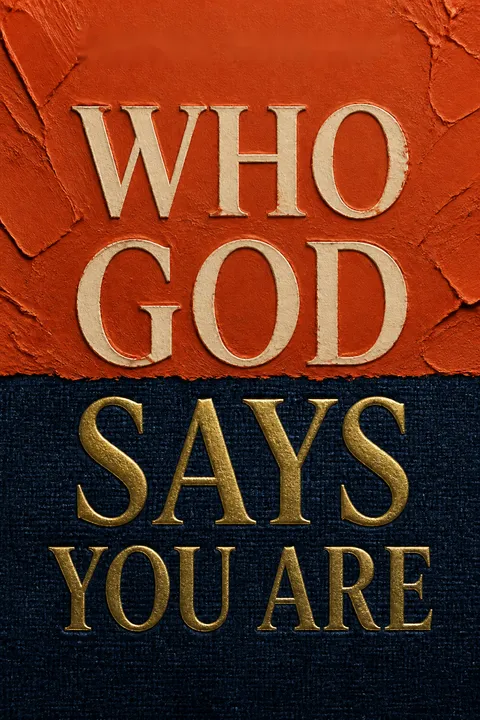
Reviews of Who God Says You Are are mostly positive, averaging 4.11 out of 5. Many readers praise its biblical depth and thoughtful exploration of identity through nine key factors, finding it transformative and spiritually grounding. Some critics note the writing can be dense, redundant, or lack cohesive narrative flow. A few readers take issue with specific theological positions, particularly around sexuality, and one reviewer challenges Snodgrass's authority to define God's will for others. Overall, most find it a valuable, thought-provoking read on Christian identity.
People Also Read




Download PDF
Download EPUB
.epub digital book format is ideal for reading ebooks on phones, tablets, and e-readers.








































