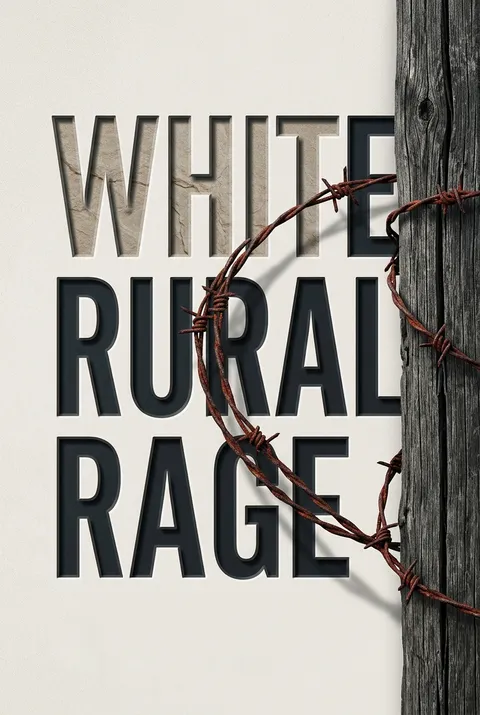

Key Takeaways
1. Rural White America's Faltering Democratic Commitments
The democratic attachments of rural White Americans are faltering.
A dangerous moment. American democracy faces its most perilous moment since the Civil War, largely due to the weakening democratic commitments of rural White Americans. Decades of suffering, layered with deep-seated cultural resentments, have fostered powerful antipathies not just towards other groups, but often towards the American democratic system itself. This anger is particularly potent because, contrary to their self-perception, rural Whites are not disempowered; in critical ways, they wield more political influence than any other large demographic group.
Minority rule. This disproportionate power has already distorted the outcomes of the American system, leading to an era of minority rule. For example, the party that lost the popular vote in seven of the last eight presidential elections managed to secure a 6-3 activist supermajority on the Supreme Court. This judicial power is now actively reshaping laws to align with a right-wing policy vision that is not supported by overwhelming majorities of the public, a direct consequence of the outsize influence held by rural Whites.
Essential source. While the threat to democracy posed by figures like Donald Trump is widely discussed, few connect it to its essential source: rural White America. Forces that destabilize the political system—such as distrust in elections, conspiracy theorizing, and the embrace of authoritarianism—are almost always more prevalent among rural Whites. Despite being significant beneficiaries of democracy's distribution of influence, they are paradoxically the least committed to its foundational principles.
2. Four Compounding Factors Fuel Rural Discontent
Four compounding factors are causing a crisis in democratic support among rural Whites that, in turn, is undermining American democracy in potentially catastrophic ways.
White despair. Rural Whites are increasingly dissatisfied with their lives and livelihoods, often with valid reasons.
- Population stagnation and economic decline
- Inadequate healthcare and crumbling infrastructure
- Rising poverty, unemployment, and drug addiction
- Limited opportunities pushing young people to leave
This despair leads them to question a political system they feel no longer serves their needs.
Outsize political power. Unlike other demographic groups, rural Whites possess inflated power in U.S. politics, granting them unusual leverage.
- Historically, they've extracted concessions from state and national governments.
- Malapportionment in the U.S. Senate and Electoral College amplifies their votes.
- Gerrymandered districts further enhance their voting power in state legislatures and the U.S. House.
This "essential minority" status means their anger is not impotent but can significantly bend the political system.
Veneration of White culture. There is an incessant praise of rural White culture and values as superior, often labeling them "real Americans" or the "heartland." This mythic status provides a wider berth for engaging in democratically transgressive behaviors, justifying their disproportionate influence by insisting on their inherent virtue and "values."
Media triggering. Rural leaders, Republican politicians, and conservative media allies constantly trigger the fears of rural White Americans.
- Daily warnings of being "under siege" by "socialist disasters" in cities.
- Blaming liberals, minorities, and Democrats for rural problems.
- Redirecting fury towards "boogeymen" like immigrants or "woke" professors.
This sophisticated propaganda system ensures rural anger is stoked, rather than problems addressed, perpetuating a cycle of resentment.
3. Outsize Political Power Undermines "One Person, One Vote"
No group was ever dealt a better electoral hand than rural White Americans.
Malapportioned Senate. The U.S. Senate profoundly violates the "one person, one vote" standard, assigning disproportionate power to smaller, more rural states.
- The population ratio between the largest and smallest states has grown from 13:1 in 1790 to 69:1 today.
- One-sixth of the country's population can theoretically block legislation supported by the other five-sixths.
- This design disproportionately favors states that are both small and rural, which are increasingly Republican.
This structural bias ensures that Senate Republicans, even when representing fewer Americans, can wield significant power, as seen in judicial confirmations.
Electoral College advantage. Rural Whites and the Republican Party also benefit from a pivotal advantage in presidential elections.
- The Electoral College allows candidates to win the presidency despite losing the national popular vote, as Donald Trump did in 2016.
- Reliably Republican small states cast more than twice as many electors as reliably Democratic small states.
- Wyoming, with 1/69th of California's population, still has 1/18th of its electoral votes due to guaranteed Senate electors.
This system is defended by arguments that rural votes should count more, often with thinly veiled implications of rural moral superiority, and has led to a sharp partisan divide in support for its abolition.
Gerrymandered districts. While Supreme Court rulings in the 1960s aimed to eliminate malapportionment in the House and state legislatures, gerrymandering continues to inflate rural voting power.
- Democratic voters are more geographically clustered, allowing Republicans to "pack" them into fewer districts.
- This maximizes Republican-held seats, even when they receive fewer statewide votes, as seen in Wisconsin and Ohio.
- Illegal gerrymanders, often targeting urban minorities, have been allowed to persist by judicial delays, effectively denying Democrats seats.
This strategic mapmaking exacerbates urban-rural tensions and ensures that rural-based Republicans maintain legislative majorities, often defying the popular will and leading to policies that harm urban areas.
4. A Culture War Exploited by Cynical Politicians
The more the culture war becomes the focus of GOP politics, the higher the stakes seem—and the more the rural voters who are the linchpin of Republican power come to see democracy itself as a threat.
Rural ethos and identity. Rural life is often portrayed in almost Edenic terms, evoking nostalgia for a simpler, more virtuous past. This myth assigns a special status to rural White citizens, viewing them as "real Americans" embodying traits like independence, hard work, and patriotism. The pickup truck, for instance, has evolved from a work vehicle to a powerful symbol of rural masculinity, strength, and capability, even for those who don't use it for labor.
Exploiting resentment. This idealized image coexists with a deep-seated anger at perceived condescension and disdain from "coastal elites." Politicians and conservative media exploit this resentment by framing political conflicts as an existential culture war between incompatible groups.
- Accusations of racism are weaponized by conservatives to portray themselves as victims.
- Book bans and library controversies become battlegrounds against "morally degraded liberal cultural ideas."
- The decline of local news leaves a void filled by national conservative media, which amplifies grievances and reinforces an "us vs. them" narrative.
This constant agitation diverts attention from material problems and solidifies partisan loyalty.
The "dark city" narrative. Conservative rhetoric consistently paints cities as dangerous, depraved "hellholes" run by liberals and minorities.
- Donald Trump frequently depicted urban areas as crime-ridden and unsafe, despite declining crime rates.
- Republican politicians like Darren Bailey and Tom Cotton use exaggerated fears of urban life to rally rural voters.
- This narrative ignores rising crime rates in rural areas and dismisses urban voters' concerns.
This demonization of cities reinforces the idea that urban values are a threat, justifying rural Whites' opposition to policies and candidates associated with urban areas, even if those policies would benefit them.
5. Donald Trump: The Unlikely King of Rural America
This is the reality Trump exposed: White rural voters don’t actually demand that candidates be like them, come from where they come from, have a deep appreciation for their lives and their concerns, or sincerely want to help them.
Unconventional appeal. Donald Trump, a lifelong New Yorker with no traditional rural background, defied conventional wisdom about appealing to rural voters. Instead of feigning authenticity or offering substantive policy plans, he offered something more visceral: validation for their anger and a promise of retribution against perceived enemies. His message resonated deeply, telling rural Whites they were right to feel wronged and mocked, and that he would be their "wrath."
The geography of Trumpism. Trump's support was most intense in majority-White rural areas, particularly in counties that had previously voted for Barack Obama.
- 206 Obama-Trump counties in 2016, mostly non-metro, with many remaining Republican.
- West Virginia, a predominantly White and native-born state, saw a dramatic shift from Democratic to overwhelming Republican support.
- In 2020, Trump increased his vote percentage in 91 out of his top 100 performing counties from 2016, demonstrating deepening loyalty.
This phenomenon revealed that White rural voters were waiting for a candidate like Trump to redefine politics, especially concerning race and identity.
"Make America Great Again." Trump's slogan tapped into a deep vein of rural nostalgia and a desire for restoration.
- It promised a return to a past era of perceived greatness, when traditional hierarchies were intact.
- This resonated with those who felt a loss of dignity and status amidst economic decline and cultural change.
- Trump's promise to "make Mexico pay for the wall" symbolized dominance and the restoration of American pride through the humiliation of others.
His campaign was an exercise in wish fulfillment, allowing supporters to indulge their desires for a rollback of social progress and a reassertion of White identity, even if his promises were transparently false.
6. The Fourfold Threat to American Democracy
The uncomfortable truth, however, is that the patriotism of millions of rural White Americans seems conditioned on the expectation that U.S. democracy serve them primarily, if not exclusively.
Racism and xenophobia. Rural Whites exhibit unique hostility towards racial and religious minorities, and immigrants.
- They are less comfortable with a diversifying America and less likely to value diversity in their communities.
- A majority in rural America disagrees that "White Americans benefit from advantages blacks do not have."
- They express higher anti-immigrant sentiments and support for policies like a border wall.
This "place resentment" is often linked to racialized attitudes, with rural Whites perceiving Democrats as "pandering to racists" for supporting diversity.
Belief in conspiracies. Rural Whites are the most conspiratorial cohort in the nation, often detached from reality.
- Higher rates of belief in QAnon conspiracies, such as Satan-worshipping pedophiles controlling the government.
- Most likely to believe the 2020 election was stolen and to doubt election legitimacy.
- Higher skepticism towards science and refusal of COVID-19 vaccines, leading to higher death rates.
- Strong support for Obama birtherism, which fueled Trump's political rise.
This anti-intellectualism and conspiracism prevent rational discourse and have fatal consequences.
Anti-democratic tendencies. Rural Whites show lower support for essential democratic principles.
- Less likely to endorse checks and balances, a free press, or ballot access.
- More concerned about non-existent voter fraud than ensuring everyone can vote.
- Embrace authoritarian figures and White/Christian nationalist movements, believing the U.S. should be a Christian-only nation.
- "Constitutional sheriffs" in rural counties falsely claim authority superior to state and national law, rejecting the Supremacy Clause.
These beliefs undermine the foundations of constitutional governance and civil liberties.
Justification of violence. Rural Whites exhibit the highest degree of support for violence as a means of political expression.
- More likely to agree that "true American patriots may have to resort to violence in order to save our country."
- Overrepresented among those who believe Trump should be restored to the presidency by force.
- Higher rates of excusing or justifying the January 6th domestic terrorist attack.
- Perpetrators of domestic terrorism are often White men from rural areas, targeting out-groups or government officials.
This willingness to abandon democratic norms for violent alternatives poses a direct threat to the republic.
7. Rural Minorities: Invisible Struggles and Stronger Democratic Faith
Sadly, on almost every measure of economic or healthcare vitality, the challenges for rural minorities are more pervasive and more punitive.
Ignored and invisible. Despite comprising 24% of the rural U.S. population and growing, rural African Americans, Latinos, and Native Americans are largely ignored by national media and policymakers. This neglect is ironic, as they often face greater economic hardships than their White neighbors. Their "misrecognition" as outsiders, coupled with their votes rarely determining statewide elections, makes them easily dismissed by both Republican and mainstream media.
Unique hardships. Rural minorities endure severer and more persistent economic and health challenges.
- Higher unemployment rates (e.g., rural Black unemployment is five points higher than rural White).
- Deeper and wider poverty, with "double exposure" for African Americans and Native Americans living in persistently poor counties.
- Limited small business development opportunities and lower homeownership rates.
- Substandard and segregated school districts with less funding.
- Worse health outcomes, inadequate access to care, and higher rates of premature death, especially for Native Americans.
These disparities are exacerbated by systemic racism and insufficient, dwindling resources.
Stronger democratic faith. Despite facing greater adversity and historical discrimination, rural minorities exhibit stronger democratic commitments than rural Whites.
- They are not threatening election officials, planning violence, or plotting to overthrow the government.
- Figures like Mondale Robinson in Enfield, NC, demonstrate a progressive agenda of self-empowerment and community organizing within the democratic system.
- Their experiences with movements like the Civil Rights movement provide a model for political engagement and belief in effecting change through activism and moral persuasion.
This resilience and commitment to democratic processes stand in stark contrast to the conditional patriotism of many rural Whites.
8. The "Despair, Distraction, Disillusionment, Decline" Spiral
You won’t turn your pain into action and demands for change; you’ll just turn it into the poison of bitterness and rage.
A self-perpetuating cycle. Rural America is caught in a vicious political circle where despair leads to distraction, which fosters disillusionment, ultimately contributing to democratic decline.
- Despair: Economic decline, job losses, stagnant wages, and disappearing healthcare facilities create deep dissatisfaction.
- Distraction: Politicians, unwilling to address root causes, divert attention with grievance-fueled culture wars, blaming "liberals" and "outsiders."
- Disillusionment: As culture wars offer no real solutions and material miseries persist, rural citizens become disillusioned with the political system.
- Democratic Decline: This disillusionment leads them to question democratic norms, embrace demagogues, and become more permissive of anti-democratic behaviors.
Each stage reinforces the next, deepening community problems and intensifying resentments.
Republican exploitation. For politicians like Congressman Chip Roy, who represent rural areas, this spiral is a political asset.
- They secure their positions by maintaining, not alleviating, rural struggles.
- Despair is converted into anger, and anger into votes, making non-competitive races even more secure.
- Republicans often ignore rural areas, knowing their votes are guaranteed, and actively harm them through policies like defunding public schools, opposing broadband, and restricting abortion access.
This strategy ensures that rural voters remain angry and cynical about politics, focusing on cultural battles rather than demanding tangible improvements from their representatives.
Anti-government ideology. The GOP's anti-government stance, while appealing to some rural voters, actively undermines their well-being.
- It prevents vital infrastructure projects, reliable water supplies, and essential services.
- Attacks on higher education hurt rural students, and climate denial harms farmers.
- "Right-to-work" laws weaken unions, depriving rural workers of economic benefits and political organizing power.
This authoritarian populism channels rural anger towards "elites" and cultural issues, preventing a focus on systemic economic power relations and ensuring that money and power remain with the traditional overclass.
9. The Missing Rural Movement: A Path to a Better Future
Without them, we cannot forge a future as a stable pluralist democracy.
Lack of coherent demands. Despite wielding significant power, rural Whites are the only major part of a party's coalition without a coherent set of demands. Unlike other identity or issue groups that lobby for specific policies, rural Whites often ask for nothing, squandering their influence. This absence of a unified movement breaks the link between electoral power and concrete policy changes that could improve their lives, leaving them vulnerable to exploitation.
Opportunity for change. Rural Americans have the unique ability to demand a better deal from their leaders.
- They must first acknowledge that "Hollywood didn't kill the family farm," nor did "college professors pour mountains of opioids into rural communities."
- Blaming external "outsiders and liberals" prevents them from developing effective political strategies.
- A new rural political movement, with clear demands, could force both parties to genuinely compete for their support and deliver tangible results.
This shift from blame to action is crucial for breaking the cycle of despair and resentment.
A multiracial future. Any effective rural movement must be multiracial, including the voices and interests of all rural residents.
- Rural Black, Latino, and Native Americans, despite facing worse conditions, maintain faith in democratic processes and offer models of activism.
- Demographic change is inevitable in rural America; embracing diversity as an asset, rather than fearing it, can defuse backlash and build stronger bonds.
- A shared vision for a positive future, beyond nostalgia, is needed—one that prioritizes economic opportunity, better infrastructure, and quality education for all.
The survival of American democracy depends on rural Americans, especially rural Whites, using their power constructively to forge a stable, pluralist future for themselves and the nation.
Review Summary
White Rural Rage examines why white rural voters support politicians who don't serve their economic interests. Reviewers praise its well-documented analysis of how Republicans exploit economic and racial anxiety, directing anger toward minorities and immigrants rather than addressing root causes. The book describes rural voters prioritizing culture war issues over material benefits. While some find the proposed solutions insufficient, others highlight the final chapter's call for rural voters to demand concrete results from politicians. Overall, readers consider it essential for understanding contemporary American politics and democracy's challenges.
People Also Read






Download PDF
Download EPUB
.epub digital book format is ideal for reading ebooks on phones, tablets, and e-readers.








































