
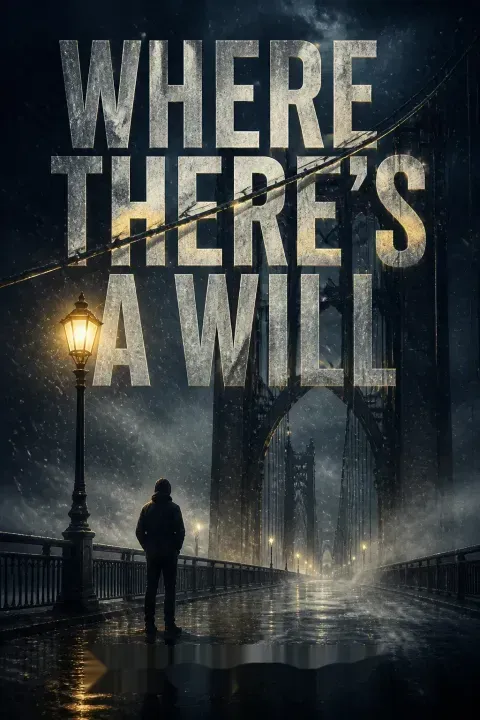


Plot Summary
Prologue
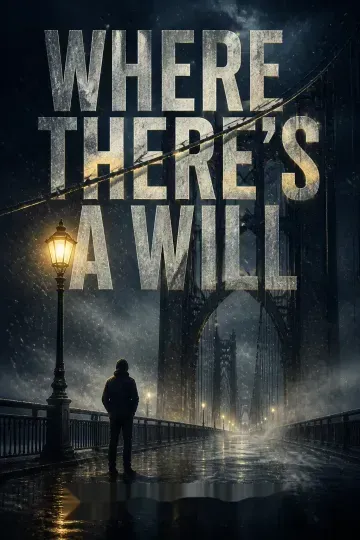
At eighteen, Waylon McAllister2 wakes on the cold concrete ledge of the Lackawanna River Viaduct. Night has fallen, sleet soaks through his threadbare clothes, and an empty bottle of his father's11 prized Lagavulin scotch lies beside him.
He stole the bottle along with a pistol and a worn photograph of his dead mother. Drunk and half-frozen, he laughs until he screams, then cradles the gun under his chin. A Tom Petty song loops in his head, and a phantom voice, soft and long-buried, sings along.
He thumbs the trigger, squeezes his eyes shut, and waits for the end. The gun does not fire. The safety was engaged, and Waylon2 never learned how to operate it. He does not jump either. Instead, he vomits onto the tracks, then waits for sunrise, thinking of a boy with ocean-blue eyes he once knew.
The prologue establishes the novel's central question: what keeps a person alive when every internal signal urges self-destruction? Waylon's survival is accidental (the safety was on) and yet meaningful. The Tom Petty song and the phantom voice of the boy he once loved suggest that connection, however buried, functions as an unconscious tether to life. The bridge setting is crucial: it will recur throughout the narrative as both Waylon's suicide destination and his place of reflection. The ruined photograph of his mother and the stolen scotch concretize Waylon's twin inheritances from his father: grief and alcoholism. That he survives this night is not triumph but deferral. The question the book must answer is whether he can ever truly choose to live.
Back to Shiloh
Will Foster, 22, has been riding his motorcycle across state lines for months, fleeing the Philadelphia campus where his boyfriend Zayne hanged himself seven months earlier. On impulse, he detours to Shiloh, Pennsylvania, population 743, where he lived for one year at age eleven.
Stopping at a gas station, he overhears a man mention the "McAllister boy,"2 and his pulse races. Inside, he recognizes Mason Wyatt,3 a childhood friend now covered in tattoos and piercings, buying gum. Mason3 remembers him too. Over beers at O'Leary's Pub, the bar Mason3 co-owns, Will1 confesses he cannot go back to his old life.
Mason3 offers him the vacant apartment above Reggie6's garage and a job as the bar's bouncer. Will1 scratches a lottery ticket, wins ten dollars, and decides to stay. What he does not say aloud is that he came back hoping to see Waylon McAllister,2 the boy who broke his heart a decade ago.
Will's arrival is propelled by grief he cannot name and a compass pointing toward unfinished business. The lottery ticket ritual (win equals stay) externalizes a decision Will has already made internally but cannot yet own. His stated reason (curiosity) masks repetition compulsion: the unconscious drive to revisit the site of his first heartbreak and attempt to master it. Shiloh represents both the happiness of his last uncomplicated year and the betrayal that taught him love could be weaponized. Mason's immediate warmth contrasts with what Will instinctively knows awaits him: Waylon's rejection.
Standing on the Bar
Will follows Mason to O'Leary's and finds Waylon McAllister2 shirtless on the bar, fixing a light fixture with a cigarette dangling from his lips. At twenty-one, Waylon2 is no longer the scrawny, dark-haired boy Will1 remembers. He is muscled, inked, pierced, and radiating contempt.
When Mason3 introduces Will,1 Waylon2 deadpans that the name does not ring a bell. He accuses Will1 of being a potential predator, a drug addict, anyone untrustworthy. His cousin Ivy,4 a tiny goth art student with sharp nails and sharper loyalty, backs him up. Mason3 defends Will,1 but the damage is done.
Waylon2 storms upstairs, spitting that he trusts Mason3 but not Will.1 Later, Will1 learns from Mason3 that Izzy Montgomery,7 the third member of their childhood trio, disappeared four years ago and is presumed dead. Mason's3 visible agony when her name comes up tells Will1 this town is carrying invisible wounds.
Waylon's theatrical hostility serves a precise function: preemptive rejection. By casting Will as a threat, Waylon controls the narrative before Will can resurrect the past that terrifies him. His accusation that Will is a nosy fucker is projection; Waylon knows exactly why Will might have returned. The bare chest, the elevated position on the bar, the performative indifference are all armor. Ivy's immediate hostility reflects a codependent loyalty system. The revelation about Izzy establishes the shared grief permeating this found family and provides crucial context for every character's fragility.
Glycerine in the Spotlight
That night, Will1 watches The Lost Boys perform. Mason3 is a magnetic frontman on vocals and guitar; Shawn5 smolders on lead guitar; Waylon,2 on drums, is the band's heartbeat. But when Waylon2 switches to center stage with an acoustic guitar and sings Bush's "Glycerine," the entire bar dissolves.
His gravelly voice pours through the speakers, and when his eyes find Will's1 in the crowd, the song becomes a private communication. Will1 feels it like a bullet. After the set, Will1 encounters Waylon2 in the bathroom with a girl wrapped around him. Waylon's2 hostility reignites.
He calls Will1 nobody to the girl. Outside on the fire escape later, Waylon's2 tone shifts. He apologizes for the day's behavior, and Will1 tells him, honestly, that he does not know where else to go. They agree to start over, though neither believes it is that simple.
The performance scene establishes the central paradox of Waylon: he can express profound emotion through music but cannot tolerate emotional vulnerability in person. Singing allows him to say what he cannot speak. The "Glycerine" moment is a public-private confession: the entire bar hears a cover song; Will alone receives a message. Waylon's immediate retreat into cruelty after the set reveals how threatening genuine connection is. The fire escape truce is fragile, built on Will's raw admission of rootlessness and Waylon's exhaustion with his own defenses.
Will and Way, Always
On Waylon's2 eleventh birthday, Will1 surprises him with double chocolate chip cookies baked by his grandmother. Waylon2 hates birthdays because his mother died giving birth to him, but Will1 insists on celebrating. They sneak into the closed school to retrieve a book Waylon2 forgot.
Trapped in a dark classroom corner by a janitor, pressed together and barely breathing, Waylon2 accidentally brushes his mouth against Will's.1 Will1 chases him outside, pins him against the brick wall, and kisses him properly. Waylon's2 terror dissolves into wonder. They hold hands, pinkies intertwined in the grass, staring at the sky.
Will1 declares them a team, coining a phrase that will echo through their lives: "Will and Way. Always." Waylon2 whispers it back like a promise. For one afternoon, the angry boy with the black hair and the lonely home life believes he might deserve happiness.
This flashback establishes the emotional stakes driving the entire narrative. The kiss is not merely childhood experimentation; it is Waylon's first experience of being chosen, of mattering to someone. Will's confident affection offers a counter-narrative to the worthlessness Waylon absorbs at home. The "Always" promise is the contract that will haunt them both. Tragedy is foreshadowed in the setting: a dark closet giving way to public exposure, the stolen moment immediately threatened by approaching footsteps. The happiness is too perfect to survive what awaits Waylon at home.
Billy Sharpe Did Not Do It
Five days after the birthday kiss, Waylon2 returns to school with his left arm in a cast. He refuses to look at Will,1 speaks in flat monosyllables. When Will1 confronts him after school, Waylon2 tells him to leave him alone, then calls him a faggot and says he cannot be friends with someone like him.
Devastated, Will1 lunges at Waylon2 but stops when Waylon2 cries out in pain. Will1 pushes up Waylon's2 sleeve and finds the arm swollen, bruised black and purple with distinct finger marks. Waylon2 claims a neighbor boy, Billy Sharpe, hurt him.
He makes Will1 swear not to tell anyone. Will1 promises, then beats Billy up at school and gets suspended. When he returns, Waylon2 shoves him, screams that he hates him, and spits in his face. He says Will1 ruined everything, then walks away. Will1 moves back to Philadelphia that summer.
The broken arm scene is the primal wound of the narrative. Waylon's weaponization of homophobic slurs is a survival mechanism: if he performs his father's hatred convincingly enough, perhaps Will will be safe. The silence Will agrees to is a child's solution to an adult horror: he beats up the wrong monster while the real one remains untouchable. Waylon's final cruelty (spitting, 'you ruined everything') is designed to ensure Will won't look back. It works. Both boys are victims of the same man, but the abuse forces them apart rather than together.
Almost Kissing at Sunrise
Weeks after Will's1 return, Waylon2 wakes him early one morning and takes him on a cross-country run to the top of the Lackawanna River Viaduct. Three hundred feet above the valley, straddling the concrete barrier, Waylon2 tells Will1 the bridge's dark history: suicides, ghost stories, the men said to be entombed in the concrete.
He admits he comes here for perspective, that the sunrise reminds him nothing lasts forever. Will,1 thinking Waylon2 is opening up, reveals he knows about Zayne's10 suicide. Waylon2 confesses he researched Will1 online.
The air thickens. Standing inches apart, Will's1 shirt off, the sun rising, Waylon2 feels the pull toward Will's1 lips. He almost gives in. Then terror floods him. He shoves Will1 hard, snarls at him never to touch him again, and bolts down the trail, leaving Will1 alone on the bridge.
The bridge is Waylon's church and his temptation. It is where he almost died and where he chose to live. Bringing Will here is an offering and a test. When Will reciprocates vulnerability (revealing Zayne's suicide), the intimacy becomes too real. Waylon's physical shove is a desperate reassertion of the boundaries his father beat into him. The almost-kiss triggers the same panic the actual kiss did a decade ago: desire equals danger, vulnerability equals annihilation. His flight is not rejection of Will but of the self that wants Will.
The Eye of the Storm
A severe storm hits Shiloh while Will1 is out. His motorcycle slides on a branch, and he seeks shelter at O'Leary's. Only Waylon2 is there; the others have gone to Mason's3 mother's house. They drink whiskey, trade cigarettes, and Waylon2 plays guitar.
The conversation drifts to the band's name, The Lost Boys, and Waylon2 explains the Peter Pan symbolism: orphans, unwanted boys who found each other. Tension builds. Will1 confronts Waylon2 about lying years ago: his father11 broke the arm, not Billy. Waylon2 finally admits it. The power cuts out. In total darkness, lying on the bar floor, they hold hands. Waylon2 whispers he does not like the dark.
Will1 tells him his grandmother's wisdom about making peace with your own truths. Then Waylon2 kisses him. Fiercely. They tear at each other's clothes, mouths and hands desperate, grinding together on the dirty floor. Neither finishes. They fall asleep intertwined, whispering apologies and pleas not to hate each other.
The storm is both literal and metaphorical. The power outage erases the visual world, allowing Waylon to act without the surveillance of his own internalized gaze. The darkness that once terrified him becomes, with Will, a sanctuary. Their intimacy is not gentle: it is violent, desperate, and interrupted. The inability to climax mirrors their inability to complete any emotional arc. They fall asleep mid-act, suspended between destruction and salvation, both whispering the same request: don't hate me. The storm that traps them is also the force that finally breaks their stalemate.
The Morning After Breakdown
Waylon2 wakes before dawn, naked on the bar floor with Will's1 arm draped across his chest. The power has returned; Alice In Chains plays softly. Panic attacks him instantly. He extracts himself, sets an alarm on Will's1 phone, and retreats to his bathroom where he collapses.
Looking in the mirror, he sees the bruises and scratches from their encounter and hears his father's11 voice calling him disgusting. He vomits, screams into his hands, claws at his own skin. Flashbacks consume him: being forced to watch pornography as an eleven-year-old while his father11 spat slurs into his ear.
He wants to die, then hates himself for wanting it. When he finally emerges, he avoids Will1 completely. For four days, Waylon2 goes on a bender, telling everyone he is working storm repairs. In truth, he is unraveling.
This is the book's most devastating sequence. Waylon's breakdown illustrates the neurological reality of complex trauma: the body keeps score. The pleasure of the night before is immediately recoded as evidence of his perversion. His father's conversion therapy succeeded not in changing Waylon's orientation but in fusing desire with shame so tightly they cannot be separated. The four-day disappearance is a flight response, but also a passive suicide attempt: drinking and drugging until something stops. Waylon cannot yet see that surviving this breakdown is progress, not failure.
Rescued from Rock Bottom
Ivy,4 panicked that Waylon2 has been missing for days, enlists Will1 and Reggie6 to find him. They trace him to Bootleggers, a dive bar on the outskirts of town where Waylon's father11 used to drink.
They find Waylon2 passed out behind the building, reeking of whiskey and urine, his arm bearing a fresh needle mark from heroin a strung-out couple gave him. When Reggie6 rouses him, Waylon2 erupts. He screams that he hates them both, that Will1 is the reason he is like this, that just looking at Will1 makes him want to hurt himself.
Reggie6 wraps his arms around Waylon2 as the young man thrashes and sobs, eventually collapsing into his uncle's6 hold, begging for it all to stop. They haul him to Reggie's6 truck. Reggie6 decides to take Waylon2 to his house, the childhood home where the abuse happened.
Rock bottom is paradoxically hopeful: the only direction from here is up. Waylon's rage at Will is misdirected grief and shame. He blames Will because Will's return shattered the carefully constructed denial system that kept him functional. The heroin is not addiction-seeking but oblivion-seeking: a desperate attempt to silence his father's voice. Reggie's physical containment of Waylon's breakdown provides the holding environment Waylon's own father never offered. The decision to return to the childhood home forces a confrontation with the past that can no longer be postponed.
Monsters in the Floorboards
Waylon2 wakes in his childhood bedroom and immediately panics. Will,1 who slept on the floor, guides him through a grounding exercise, tapping a rhythm on his back until his breathing steadies. Once calm, Waylon's2 defenses crumble.
He shows Will1 the scars on his hip from a belt buckle beating when he was six. He describes being locked in his room for three days without food, water, or a toilet, so terrified of his father11 that he used his closet as a bathroom.
He recounts learning at age six, during that same punishment, that his mother died giving birth to him. He pulls a crumpled brown paper bag from a hidden floorboard and shoves it at Will.1 Inside are the Valentine's Day cards Will1 gave him at age ten. Waylon2 kept them hidden for over a decade.
The childhood home functions as a repository of traumatic memory. Every detail triggers Waylon: the mismatched flooring, the crack in the wall, the stairs. Will's tapping exercise is a clinical intervention (bilateral stimulation, used in EMDR therapy) that he deploys instinctively. The hidden Valentine cards are the book's most potent symbol: tangible proof that the love Will offered was real enough to preserve, even as Waylon performed its rejection. Keeping them was an act of secret fidelity to his true self that his father could never reach.
Where There Is a Will
On Reggie's6 porch, Will1 and Waylon2 have the conversation they have needed for ten years. Will1 admits he felt guilty for Zayne's10 suicide, that his psychology studies failed to save the person closest to him. Waylon2 confesses that his father11 caught them holding hands on his eleventh birthday, and the punishment was the broken arm.
He then reveals what he has told no one: at seventeen, drunk on his father's11 scotch, he sat on the bridge with a gun to his chin. The safety was on. He did not know how to use it.
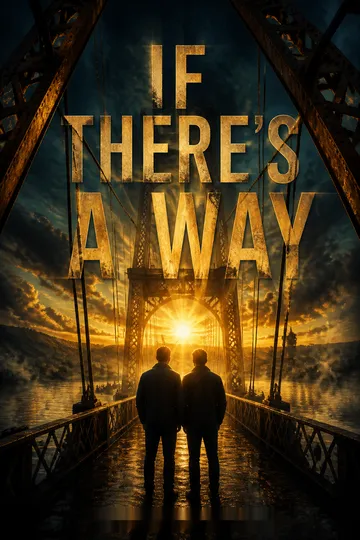
In that moment, he thought of Will,1 of a Tom Petty song, and chose to live. The next day, he tattooed the Inguz rune on his knuckle: a Viking symbol meaning "where there is a will, there is a way." Will1 begins burning the Valentine cards as closure. Waylon2 stops him from destroying the Care Bear one.
This is the emotional climax of the book's first healing arc. The Inguz tattoo reframes their names as a survival mantra rather than a childhood rhyme. Waylon's admission that the thought of Will saved his life recasts their entire history: Will's return to Shiloh is not coincidence but the unconscious fulfillment of a psychic bond neither fully understood. Will's attempt to burn the cards is his attempt to release Waylon; Waylon stopping him is his first active choice to hold on. The Care Bear card is preserved because it articulates what neither can yet say plainly.
What His Father Did
Weeks later, after a football watch party at the bar, Will1 wakes hungover in Waylon's2 bed. Waylon2 returns from a run, and the conversation turns intimate. Trembling, Waylon2 finally tells Will1 the worst of it: that summer after their friendship ended, his father11 confined him to the house for sixty-five days.
Seamus McAllister,11 convinced he could beat the homosexuality out of his son, forced eleven-year-old Waylon2 to watch brutal gay pornography while screaming slurs at him and striking him whenever his body responded involuntarily.
This homemade conversion therapy, administered by a drunk, grieving father, wired Waylon's2 sexuality to terror and shame. After confessing this, Waylon2 kisses Will.1 They make love for the first time sober and intentional. Waylon2 climaxes with Will's1 name on his lips. His father's11 voice is, for once, silent.
The conversion therapy revelation contextualizes every self-destructive behavior Waylon exhibits. His promiscuity with women, his violent rejection of his own desires, his panic after intimacy: all are adaptations to this original trauma. The summer conversion therapy was not about changing his orientation but about annihilating his capacity for love. That Waylon can be intimate with Will without dissociating or vomiting is a monumental victory. The silence of his father's voice during sex is the book's most hopeful sign: the trauma imprint can be overwritten by corrective experiences.
Shawn's Quiet Vigil
That same night, Will1 gets sick from Ivy's4 potent blue cocktail. Waylon2 carries him to his bathroom, cleans his face, gives him Advil and water, and ends up cradling Will's1 head in his lap on the bathroom floor, stroking his hair. Shawn5 walks in. Waylon2 freezes, expecting violence or disgust. Instead, Shawn5 crouches beside him, talks him through a panic attack with counted breathing, and tells him his secret is safe.
He adds something unexpected: Waylon2 should not let that asshole, his father,11 win. Then he says if Waylon2 ever needs to talk, he knows where to find him. It is the most words Shawn5 has ever spoken to Waylon2 directly, and the first time anyone outside of Ivy4 has acknowledged what Waylon2 is going through.
Shawn's intervention is a masterclass in trauma-informed support. He does not demand explanations or labels. He sees Waylon's panic and immediately deploys grounding techniques (counted breathing, present-moment focus). His reference to 'that asshole' indicates he has intuited the source of Waylon's struggle, likely recognizing parallels to his own history as a foster kid and recovering addict. His offer to talk represents the beginning of a new, healthier support network that reaches beyond the codependent bond with Ivy.
Telling Ivy Everything
Unable to sleep, Waylon2 drives to Ivy's4 apartment before sunrise. He climbs into her bed and tells her he kissed Will.1 She has been avoiding him since Bootleggers, not just because he scared her but because watching him self-destruct triggered memories of her brother, who used to drug her.
Waylon2 had not realized. He tells Ivy4 everything: the childhood kisses, his father's11 abuse and conversion therapy, his suicide attempt, the Inguz tattoo, and now, falling for Will.1 Ivy4 listens without judgment.
She admits she has known for years that he was not okay, that she enabled him by providing a safe place to hide rather than pushing him toward help. They cry. They forgive each other. For the first time, Waylon's2 relationship with his cousin is honest rather than codependent.
This scene models healthy relationship repair. Ivy's distance was not punishment but self-protection; her brother's history made Waylon's spiral unbearable to witness. Waylon's confession is his first act of coming out as something other than straight, and Ivy's acceptance provides the unconditional love his father withheld. Their acknowledgment of codependency is psychologically sophisticated: they recognize that love without boundaries enabled Waylon's addiction. The repaired relationship is built on truth rather than mutual protection, allowing both to grow.
The Anniversary Cracks Mason
On the fourth anniversary of Izzy's7 disappearance, Will1 arrives at the bar to find Mason3 drunk for the first time in years, clutching a vodka bottle with bloodied knuckles. Jeremy Montgomery,8 Izzy's7 twin, found him at the cemetery. Mason3 has finally accepted what he has denied for four years: Izzy7 is dead and is not coming back.
In his drunken anguish, he looks at Jeremy8 and calls him Izzy,7 begs him not to leave. Then, turning on Waylon,2 he says he wishes it had been Waylon2 instead of Izzy.7 Waylon2 replies that he wishes the same. Mason3 says he wishes it were him more. Waylon2 agrees. Mason3 hurls the vodka bottle at Waylon's2 head. Will1 yanks him out of the way. Shawn5 and Jeremy8 carry Mason3 upstairs. Waylon2 begins to spiral.
Mason's breakdown is the external trigger for Waylon's final-act crisis. The cruel words Mason speaks are not true feelings but grief weaponized: he needs to hurt someone as much as he hurts. Waylon's responses are equally devastating because they are true. Waylon does wish he had died instead of Izzy; survivor's guilt has shaped his self-destruction. This scene demonstrates how unresolved grief can poison the most intimate relationships. Mason breaking his sobriety signals that the careful equilibrium of this found family is collapsing under the weight of accumulated losses.
His Father Is Getting Out
After Mason's3 attack, Waylon2 grabs a whiskey bottle and spirals. Will1 tries to stop him. Waylon2 pushes, taunts, kisses him violently, then shoves him again, shattering the bottle on the floor. He careens toward full relapse when Ivy4 bursts through the door.
She did not come about Mason.3 Her mother called: Waylon's father, Seamus McAllister,11 is being released from prison. The man who beat Waylon2 his entire childhood, who broke his arm, cracked his ribs, tried to brainwash him with homemade conversion therapy, and nearly killed him at sixteen, is walking free.
Waylon2 goes completely still. His eyes, which moments before were wild with rage and grief, empty to nothing. Will1 reaches for his hand. Waylon2 grips it so hard bones creak. The book ends here, suspended on the edge of this new catastrophe.
The cliffhanger compounds trauma upon trauma. Mason's breakdown has already destabilized Waylon; the father's release is the kill shot. Waylon's dissociative response (the light going out behind his eyes) is a trauma survivor's last defense: when reality is too catastrophic, the psyche checks out. Will's grip on his hand is the lifeline, but the book ends before we know if it is enough. Structurally, this ending mirrors the prologue: Waylon on the precipice of annihilation, reaching for something to hold on to. The difference is that this time, Will is actually there.
Analysis
Where There's a Will is a study in how childhood trauma calcifies into adult self-destruction, and how love, when it finally arrives, must first be survived before it can be enjoyed. The novel's structural genius lies in its dual timeline: the flashbacks to age eleven are not nostalgic interludes but the origin story of Waylon's2 pathology. Every present-day behavior (his promiscuity, his substance abuse, his violent rejection of Will1) is a direct adaptation to what his father11 did to him that summer he was eleven, when homemade conversion therapy fused desire to shame so thoroughly they could never be separated without extraordinary intervention.
The book operates on the psychological principle of repetition compulsion: Will1 returns to Shiloh unconsciously seeking to master the rejection that shaped him; Waylon2 keeps pushing Will1 away to confirm his own unworthiness. They are trapped in a feedback loop until external crises (the storm, Bootleggers, Mason's3 breakdown) force a new pattern. Waylon's2 near-fatal spiral functions as a therapeutic rupture: the defenses that kept him alive are killing him, and only total collapse enables reconstruction.
The novel is remarkable for its commitment to showing recovery as non-linear. Waylon2 does not simply get sober and come out. He oscillates between progress and regression, intimacy and withdrawal. His therapist's harm-reduction approach acknowledges a truth many recovery narratives resist: for some, the goal is not abstinence but manageable relationship with one's demons. The cliffhanger ending, with the abusive father's11 release, is thematically necessary. Waylon's2 recovery has occurred in the father's11 absence; the real test is whether he can maintain it in the father's11 presence.
At its core, this is a novel about whether love is stronger than the stories we were told about ourselves as children. Waylon2 was taught he was a murderer (of his mother), a pervert (for loving Will1 ), and worthless. Will1 was taught that his love was not enough to make people stay. Their reunion is a mutual act of revision: rewriting those stories together, one excruciating chapter at a time. They do not finish that revision in this book. But they have begun.
Review Summary
Where There's a Will receives mostly positive reviews, averaging 4.25/5 stars. Readers frequently praise the intense angst, slow-burn romance, and emotionally rich writing, particularly for a debut novel. The central relationship between Will and Way—childhood friends reunited after a painful falling out—resonates deeply with many, who find their dynamic both heartbreaking and compelling. Common criticisms include excessive internal monologue, repetitive pacing, and an overwhelming accumulation of trauma. The cliffhanger ending left readers eager for the sequel, with most praising the vivid characterization and found-family elements.
People Also Read

Characters
Will Foster
Grieving drifter seeking homeA twenty-two-year-old gay former psychology student from Philadelphia. Seven months before the story, he found his boyfriend Zayne10 hanging in their dorm room, a trauma that shattered his faith in his ability to help others and sent him fleeing onto the open road. Outgoing, stubborn, and compulsively protective, Will masks his own pain by trying to fix everyone around him. He returned to Shiloh unconsciously seeking the last place he felt whole: the year he was eleven, before Waylon McAllister2 broke his heart. His psychology training gives him clinical insight into trauma and coping mechanisms, but he struggles to apply that knowledge to himself. Will's defining wound is the belief that his love is never enough to make people stay.
Waylon McAllister
Abuse survivor drowning slowlyTwenty-one-year-old drummer and bartender in Shiloh. His mother died giving birth to him, a fact his alcoholic father, former police chief Seamus McAllister11, weaponized throughout Waylon's childhood. Subjected to physical, verbal, and psychological abuse from infancy, including a summer of forced conversion therapy at age eleven, Waylon developed complex PTSD, internalized homophobia, and alcohol dependency. He copes through promiscuity, substance use, and a carefully constructed mask of devil-may-care indifference. His talent for music is the one uncorrupted outlet for emotions he cannot otherwise express. Beneath the armor, Waylon is terrified of his own capacity for love, which his father11 taught him was perversion and weakness.
Mason Wyatt
Recovering addict clinging to hopeWill's1 childhood friend and Waylon's2 best friend since infancy. Co-owner of O'Leary's Pub and frontman of The Lost Boys. A recovering opioid addict whose girlfriend Izzy7 vanished from a Florida resort four years ago. For years, Mason refused to accept she was dead, a psychological defense that kept him functional but brittle. His younger sister Phoebe9 discovered him after his overdose, a trauma that reshaped their relationship. Mason is the emotional center of the found family, generous and warm, but his unresolved grief makes him capable of devastating cruelty when his defenses finally crack. His bond with Shawn5, a fellow recovering addict, is the most stabilizing force in his life.
Ivaiah McAllister
Fierce cousin and enablerWaylon's2 younger cousin, known as Ivy, a tiny goth art student with sharp black nails and sharper loyalty. She has been Waylon's2 primary confidante and protector since childhood, a role that became codependent as she provided him a safe place to hide rather than pushing him toward help. Her own brother's history with drugging her makes Waylon's2 self-destruction particularly triggering. Beneath her hostile exterior, Ivy is deeply empathetic and perceptive. She is the first person Waylon2 comes out to, and her acceptance becomes a crucial step in his recovery. Her relationship with Waylon2 evolves from mutual protection to honest accountability.
Shawn
Stoic protector with shared scarsLead guitarist of The Lost Boys and Mason's3 sponsor and protector. A former homeless heroin addict who was rescued by Mason's3 mother Sherry and sent to the same rehab program. Stoic to the point of near-invisibility, he communicates through action rather than words. His own trauma history (foster care, abuse) gives him unique insight into Waylon's2 struggle, and he becomes an unexpected ally, offering grounded, nonjudgmental support. His fierce protectiveness of Mason3 borders on single-minded devotion. Shawn's quiet observation of Waylon's2 relationship with Will1 marks the first time anyone outside Ivy's4 orbit truly sees what Waylon2 is hiding.
Reggie McAllister
Guilt-ridden uncle making amendsWaylon's2 uncle, a burly mechanic who owns the garage where Will1 rents an apartment. He was absent during much of Waylon's2 childhood, working on the road as a trucker, and carries immense guilt for not recognizing the abuse sooner. He took Waylon2 in at sixteen after the near-fatal beating by Seamus11. Gruff and vulgar but deeply caring, Reggie is determined not to fail his nephew again. His decision to bring Waylon2 back to the childhood home after the Bootleggers crisis is a deliberate confrontation with the past. He provides the stable, protective presence Waylon2 never had growing up.
Izzy Montgomery
Missing girl who defined them allMason's3 girlfriend and Waylon's2 childhood best friend, who vanished from a Florida resort at seventeen. Presumed dead four years later, though her body was never found. She was the vibrant, fearless center of the childhood friend group, the one who believed in their musical dreams and pushed them forward. Her mother Eva was best friends with Waylon's2 late mother and helped raise Waylon2 during his infancy. Izzy's absence shapes every character's grief, motivation, and capacity for hope. Her twin brother Jeremy8 shares her amber eyes, making his presence both a comfort and a torment for those who loved her.
Jeremy Montgomery
Gentle twin carrying her ghostIzzy's7 twin brother, soft-spoken, artistic, and openly gay. He was bullied mercilessly growing up in Shiloh, and his presence triggers complicated feelings in Waylon2, who sees in Jeremy everything he fears in himself. Jeremy shares his sister's amber eyes, making him a painful mirror for those who loved her, especially Mason3. He returns to Shiloh to help his parents organize an Izzy7 memorial benefit. His easy chemistry with Will1 stirs jealousy in Waylon2 and forces Waylon2 to confront what he wants.
Phoebe
Precocious little sister watchingMason's3 fourteen-year-old sister, sardonic, theatrical, and a magnet for trouble. She discovered Mason3 after his overdose at age twelve, a trauma that has strained their relationship. She adores Shawn5, who has become a surrogate older brother and unofficial guardian. Her sharp observations and unfiltered commentary often reveal truths the adults around her avoid. Despite her chaotic exterior, she is emotionally perceptive and fiercely protective of her family.
Zayne Marshall
Will's boyfriend who chose deathWill's1 deceased boyfriend, who died by suicide seven months before the story begins. Will1 found him hanging in his dorm room. Zayne had struggled with depression since childhood but never disclosed the severity to Will1. He left a two-sentence note apologizing for Will1 being the one to find him and insisting it was not Will's1 fault. His death shattered Will's1 sense of purpose and drove him from his psychology studies. Zayne represents the unknowability of another's inner pain, even for those trained to recognize it.
Seamus McAllister
Abusive father, imprisoned threatWaylon's2 father, former Shiloh Chief of Police. An alcoholic who blamed his son for his wife's death in childbirth. Physically, verbally, and psychologically abused Waylon2 for sixteen years, including a summer of forced conversion therapy when Waylon2 was eleven. He nearly beat Waylon2 to death when Waylon2 was sixteen, which led to his arrest. While driving drunk that same night, he killed a young girl. Currently in prison but seeking early parole. He never appears directly in the present-day narrative but haunts every page through Waylon's2 flashbacks, nightmares, and internal monologue.
Kate
Hook-up who outs WillA redhead Waylon2 previously slept with. She appears at the bar one night with Will1, casually revealing to a stunned Waylon2 that Will1 is gay. Her offhand disclosure forces Waylon2 to confront the reality that the boy he once kissed has grown into an openly gay man, triggering panic that erupts into hostility. She represents the wider world's matter-of-fact acceptance of queerness that Shiloh's culture has taught Waylon2 to fear.
Plot Devices
The Viaduct
Suicide site and sacred refugeThe Lackawanna River Viaduct, a three-hundred-foot-high abandoned train bridge nicknamed Freedom Bridge, is where Waylon2 nearly killed himself at seventeen. It is also where he goes to watch sunrises and remember why he chooses to live. Waylon2 brings Will1 here as an act of profound intimacy and testing. The bridge's ghost stories (men entombed in the concrete, siren voices luring jumpers) mirror Waylon's2 own haunting by his father's11 voice. The bridge symbolizes the thin line between self-destruction and perseverance that Waylon2 walks daily.
Inguz Tattoo
Survival mantra inked on skinA Viking rune tattooed on Waylon's2 right ring finger the day after his father's11 sentencing. The symbol, called Inguz, carries the meaning 'where there is a will, there is a way,' a phrase that incorporates both Waylon's2 and Will's1 names. Waylon2 chose it as a reminder that his will to live was the one thing his father11 could never control or take from him. The tattoo becomes a touchstone throughout the novel: Waylon2 strokes it when anxious, Will1 traces it during intimate moments. It represents the private, unkillable core of self that survived even the worst abuse.
Valentine Cards
Preserved proof of childhood loveWhen they were ten and eleven, Will1 gave Waylon2 several Valentine's Day cards, including a Care Bear card featuring Grumpy Bear with the message 'You make the rain clouds go away!' Waylon2 secretly kept these cards hidden under a floorboard in his childhood bedroom for over a decade, even as he performed rejection of Will1. The cards represent the love Waylon2 could not accept but could not destroy. Will's1 attempt to burn them as a gesture of closure and Waylon's2 intervention to save the Care Bear card marks a pivotal shift: Waylon2 is finally choosing to hold on.
The Lost Boys
Found family expressed through musicThe band formed by Mason3, Waylon2, and Shawn5, named after Peter Pan's orphans: the unwanted boys who found each other. Music is the group's emotional language and shared dream. Waylon2, a near-savant musician, can learn songs after hearing them only once, and his talent is the band's rhythmic foundation. The tension between playing covers and writing originals mirrors the characters' fear of authenticity and exposure. Izzy's7 absence haunts their musical ambitions: pursuing the dream without her feels like exploitation, but abandoning it feels like another death.
Alcohol
Copied coping mechanism from fatherWaylon's2 drinking functions as self-medication for complex PTSD, a direct inheritance from his alcoholic father11. His therapist's harm-reduction approach (moderation rather than abstinence) creates ongoing tension: Waylon2 must learn whether he can develop a healthy relationship with alcohol or whether total sobriety is necessary. His drinking escalates during moments of emotional crisis, particularly after intimacy with Will1. Mason's3 relapse on the anniversary of Izzy's7 disappearance demonstrates the catastrophic stakes when grief overwhelms recovery. Alcohol is the novel's most persistent antagonist, always waiting in the wings.
Lost Boys Series
Download PDF
Download EPUB
.epub digital book format is ideal for reading ebooks on phones, tablets, and e-readers.








































