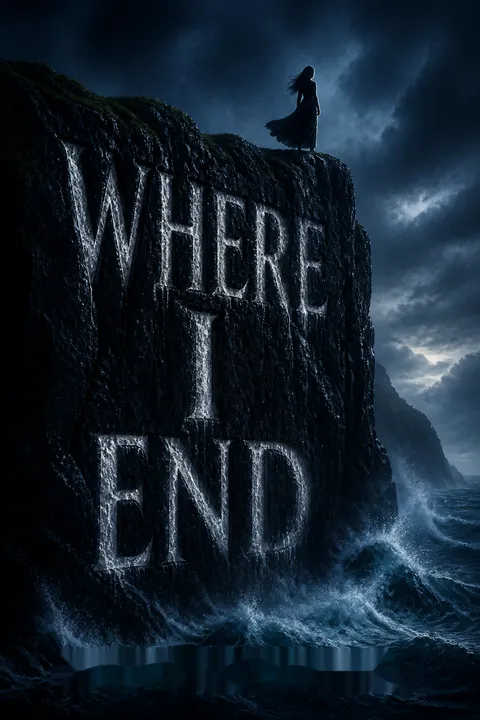

Plot Summary
Island of Stone and Silence
The story opens on a remote, wind-battered Irish island, where the narrator, Aoileann, lives in a house at the island's edge with her grandmother, Móraí, and her mother, who is bedridden and nearly inhuman. The island is described as both beautiful and oppressive, its stone walls and cliffs a constant presence. The community is insular, superstitious, and hostile to outsiders, and Aoileann is marked as different, both by her appearance and her family's history. The island's isolation and the ever-present sea create a sense of resignation and entrapment, setting the tone for the claustrophobic, gothic atmosphere that pervades the novel.
The Bed-Thing's Vigil
Aoileann's mother, referred to as the "bed-thing", is a silent, decaying presence, cared for by Aoileann and Móraí. The daily rituals of hoisting, cleaning, and feeding her are described in visceral, unsettling detail. The mother's body is a site of horror and revulsion, her needs a source of shame and resentment. The house is physically altered to accommodate her, with windows and doors bricked up, and sharp objects locked away. The bed-thing's existence is both a punishment and a warning, a living reminder of something unspeakable in the family's past.
Rituals of Care
The care of the bed-thing is a grim, repetitive cycle that defines Aoileann's life. She and Móraí perform their duties with a mix of resentment, duty, and numbness. The physical labor is grueling, and the emotional toll is evident in Aoileann's detachment and occasional cruelty. The rituals are both protective and punitive, designed to keep the bed-thing alive but also to contain her, to prevent her from becoming a spectacle or a threat. The routines are a form of penance, but also a means of control, reflecting the family's inability to confront the trauma at the heart of their story.
Scratches in the Floor
Aoileann discovers that her mother, despite her apparent helplessness, is scratching letters and symbols into the floor with her ruined hands. These marks become an obsession for Aoileann, who records and tries to decipher them, hoping for answers to the mysteries of her family and her own identity. The scratches are both a cry for help and a form of resistance, evidence that the bed-thing is still capable of thought and agency. They also mirror Aoileann's own longing for connection and understanding, her need to make sense of her isolation and pain.
Outsider Among Islanders
Aoileann is shunned by the islanders, who view her family with suspicion and fear. She is both invisible and hyper-visible, ignored by adults and taunted by children. Her mixed heritage and the scandal surrounding her mother's condition mark her as an outsider. Trips to the mainland reveal a world where she is anonymous, and the contrast makes her return to the island even more painful. The island's hostility is internalized, fueling Aoileann's self-loathing and her desperate desire for acceptance, love, and escape.
Rachel's Arrival
Rachel, a young artist and new mother, arrives on the island for a residency, bringing her infant son, Seamus. She is vibrant, open, and full of life, a stark contrast to the decay and silence of Aoileann's home. Rachel's presence awakens something in Aoileann—a hunger for connection, beauty, and maternal affection. The two women form a tentative friendship, with Aoileann drawn to Rachel's warmth and Rachel grateful for Aoileann's help. Rachel's art and her struggles with new motherhood become a mirror for Aoileann's own longing and loss.
Hunger for Connection
Aoileann's fascination with Rachel deepens into obsession. She is captivated by Rachel's body, her nurturing of Seamus, and the easy intimacy between mother and child. Aoileann's own experiences of care are warped by neglect and horror, and she yearns for the love and touch she has never known. This hunger becomes physical and transgressive, culminating in moments of boundary-crossing and secret acts. The lines between care and harm, love and violence, become increasingly blurred as Aoileann's need threatens to consume both herself and those around her.
Night Watcher
At night, Aoileann becomes a watcher, slipping out to observe Rachel and her baby through windows, sometimes entering the house to help with the baby while Rachel sleeps. The act of watching is both comforting and invasive, a way for Aoileann to feel close to Rachel but also to exert control. As Rachel's exhaustion and anxiety mount, she becomes increasingly dependent on Aoileann's help, even as she senses something is wrong. The island's atmosphere of dread intensifies, and the boundaries between self and other, sanity and madness, begin to dissolve.
The Letter in the Wall
Aoileann discovers a letter from her father to her mother, hidden in the wall, and later, a secret message scratched by her mother. The letter reveals the depth of the family's suffering and the guilt that haunts them. Through painstaking transcription, Aoileann uncovers her mother's voice for the first time—a voice full of regret, horror, and longing for forgiveness. The truth of what happened to Aoileann's twin sister, Étaín, and the circumstances that led to her mother's collapse, begin to emerge. The family's silence and secrecy are shown to be both a cause and a consequence of their suffering.
Rachel Unravels
Rachel's mental and physical health deteriorate as Seamus becomes increasingly unwell. The island's oppressive atmosphere, the isolation, and the supernatural undertones of the crying baby in the wind all contribute to her unraveling. Rachel confides in Aoileann about her fears, her sense of being "wide open," and her terror that something is trying to get in. The boundaries between the living and the dead, the past and the present, seem to blur. Aoileann's role shifts from helper to manipulator, as she exploits Rachel's vulnerability to bind her closer.
The Baby's Decline
Aoileann, desperate to remain essential to Rachel, begins to harm Seamus by secretly feeding him seawater, making him sick and keeping Rachel dependent. The baby's decline is mirrored by the increasing violence and cruelty in Aoileann's care for her own mother. The rituals of care become acts of punishment and control, and the line between victim and perpetrator blurs. The island's history of violence and loss is reenacted in the present, as the cycle of suffering continues.
The Rope and the Cliff
As Rachel prepares to leave the island, Móraí confronts Aoileann, revealing the truth about her mother's self-destruction and the death of her twin. The family's secrets are laid bare, and Aoileann is forced to confront her own complicity and the legacy of trauma she carries. In a final act of both mercy and vengeance, Aoileann leads her mother to the island's cliff, tying her with the gravewall rope and pushing her over the edge. The act is both an ending and a release, a way to break the cycle and claim a new identity.
Where I End
With her mother gone, Aoileann prepares to leave the island with Rachel and Seamus, taking on the name of her lost twin, Étaín. The ending is both hopeful and unsettling—an escape from the island's curse, but also a continuation of its legacy. The boundaries between self and other, care and harm, remain porous. The story closes with the sense that endings are never absolute, and that the past continues to haunt the present, even as new possibilities emerge.
Analysis
A modern gothic meditation on trauma, motherhood, and the hunger for connectionWhere I End is a haunting exploration of the ways in which trauma, isolation, and generational pain shape identity and relationships. Through its visceral depiction of bodily decay, ritualized care, and the longing for maternal love, the novel interrogates the boundaries between self and other, care and harm, victim and perpetrator. The island setting functions as both a physical and psychological prison, amplifying the characters' suffering and their desperate attempts to break free. The story's use of unreliable narration, fragmented memory, and symbolic communication invites the reader to question the nature of truth and the possibility of redemption. Ultimately, the novel suggests that the hunger for connection—however twisted or destructive—remains a fundamental human drive, and that the legacies of trauma can only be confronted through acts of witness, confession, and, sometimes, release. Where I End is a powerful, unsettling meditation on the costs of silence, the complexities of care, and the possibility of transformation in the face of overwhelming darkness.
Review Summary
Where I End is a disturbing, atmospheric horror novel set on a remote Irish island. It follows Aoileann, a young woman caring for her bedridden mother while isolated from the community. When a visitor arrives with a baby, Aoileann becomes obsessed. Readers praise the vivid, unsettling prose and exploration of motherhood's dark side. Many found it deeply unsettling yet compelling, with strong gothic and psychological horror elements. Some criticized its portrayal of disability. Overall, it's a polarizing read that elicits strong reactions for its visceral, haunting narrative.
People Also Read


Characters
Aoileann (Étaín)
Aoileann is the narrator and emotional core of the novel, a young woman shaped by isolation, neglect, and the burden of caring for her ruined mother. Her psyche is marked by longing, resentment, and a deep hunger for connection—especially maternal love, which she has never truly known. She is both victim and perpetrator, capable of tenderness and cruelty, her actions driven by a desperate need to be seen and needed. Her relationship with Rachel is both redemptive and destructive, as she seeks to claim the love and life denied to her. Aoileann's journey is one of self-discovery, but also of self-destruction, as she confronts the legacy of trauma and chooses her own ending.
Móraí
Aoileann's grandmother, Móraí, is a figure of endurance and repression. She is the keeper of the family's secrets, the enforcer of routines, and the guardian of the bed-thing. Her care is practical and unsentimental, shaped by years of hardship and disappointment. Móraí's relationship with Aoileann is marked by distance and occasional flashes of protectiveness, but also by resentment and blame. She is both a victim of circumstance and an agent of the family's ongoing suffering, unable or unwilling to break the cycle of silence and shame.
The Bed-Thing (Aoibh, Aoileann's Mother)
Once a vibrant woman, Aoibh is now reduced to a near-corpse, cared for in a state of abjection. Her body is a site of horror, her mind seemingly lost, but she retains a desperate agency, scratching messages into the floor and wall. Her silence is both a punishment and a form of resistance, a refusal to explain or atone for the past. The truth of her suffering and her role in the family's tragedy is revealed gradually, showing her as both victim and perpetrator, haunted by guilt and longing for forgiveness.
Rachel
Rachel is an outsider, an artist and new mother who arrives on the island seeking inspiration and escape. She is open, generous, and full of life, but also fragile and overwhelmed by the demands of motherhood and the island's oppressive atmosphere. Her relationship with Aoileann is initially one of gratitude and friendship, but becomes increasingly fraught as she is drawn into the family's web of need and harm. Rachel's unraveling mirrors the island's history of loss and madness, and her fate is bound to Aoileann's choices.
Seamus
Rachel's infant son, Seamus, is both a symbol of hope and a site of danger. His presence awakens Aoileann's longing for maternal love, but also her envy and capacity for harm. Seamus's decline, caused by Aoileann's secret sabotage, becomes the focus of Rachel's anxiety and the means by which Aoileann maintains her hold over her. The baby's fate is a measure of the family's capacity for both care and destruction.
Dada (Eoghan)
Aoileann's father, Eoghan, is a peripheral but significant figure. He is marked by loss—the death of his other daughter, Étaín, and the collapse of his wife. His visits are brief and ritualized, and he is unable to confront the reality of his family's suffering. His letters and memories provide crucial pieces of the family's history, revealing both his love and his helplessness in the face of tragedy.
The Islanders
The island community is a collective character, defined by suspicion of outsiders, adherence to tradition, and a history of violence and loss. Their treatment of Aoileann and her family is both a cause and a reflection of the family's isolation and suffering. The islanders' beliefs and practices—especially around death and burial—shape the novel's atmosphere of dread and fatalism.
The Island
The island itself is a character, its stone walls, cliffs, and sea shaping the lives and fates of its inhabitants. It is both a place of beauty and a site of horror, a repository of secrets and suffering. The island's presence is felt in the wind, the cries in the night, and the rituals of care and burial. It is both a setting and a force, driving the characters toward their inevitable ends.
Étaín
Aoileann's twin sister, Étaín, died as an infant under mysterious circumstances. Her absence haunts the family, and her fate is the key to understanding the trauma at the heart of the story. Étaín represents both what was lost and what might have been, a shadow self that Aoileann ultimately claims as her own.
The Bed-Thing's Hands
The ruined hands of Aoileann's mother are both a symbol of her suffering and a tool for resistance. Through them, she scratches messages into the floor and wall, leaving a record of her pain and her attempts to reach out. The hands are a reminder of the violence done to her and by her, and of the possibility of agency even in the most abject circumstances.
Plot Devices
Gothic Isolation and Bodily Horror
The novel uses the isolated island setting and the grotesque details of the bed-thing's care to create a gothic atmosphere of claustrophobia, horror, and fatalism. The physical environment mirrors the characters' psychological states, and the rituals of care become both acts of love and violence. The body—especially the mother's body—is a site of horror, abjection, and longing, reflecting the novel's themes of motherhood, trauma, and the limits of empathy.
Unreliable Narration and Fragmented Memory
Aoileann's narration is marked by uncertainty, repression, and obsession. The truth of her family's history is revealed gradually, through letters, scratched messages, and overheard conversations. The gaps in memory and the unreliability of perception create a sense of unease and ambiguity, forcing the reader to piece together the story from fragments. The use of first-person narration immerses the reader in Aoileann's psyche, blurring the line between reality and delusion.
Symbolism of Scratches and Letters
The scratches in the floor and the hidden letters serve as symbols of desperate communication and the persistence of agency in the face of abjection. They are both evidence of suffering and attempts to reach out, to make sense of trauma and to leave a mark. The act of deciphering these messages becomes a metaphor for the search for meaning and connection in a world defined by loss and silence.
Cycles of Care and Harm
The novel's structure is built around cycles—of care, harm, silence, and revelation. The rituals of tending to the bed-thing are mirrored in Aoileann's care for Rachel and Seamus, and in the island's history of violence and loss. The repetition of these cycles underscores the difficulty of breaking free from the past, and the ways in which trauma is transmitted across generations.
Foreshadowing and Ominous Motifs
The novel is rich in foreshadowing, with motifs of water, stone, and rope recurring throughout. The ever-present sea, the gravewall ropes, and the cries in the wind all hint at the story's tragic trajectory. The use of these motifs creates a sense of inevitability, as if the characters are caught in a web of fate from which they cannot escape.
Download PDF
Download EPUB
.epub digital book format is ideal for reading ebooks on phones, tablets, and e-readers.








































