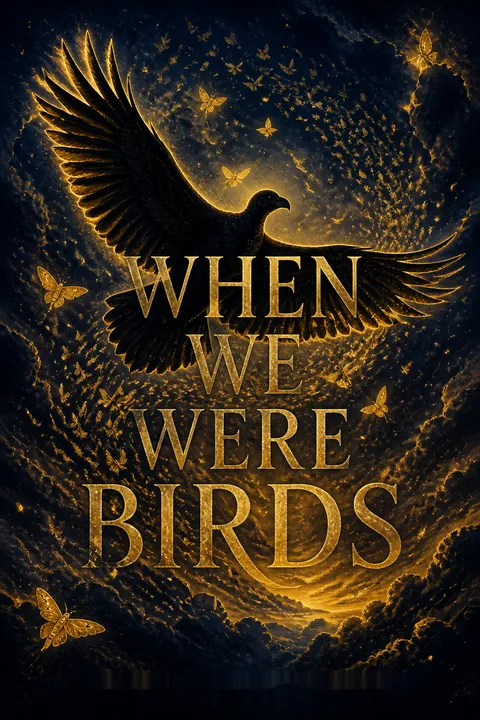

Plot Summary
Before the Storm: Origins
In the lush hills of Morne Marie, Trinidad, young Yejide listens to her Granny Catherine's stories of a time before humans, when animals ruled and peace reigned. The arrival of men brings war, devastation, and a great storm that births the corbeaux—sacred black birds who consume the dead and ferry souls. This myth, passed down through generations of St Bernard women, is more than a bedtime story; it is the foundation of their family's secret duty as guardians of the boundary between life and death. The story's magic and melancholy foreshadow the burdens Yejide will inherit, and the sense of being both chosen and cursed by ancestry. The world is alive with spirits, and the living are never far from the dead.
Oathbreakers and Outcasts
Darwin, a young Rastaman, leaves his rural home for Port Angeles, desperate for work. He breaks his Nazarite vow—never to cut his hair or touch the dead—when he accepts a job as a gravedigger at Fidelis Cemetery. The city is harsh, its sky choked with dust and circling corbeaux, and Darwin feels the weight of his mother's disappointment and his own uncertainty. The cemetery is a world apart, ruled by Errol, the enigmatic foreman, and a crew of hardened men. Darwin's arrival is met with suspicion and hazing, but necessity forces him to endure. The city's undercurrent of death and survival shapes him, and the first cracks appear in his sense of self.
City of the Dead
Darwin navigates the city's chaos—vendors, hustlers, preachers, and the ever-present dead. Fidelis Cemetery is revealed as a city within the city, a labyrinth of graves, mausoleums, and stories. The living and the dead intermingle: mourners, caretakers, and the forgotten. Darwin's work is physical and spiritual labor, digging graves by hand, learning the rituals and superstitions that govern the dead. The cemetery's records, kept by the sharp-witted Shirley, are the true heartbeat of Fidelis, preserving the lineage and memory of those buried. Darwin's sense of alienation deepens, but he begins to see the cemetery as a place of both dread and belonging.
The Gravedigger's Test
Darwin's first days at Fidelis are a trial by fire. The crew tests his resolve, mocking his clean clothes and outsider status. Errol, with his unsettling gaze and shifting demeanor, pushes Darwin to prove himself. The work is grueling—digging graves, handling the dead, and enduring the rituals that mark each burial. Darwin's hands blister, his spirit wavers, but he persists, driven by the need to support his ailing mother. The camaraderie of the crew is hard-won, sealed with rum and shared labor. Yet beneath the surface, Darwin senses secrets and dangers lurking in Fidelis, and the boundaries between the living and the dead begin to blur.
Homecomings and Exiles
Darwin's relationship with his mother, Janaya, is fraught with love, pride, and disappointment. She raised him as a Nazarite, separate from the world, and his decision to work among the dead is a betrayal of their shared faith. Their last meal together is heavy with unspoken fears and broken promises. Janaya's pain is both physical and spiritual, her hands twisted by age and labor. Darwin's exile is self-imposed, but the city's indifference and the cemetery's demands make him question who he is becoming. The past clings to him—memories of childhood, lost love, and the father who vanished into the city's shadows.
The Vow Unravels
The act of cutting his dreadlocks is both a sacrifice and a liberation for Darwin. Alone in a stranger's house, he shaves his head and beard, shedding the outward signs of his vow and embracing the unknown. The transformation is painful, a severing from his past and his mother's hopes. The city's anonymity offers both freedom and danger. Darwin's new self is unmoored, vulnerable to the city's temptations and the cemetery's darkness. The razor's buzz echoes the storm of change within him, and the sense of being watched—by ancestors, by the dead, by fate—intensifies.
Matriarchs and Mourning
In Morne Marie, Yejide is paralyzed by the impending death of her mother, Petronella. The house is filled with kin, memories, and the weight of unspoken expectations. Petronella's grief for her twin, Geraldine, has left her hollow, and Yejide's longing for maternal love is met with silence. The rituals of mourning are both comfort and curse, binding the women of the house in a cycle of loss. Yejide's relationship with Seema, her closest companion, is a rare source of warmth. The storm outside mirrors the turmoil within, and the legacy of the St Bernard women presses in, demanding a reckoning.
The Call to Inheritance
As Petronella's death approaches, Yejide is drawn into visions and dreams that blur the line between worlds. The house becomes a liminal space, haunted by ancestors and the living alike. Petronella finally calls for her daughter, initiating the transfer of power and responsibility. In a surreal encounter, mother and daughter confront the pain, resentment, and love that bind them. Petronella reveals the true nature of their legacy: to guide the dead, to balance the world's energies, to become a bird-woman at the threshold of life and death. Yejide's acceptance is both a burden and a liberation, and the storm marks her transformation.
The Vigil and the Storm
Petronella's death unleashes a storm that is both literal and spiritual. The house is beset by moths—omens of transition—and the kin gather for the vigil. Yejide's senses are heightened; she sees the shadows of death around her loved ones and feels the pull of the dead. The funeral is a convergence of tradition, community, and the supernatural. The living mourn, the dead gather, and Yejide stands at the center, newly anointed and deeply alone. The storm passes, but the world is changed, and Yejide's role as matriarch and gatekeeper is sealed.
The Weight of the Grave
At Fidelis, Darwin is drawn deeper into the cemetery's secrets. The work becomes more than physical labor; it is a confrontation with mortality, guilt, and complicity. The crew's illicit activities—robbing graves, hiding bodies—are revealed, and Darwin is forced to participate, bound by fear and necessity. The disappearance of Mr. Julius, a grieving widower, haunts him. The lines between victim and perpetrator blur, and Darwin's sense of self erodes. The cemetery is both prison and sanctuary, and the dead demand justice. Darwin's dreams are filled with omens, and the city's violence encroaches on his fragile peace.
Rituals of Passing
The days around All Souls' are a time of heightened ritual and remembrance. Families flood Fidelis, tending graves and honoring ancestors. Yejide leads the wake for her mother, invoking the lineage of bird-women and the power of the dead. The living and the dead intermingle, and the boundaries of the world grow thin. Darwin, battered and hunted by his former crew, finds solace in Yejide's presence. Their connection deepens, forged in the crucible of loss and danger. The rituals are both healing and harrowing, and the city's wounds are laid bare.
The Living and the Lost
Darwin and Yejide, drawn together by fate and longing, plan their escape from the city's grip. Their love is a sanctuary, a defiance of the forces that seek to claim them. The dead, restless and wronged, demand retribution, and the storm returns with a vengeance. Errol and the crew pursue Darwin through the flooded cemetery, but the dead rise to claim their due. Yejide's power as gatekeeper is unleashed, and the balance is restored through sacrifice and mercy. The lovers survive, but not unscathed, and the city is forever changed by the reckoning.
The Bird Women's Legacy
In the aftermath, Yejide grapples with the weight of her inheritance. The voices of her foremothers echo in her mind, offering wisdom and warning. The legacy of the bird-women is both gift and curse, a cycle of sacrifice and survival. Yejide's relationship with Seema is tested, and the bonds of family are redefined. The dead are honored, the living mourn, and the world turns. Yejide learns that love is not always soft, that duty can coexist with desire, and that freedom is found in embracing both the darkness and the light.
Crossing Thresholds
Darwin is visited by the spirit of his father, Levi, in Fidelis. Their encounter is a moment of reckoning and release, as old wounds are acknowledged and forgiven. The boundaries between the living and the dead are porous, and the past is never truly gone. Darwin's sense of self is restored, and he finds peace in the knowledge that he is both his mother's son and his father's heir. The city's cycles of loss and renewal continue, and the possibility of healing emerges from the ruins.
The Sweeper's Secret
The true nature of Errol's power is revealed: he is the Sweeper, the one who cleans up the city's messes, both for the living and the dead. The crew's crimes are part of a larger system of corruption and violence, and Darwin's participation implicates him in the city's darkness. The dead demand justice, and the reckoning is both personal and collective. The price of survival is high, and the cost of complicity is borne by all. The cemetery is both a grave and a cradle, a place of endings and beginnings.
All Souls' Reckoning
The storm reaches its climax as Darwin and Yejide face Errol and the crew in Fidelis. The dead rise, claiming the Sweeper and restoring balance to the world. Yejide's power as gatekeeper is affirmed, and Darwin's courage is tested. The lovers survive the night, wounded but alive, and the city is cleansed by rain and memory. The rituals of All Souls' are completed, and the living and the dead find peace. The cycle of inheritance continues, and the world is remade through love, loss, and the courage to face the darkness.
Lovers in the Aftermath
In the quiet after the storm, Darwin and Yejide find solace in each other. Their wounds heal, and the house in Morne Marie becomes a sanctuary for the living and the dead. The legacy of the bird-women is honored, and the bonds of family are renewed. The city's scars remain, but the possibility of redemption endures. The lovers dream of escape, of a life beyond the reach of death and duty, but they are anchored by love and memory. The world is both beautiful and broken, and hope is found in the act of choosing each other.
The Dead Remember
The story ends with letters, rituals, and the quiet persistence of life. Darwin writes to his mother, seeking forgiveness and offering truth. The dead are honored, their names inscribed in stone and memory. The living carry their burdens and their blessings, forging new paths from the ruins of the old. The cycle of life and death continues, and the world is held together by the stories we tell, the love we share, and the courage to remember. The dead are never truly gone, and the living are never truly alone.
Analysis
A meditation on inheritance, grief, and the possibility of transformationWhen We Were Birds is a luminous exploration of the ways in which the past shapes the present, and how the living and the dead are bound together by love, loss, and duty. Through the intertwined stories of Yejide and Darwin, the novel examines the burdens and blessings of inheritance—ancestral, cultural, and personal. The magical realism rooted in Trinidadian folklore elevates the narrative, allowing for a nuanced exploration of grief, trauma, and the longing for connection. The cemetery, both grave and cradle, becomes a site of reckoning, where justice is demanded and healing is possible. The novel's lessons are manifold: that love is not always gentle, that freedom requires sacrifice, and that the courage to remember—to honor the dead and to choose the living—is the foundation of hope. In a world haunted by loss, When We Were Birds offers the possibility of redemption through storytelling, ritual, and the transformative power of love.
People Also Read
Characters
Yejide St Bernard
Yejide is the latest in a long line of St Bernard women, guardians of the boundary between life and death in Morne Marie. Raised in the shadow of her mother Petronella's grief and distance, Yejide longs for love and belonging but is marked by the family's supernatural legacy. Her journey is one of reluctant acceptance—she inherits the power to guide the dead, becoming a bird-woman, a corbeau, at the cost of personal freedom. Her relationship with Seema is her anchor, and her love for Darwin offers hope of escape. Psychologically, Yejide is torn between duty and desire, haunted by resentment and longing, but ultimately finds strength in embracing her inheritance and forging her own path.
Darwin Emmanuel
Darwin is a young Rastaman forced by poverty to break his sacred vow and work as a gravedigger in Port Angeles. Haunted by his mother's disappointment and the absence of his father, Darwin is both vulnerable and resilient. His journey is one of self-discovery, as he navigates the city's dangers, the cemetery's secrets, and the moral compromises of survival. His love for Yejide is transformative, offering both sanctuary and challenge. Psychologically, Darwin is marked by guilt, longing, and a deep need for belonging. His eventual confrontation with his father's spirit and his role in the cemetery's reckoning allow him to reclaim agency and hope.
Petronella St Bernard
Petronella is Yejide's mother, a twin whose life is defined by loss and the burdens of inheritance. Her grief for her sister Geraldine leaves her emotionally distant, and her relationship with Yejide is fraught with resentment and unmet expectations. As the family's matriarch, Petronella is both powerful and trapped, embodying the contradictions of love, sacrifice, and regret. Her death and the transfer of power to Yejide are both a release and a curse. Psychologically, Petronella is complex—capable of deep love but unable to express it, shaped by duty and the weight of ancestral expectation.
Errol "Sweeper" Jardim
Errol is the enigmatic and dangerous foreman of Fidelis Cemetery, known as the Sweeper. He rules the cemetery with a mix of charisma, menace, and cunning, orchestrating both legitimate burials and criminal activities. Errol is a survivor, shaped by hardship and the city's corruption, and he recognizes both the darkness and potential in Darwin. Psychologically, Errol is a study in power—ruthless, pragmatic, and ultimately doomed by his own complicity. His downfall is both a personal reckoning and a symbol of the city's need for justice.
Seema
Seema is Yejide's closest companion, more sister than friend, raised alongside her in Morne Marie. Practical, nurturing, and fiercely loyal, Seema is the emotional heart of the household. Her relationship with Yejide is both a source of comfort and tension, especially as Yejide's inheritance creates distance between them. Psychologically, Seema is grounded, resilient, and quietly wise, embodying the possibility of love and support outside blood ties. Her presence anchors Yejide, and her own sacrifices highlight the costs of legacy and belonging.
Janaya
Janaya is Darwin's mother, a seamstress who raises him in the Nazarite faith, emphasizing separation from the world and the sanctity of life. Her disappointment in Darwin's choices is rooted in love and fear, and her own pain—physical and emotional—shapes their relationship. Janaya is both nurturing and stern, a symbol of the sacrifices mothers make and the wounds they carry. Psychologically, she is marked by pride, resilience, and a deep sense of loss, both for her son and for the life she hoped to build.
Shirley
Shirley is the sharp, efficient clerk who manages the records at Fidelis Cemetery. She is the true heartbeat of the cemetery, preserving the stories and lineages of the dead. Shirley is practical, no-nonsense, and deeply compassionate, offering guidance to Darwin and the crew. Psychologically, she represents the importance of memory, ritual, and the unseen labor that sustains community. Her presence is a reminder that the dead are never truly forgotten as long as their names are remembered.
Levi (Carlton Springer)
Levi is Darwin's long-lost father, a shadowy figure whose absence shapes Darwin's identity. His eventual appearance as a spirit in Fidelis is a moment of reckoning and reconciliation. Levi is both a cautionary tale and a source of healing, embodying the complexities of fatherhood, regret, and forgiveness. Psychologically, he represents the unresolved wounds of abandonment and the possibility of closure, even after death.
Mr. Julius
Mr. Julius is an elderly man who loses his wife, Emily, and becomes a fixture in Darwin's conscience. His grief is profound, and his disappearance becomes a catalyst for Darwin's moral crisis. Mr. Julius embodies the pain of loss, the longing for connection, and the vulnerability of the forgotten. Psychologically, he is a mirror for Darwin's own fears and a reminder of the costs of indifference.
The Ancestors (Catherine, Deborah, Babygirl, Maman)
The foremothers of the St Bernard line are ever-present, guiding, warning, and shaping the destinies of their descendants. Each embodies a facet of the family's legacy—strength, sacrifice, wisdom, and sorrow. Psychologically, they represent the weight of history, the persistence of memory, and the possibility of transformation through storytelling and ritual.
Plot Devices
Dual Narrative Structure
The novel alternates between the perspectives of Yejide and Darwin, two characters from different worlds whose paths converge in the city of the dead. This dual structure allows for a rich exploration of parallel journeys—inheritance and exile, duty and desire, life and death. The convergence of their stories is foreshadowed through dreams, omens, and the mythic presence of the corbeaux. The structure heightens tension, deepens character development, and underscores the novel's themes of connection and transformation.
Magical Realism and Folklore
The novel is suffused with magical realism, drawing on Trinidadian folklore, ancestral myths, and the supernatural. The corbeaux, bird-women, and the rituals of the dead are both literal and symbolic, grounding the story in a world where the spiritual and the mundane coexist. This device allows for the exploration of grief, inheritance, and the persistence of the past, while also providing moments of wonder and terror. The magical elements are seamlessly integrated, reflecting the lived reality of the characters and their cultural context.
Foreshadowing and Symbolism
The recurring motifs of storms, moths, and birds serve as omens of change, death, and transformation. The physical storms mirror the emotional and spiritual upheavals of the characters, while the presence of corbeaux signals the proximity of death and the work of the bird-women. The rituals of mourning, the cutting of hair, and the passing of heirlooms are symbolic acts that foreshadow the characters' journeys and the transfer of power. The novel's rich symbolism deepens its emotional resonance and invites multiple interpretations.
Ritual and Repetition
The novel is structured around rituals—funerals, wakes, vigils, and the passing of power from mother to daughter. These ceremonies are both personal and communal, binding the characters to their ancestors and to each other. The repetition of stories, prayers, and songs creates a sense of continuity and inevitability, while also allowing for moments of rupture and change. Ritual is both a source of comfort and a site of conflict, reflecting the complexities of inheritance and the struggle to forge new paths.
The Cemetery as Microcosm
Fidelis Cemetery is more than a setting; it is a character in its own right, a microcosm of the city's history, violence, and hope. The cemetery's labyrinthine structure, its records, and its rituals mirror the complexities of the living world. It is a place of secrets, survival, and reckoning, where the boundaries between the living and the dead are porous. The cemetery's centrality to the plot allows for the exploration of themes of memory, justice, and the persistence of the past.
Download PDF
Download EPUB
.epub digital book format is ideal for reading ebooks on phones, tablets, and e-readers.








































