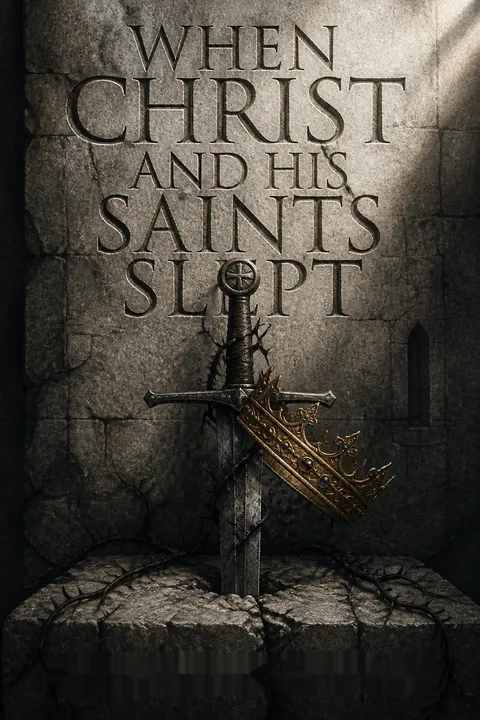

Plot Summary
White Ship, Black Fate
In 1120, the White Ship sinks off Barfleur, drowning King Henry I's only legitimate son and heir, William. The tragedy devastates the royal family and shatters the line of succession, leaving England vulnerable. Survivors and witnesses, from nobles to commoners, are left to grapple with the consequences. The king's daughter, Maude, is now the only legitimate child, but as a woman, her claim is uncertain in a world ruled by men. The event sets the stage for decades of turmoil, as the hopes of a peaceful succession are lost to the sea, and the seeds of civil war are sown in grief and uncertainty.
A Kingdom Without Heir
King Henry I, desperate to secure his legacy, forces his barons to swear fealty to his daughter, Maude, as his heir. Yet, the idea of a woman ruling England is met with resistance and skepticism. Maude, widowed Empress of Germany, is recalled and married to Geoffrey of Anjou, a match that brings more strife than unity. The king's nephews, Stephen and Theobald, watch and wait, their ambitions quietly growing. The kingdom's future hangs in the balance, as old loyalties are tested and new alliances are forged, all under the shadow of a missing male heir and a king's unyielding will.
Oaths and Ambitions
Upon Henry I's death, the fragile peace collapses. Stephen, charming and affable, moves swiftly, seizing the crown with the help of powerful allies and the Londoners' support. Maude, betrayed and outraged, is left isolated, her claim dismissed by those who once swore loyalty. The barons, torn between their oaths and their own interests, choose sides. The kingdom fractures, and the first sparks of civil war ignite. The struggle for England becomes not just a battle of armies, but of legitimacy, gender, and the very nature of kingship.
The Empress Returns
Maude, now Empress Matilda, lands in England to press her claim, supported by her half-brother Robert of Gloucester and a handful of loyalists. Her arrival electrifies her supporters and terrifies her enemies. Yet, her pride and imperious manner alienate potential allies. The war becomes personal, as Maude and Stephen clash in a series of sieges, betrayals, and shifting fortunes. The land is torn apart, and the people suffer, as the empress refuses to yield and the king refuses to fall. The struggle becomes a test of endurance, will, and the limits of power.
Marriage of Enemies
Maude's marriage to Geoffrey of Anjou is a union of necessity, not love. Their relationship is fraught with resentment, violence, and mutual distrust. Yet, from this stormy bond comes Henry, a son destined to change England's fate. The personal animosities between Maude and Geoffrey mirror the larger conflict tearing the kingdom apart. Their marriage, meant to secure peace, instead breeds new rivalries and ambitions, as the next generation is shaped by the failures and passions of their parents.
The Anarchy Unleashed
The civil war, known as The Anarchy, engulfs the land. Castles are besieged, towns burned, and the countryside ravaged by mercenaries and outlaws. Loyalties shift with the wind, as barons play both sides for survival and gain. The suffering of the common people is immense, as famine and violence become daily realities. Neither Stephen nor Maude can secure a decisive victory, and the war drags on, a relentless cycle of hope and despair. The very fabric of society is torn, and the chroniclers lament that "Christ and his saints slept."
Castles and Loyalties
Key strongholds—Wallingford, Oxford, Winchester—become symbols of resistance and ambition. Maude's daring escape from Oxford in a snowstorm becomes legend, while Stephen's repeated failures to hold his barons' loyalty undermine his rule. The war is fought as much in council chambers and bedchambers as on the battlefield. Personal relationships—between siblings, spouses, and rivals—prove as decisive as armies. The lines between friend and foe blur, and survival depends on wit, courage, and the willingness to betray.
The Lioness in Winter
As the war grinds on, Maude's son Henry comes of age. Charismatic, intelligent, and relentless, he inherits his mother's ambition and his father's cunning. His marriage to Eleanor of Aquitaine, the most powerful woman in Europe, creates a partnership that will reshape the continent. Together, they command vast territories and inspire both awe and fear. The old order begins to crumble, as the future king and queen prepare to claim their inheritance, determined to succeed where their parents failed.
Siege and Survival
The war's final years are marked by exhaustion and attrition. Key sieges—Wallingford, Malmesbury, and others—test the limits of human endurance. Acts of heroism and cruelty abound: children are taken as hostages, castles burned, and oaths broken. The suffering of the people reaches its peak, and even the victors are left scarred. The leaders, once so certain of their cause, are forced to confront the cost of their ambitions. The land itself seems to cry out for peace, as the survivors count their losses and search for meaning in the ruins.
The Turning of Tides
The deaths of key figures—Robert of Gloucester, Eustace, and others—shift the balance of power. Stephen, weary and broken, is forced to negotiate with Henry, recognizing him as his heir. The barons, too, are ready for an end to the bloodshed, and the Church brokers a fragile peace. The long nightmare of civil war begins to recede, as hope returns to a battered land. Yet, the scars remain, and the lessons of the past linger, shaping the future of England and its rulers.
The Price of Kingship
Henry ascends the throne as Henry II, inheriting a kingdom in ruins and a legacy of distrust. His marriage to Eleanor brings both strength and strife, as their partnership is tested by ambition, betrayal, and the demands of rule. The challenges of kingship prove as daunting as the struggle to win the crown. Old enemies become new threats, and the cycle of power and loss continues. The cost of victory is counted not just in land and titles, but in broken relationships and haunted memories.
The End of the Anarchy
With Henry's coronation, the long civil war finally ends. The barons submit, the castles are razed, and the mercenaries expelled. The land begins to heal, but the wounds of the past are slow to close. The survivors—Maude, Stephen's family, and countless others—must find their place in a changed world. The lessons of the Anarchy shape the new king's rule, as he seeks to restore justice, order, and hope to a weary people. The story of a kingdom torn apart becomes a cautionary tale for generations to come.
A New Dawn Rises
As Henry and Eleanor begin their reign, the promise of renewal is tempered by the challenges ahead. The legacy of the Anarchy lingers, and the new king and queen must navigate the treacherous waters of power, loyalty, and love. The birth of their children, the rebuilding of the realm, and the forging of a new dynasty mark the dawn of a new era. Yet, the shadows of the past remain, a reminder that peace is fragile and the price of kingship is never fully paid.
Analysis
A meditation on power, legitimacy, and the human cost of ambitionWhen Christ and His Saints Slept is both a sweeping historical epic and an intimate psychological study of its characters. Sharon Kay Penman explores the chaos unleashed when the rules of succession are broken, and the devastating effects of civil war on a nation and its people. The novel interrogates the nature of kingship, the role of women in power, and the limits of loyalty and justice. Through the parallel stories of Maude and Stephen, Penman shows that good intentions are not enough, and that the qualities that make a good person may not make a good ruler. The suffering of the common people is never far from view, reminding readers that history's grand events are paid for in blood and sorrow. Ultimately, the book is a testament to endurance, the possibility of renewal, and the hard-won lessons of a generation scarred by conflict. The peace that comes at the end is fragile, bought at a terrible price, and the new dawn that rises is both hopeful and uncertain—a fitting legacy for an age when even the saints seemed to sleep.
Review Summary
When Christ and His Saints Slept receives overwhelmingly positive reviews (4.26/5) for its vivid portrayal of England's civil war between Empress Maude and King Stephen. Readers praise Penman's meticulous research, complex characterization, and ability to bring medieval history alive without gratuitous violence. The 700+ page length flies by for most, though some find it slow or confusing due to numerous characters with similar names. Critics appreciate the nuanced portrayal of both sides and the introduction of fictional character Ranulf. The book's strength lies in balancing historical accuracy with engaging storytelling, particularly when introducing Henry II and Eleanor of Aquitaine.
People Also Read

Characters
Maude (Empress Matilda)
Maude is the daughter of Henry I, raised to rule but denied her birthright by the prejudices of her time. Her intelligence and willpower are matched only by her pride, which often alienates potential allies. Her marriage to Geoffrey of Anjou is a battlefield of its own, shaping her son Henry's character. Maude's struggle is not just for a crown, but for the right of a woman to wield power in a man's world. Her resilience and refusal to yield become legendary, but her inability to compromise costs her dearly. In the end, she finds a measure of peace as the mother of a king, her legacy secured through her son.
Stephen of Blois
Stephen is the nephew of Henry I, whose quick wit and affability win him the crown but not the loyalty of his barons. His reign is marked by indecision, misplaced trust, and a fatal inability to enforce his will. Stephen's personal virtues—kindness, mercy, and optimism—become his political undoing, as he is repeatedly betrayed by those closest to him. His love for his family, especially his sons, blinds him to the realities of power. Stephen's tragedy is that of a good man in the wrong role, a king who cannot be ruthless enough to survive in a brutal age.
Henry II (Henry Fitz Empress)
Henry is the product of his parents' ambition and strife, inheriting Maude's will and Geoffrey's cunning. From a young age, he is marked by intelligence, energy, and a fierce drive to claim what is his. His marriage to Eleanor of Aquitaine creates a partnership of equals, both passionate and volatile. As king, Henry is a reformer and a conqueror, but also a man haunted by the costs of power. His ability to inspire loyalty and fear sets him apart, but his relationships—with his mother, wife, and children—are fraught with tension. Henry's reign is both a triumph and a warning, the beginning of a new dynasty and the end of an old order.
Eleanor of Aquitaine
Eleanor is the most powerful woman of her age, bringing Aquitaine and a legacy of culture and intrigue to her marriage with Henry. Her beauty, wit, and political acumen make her both admired and feared. Eleanor's first marriage to Louis VII of France is a disappointment, but with Henry, she finds a partner worthy of her ambition. Their union is passionate, creative, and often tempestuous, producing a dynasty that will shape Europe. Eleanor's strength lies in her adaptability and her refusal to be defined by others' expectations. She is both a survivor and a shaper of history.
Geoffrey of Anjou
Geoffrey is Maude's second husband, a man of charm and violence, whose relationship with his wife is a storm of passion and resentment. He is a skilled warrior and a shrewd politician, but his ambitions are often at odds with Maude's. Geoffrey's legacy is secured through his son Henry, whom he prepares for kingship with both love and harshness. His death leaves a void that shapes the final years of the Anarchy, and his influence lingers in the character of his descendants.
Robert of Gloucester
Robert is Maude's half-brother and her most steadfast supporter. A man of honor and moderation, he provides the military and political backbone of Maude's cause. His ability to mediate, strategize, and inspire loyalty makes him indispensable, but his death marks the beginning of the end for Maude's hopes. Robert's legacy is one of service and sacrifice, a reminder that greatness often lies in supporting roles.
Eustace of Boulogne
Eustace is Stephen's eldest son, raised to expect the crown but ill-suited to wear it. His arrogance, cruelty, and impatience alienate allies and undermine his father's rule. Eustace's inability to inspire loyalty or compassion makes him a symbol of the failures of hereditary kingship. His sudden, mysterious death is seen by many as divine judgment, clearing the way for peace but leaving his family shattered.
Ranulf Fitz Roy
Ranulf, a fictional half-brother to Maude, serves as a lens through which the reader experiences the era's turmoil. Torn between loyalties, he is both insider and outsider, moving between England and Wales, nobility and commoners, men and women. His journey is one of self-discovery, love, and loss, as he seeks meaning in a world defined by power and betrayal. Ranulf's story humanizes the grand events, showing the costs of war on ordinary lives.
William de Ypres
William is Stephen's most capable captain, a mercenary whose loyalty is bought but whose skills are unmatched. As he ages and loses his sight, he becomes a symbol of the fading old order, his pragmatism and cynicism contrasting with Stephen's idealism. William's relationship with Stephen and Matilda is complex, marked by both affection and calculation. His decline mirrors the end of an era.
The Bishop of Winchester (Henry of Blois)
Stephen's brother, the bishop is a master of intrigue, always seeking to advance his own power and that of the Church. His shifting loyalties and political machinations make him both a kingmaker and a destabilizer. Torn between family and ambition, faith and pragmatism, he is a study in the ambiguities of power. His eventual retreat from politics is both a personal and a historical turning point.
Plot Devices
Dual Claims and Oaths
The central device is the conflict between sworn oaths and personal ambition. The barons' oaths to Maude are set against their support for Stephen, highlighting the fragility of loyalty in a world where power is the ultimate currency. The narrative structure alternates between the perspectives of Maude and Stephen, showing how each is both right and wrong, victim and perpetrator. Foreshadowing is used throughout, with omens, prophecies, and the recurring motif of the White Ship's loss, reminding readers that fate and human folly are intertwined. The use of sieges, hostages, and shifting alliances keeps the tension high, while the personal stories of love, betrayal, and endurance ground the epic in human experience.
Plantagenets Series
Download PDF
Download EPUB
.epub digital book format is ideal for reading ebooks on phones, tablets, and e-readers.








































