

Key Takeaways
Ask 'What's your dream?' — not your goal, not your plan
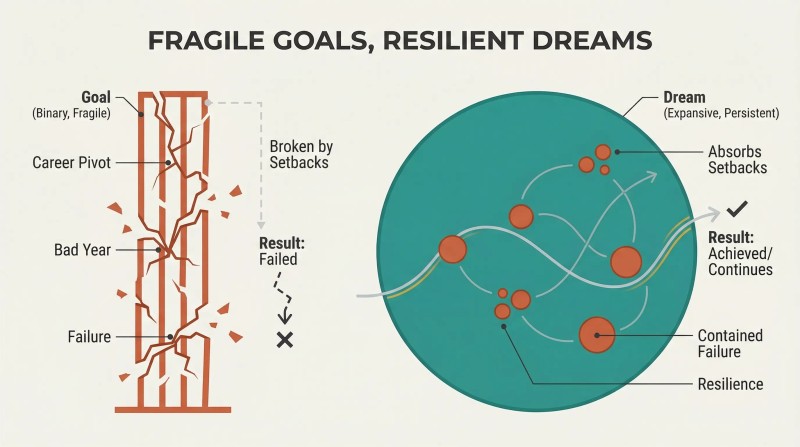
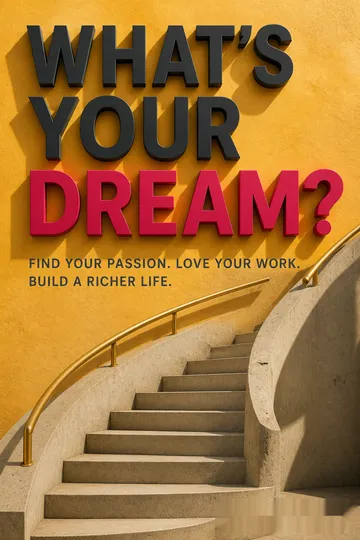
Simon Squibb asks thousands of strangers one question: "What's your dream?" The word matters. Goals are binary — pass or fail — and expire at year's end. Resolutions dissolve when willpower fades. But a dream is engineered for survival: big enough to contain failure, outlast bad years, and accommodate career pivots. No annual review will tell you your dream performance was subpar.
Squibb discovered this question by accident. After selling his agency for millions and retiring at forty, he posted a video about fatherhood that went viral. A commenter snapped: "Not everyone gets to have a dream." That troll unknowingly launched Squibb's mission. When he asks the question on the street, people physically transform — standing taller, eyes alive, describing futures they've never shared aloud. Dreams, unlike goals, don't punish you for falling short. They persist.
Your Porsche will own you — possessions are dream killers
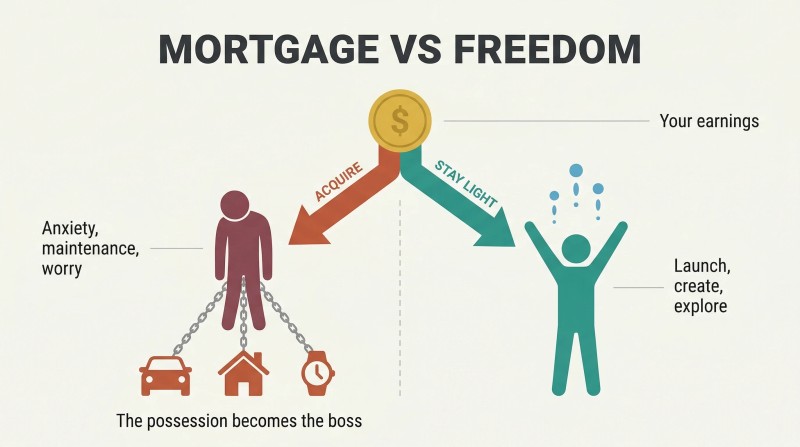
Squibb bought his dream Porsche after selling his company. Euphoria lasted one week. By week two, someone scratched it and he spent three days at the garage. By week three, anxiety had replaced joy. When he sold it, the relief felt almost as good as buying it. Every possession he's shed since has made him feel freer.
The housing trap works identically. A mortgage locks you into a job to service debt, devours savings that could fund a business, and consumes mental bandwidth. Squibb slept on a friend's sofa for months in Hong Kong, which freed him to launch the agency that changed his life. He argues most "dream" purchases — homes, cars, watches — end up owning you through maintenance, worry, and replacement cycles. The possession becomes the boss.
Mine your deepest pain — it's the GPS for your purpose
Pain gives purpose its traction. Squibb calls it a "pain anchor" — the deeply personal wound that turns a vague want into a compulsive need. Kellie, a dog groomer abandoned by her mother as a teenager, channelled that trauma into a mobile pet salon caring for animals "that can't speak up when they need help." Sophie nearly died after childbirth, couldn't find comfortable jeans during recovery, and created I Am Denim — now stocked by Debenhams and featured in Vogue.
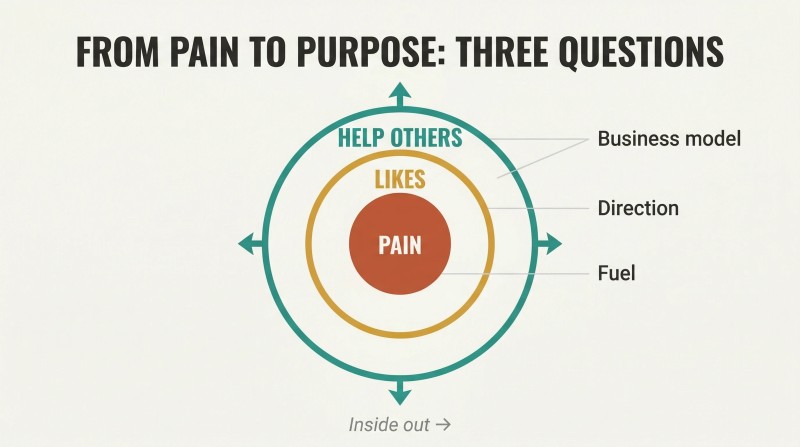
Squibb's Three Questions framework maps this journey from inside out:
1. What do I like doing?
2. What is my pain?
3. How can I help others?
Your likes provide direction. Your pain provides fuel. Helping others provides the business model. Squibb's own pain — homeless at fifteen after his father's death — powers everything he does today. That memory of desperately needing help and finding none is why HelpBnk exists.
Purpose recharges your battery — burnout motivation drains it
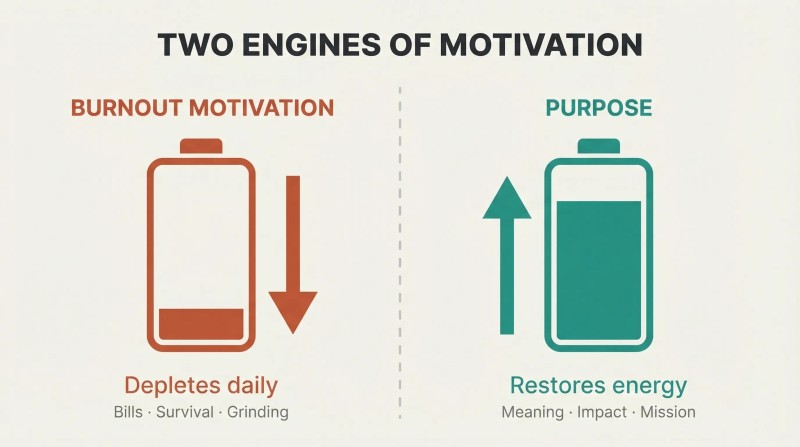
Squibb distinguishes two motivational engines. Burnout motivation — grinding just to pay bills and survive the month — depletes you daily. True purpose restores energy even during exhausting work. Studies of Polish firefighters and Italian Catholic priests found that those with an expressed sense of purpose experienced significantly less burnout despite demanding roles.
The health data is startling. A study tracking over 13,000 Americans aged fifty-plus found those with the strongest sense of purpose had the lowest mortality risk. Another showed purposeful people spent less time in hospital. Purpose also solves the excuses people give for not having a dream — "I'm too lazy," "I don't have time," "I need money first." These problems are symptoms of purposelessness. When Squibb found purpose at Fluid by championing creative talent rather than just serving brands, staff turnover vanished.
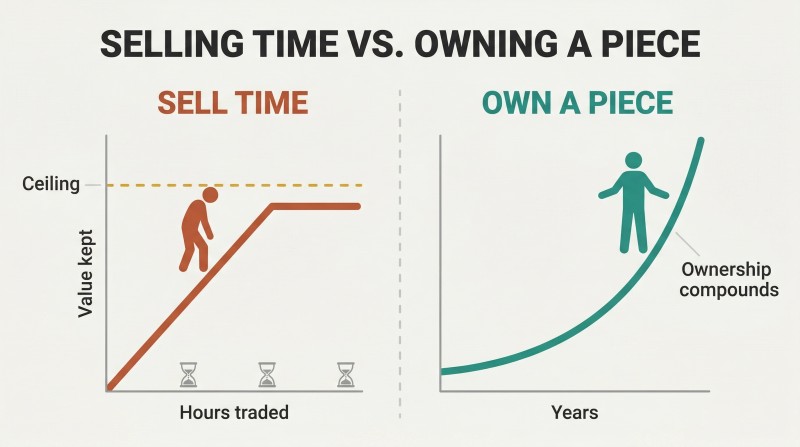
Employees sell time until nothing's left; own a piece instead
Squibb frames the career trap simply: you're either selling time or buying it. Employees trade hours for wages and hit a ceiling — give more, earn marginally more, burn out. Entrepreneurs build teams and systems that generate value beyond their personal hours, effectively buying time back. At Fluid, Squibb earned the most money while doing the least work — living off risks he'd taken years earlier as chairman.
The practical escape route starts now. Ask your employer for equity. If they refuse, find a company that offers ownership stakes, or launch a side hustle where you own the output. Even modest ownership transforms your relationship with work — you're investing labour rather than renting it. Squibb insists ownership conveys freedom, and he tells every employee who'll listen to seek it out, even if their boss hates hearing it.
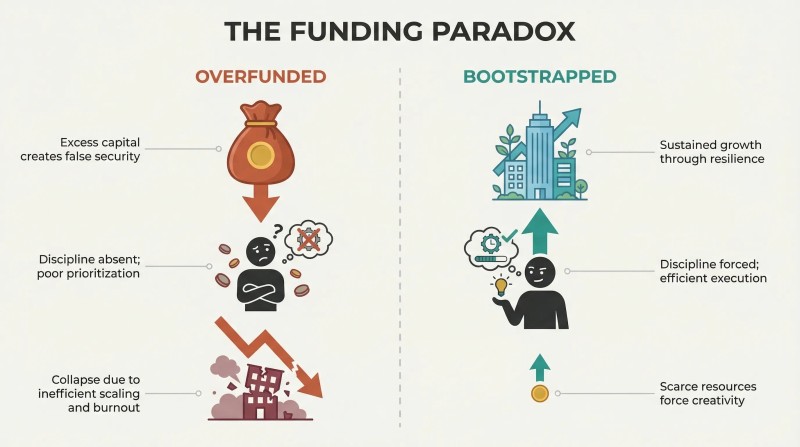
No money? Good — scarcity breeds the discipline funding kills
Bootstrap everything at the start. Gymshark's Ben Francis was delivering pizzas at nineteen when he bought a sewing machine and started making gym clothes in his parents' garage — his grandmother taught him to sew. The company hit a billion-pound valuation. Squibb's own best businesses were bootstrapped; his worst failure came from a lavishly funded joint venture with a private equity partner, fancy offices, and a feng shui consultant.
Excessive capital destroys discipline. WeWork raised $22 billion before going bankrupt — unlimited money let them sign unprofitable leases with impunity. Juul took tobacco industry money that corrupted its original purpose. By contrast, bootstrapping forces you to justify every penny and earn revenue before spending it. Squibb's golden rule: take 50% payment upfront. The first half covers costs; the second half fuels growth.
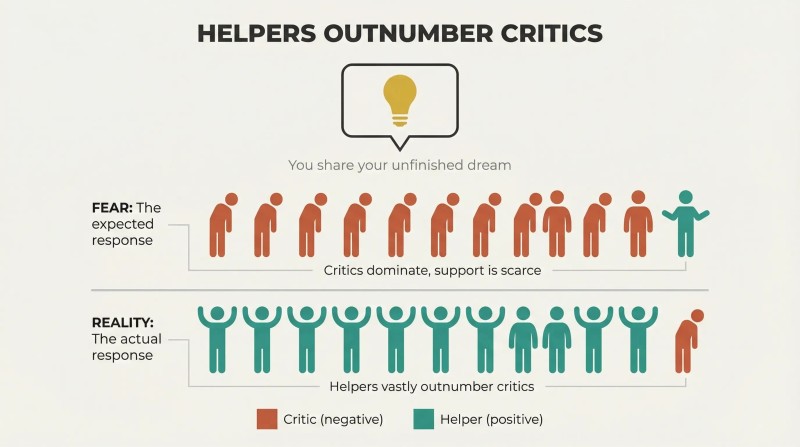
Share your dream before it's polished — helpers outnumber critics
Ideas locked in your head are worthless. Caitlin dreamed of travelling the world as a photographer but thought she'd need years of saving first. After sharing her dream on camera, lastminute.com sponsored her trips to Amsterdam and Malta. Sam in Hong Kong had a catering business name — Chez Sam — but no confidence to start. Seventy-two hours after telling Squibb her dream, she was pitching to investors with her own baked goods. The video hit 17 million views.
Help is more abundant than you expect. When HelpBnk opened registrations, Squibb braced for a flood of help-seekers and a shortage of mentors. The opposite happened — helpers massively outnumbered those asking. One tip: never ask someone to be your "mentor" (too large a commitment). Instead, ask one specific question per interaction and leave with one insight you didn't have before.
Three paying customers teach more than any business plan
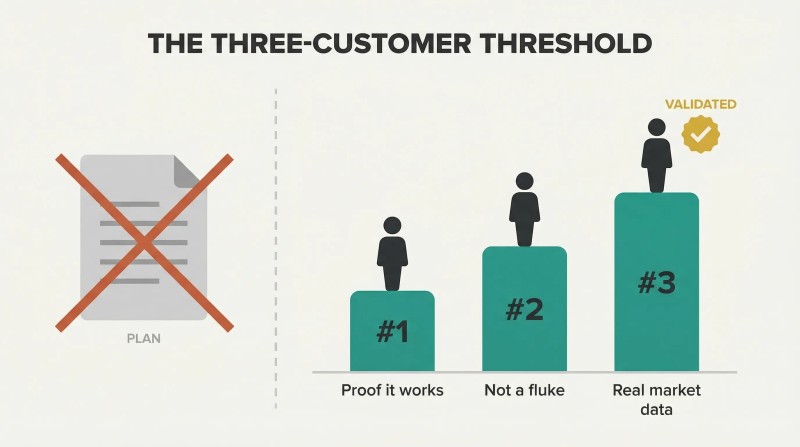
Squibb is blunt: don't write a business plan. They pretend you can forecast five years out when most founders can't predict five weeks. Plans create the illusion of progress while you sit at a desk. Instead, make a quick mind map — connected circles linking your hobby to business models, customers, and partners — then start selling.
Three customers is the validation threshold. The first proves the idea works. The second proves it wasn't a fluke. The third gives you real market data about what customers actually want versus what you assumed. Squibb's target for every new business is zero — break-even. When revenue matches costs, the foundation is solid. His own content journey went from 150 YouTube views on his first video to 1.5 million on a later one, built entirely through compounding small wins.
Fire your sevens to keep your nines and tens
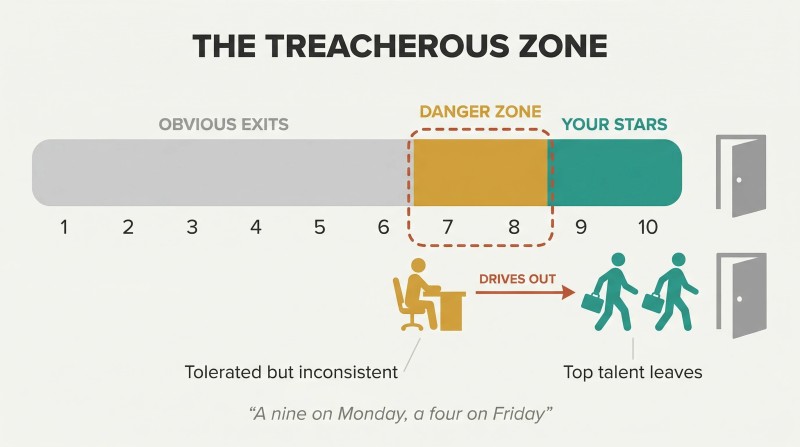
The Rule of Seven and Eight is Squibb's sharpest hiring insight. On a 1 – 10 performance scale, sixes and below are obvious exits. Nines and tens are your stars — retain them with equity and freedom. The treacherous zone is 7 – 8: employees who can do the job but never consistently excel. A nine on Monday, a four on Friday.
Tolerating mediocrity drives out excellence. When you keep sevens, your top performers see that mediocrity earns equivalent rewards. They conclude you don't truly value their contribution and leave for somewhere that does. The diagnostic signal: if someone's name keeps surfacing in management discussions and not for praise, you have your answer. Squibb adds that many underperformers are secretly looking for a way out — several have thanked him later for the push toward roles where they thrived.
Treat risk as a muscle — it strengthens with every rep
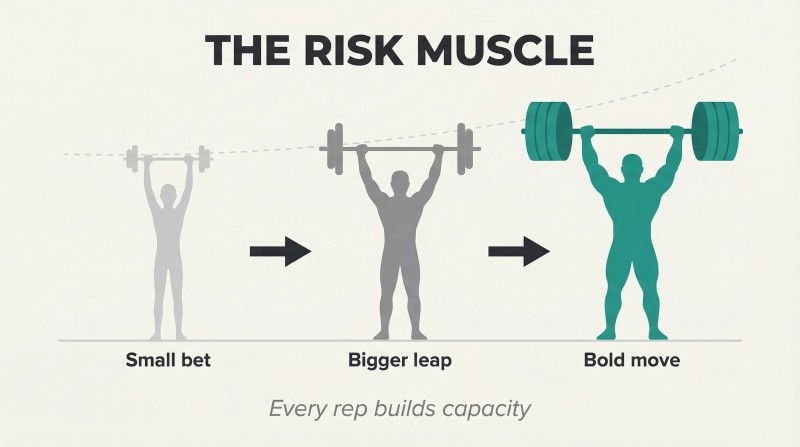
Risk is a learnable skill, not a personality trait. Before any major bet, Squibb visualises both worst-case and best-case outcomes. If you can stomach the worst, flip to the best and go. Natasha, the Vegan Patty Lady, and her husband Adonye wrestled with putting their house deposit into her business. His conclusion: "It's only money. If it takes five grand for my wife to follow her dream, then that's life."
Smart entrepreneurs derisk boldly. When Squibb wanted a sweet brand in the brutal confectionery market, he didn't build factories. He co-ventured with Tasty Mates, gaining their manufacturing expertise while they gained his audience. Nvidia in 1996 had one month of cash and a 50-50 product bet — founder Jensen Huang now makes "thirty days from going out of business" a company rallying cry. The key: take more risks, but take smarter ones.
Persist longer than competitors and luck becomes arithmetic
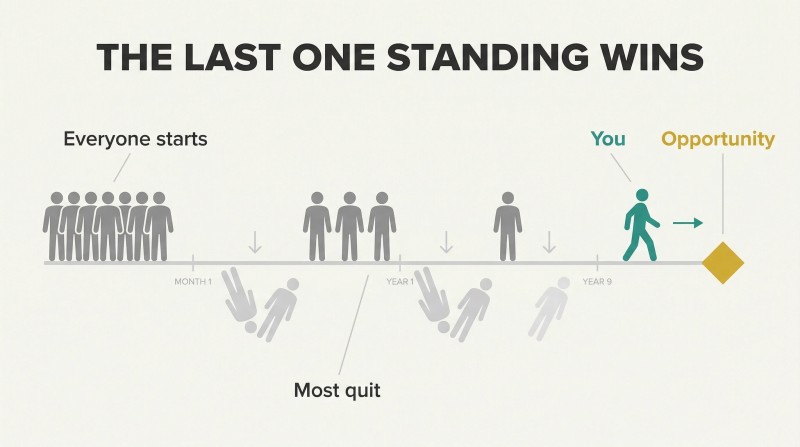
Persistence is Squibb's ultimate differentiator. When he launched Fluid in Hong Kong, he wrote a list of fifty dream clients — every major brand he wanted. Not one agreed to meet him the first month. He kept contacting them, adding value without hard-selling — seasonal greetings, useful articles, business insights. Within a year, several had signed. After nine years, all fifty were clients.
Persistence compounds because most people quit. Blockbuster didn't lose to Netflix for lack of vision — it actually built a competitive streaming service that had Netflix's founders worried. It lost because internal dysfunction led to abandoning the strategy too early. Apple nearly went bankrupt in 1997 before the iMac comeback. Squibb's formula: stay visible, stay available, outlast the field. What people call luck is usually just being the last one standing when the opportunity finally drops.
Analysis
Squibb's book occupies a distinctive niche in the crowded entrepreneurial self-help genre by grounding its frameworks not in academic research or Silicon Valley lore, but in thousands of impromptu street conversations with workers, commuters, and strangers. This ethnographic methodology — approaching a McDonald's employee or a Hong Kong pedestrian with 'What's your dream?' — gives the book an anthropological texture absent from most business literature. The data is anecdotal but voluminous, and the patterns Squibb identifies (the Seven Steps of blockers, the predictable transformation in body language when dreams are voiced) carry the weight of observed human behavior rather than laboratory experiments.
The central semantic argument — that 'dream' is psychologically superior to 'goal' — implicitly parallels identity-based motivation frameworks like James Clear's identity habits and Carol Dweck's growth mindset research. Dreams, as Squibb defines them, are identity-level commitments resistant to failure, whereas goals are outcome-level targets that shatter on first contact with adversity. His pain anchor concept independently echoes Viktor Frankl's logotherapy: suffering, properly metabolized, becomes the most durable motivational fuel.
Where the book genuinely adds value to the conversation is in its contrarian practical prescriptions: don't write a business plan, don't buy a house, start poor, take 50% upfront, fire your sevens. These challenge orthodox business education with specific mechanisms and cautionary tales. The Rule of Seven and Eight is a genuinely novel hiring heuristic.
The book's structural weakness is proportional to its 85,000-word ambition: core messages repeat across chapters, and street-interview vignettes, while individually charming, blur together. The mortality-and-purpose research is cited but not interrogated. Still, Squibb's biography — homeless teenager to PwC acquisition to giving it all away for free — provides an authenticity that purely theoretical authors cannot manufacture.
People Also Read


Glossary
#GiveWithoutTake
Help others expecting nothing backSquibb's core philosophy and social movement advocating that people should help each other freely, without expecting payment or reciprocation. It underpins his platform HelpBnk, his street interviews, and his broader mission. The principle holds that free help creates a chain reaction—recipients become givers—whereas transactional help stops the chain.
Seven Steps
Staircase of dream-blocking excusesSquibb's framework cataloguing the seven sequential blockers people face when pursuing a dream. Each step represents a common excuse: 1. I don't have time, 2. I'm trapped, 3. I don't need it, 4. I don't know what, 5. I don't know how, 6. I'm worried what they'll think, 7. I've tried before. The framework helps readers identify where they're stuck and how to climb past it.
Three Questions
Framework for discovering your dreamSquibb's three-question sequence for uncovering your dream and purpose: 1. What are my likes and dislikes? (provides direction), 2. What is my pain anchor? (provides fuel and compulsion), 3. How can I help others? (provides the business model and external validation). Designed to be answered in order, moving from introspection outward to impact.
Pain anchor
Personal wound that fuels purposeA deeply personal experience of suffering or injustice that gives a dream its emotional traction and converts vague wants into urgent needs. Squibb argues most successful entrepreneurs have a pain anchor—a formative trauma they are running from as much as a destination they are running toward. Examples include his own homelessness at fifteen and founders who built businesses from medical or family crises.
Burnout motivation
Unhealthy survival-mode motivationSquibb's term for the draining form of motivation where someone's primary purpose is merely to survive—pay bills, keep the mortgage, get through the month. Unlike true purpose, which recharges energy, burnout motivation depletes it daily, creating a treadmill where the best possible outcome is just staying afloat. It's the opposite of purposeful work.
Rule of seven and eight
Mid-performers who drive stars awaySquibb's hiring and management framework stating that employees ranked 7 or 8 out of 10 are the most dangerous to retain. They're not bad enough to fire obviously, but keeping them signals to 9-and-10 performers that mediocrity is acceptable. The result: your best people leave. The diagnostic signal is when someone's name dominates management conversations for the wrong reasons.
Risk muscle
Learnable skill of calculated risk-takingSquibb's metaphor for the ability to take smart, calculated risks in business—a skill that strengthens with practice rather than being an innate personality trait. Building the muscle involves visualising best and worst outcomes, testing decisions against your purpose, and derisking through partnerships or pilots rather than betting everything on a single move.
Three Ts
How founders step back gracefullySquibb's process for overcoming founder syndrome and divorcing yourself from daily operations: Train people to take on your responsibilities, Trust them to execute without micromanagement, and Tear yourself away from the business. This enables the company to grow beyond the founder's personal capacity and prepares it for eventual sale or leadership transition.
#TakeFour
Daily four-minute helping practiceSquibb's closing challenge: spend four minutes each day helping a stranger. One minute to learn who they are, one to discover what they need, one to provide some help, and one to pass the story along so others can do the same. Designed as a daily habit that builds the #GiveWithoutTake mindset and creates compounding chains of support.
Selling time vs. buying time
Employee-versus-entrepreneur economics frameworkSquibb's framework distinguishing two career models. Selling time means trading hours for wages—you hit a ceiling as demands increase and energy depletes. Buying time means building systems, teams, and ownership stakes that generate value beyond your personal hours, so you become freer as the business grows. The shift from selling to buying time is central to escaping the career trap.
Download PDF
Download EPUB
.epub digital book format is ideal for reading ebooks on phones, tablets, and e-readers.








































