
Plot Summary
Barbara's Watchful Solitude
Barbara Covett, a veteran history teacher at St. George's, lives a life marked by solitude and routine. Her days are filled with the quiet rituals of a single woman: teaching, reading, and tending to her cat, Portia. Barbara's emotional world is tightly controlled, her interactions with colleagues polite but distant. She is a keen observer, both of herself and others, and her narrative voice is laced with dry wit and a sense of superiority. When Bathsheba "Sheba" Hart, a new art teacher, arrives at the school, Barbara's world is quietly upended. She senses in Sheba a kindred spirit, someone whose vulnerability and openness contrast sharply with her own guardedness. Barbara's fascination with Sheba grows, setting the stage for a complex and ultimately destructive attachment.
Sheba's Arrival and Allure
Sheba Hart enters St. George's with an air of bohemian grace and upper-class candor, immediately drawing attention from both male and female staff. Her beauty and aloofness provoke admiration and suspicion in equal measure. Barbara, initially content to observe from afar, is captivated by Sheba's insouciant honesty and the effortless way she navigates the staffroom's social hierarchies. Sheba's lack of interest in forming quick alliances sets her apart, and her privileged background becomes a source of both envy and fascination. Barbara's admiration deepens into longing for intimacy, and she begins to imagine a future friendship marked by uncommon trust and warmth. The seeds of obsession are sown as Barbara positions herself as Sheba's confidante and protector.
Classroom Chaos and Connection
Sheba's early days at St. George's are fraught with classroom disorder and student hostility. Her attempts at creative teaching are met with ridicule and chaos, leaving her emotionally battered. Barbara, ever the observer, notes Sheba's difficulties and feels both concern and a sense of superiority. Sheba's vulnerability in the face of adolescent cruelty draws Barbara closer, and she yearns to offer guidance but hesitates, wary of appearing meddlesome. The staffroom gossip about Sheba's lack of discipline and supposed aloofness only intensifies Barbara's desire to be needed. Their tentative exchanges—brief greetings, shared complaints—hint at a deeper connection, but both women remain guarded, circling each other in a dance of mutual recognition and restraint.
The Connolly Encounter
During a routine Homework Club session, Sheba encounters Steven Connolly, a working-class student with artistic talent and a quiet demeanor. Their initial interaction is innocuous—Sheba encourages his drawing, and Connolly responds with shy gratitude. Yet, this meeting marks the beginning of a fateful bond. Sheba is touched by Connolly's earnestness and feels a surge of purpose in nurturing his talent. Connolly, in turn, is drawn to Sheba's attention and validation. The exchange is charged with unspoken longing and the thrill of transgression. Barbara, unaware of the specifics, senses a shift in Sheba's mood and becomes increasingly invested in her friend's emotional life, even as the true nature of Sheba's connection with Connolly remains hidden.
Friendship, Rivalry, and Yearning
As Sheba's confidence grows, she forms a friendship with another teacher, Sue Hodge, igniting Barbara's jealousy and sense of exclusion. Barbara's longing for intimacy with Sheba becomes tinged with resentment and contempt for Sue, whom she deems unworthy. The rivalry exposes Barbara's deep-seated insecurities and her desperate need for connection. Sheba, oblivious to the emotional undercurrents, navigates her relationships with a mix of candor and naiveté. Barbara's attempts to assert her importance—through petty provocations and pointed remarks—are met with Sheba's characteristic equanimity. The emotional stakes rise as Barbara's fixation intensifies, setting the stage for the betrayals to come.
The Forbidden Bond
Sheba's relationship with Connolly crosses the line from mentorship to sexual intimacy, catalyzed by a charged encounter after school. The affair is marked by secrecy, guilt, and a heady sense of liberation for Sheba, who is both exhilarated and terrified by her transgression. Connolly's youth and vulnerability awaken in Sheba a complex mix of maternal protectiveness and erotic desire. The clandestine meetings—on Hampstead Heath, in Sheba's studio—are fraught with risk and longing. Sheba rationalizes her actions, insisting on the purity of her feelings and the mutuality of the relationship. Barbara remains in the dark, her role as confidante limited to Sheba's carefully curated confessions. The affair's emotional intensity isolates Sheba from her family and colleagues, deepening her dependence on Connolly and, unwittingly, on Barbara.
Secrets, Lies, and Self-Deceit
As the affair progresses, Sheba becomes adept at compartmentalizing her life, maintaining the façade of domestic normalcy while pursuing her illicit passion. She confides in Barbara only partially, offering sanitized versions of her interactions with Connolly. Barbara, sensing something amiss, oscillates between concern and willful ignorance, eager to preserve her privileged access to Sheba's inner world. The web of secrets grows more tangled as Sheba's guilt mounts and her ability to control the narrative slips. The emotional toll manifests in strained family relationships, professional neglect, and a growing sense of impending doom. Both women are ensnared by their own self-deceptions, unable or unwilling to confront the full consequences of their actions.
The Affair's Unraveling
The fragile equilibrium of secrecy is shattered when Connolly's mother discovers evidence of the affair—letters, photographs—and confronts Sheba at her home. The confrontation is explosive, drawing in Sheba's husband, Richard, and precipitating a cascade of revelations. Barbara, meanwhile, is forced to confront her own complicity when her indiscreet conversation with a colleague, Bangs, contributes to the spread of rumors. The school administration becomes involved, and the threat of legal action looms. Sheba's carefully constructed world collapses as the affair becomes public knowledge. Barbara's role shifts from confidante to caretaker, as she shelters Sheba in the aftermath, but the dynamics of power and dependency between them are irrevocably altered.
Betrayal and Exposure
Barbara's obsession with Sheba reaches its zenith as she both enables and betrays her friend. Her need for significance leads her to document Sheba's story in a secret manuscript, blurring the lines between loyalty and exploitation. When Sheba discovers the manuscript, the sense of betrayal is profound, exposing the transactional nature of their friendship. The public scandal intensifies, fueled by media sensationalism and societal outrage. Sheba is cast as a pariah, abandoned by her husband and ostracized by her peers. Barbara, for all her protestations of devotion, is revealed as both savior and saboteur, her motives as ambiguous as her narrative reliability.
Scandal and Social Judgment
The revelation of Sheba's affair ignites a media firestorm, with journalists and commentators dissecting every aspect of her life and motivations. The public response is a mix of prurient fascination, moral condemnation, and thinly veiled misogyny. Sheba's actions are pathologized, her marriage and motherhood scrutinized, and her sexuality vilified. The scandal becomes a proxy for broader anxieties about gender, class, and authority. Barbara, thrust into the spotlight as Sheba's defender, is both amused and appalled by the sanctimony of the coverage. The narrative explores the ways in which society polices female desire and punishes transgression, exposing the hypocrisies and double standards at play.
Collapse and Consequence
In the aftermath of the scandal, Sheba is left adrift—estranged from her family, facing legal repercussions, and dependent on Barbara for shelter and support. The power dynamics between the two women shift, with Barbara assuming the role of caretaker and gatekeeper. Sheba's emotional fragility is matched by Barbara's possessiveness, as their relationship becomes increasingly claustrophobic. The outside world recedes, replaced by a tense domesticity marked by resentment, regret, and mutual need. The consequences of Sheba's actions are inescapable, and the possibility of redemption or escape grows ever more remote.
Exile, Dependency, and Reflection
As Sheba awaits trial and the return of her brother to reclaim the house where they are staying, she and Barbara settle into a pattern of uneasy coexistence. Their days are marked by routine, silence, and the occasional eruption of old grievances. Barbara's manuscript becomes a point of contention, symbolizing the blurred boundaries between care and control, truth and narrative. Sheba's sense of agency is eroded, her future uncertain. The women's dependency on each other is both a source of comfort and a trap, highlighting the complexities of female friendship and the human need for connection, even in the face of betrayal.
The Final Reckoning
The tension between Sheba and Barbara reaches a breaking point when Sheba discovers Barbara's manuscript and accuses her of exploitation and betrayal. In a moment of catharsis, Barbara destroys the incriminating evidence of Sheba's affair—photographs, sculptures, and the manuscript itself—offering both punishment and absolution. The act is both violent and tender, a final assertion of control and care. The women reconcile, bound by shared suffering and the recognition of their mutual flaws. The future remains uncertain, but the need for connection endures, even as the possibility of true understanding remains elusive.
The Nature of Loneliness
Barbara's narrative is, at its core, a meditation on loneliness—the ache of unfulfilled desire, the hunger for intimacy, and the ways in which people seek to fill the void. Her fixation on Sheba is both a symptom and a cause of her isolation, a desperate attempt to forge meaning in a world that has rendered her invisible. The story interrogates the boundaries between friendship and obsession, care and control, and the dangers of projecting one's needs onto another. Barbara's self-awareness is both her salvation and her curse, as she oscillates between self-justification and self-reproach.
The Meaning of Scandal
The scandal at the heart of the novel serves as a lens through which to examine broader questions of morality, power, and social order. The public's fascination with Sheba's affair reveals deep-seated anxieties about female sexuality, authority, and the boundaries of acceptable behavior. The narrative exposes the ways in which scandal is constructed, consumed, and weaponized, often at the expense of truth and empathy. The story challenges readers to question their own complicity in the machinery of judgment and to consider the human cost of collective outrage.
The Enduring Need for Connection
In the end, What Was She Thinking? is a story about the enduring human need for connection—for someone to witness, understand, and care. The relationships at the novel's center are fraught with ambiguity, betrayal, and pain, but they are also marked by moments of tenderness, loyalty, and grace. The characters' flaws are laid bare, their motives muddled, their actions often indefensible. Yet, the narrative refuses easy answers or moral certainties, insisting instead on the complexity of desire and the possibility of forgiveness. The final image is one of tentative reconciliation, a fragile hope that, even in the aftermath of ruin, the need for love persists.
Analysis
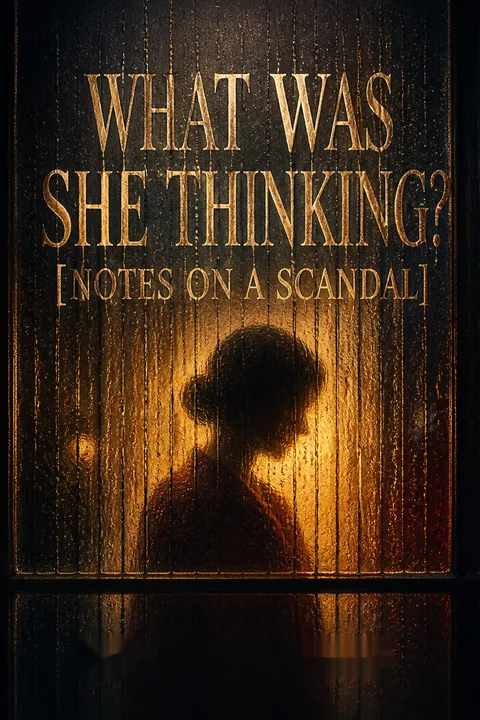
A modern parable of loneliness, obsession, and the dangers of unchecked desire, What Was She Thinking? [Notes on a Scandal] is a masterful exploration of the blurred boundaries between care and control, friendship and fixation. Through Barbara's unreliable narration, the novel interrogates the ways in which we construct and consume stories—about ourselves, about others, and about transgression. The scandal at its center is less a tale of sexual deviance than a meditation on the human need for connection and the lengths to which we will go to avoid the pain of isolation. Heller's incisive prose exposes the hypocrisies of social judgment, the complexities of female friendship, and the perils of self-deception. The novel's enduring lesson is that the search for intimacy, when warped by loneliness and denial, can lead to both ruin and revelation. In a world quick to condemn and slow to understand, the true scandal may be our collective failure to recognize the humanity in those who transgress—and in ourselves
Review Summary
What Was She Thinking? [Notes on a Scandal] receives widespread praise for its masterful character study, earning an average of 3.74 stars. Reviewers consistently highlight Barbara Covett as a brilliantly crafted, deeply unsettling narrator whose crushing loneliness and manipulative tendencies prove more compelling than the central teacher-student scandal. Heller's precise, witty prose draws frequent admiration, as does her unflinching exploration of obsession, class, and moral hypocrisy. Some readers found the ending abrupt and characters unlikeable, though most agreed that Heller's sharp psychological insight makes this a gripping, thought-provoking read.
People Also Read


Characters
Barbara Covett
Barbara Covett is the novel's narrator and emotional center—a solitary, middle-aged history teacher whose life is defined by routine, discipline, and a profound sense of isolation. Her intelligence and wit mask a deep longing for intimacy, which finds its focus in her obsessive attachment to Sheba Hart. Barbara's psychoanalytic profile is marked by repression, envy, and a need for control; she is both self-aware and self-deluding, capable of acute insight and profound denial. Her relationship with Sheba oscillates between care and possessiveness, loyalty and betrayal. Barbara's narrative is unreliable, colored by her desires and resentments, and her actions—particularly her role in exposing Sheba's affair—are driven as much by a need for significance as by genuine concern. Over the course of the novel, Barbara's self-concept is both challenged and reinforced, leaving her both more exposed and more entrenched in her solitude.
Bathsheba "Sheba" Hart
Sheba Hart is the catalyst for the novel's events—a beautiful, upper-class woman whose openness and vulnerability make her both alluring and susceptible. Sheba's psychoanalytic portrait is one of arrested development: she is impulsive, idealistic, and hungry for validation, yet emotionally immature and prone to self-deception. Her affair with Steven Connolly is both a rebellion against the constraints of her privileged life and a desperate search for meaning and excitement. Sheba's relationships—with her husband, children, and Barbara—are marked by ambivalence and a tendency to idealize or devalue those around her. As the scandal unfolds, Sheba's self-image crumbles, and she is forced to confront the consequences of her actions. Her dependency on Barbara grows, even as she resents the loss of autonomy, and her journey is one of painful self-recognition and ambiguous redemption.
Steven Connolly
Steven Connolly is the object of Sheba's illicit desire—a fifteen-year-old student whose artistic talent and emotional neediness make him both appealing and dangerous. Connolly's role in the narrative is complex: he is at once victim and agent, seduced and seducer. His working-class background and family dynamics are filtered through Sheba's romanticized lens, but Connolly himself is more pragmatic and self-interested than she realizes. He is capable of both tenderness and cruelty, and his motivations—sexual curiosity, a desire for attention, and a need to assert power—are as muddled as Sheba's. Connolly's eventual betrayal of Sheba is both a survival strategy and a reflection of his own confusion, leaving him both empowered and damaged by the affair.
Richard Hart
Richard Hart, Sheba's husband, is a communications lecturer whose intellectualism and emotional reserve create a gulf between him and his wife. He is both supportive and condescending, loving and oblivious. Richard's psychoanalytic profile is one of narcissism tempered by genuine affection; he is threatened by Sheba's independence but unable to provide the intimacy she craves. The revelation of Sheba's affair shatters his self-image and family stability, leading to anger, withdrawal, and eventual estrangement. Richard's relationship with Barbara is marked by mutual suspicion and rivalry, as both vie for Sheba's loyalty and attention.
Polly Hart
Polly is Sheba and Richard's teenage daughter—a sharp, independent, and often hostile presence in the household. Her adolescence is marked by defiance, experimentation, and a keen awareness of her parents' flaws. Polly's relationship with Sheba is fraught with conflict and misunderstanding, but she is also one of the first to suspect her mother's affair. Her actions—running away, confronting Sheba—serve as both a catalyst for crisis and a mirror for Sheba's own emotional immaturity. Polly's journey is one of painful individuation, as she navigates the chaos of her family's collapse.
Ben Hart
Ben, Sheba and Richard's younger son, has Down's syndrome and serves as a symbol of innocence and unconditional love in the novel. His presence highlights the stakes of Sheba's actions and the collateral damage of the scandal. Ben's needs and vulnerabilities elicit both tenderness and guilt from Sheba, and his confusion in the face of family upheaval is a source of pathos. Ben's relationship with Barbara is less developed, but he represents the possibility of connection untainted by desire or betrayal.
Sue Hodge
Sue Hodge is a fellow teacher and Barbara's chief rival for Sheba's friendship. She is earnest, garrulous, and somewhat oblivious to the emotional undercurrents around her. Sue's presence exposes Barbara's jealousy and insecurity, and her attempts at intimacy with Sheba are both comic and poignant. Sue's role in the narrative is to highlight the dynamics of female friendship—its competitiveness, its capacity for both support and exclusion.
Brian Bangs
Brian Bangs is a socially inept math teacher whose unrequited crush on Sheba and subsequent conversation with Barbara inadvertently contribute to the exposure of the affair. Bangs is both pitiable and dangerous—a figure whose loneliness and need for validation make him susceptible to manipulation. His actions are not malicious, but their consequences are far-reaching, illustrating the unpredictable ways in which secrets unravel.
Mrs. Connolly
Mrs. Connolly is Steven's mother—a formidable, working-class woman whose discovery of the affair precipitates the public scandal. Her anger and determination to protect her son are both understandable and fearsome. Mrs. Connolly's confrontation with Sheba is a moment of reckoning, exposing the class tensions and moral judgments that underlie the narrative. Her actions are driven by a mix of outrage, shame, and a desire for justice.
Portia
Portia, Barbara's aging cat, is a minor but symbolically significant character. She represents Barbara's capacity for care and her profound loneliness. Portia's illness and eventual death parallel the unraveling of Barbara's relationship with Sheba, serving as a metaphor for loss, dependency, and the limits of consolation.
Plot Devices
Unreliable Narration
The novel's most significant plot device is its use of unreliable narration. Barbara's account is subjective, self-serving, and often at odds with observable reality. Her interpretations of events, motives, and relationships are colored by her desires, fears, and resentments. This narrative structure invites readers to question the veracity of her story and to read between the lines for the truths she cannot or will not acknowledge. The tension between Barbara's self-presentation and the evidence of her actions creates dramatic irony and psychological depth, making the novel as much a study of perception as of scandal.
Epistolary and Confessional Structure
Barbara's secret manuscript functions as both a confessional and a weapon—a means of asserting control over Sheba's story and, by extension, over Sheba herself. The act of writing becomes a form of surveillance, judgment, and, ultimately, betrayal. The manuscript's discovery by Sheba is a pivotal moment, exposing the power dynamics at play and the dangers of narrative appropriation. This device also allows for meta-commentary on the nature of storytelling, truth, and the ethics of representation.
Foreshadowing and Retrospective Framing
From the outset, the narrative is suffused with a sense of impending doom. Barbara's retrospective framing—her references to the scandal, the legal proceedings, and the aftermath—creates suspense and a sense of fatalism. The use of foreshadowing heightens the emotional stakes and underscores the inevitability of exposure and consequence. The reader is invited to piece together the chronology of events, aware that disaster is always just around the corner.
Social Satire and Irony
The novel employs irony and social satire to critique the hypocrisies of contemporary British society—its class anxieties, gender double standards, and media sensationalism. The scandal at the heart of the story becomes a vehicle for exploring broader questions of morality, authority, and the policing of female desire. The narrative's dark humor and biting observations serve to both entertain and unsettle, challenging readers to examine their own complicity in the machinery of judgment.
Download PDF
Download EPUB
.epub digital book format is ideal for reading ebooks on phones, tablets, and e-readers.








































