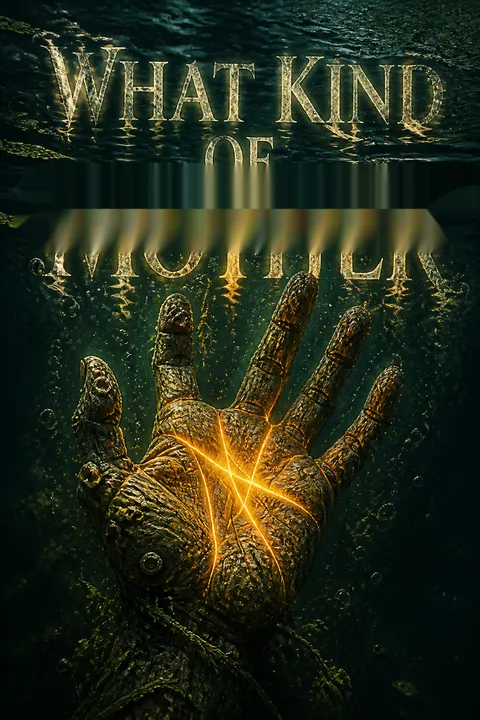

Plot Summary
Return to Brandywine Shadows
Madi Price, a struggling palm reader, returns to her rural hometown of Brandywine, Virginia, after her life unravels elsewhere. She's estranged from her daughter Kendra, who now lives with her father, and Madi's only means of survival is reading fortunes at the local farmers market. The town is small, insular, and full of gossip, especially about Henry McCabe, a fisherman whose infant son, Skyler, vanished years ago. Madi's return is marked by a sense of displacement and longing, both for her daughter and for a sense of belonging. The oppressive heat and the ever-present river set a tone of unease, as Madi tries to rebuild her life amid the ghosts of her past and the judgmental eyes of her community.
Hands, Fate, and Farmers
At the farmers market, Madi reads palms for the locals, inheriting the role from her grandmother. The act is intimate, a blend of performance and intuition, and it's how she scrapes by. The market is a microcosm of Brandywine: gossip, rivalry, and the unspoken pain of its residents. Madi's readings are less about supernatural insight and more about empathy—she tells people what they need to hear. When Henry appears, the air thickens with old memories and unresolved feelings. The act of palm reading becomes a metaphor for the search for meaning and control in a world where fate seems arbitrary and cruel. The market's bounty—crabs, produce, preserves—contrasts with the emotional hunger of its people.
The Missing Boy's Eyes
Henry's story is the town's open wound. His son, Skyler, disappeared as a baby, and his wife Grace died by suicide soon after. The community whispers theories—abduction, maternal madness, paternal guilt—but no one knows the truth. Henry is a man hollowed by loss, living on his boat, endlessly posting missing-person flyers. Madi is drawn to his pain, sensing a kinship in their mutual grief. When she reads Henry's palm, she's overwhelmed by a vision of water and a duck blind—a structure in the river—hinting at secrets submerged beneath the surface. The vision unsettles her, blurring the line between intuition and something darker, and sets her on a path toward the heart of the mystery.
Old Flames, New Grief
Madi and Henry share a complicated history, a brief high school romance that ended before it could become something lasting. Their reunion is charged with nostalgia and regret, but also with the possibility of healing. Both are marked by parental wounds—Madi by her estrangement from Kendra, Henry by Skyler's loss. As they reconnect, their shared pain becomes a bridge, but also a trap. The town's scrutiny intensifies, and Madi feels the weight of expectation: to help Henry, to find Skyler, to be a better mother. The river, ever-present, becomes a symbol of both connection and danger, its currents pulling them toward truths they may not want to face.
The Duck Blind Vision
Madi's visions intensify, centering on the duck blind in the river. She feels herself slipping into other perspectives—Grace's, Henry's, even Skyler's—experiencing moments of drowning, suffocation, and longing. The duck blind becomes a locus of trauma, a place where the boundaries between past and present, living and dead, are porous. Madi is both terrified and compelled, sensing that the answers to Skyler's disappearance lie in these visions. The supernatural elements escalate: objects move, the neon sign in her motel room flickers inexplicably, and the river seems to call to her. The visions are both a curse and a guide, pushing her closer to the truth.
A Mother's Guilt
Madi's relationship with Kendra is fraught with guilt and misunderstanding. She wants to protect her daughter, but feels powerless as Kendra drifts further away, seduced by the stability of her father's new family. Madi's own mother rejected her when she became pregnant as a teen, and the cycle of abandonment haunts her. The story interrogates what it means to be a mother: the sacrifices, the failures, the desperate hope for redemption. Madi's attempts to help Henry become entangled with her need to atone for her own perceived shortcomings. The river, with its tides and undertow, mirrors the push and pull of maternal love and loss.
The River's Secrets
The Chesapeake Bay and its tributaries are more than a backdrop—they are living, breathing entities that shape the characters' fates. The river is a source of sustenance and danger, a place where bodies and secrets are hidden. Madi's visions suggest that Skyler's fate is bound to the water, and that the duck blind is the key. As she and Henry search the river, the boundary between reality and hallucination blurs. The river becomes a metaphor for grief: deep, unknowable, and capable of both nurturing and destroying. The search for Skyler is also a search for meaning in the face of overwhelming loss.
Girls Night, Mother's Love
A rare night together with Kendra offers Madi a glimpse of the life she wishes she could have—a simple, loving relationship with her daughter. They share laughter, secrets, and even a joint, but the moment is fleeting. The river intrudes, both literally and metaphorically, as Madi is drawn to swim in its dark waters. She experiences a terrifying vision of drowned infants and aggressive crabs, blurring the line between hallucination and supernatural encounter. The episode leaves her physically and emotionally scarred, reinforcing the sense that the river—and the past—will not let her go.
Feeding the Void
As Madi becomes more involved with Henry and the search for Skyler, she finds herself increasingly drained—physically, emotionally, and spiritually. The motif of hunger recurs: the townspeople's need for hope, Madi's need for connection, Henry's need for closure, and, eventually, the monstrous hunger of the boy they find. The supernatural elements escalate: jellyfish, crabs, and barnacles invade Madi's world, and the boundaries between human and animal, living and dead, blur. The story suggests that grief and longing are forms of hunger, and that the attempt to fill the void can lead to monstrous transformations.
The Boy in the Trap
Madi and Henry discover a boy in the duck blind—a feral, silent child who resembles the age-progressed image of Skyler. He is covered in scars, branded with the shapes of river creatures, and exhibits bizarre, inhuman behaviors: eating worms, molting his skin, and manifesting supernatural phenomena. Henry is convinced this is his son, resurrected by their combined longing and belief. Madi is torn between horror and maternal instinct, compelled to care for the boy even as she fears him. The boy's presence destabilizes reality, and the line between victim and monster becomes increasingly ambiguous.
Becoming Skyler
The boy's existence is sustained by the belief and attention of Madi and Henry. He is a tulpa—a thoughtform made flesh, born from grief, longing, and the desperate need for closure. As Madi cares for him, she feels her own energy draining away, her identity subsumed by the role of mother to this impossible child. Henry's obsession becomes dangerous, culminating in violence and self-destruction. The boy, now called Skyler, is both a miracle and a curse, embodying the unresolved traumas of his creators. The story interrogates the power of belief to shape reality, for good and ill.
The Price of Belief
As the situation spirals out of control—culminating in violence, fire, and death—Madi is forced to confront the consequences of her actions. Henry sacrifices himself, unable to live with the monster he helped create. Madi, left alone with Skyler, must decide whether to continue sustaining him with her belief and love, or to let him go. The story becomes a meditation on the price of holding on versus the pain of letting go. The river, ever-present, offers both oblivion and renewal, and Madi's final choice is both an act of love and surrender.
Family Unraveled
The traditional family structures in the novel—Madi and Kendra, Henry and Grace and Skyler—are all shattered by trauma. In their place, new, monstrous forms of family emerge: Madi and Skyler, bound by need rather than blood. The story explores the ways in which family is both a source of strength and a site of horror, capable of nurturing and consuming. The final chapters are suffused with a sense of inevitability, as Madi accepts her role as mother to the inhuman child, even as it costs her everything else.
The Monster's Embrace
Madi's relationship with Skyler becomes increasingly symbiotic, even parasitic. She is both his creator and his sustenance, feeding him with her stories, her memories, her very self. The boy's monstrous nature is undeniable—he consumes animals, people, even his own skin—but Madi's love persists, warped and desperate. The story asks what a mother is willing to endure, and what she becomes, in the name of love. The river, now a character in its own right, claims all secrets, all bodies, all stories.
Molting and Memory
Skyler's repeated molting becomes a metaphor for the cycles of trauma and renewal that define the characters' lives. Each shedding is both a death and a rebirth, a chance to start over but also a reminder of what has been lost. Madi's memories of Kendra, Henry, and her own childhood intermingle with her present reality, blurring the boundaries between self and other, past and future. The act of storytelling—repeating Skyler's origin, recounting the family's tragedies—becomes both a means of survival and a trap.
The Final Shedding
As Skyler grows, his need for Madi diminishes, and she is left to confront the emptiness at the heart of her existence. The story ends with a sense of ambiguity: has Madi saved Skyler, or doomed herself? Is the cycle of loss and longing ever truly broken, or does it simply take new forms? The river, indifferent and eternal, continues to flow, carrying away the remnants of the past. The final image is one of surrender—to love, to grief, to the unknowable depths of the self.
The River Claims All
In the end, the river reclaims everything: bodies, secrets, stories. Madi, now utterly transformed by her experiences, drifts on the water with Skyler, their fates entwined. The boundaries between mother and child, human and monster, living and dead, dissolve in the river's embrace. The story closes with a sense of both horror and peace, as the characters are subsumed by the forces that shaped them. The river, ever-hungry, is both grave and cradle, the source and end of all things.
Analysis
A modern Southern Gothic meditation on grief, motherhood, and the monstrous power of beliefWhat Kind of Mother is a haunting exploration of the ways in which loss, longing, and love can warp reality itself. Through the intertwined stories of Madi, Henry, and the supernatural child Skyler, the novel interrogates the boundaries between the psychological and the supernatural, the personal and the communal, the human and the monstrous. At its core, the book asks what it means to be a mother: Is it biology, intention, sacrifice, or something darker? The river, with its tides and secrets, becomes a metaphor for the unconscious forces that shape our lives, while the creation of Skyler as a tulpa literalizes the idea that our griefs and desires can take on lives of their own. The novel's Southern Gothic setting, its motifs of hunger and transformation, and its use of unreliable narration all serve to destabilize the reader, mirroring the characters' own disorientation. Ultimately, What Kind of Mother is a story about the costs of holding on—how the refusal to let go of the past can create monsters, and how love, in its most desperate forms, can both save and destroy. It is a chilling, lyrical, and deeply unsettling meditation on the limits of empathy, the dangers of unchecked need, and the enduring power of story to shape—and unmake—our realities.
Review Summary
What Kind of Mother is a polarizing Southern Gothic folk horror novel with an overall rating of 3.05/5. Readers frequently praise the atmospheric writing and strong first half, with many noting Chapman's skill at building tension and vivid settings. However, the book sharply divides opinion at its twist, which introduces body horror and supernatural elements involving a tulpa-like creature. Critics find the ending confusing and characters' decisions illogical, while fans celebrate its originality, weirdness, and unflinching horror. Themes of grief, parenthood, and belief run throughout.
Characters
Madi Price
Madi is the emotional core of the novel—a woman marked by loss, guilt, and longing. Her estrangement from her daughter Kendra and her return to Brandywine set the stage for her journey. As a palm reader, she is both a performer and a confidante, skilled at reading others but blind to her own needs. Madi's relationship with Henry is fraught with nostalgia and regret, and her involvement in the search for Skyler becomes a quest for redemption. Psychologically, she is driven by a desperate need to be needed, to atone for her perceived failures as a mother. Her development is a descent into obsession and self-sacrifice, culminating in her acceptance of the monstrous child as her own—a choice that is both empowering and annihilating.
Henry McCabe
Henry is a man hollowed by tragedy: the disappearance of his son Skyler and the suicide of his wife Grace. He is both victim and perpetrator, his grief warping into obsession. Henry's refusal to let go of Skyler—manifested in endless searches and missing-person flyers—becomes the engine of the novel's supernatural events. His relationship with Madi is complex: she is both a lifeline and a mirror, reflecting his own brokenness. Psychologically, Henry is trapped in a loop of guilt and longing, unable to move forward. His ultimate act—helping to create and then attempting to destroy the monstrous Skyler—reveals the destructive potential of unchecked grief and the dangers of refusing to accept loss.
Skyler
Skyler is both a character and a symbol: the missing boy, the object of longing, and the embodiment of unresolved trauma. As a tulpa—a being created by thought and belief—he is sustained by the attention and love of Madi and Henry. Physically, he is marked by scars, animalistic behaviors, and supernatural abilities: molting, consuming flesh, and warping reality. Psychologically, he is a blank slate, shaped by the needs and fears of his creators. His development is a grotesque parody of childhood, a cycle of hunger, transformation, and destruction. Skyler's existence forces the other characters to confront the limits of love and the costs of refusing to let go.
Kendra
Kendra is Madi's teenage daughter, living with her father and stepmother after years of instability. She represents both what Madi has lost and what she hopes to regain. Kendra is independent, skeptical, and searching for her own identity. Her relationship with Madi is strained by years of disappointment and unmet needs, but there is still love beneath the surface. Psychologically, Kendra is caught between loyalty to her mother and the allure of a more stable life. Her brief reappearances in the narrative serve as reminders of what is at stake for Madi, and her ultimate distance underscores the novel's themes of separation and longing.
Grace
Grace is Henry's wife and Skyler's mother, whose suicide sets the events of the novel in motion. Though largely absent, her presence is felt through memories, visions, and the lingering effects of her actions. Grace's struggle with postpartum depression and her inability to bond with Skyler are depicted with empathy and horror. She is both victim and perpetrator, her death a wound that never heals. Psychologically, Grace represents the dark side of motherhood—the fear of failing, the terror of being consumed by one's child. Her absence haunts both Henry and Madi, shaping their choices and their fates.
Donny
Donny is Madi's ex and Kendra's father, now remarried and living a stable, middle-class life. He represents the path not taken: security, normalcy, and emotional distance. Donny's reentry into Kendra's life is both a blessing and a threat to Madi, offering Kendra the stability she craves but deepening Madi's sense of failure. Psychologically, Donny is pragmatic, emotionally reserved, and somewhat oblivious to the deeper currents of pain in Madi and Kendra's lives. His presence highlights the novel's exploration of what it means to be a "good" parent.
Charlene
Charlene is one of the "farmers market mafia," an older woman who serves as both gossip and guardian in Brandywine. She is sharp-tongued, opinionated, and fiercely protective of her community. Charlene's role is to enforce the town's norms and to remind Madi of her outsider status. Psychologically, she is both a source of comfort and a source of pressure, embodying the expectations and judgments of small-town life. Her interactions with Madi and Henry reveal the ways in which communities can both support and suffocate their members.
Lizzie
Lizzie is a young woman who comes to Madi for a palm reading, seeking hope and guidance. Her story is one of vulnerability and unmet needs, and her tragic fate at the hands of the monstrous Skyler underscores the dangers of misplaced trust and the limits of empathy. Psychologically, Lizzie represents the many people who come to Madi seeking answers, and her death is a turning point in the narrative, forcing Madi to confront the consequences of her actions.
The River
Though not a character in the traditional sense, the river is a constant presence in the novel, shaping the lives and deaths of all who live near it. It is both nurturing and destructive, a source of food and a graveyard for secrets. Psychologically, the river represents the unconscious, the realm of repressed memories and unresolved grief. Its currents mirror the emotional tides of the characters, and its depths are both alluring and terrifying.
The Duck Blind
The duck blind is the novel's central symbol—a place where boundaries dissolve and realities overlap. It is the site of Madi's visions, the hiding place of the monstrous Skyler, and the stage for the story's climactic confrontations. Psychologically, the duck blind represents the threshold between past and present, life and death, self and other. It is a place of both revelation and danger, where the characters are forced to confront the truths they have tried to bury.
Plot Devices
Tulpa/Manifestation
The central plot device is the creation of Skyler as a tulpa—a being brought into existence by the combined belief, grief, and longing of Madi and Henry. This device blurs the line between supernatural horror and psychological metaphor, suggesting that the monsters we create are born from our deepest wounds. The tulpa concept allows the novel to explore the power of belief, the dangers of unresolved trauma, and the ways in which the past can intrude upon the present. The device is foreshadowed through Madi's palm readings, Henry's obsessive rituals, and the recurring motifs of hunger and transformation.
Unreliable Narration and Shared Visions
The narrative frequently shifts between Madi's perspective, Henry's memories, and supernatural visions that may or may not be real. This device creates a sense of disorientation and ambiguity, forcing the reader to question what is true and what is imagined. The shared visions between Madi and Henry serve as both plot advancement and psychological exploration, revealing hidden truths and repressed memories. The use of unreliable narration heightens the horror and underscores the novel's themes of uncertainty and instability.
The River as Metaphor and Setting
The river is both a literal setting and a metaphor for the characters' emotional states. Its currents, tides, and hidden depths mirror the cycles of grief, longing, and transformation that define the story. The river is a place of both danger and possibility, where bodies are hidden and secrets are revealed. Its presence is woven throughout the narrative, shaping the characters' actions and serving as the ultimate arbiter of fate.
Motifs of Molting, Hunger, and Consumption
The recurring motifs of molting, hunger, and consumption serve as both plot devices and thematic explorations. Skyler's repeated shedding of his skin mirrors the characters' attempts to start over, to escape the past, and to become something new. The motif of hunger—emotional, physical, supernatural—underscores the costs of survival and the dangers of unchecked need. These motifs are used to foreshadow key events, to deepen the psychological complexity of the characters, and to reinforce the novel's central questions about the nature of love and loss.
Small-Town Gothic and Gossip
The insular, gossip-driven community of Brandywine serves as both a backdrop and a plot device. The town's collective memory, its rituals, and its judgments shape the characters' actions and limit their options. The farmers market, the church, and the ever-present eyes of neighbors create a sense of claustrophobia and inevitability. This device is used to explore themes of belonging, exclusion, and the ways in which communities both nurture and destroy their members.
Download PDF
Download EPUB
.epub digital book format is ideal for reading ebooks on phones, tablets, and e-readers.








































