
Plot Summary
Tragic Skies Over Winshaw
The Winshaw family's legacy is scarred early by the death of Godfrey—a charismatic pilot—shot down on a secret wartime mission, plunging his emotionally fragile sister, Tabitha, into delusion. She's convinced their ruthless brother, Lawrence, orchestrated Godfrey's death for personal gain. The family's cold indifference and Lawrence's own suspicious business dealings nurture seeds of suspicion and trauma. Godfrey's body is never recovered; grief, madness, and toxic ambition become the family inheritance, dictating the corrosive atmosphere and shaping the fates of the Winshaw heirs and their victims.
Family Feuds and Secrets
As Mortimer, a more sensitive Winshaw, celebrates his birthday, the entire clan's underlying animosities and wounds surface. Tabitha's instability and her obsession with Godfrey's "murder" jitter everyone. The younger Winshaws—Henry, Mark, Thomas, Dorothy—begin to imitate their elders' callousness, greed, and amorality. Mark's chilling indifference, Thomas's voyeuristic tendencies, and Dorothy's utilitarian approach to animals expose the warped family values. Even at a celebration, trauma lingers: a child's wounded hand, a mysterious attempted burglary, and Tabitha's cryptic warnings foreshadow violence and doom.
Bloodlines and Betrayals
The Winshaws shun softness and sentiment, with members like Dorothy showing contempt for tradition and empathy. Mark's chilly detachment from his mother sets the tone for decades of family fracture, and bloodshed repeats itself. The ramifications of wartime betrayals and unspoken secrets simmer under the surface, setting the stage for tragic repetition—where the cycle of violence and treachery becomes inescapable for Winshaws and those under their shadow.
Orphans and Icons
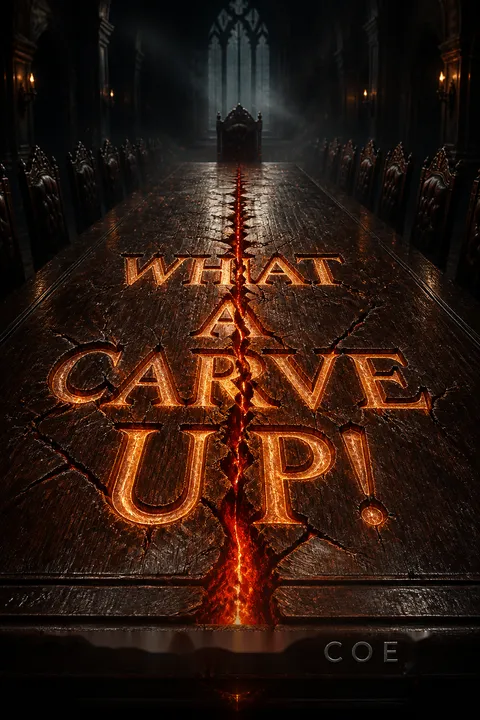
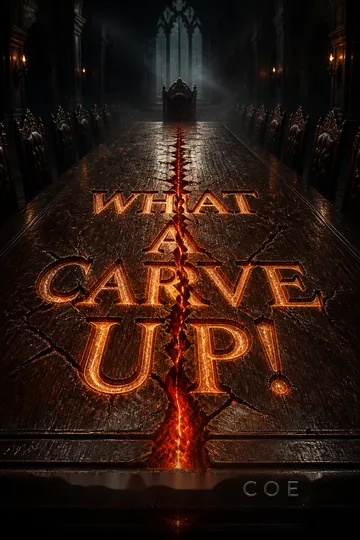
Michael Owen, the eventual Winshaw biographer, recounts his own childhood beneath the pall of postwar Britain's wants and melancholy. His hero, cosmonaut Yuri Gagarin, represents unattainable glory and hope. A botched family outing and an interrupted viewing of a horror-comedy "What a Carve Up!" leave Michael suspended between innocence and trauma, shadowed by unanswered questions about love and fear. The episode becomes the primal scene for his later emotional and narrative quests—forever seeking closure, meaning, and the end of someone else's story.
Enter the Biographer
Decades later, Michael is recruited—at the insistence of the still-institutionalized Tabitha—to write the definitive (and damning) Winshaw history. Michael's sense of purpose is shadowed by isolation, enduring depression, and his struggles as a failed novelist. His immersion in Winshaw archives, interviews, and scandals only exacerbates his own emotional withdrawal, as their stories of cruelty, duplicity, and exploitation threaten to consume him. He begins to suspect that Tabitha's madness may mask deadly truths about family murder, and that his own fate is entwined with their legacy.
Greed's Many Branches
The modern Winshaws—each claiming a corner of political, financial, agricultural, and cultural life—exploit their power for personal gain. Henry, once a socialist MP, becomes an architect of NHS privatization; Mark traffics in arms with murderous regimes; Thomas engineers ruthless financial deals; Dorothy industrializes animal suffering; Hilary launders truths through the tabloid press; Roddy commodifies art and sexuality. Collusion across branches ensures every arena—healthcare, food, media, art, war—is carved up, the public good sacrificed for bottom lines. Their "success" is national disaster.
Media Lies and Manufactured Truths
Hilary's ascent as a media "personality" epitomizes how the family infects public discourse. She turns truth upside down, peddling praise for dictators, smearing the vulnerable, and reshaping "common sense" to serve power. Her life is a void of maternal tenderness, authentic friendship, or self-aware love, replaced only by relentless ambition, public performance, and cruel dismissiveness. The Winshaw method of bending facts—be it in print, politics, or art—becomes the era's defining legacy.
Ruthless Profits, Ruthless Losses
Thomas and Mark use financial engines and arms trading to siphon riches from already-struggling industries and war-torn nations. Pensioners are robbed, rivals ruined, and foreign conflicts escalate, all to increase Winshaw wealth. Dorothy turns creatures and food into cogs for the market, slaughtering animals with mechanistic callousness and feeding the public a diet of processed poison—indirectly killing Michael's own father. The Winshaws' reach becomes so pervasive that national and personal tragedies alike can be traced to their greed.
Family Gatherings Unravel
Called to Winshaw Towers for Mortimer's will, the inheritors find only debts and disappointment. Trapped by a storm, phone lines and roads cut, their numbers dwindle as one after another is gruesomely murdered. Michael—caught in the hallucinatory mirroring of Gothic plots he half-remembers—becomes both witness and suspect, forced to confront the ghosts of childhood and the realities of Winshaw evil. The deaths are symbolically tailored—each Winshaw succumbing to a fate mocking their vice or sin.
The Carve-Up Revealed
In the style of a country house mystery, Michael pieces together clues from secret passages, family history, and his own parentage. The vengeful killer, Mortimer—once gentle, now driven to exact justice for a family's centuries of cruelty—dispatches his kin in poetic retribution. What began as satire and suspense coalesces into a savage reckoning: madness sits at the root of both Winshaw evil and the ability to survive it.
Passion, Paralysis, and Politics
Michael's solitary life is illuminated briefly by his hesitant romance with Fiona, a kind, capable neighbor. Their bond grows in the shadow of the first Gulf War—another consequence of Winshaw arms dealing and media misdirection. Fiona's sudden, fatal illness, abetted by a crumbling NHS, exposes the direct link between family profit and personal loss. Grief, rage, and powerlessness trap Michael in cycles of helplessness and memory.
Medicine, Markets, and Malice
Michael confronts endless bureaucracy and neglect as Fiona's diagnosis is missed and her care delayed—the result of years of Winshaw-led "reforms." As she dies, he identifies Henry Winshaw and the family as the literal and symbolic authors of suffering, his private vengeance echoing Mortimer's bloodier solution. In this broken system, history, capitalism, and fatalism conspire to make every death a murder by policy.
Apocalypse at Winshaw Towers
In a phantasmagoria of murder and confession, Mortimer reveals himself as the hand behind the carnage, inspired in equal measure by horror films, family history, and Michael's own unfinished manuscript. Phoebe—a painter burned by the family's corruption of culture—escapes alongside Michael, both burdened by knowledge and uncertain hope. It's a final inversion: brutality and madness reap their own, but the cycle remains unbroken.
Vengeance of the Forgotten
Each dead Winshaw falls to a fate that fits their sin: the media manipulator is buried under her own words, the financier loses his eyes, the arms dealer his arms, the art dealer suffocates under gold. With Mortimer's last act—a mercy killing for himself—history closes not with closure but exhaustion: only the innocent and the newly awakened survive to recall what might have been.
The Dreamer Descends
Michael and Phoebe, dazed by events, attempt to find solace and meaning beyond the Winshaw curse. The outside world, more shallow and hungry than ever, clamors for sensational details as new wars begin. Closure is a myth; history, personal and public, dissolves into unfinished stories and perpetual cycles. Memory, guilt, and longing tie survivors together, uncertainly, as the dream and nightmare refuse to yield to easy explanation.
The Aftermath of Madness
In the "Peacock Press" coda, the editor's shallow summary fails utterly to contain the truth or provide redress. The Winshaw legacy, like Michael's childhood trauma and dreams of Gagarin's blue skies, persists unfinished—offering neither catharsis nor justice, only caution and unresolved ache. Even as Michael falls—real or imagined, in memory or fate—a thin blue hope remains: the promise that things might, one day, be otherwise.
Analysis
A savage, uproarious indictment of the eighties—and of power, complicity, and the failure of empathy"What a Carve Up!" is a dazzling fusion of satire, horror, tragedy, and metafiction, eviscerating just how the privileged few "carve up" the postwar hopes of Britain into profit, pain, and public cynicism. The Winshaws' crimes are our own: as readers and as citizens, we, too, are dazzled and distracted by spectacle, by the flickering of screens that both expose and obscure. Michael, the perpetual witness and failed avenger, is each of us—his grief for the dead Fiona, his desperate need for closure, and his inability to write an ending are Britain's own nightmares under neoliberalism.
Coe's lesson is bleak but essential: evil is not just the violent act or the obvious villain. It is the system and culture that reward indifference and greed, that privatize health and culture and turn everything—truth, caring, art—into parts of a market to be bought, sold, and destroyed. The Winshaws have many faces: politician, banker, journalist, farmer, art dealer—but their true legacy is inherited by all who acquiesce, look away, or quietly profit.
Yet, in its tragicomic swirl, the novel resists giving easy answers or redemptions. The final moments—Michael's "fall" or flight, the unwritten ending, the thin blue "ribbon of hope"—remind us that justice may always be unfinished, but collective memory and personal imagination remain. Facing our complicity—personal and historical—is the first, hard step to writing a new story.
Review Summary
What a Carve Up! receives widespread praise for its sharp political satire, complex narrative structure, and dark British humor. Reviewers consistently highlight the masterful plotting, where seemingly unrelated threads weave together brilliantly. The novel's critique of Thatcher-era Britain remains strikingly relevant today. Many readers found the Dorothy chapter particularly impactful, and the finale — echoing Agatha Christie's country house mysteries — drew frequent admiration. Some noted slow pacing in early sections, and a few felt the length diluted its focus, but most considered it a genuinely brilliant, multi-layered achievement.
Characters
Michael Owen
Michael is a failed novelist, emotionally stunted and deeply solitary, whose childhood traumas—most notably the partial viewing of "What a Carve Up!"—leave him adrift in adult life, suspended between longing and cynicism. Lured by the promise of steady work, he becomes the Winshaws' biographer, only to be slowly destroyed by their legacy of avarice and cruelty. Psychoanalytically, Michael embodies the "neurotic witness," whose passivity, obsession with narrative, and inability to act mirror the audience's complicity in systemic disaster. His arc is from helpless chronicler to wounded participant, forced finally to reckon with personal and historical injuries—yet perpetually unfinished, like the book and like Britain itself.
Tabitha Winshaw
The "mad" aunt, Tabitha is at once the family's most marginalized and prescient member. Her obsession with Godfrey's death is dismissed as insanity—but her delusions conceal a real conspiracy and betrayal. Tabitha's petulance and eccentricities disarm, hiding just how much she sees and how much she is herself a victim of the Winshaws' drive for control. Ultimately, she stands for those exiled from history's official account: women, sensitives, and outcasts who alone remember crimes everyone else strives to forget.
Mortimer Winshaw
Mortimer, the "nice" sibling, stands by his fragile wife and estranged son, preserving a shred of humanity in a brutal line. His descent into vengeful madness late in life—killing his kin in stylized retribution—mirrors the collapse of hope for reform. Mortimer psychoanalytically embodies the suppressed conscience and the latent violence at the heart of complicity. His ultimate act—assisted suicide or self-destruction—exposes the futility of justice in a corrupted system, while offering ambiguous mercy to survivors.
Henry Winshaw
Henry transforms from earnest Labour MP to cynical Thatcherite, masterminding the dismantling of the welfare state—especially the NHS—for personal and ideological gain. A master rationalizer, Henry uses language and statistics to mask violence, justifying every crime as "efficiency." His repression of emotion and constant recalibration for power's sake betray not only hypocrisy but a profound emptiness—he is what happens when principle is gutted by greed.
Mark Winshaw
Mark is "the iceman," dispassionately brokering contracts for weapons, unbothered by the deaths that follow. His lack of family feeling, personal loyalty, or moral anxiety makes him an avatar for globalized, postmodern evil—uninterested in narratives, justice, or even simple pleasure. His psychoanalytical profile is that of a psychopathic achiever, his affectlessness insulated by privilege and by endless mirrors—literally and metaphorically.
Thomas Winshaw
Thomas, who wields financial power without scruple, is obsessed with seeing but not being seen, desiring distance from all consequences and from flesh-and-blood intimacy. His rituals of surveillance, his collection of frozen images, conceal deep anxieties about potency, aging, and authenticity. Thomas personifies the era's financialization of everything—where screens, numbers, and proxies replace bodies, relationships, and realities.
Dorothy Winshaw
Dorothy embodies the transformation of nature into industry. Her drive to maximize profit results in mass suffering—animals mutilated, food synthetic, landscapes ruined. Dorothy's emotional sterility matches her industrial cruelty: she cannot touch, love, or create, only process, calculate, and discard. Psychoanalytically, her fate is a warning: in destroying all ties to feeling, we create monsters—capable of killing, and capable of justifying it.
Hilary Winshaw
Hilary rises through journalism and TV not by seeking truth but by constructing attractive falsehoods, tailored always to the needs of the powerful. Her relationships—with editors, lovers, family—are transactional. Her identity is synthetic, every feeling cultivated for effect. Hilary's inability to love, grieve, or mother is both symptom and cause: her compulsive language games substitute for authentic experience.
Roddy Winshaw
Roddy uses prestige in art to buy sex, influence, and validation—destroying innocent artists like Phoebe and faking expertise he doesn't possess. His relationships are exploitative; his taste only for surfaces, not substance. Roddy is postmodern in his amorality, a dealer in values he neither understands nor cares for.
Phoebe Barton
Phoebe, an outsider like Michael, carries her own traumas—a victim of Winshaw exploitation but also of a society that rewards polish over passion, manipulation over honesty. Psychoanalytically, Phoebe can be seen as the "creative self" battered by the values of control, calculation, and falsehood. Her tentative relationship with Michael offers the only fragile hope: that love and authentic expression might someday survive, though never unscarred.
Plot Devices
Multiperspectival Narrative and Meta-Structure
Coe orchestrates the novel as a "collage" of genres: family saga, murder mystery, political satire, and mock country house whodunit. The recursive structure—Michael's interrupted childhood story; his later, unfinished biography ("The Winshaw Legacy"); and the procedural of the country house murders—echoes both the blurring of public fact and private fiction and the way trauma never truly resolves but repeats.
Foreshadowing and Macabre Irony
From the initial trauma of Michael's unfinished film to the repeated images of flight, death, and mutilation, Coe seeds the plot with symbols—axes, car crashes, missing limbs, unspeakable food—that return as both literal and poetic comeuppance for the Winshaws. Each murder method chillingly matches the victim's vice, creating a crescendo of satirical justice and Gothic horror.
Doubles, Mirrors, and Genre Parody
The narrative's frequent doubling—Michael and Godfrey; fiction and "real" history; victims and perpetrators—heightens the sense that everyone is playing a part in someone else's script. Parody is foregrounded: the plot openly references "What a Carve Up!" and other classics—the building's secret passages, the unmasking of the killer, the pastiche of whodunit conventions—both sending up genre expectations and inviting genuine emotional engagement.
The Winshaw Legacy Series
Download PDF
Download EPUB
.epub digital book format is ideal for reading ebooks on phones, tablets, and e-readers.








































