
Key Takeaways
1. Weakness is the Gateway to God's Power
For when I am weak, then I am strong.
The paradox of strength. In a world that prizes physical, moral, and relational strength, we often view weakness as inadequacy or failure. Yet, for the Christian, weakness is not a dead end but a divine pathway. It is in our moments of profound insufficiency—when we feel overwhelmed, incapable, or "beset with weakness"—that God's strength is most perfectly displayed.
Embracing inadequacy. The biblical narrative, particularly through figures like Joshua and Timothy, reveals that exhortations to "be strong and courageous" are often given to those who feel deeply weak. This isn't about self-reliance, but about recognizing our limitations to foster humility and self-distrust. This awareness then compels us to depend entirely on Christ, our Savior and Lord, for every step.
Paul's personal testimony. The apostle Paul, despite his immense apostolic authority, was called "weak" by his critics in Corinth. He openly embraced this label, even revealing his "thorn in the flesh"—a persistent, painful affliction—as a divinely appointed weakness. Christ's response to Paul's pleas for healing was profound: "My grace is sufficient for you, for my power is made perfect in weakness." This divine truth transforms discouragement into joyful freedom, allowing us to boast gladly in our weaknesses.
2. Christ's Love: The Driving Force of Our Calling
For the love of Christ controls us, because we have concluded this: that one has died for all, therefore all have died; and he died for all, that those who live might no longer live for themselves but for him who for their sake died and was raised.
Beyond human approval. Paul's ministry, often met with suspicion and contempt, was not driven by a desire for human admiration or self-promotion. Instead, he was passionately motivated by a threefold purpose rooted in Christ: to give constant pleasure to Christ, to be found faithful to Christ on judgment day, and most profoundly, to be controlled by the love of Christ. This unwavering focus allowed him to disregard the Corinthians' criticisms and remain steadfast in his mission.
Pleasing our Lord. Our aim, like Paul's, should be to always and under all circumstances please our Lord and Savior. This demanding agenda requires sustained love, expressed in adoration and thanksgiving for Christ's sacrifice, and sustained obedience to His commands. It means battling self-indulgence, sloth, and indifference, and actively pursuing daily holiness and neighbor-love.
Living for Him. The transformative power of Christ's love means we no longer live for ourselves. His death for all implies that all who believe have died to their old, self-serving lives. His resurrection means we are raised with Him, participating in His new life, driven by divine energy. This "new creation" brings a fresh vision, direction, and purpose, permanently changing our inward mindset and how we perceive both Christ and others.
3. The Stupendous Exchange: Our Sin for His Righteousness
For our sake he made him to be sin who knew no sin, so that in him we might become the righteousness of God.
Reconciliation's profound meaning. Reconciliation is the grand act of transforming alienation and hostility into intimate, harmonious togetherness with God. Our initial state was one of enmity, burdened by trespasses and facing retributive judgment. The new state of friendship, available to all, rests entirely on Christ's incarnation, propitiation on the cross, resurrection, and the Holy Spirit's work in our hearts, culminating in our justification by God.
God's method: a two-way transfer. The core of this reconciliation is what Paul calls "the stupendous exchange." God the Father "made him to be sin who knew no sin," meaning Christ, though sinless, was counted and treated as a sinner, bearing our penalty. In return, we who believe and are united with Christ become "the righteousness of God," meaning we are made relationally right with God, accepted and forgiven, free from penal liability.
Holy love in action. This double action is an overwhelming display of holy love:
- Father's love: Sending His Son to die for our sins.
- Son's love: Bearing the sins of the world.
- Spirit's love: Creating and sustaining the faith that brings reconciliation.
This divine embrace means that Christ's perfect righteousness now covers us, granting us the status and position that are His, simply by virtue of what He has done for us.
4. Every Believer, an Ambassador of Reconciliation
Therefore, we are ambassadors for Christ, God making his appeal through us. We implore you on behalf of Christ, be reconciled to God.
A universal calling. Paul's ministry of reconciliation, though apostolic, is not exclusive to him and Timothy. Christ's Great Commission to disciple all nations was given to the apostles as representatives of the entire church. Therefore, all Christians are called to share in this mission, making Christ known with a discipling purpose as widely as possible.
Sharing the message. As "ambassadors for Christ," we are entrusted with the "message of reconciliation." This means actively proclaiming that God, through Christ, has reconciled the world to Himself, "not counting their trespasses against them." Our role is to implore others, on behalf of Christ, to "be reconciled to God."
Living out the calling. This ambassadorship involves more than just words; it's a lifestyle. We are called to:
- Trust, love, honor, worship, and serve Christ.
- Practice neighbor-love in all its forms, including evangelism.
- Be a missional community, pulling our weight in both doxological (worship) and missional aspects of the church's life.
Our personal transformation and reliance on Christ's strength enable us to fulfill this vital vocation, turning our weaknesses into opportunities for God's power to shine.
5. Money: A Test of Stewardship, Not a Source of Strength
The point is this: whoever sows sparingly will also reap sparingly, and whoever sows bountifully will also reap bountifully.
The deceptive lure of wealth. The fallen human heart often views money as a magical source of stability, strength, and power, leading to idolatry. We shrink from the perceived weakness of poverty and embrace the illusion of affluence, worshipping our investments and bank balances instead of God. Jesus explicitly warned, "You cannot serve God and money," highlighting the spiritual danger of mammon.
God's money, our stewardship. The fundamental truth about money for Christians is that it is not ours; it is God's. We are merely stewards, managers, and trustees of His funds, entrusted to use them for His glory. This perspective shifts our focus from personal accumulation to divine purpose, demanding accountability for how we manage what has been loaned to us.
The conversion of the purse. Many find that their wallet is the last part of their life to be fully surrendered to God's transforming grace. While tithing (10% annually) is a good starting point, it should not be seen as "rent" to God, after which the rest is ours. Instead, we are challenged to give generously, even "beyond our means," as the Macedonians did, seeing the sky as the limit for our contributions to God's kingdom and those in need.
6. Generous Giving: An Act of Gratitude and Glorification
Thanks be to God for his inexpressible gift!
Gratitude as the ethic. Christian giving is fundamentally an expression of unending gratitude for God's "almost unbelievable grace." Knowing that "though he was rich, yet for your sake he became poor, so that you by his poverty might become rich," compels us to respond with open hearts and hands. This gratitude, fueled by Christ's grace, becomes the driving force behind our generosity.
Four "Be-attitudes" of giving:
- Be grateful to your gracious God: Express unending thanks for Christ's saving grace.
- Be generous to your needy neighbor: Actively relieve the needs of those around you, embodying "Samaritanship."
- Be given to Christ your Savior as his disciple: Emulate Jesus's self-giving lifestyle, committing your wealth for His sake.
- Be a glorifier of God: Plan your giving to evoke praise and thanks to God from others, ensuring His adoration and appreciation.
The manner of giving. Paul outlines five key principles for how Christians should give:
- Voluntary: Not under pressure or compulsion, but a considered, free-will decision.
- Cheerful: Rooted in exhilaration and lightness of spirit, trusting God's future provision.
- Deliberate: Planned and thought out, balancing generosity with responsibility.
- Wisely managed: Transparent, accountable, and aboveboard to all parties.
- Cooperative: Working together for common causes, fostering deeper fellowship through "fair shares."
7. Unshakeable Hope: Our Anchor in Present Affliction
So we do not lose heart. Though our outer self is wasting away, our inner self is being renewed day by day.
Hope as the essence of life. Humans are inherently hoping creatures; without hope, life shrinks to mere existence. While spontaneous hope may drive us in youth, extended age often brings bleak boredom as earthly aspirations fade. The Bible, however, offers a unique, unshakeable hope: a certainty about a glorious future promised by God, which transcends this world's limitations.
Upbeat in weakness. Despite facing intense criticism, opposition, and personal distress, Paul's letter to the Corinthians is remarkably upbeat. His "unquenchable love and unconquerable hope" shine through, demonstrating that even in profound weakness, triumph in Christ is possible. This hope, like a "glowing coal" at his heart, determines his attitude toward all present pressures.
An eternal weight of glory. This biblical hope is not mere optimism but a confident expectation of "glory"—a kaleidoscope of wonders and delights. Paul assures us that "this light momentary affliction is preparing for us an eternal weight of glory beyond all comparison." By fixing our gaze on "the things that are unseen" and eternal, we find the strength to persevere, resisting the down-drag of apathy and despair that suffering might otherwise induce.
8. Fragile Vessels, Indwelling Divine Treasure
But we have this treasure in jars of clay, to show that the surpassing power belongs to God and not to us.
The contrast of divine and human. Paul vividly contrasts the "treasure" of divine knowledge and the glory of God in Christ with the "jars of clay"—our fragile, vulnerable physical bodies. This imagery highlights that the immense power displayed in fruitful ministry is not our own, but God's. Our physical weaknesses, pains, and degenerations serve to underscore His surpassing strength.
Resurrection life in mortal flesh. Ministers of the gospel, like Paul, carry about in their bodies the "dying process" that Jesus endured—pain, exhaustion, ridicule. Yet, despite these external weakening factors, they are sustained and energized by a daily inner renewal, the resurrection life of Christ. This means that "death is at work in us, but life in you," as their suffering ultimately brings life to others.
Supernaturalized perseverance. This supernaturalized living allows believers to "not lose heart" and to be "always of good courage." While our "outer self" (the public person known to the world) may waste away, our "inner self" (our true identity in God) is renewed daily. This constant renewal, fueled by hope in future glory, enables us to keep going, no matter the obstacles, demonstrating that when we are humanly weak, in the Lord we are truly strong.
9. A Glorious Destiny: New Body, Eternal Home with Christ
For we know that if the tent that is our earthly home is destroyed, we have a building from God, a house not made with hands, eternal in the heavens.
Certainty of future hope. Paul speaks with absolute certainty, declaring, "We know," about the glorious destiny awaiting believers. This knowledge, likely from Christ's words and direct revelations, provides profound comfort and assurance, countering the anxieties of present suffering and the fear of death.
A new dwelling place. Our current bodies are likened to temporary, vulnerable "tents"—prone to disease, discomfort, and the limitations of aging. But a far better "house" awaits us: a permanent, higher-quality "building from God, a house not made with hands, eternal in the heavens." This new resurrection body will be enriching, fulfilling, and free from the frustrations of our mortal existence, transforming our groaning into joy.
Clothed in life. Paul negates the fear of being "naked" or "unclothed" after death. Instead, we will be "further clothed" by God's work, as "what is mortal" is "swallowed up by life." The Holy Spirit, dwelling within us, serves as God's "guarantee"—a deposit or down payment—assuring us that this glorious transformation will most certainly happen. This hope fills us with wondering joy, knowing that everything will be immeasurably good in our eternal home with the Lord.
Review Summary
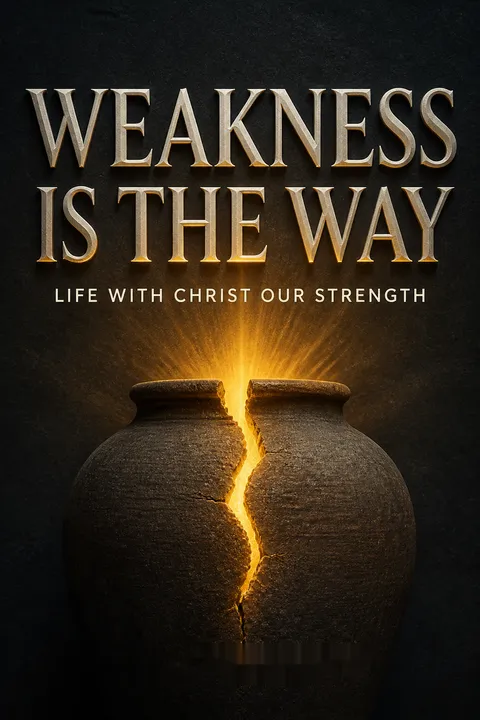
Weakness Is the Way receives praise for Packer's exposition of 2 Corinthians, exploring how acknowledging weakness leads to strength in Christ. Readers appreciate the accessible yet scholarly approach, though some find Packer's writing style challenging. The book emphasizes Paul's defense of his ministry, focusing on dependence on Christ rather than self-sufficiency. A substantial section on Christian giving and generosity surprises many readers. At 118 pages, it's described as devotional and practical. Some reviewers feel the title is misleading, expecting more personal reflection than biblical exposition. Overall, readers find it encouraging and recommend it alongside commentaries.
People Also Read








Download PDF
Download EPUB
.epub digital book format is ideal for reading ebooks on phones, tablets, and e-readers.








































