
Plot Summary
Sea Boots and Legends
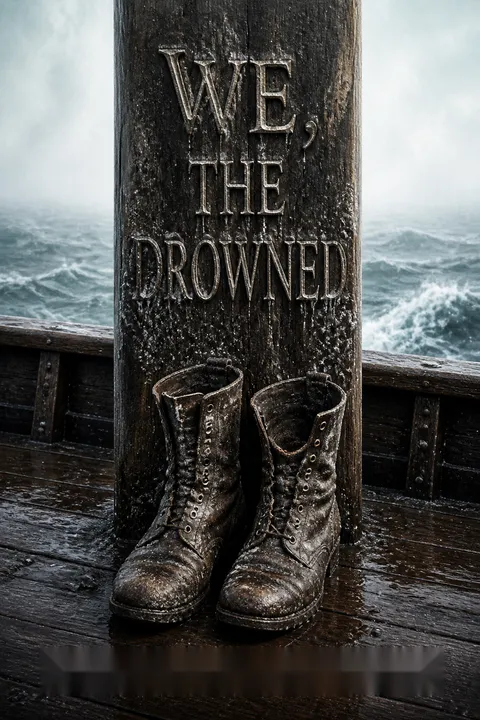
Laurids Madsen's legendary survival—blasted sky-high as his ship explodes, then returning to Marstal "from Heaven" thanks to his boots—becomes the founding myth for Marstal. His world-weary bravado and alien tongue confuse his children, especially Albert, who idolizes him. Marstal is a place tethered to the sea, with generations pitching their manhood, fate, and legacy into the waves. Laurids' restless spirit and longing for elsewhere instill a yearning in his children and neighbors: the ocean's promise of greatness foreshadowed by ever-present loss. The communal memory is one not just of departure or return but of enduring absence—fathers who go to sea and either don't return or come back irrevocably changed. The boots, heavy and charred, are both anchor and symbol—the burden of history and hope that haunts each child as he grows toward the horizon.
Smoke and Steel Battles
The outbreak of the Danish-German war violently interrupts Marstal's routines—first as a farce, then as tragedy. Laurids and other townsmen, initially intoxicated by glory and camaraderie, face the terrifying randomness of battle aboard Denmark's fleet. Cannon shots, blood, and death strip war of heroism, confronting boys and men with trauma and guilt that never quite fades. Captivity and humiliation turn the survivors inward, transforming Laurids' spirit and further alienating him on his return. The aftermath breeds silence, shame, and bitter self-reckoning; townsfolk must build new walls and dreams upon foundations of collective debacle and haunted memories, even as they mythologize what could not be endured.
Scars of Childhood
Marstal's children grow up under teacher Isager's tyranny—his thrashing rope and violence a rite of passage more formative than any school lesson. Endurance, camaraderie, and cunning are born from shared suffering. The boys absorb his brutality, turning it on each other and the world. Their revenge—against Isager, his dog, and ultimately themselves—never fully satisfies, only perpetuating cycles of cruelty. Early traumas, in school or at home, are never contained: boys harden, or break, learning young that justice is rare, and violence migrates from bullies to battlefields.
Thrashed and Transformed
Graduating from Isager's school means nothing without survival at sea. Young Albert and fellow boys, thrust into adult responsibility as ship cooks and deckhands, learn that the sea, like Isager, can batter but also teach. Endurance, wit, and resourcefulness define adulthood. The longing for the open world—America, the Pacific—pulls the ambitious outward, but every horizon is tinged with the threat of humiliation, hunger, and violence. The legacy of pain, pride, and stubborn will is passed from father to son, forging the resilience (and wounds) that define Marstal's sons.
War at Home and Sea
As Marstal prospers from the boom in shipping, new dangers arise—both from global wars and the changing tides of commerce. Community is built in the shared work of constructing the breakwater, a costly monument to togetherness and survival. At the same time, beneath apparent unity, obsessions, rivalries, and old wounds simmer. The sea takes more than it gives; every ship and every son carries the risk of disappearance. The town's prosperity is haunted by dreams and visions of disaster, and even amidst growth, a sense of impending doom shadows each step forward.
The Rage of Orphans
Orphaned or wounded children—bereft of fathers, battered by mothers or stepfathers—channel their pain into acts of defiance and destruction. Boys like Herman turn trauma into ruthlessness; others seek solace or power in gangs, rites of passage, and dangerous games. Childhood innocence is a casualty in a community where every adult is either lost to the sea or haunted by what they've seen there. The boys inherit their town's wounds and ambitions, setting the stage for new cycles of rebellion and despair.
Lost and Left Behind
Marstal's greatness rests on perpetual loss: ships and men vanish without markers, leaving widows and families in endless mourning. The communal psyche is shaped by the tension between collective endurance and silent, private grief. As the world modernizes, Marstal's traditions seem increasingly fragile, and each war pulls further at its seams—leaving survivors scarred, haunted by visions of disaster, and uncertain whether to cling to or surrender their old ways.
Breakwater Dreams and Doubt
Albert Madsen rises from the sea's ordeal to become a shipowner, entrepreneur, and town leader. He envisions the breakwater and the monument as testaments to human fellowship: communal strength as bulwark against the ocean's (and life's) unpredictability. But beneath this pride and optimism lie unease and visions of destruction—premonitions that the fellowship and prosperity he celebrates are impermanent, vulnerable to greed, war, and unforeseeable catastrophe. The breakwater becomes a symbol not just of hope but of the limits of human defenses.
The Widow's Inheritance
The deaths of Marstal's men (in war and on the sea) leave widows—and soon enough, women—at the center of its economic and social life. Klara Friis, orphaned in her own childhood, inherits not just property but agency and purpose. Her resolve to save Marstal from the sea's toll sets her against tradition. Guided by memories of abandonment and schooled in toughness, she uses wealth not to build, but to prevent others from being lost—reshaping her community's future and her own role from victim to architect. Yet every power gained brings new loneliness and doubt.
Profits and Disillusions
The boom years bring both prosperity and moral uncertainty: speculation, risky investments, and shifting values challenge old certainties. Marstal's pride in resilience is poisoned by greed, the flimsy promises of men like Henckel, and the discovery that profit can be as destructive as any storm. Shipowners weigh human lives against gold; loyalty and tradition unravel as townsfolk chase gain or fall into bankruptcy. Peace and progress reveal themselves to be as contingent, and as treacherous, as the sea itself.
The Next Generation's Furies
The post-war boys create their own codes, gangs, and initiation rituals; violence and rivalry persist in peacetime. These are the new orphans: children of absent or dead fathers, shaped by stories of heroism and loss, desperate to reclaim agency in a world never designed for them. Myths (and lies) about adventure, toughness, and shame bind them—until injury, betrayal, and the coming of adulthood break many of them apart. The boys of Marstal rehearse, on land and in play, the epic struggle of survival in a vanishing world.
Hearts of Shrimp and Stone
The new Marstal is defined by small mercies and unexpected connections. Albert finds purpose mentoring Knud Erik, a boy vulnerable to grief's pull and a mother's anxious love. Their relationship is half-fatherly, half peer—as the town changes, so do the meanings of family, legacy, and masculinity. The passing of old values, the aching for significance, and the brief warmth of shared adventure give way, inevitably, to new losses and estrangement. The heart that endures is necessarily both tender and hard.
The Cannibal's Shadow
The long shadow of violence persists—Herman's childhood crime, covered in secrecy and fear, marks him and those around him. The town's justice is pragmatic and incomplete; trauma is neither avenged nor absolved. Stories of murder and betrayal, passed among the boys, become sources of both fascination and dread. The people of Marstal are at once complicit and terrified: justice can never be truly final in a place where ghosts outnumber the living.
All Our Fathers Drown
The sea's cost—fathers, sons, and entire generations—is paid again and again, with each new conflict or voyage. Attempts to cheat fate or provide safety—memorials, insurance, new technology—prove limited, sometimes hollow. Women inherit the town's fortunes and burdens, overseeing not just the economy but the very meaning of survival. Efforts to break the cycle, to save the next generation from sacrifice, often lead only to further loneliness or unintended harm. The town's memory is a ledger of debts that can never be cleared.
Women Take the Helm
Driven by a desire to end needless loss, Klara and other women assume the roles of builders, protectors, and, finally, destroyers of Marstal's shipping traditions. Their efforts to redirect the town's fate—from orphanages to idled ships—seek to create a new world free from the old cruelties. Yet this victory is bittersweet: saving sons means losing Marstal itself. By seeking to wall out death, they wall out the very forces that made the town what it was.
Survivors, Sins, and Songs
As world war returns, Marstal's sons and daughters must navigate not just mines and U-boats but the inner devastation of guilt, trauma, and complicity. Knud Erik and his crew survive horrors that transform them: heroism is wound with shame, survival with moral compromise. Old enemies become companions in suffering. In the absence of easy forgiveness or meaning, small acts of connection—songs, stories, fleeting love—are the only redemption left.
Return from the Deep
Survivors—ragged, broken, mixed in origin and fortune—struggle to return to a town that can no longer understand them, to families that have moved on or mourned them as dead. The war's end is both catharsis and further estrangement: the returning are both celebrated and isolated, their brokenness and wild stories unsettling to those who stayed. The lost—fathers, sons, dreams—are mourned yet again. The joy of peace is always muted by the knowledge of what was left behind.
We, The Drowned
In the final reckoning, Marstal's identity is revealed as inseparable from the ocean's hunger and history's indifference. The town—its generations, ships, monuments, myths—is a tapestry of fellowship and forsakenness, pride and ruin, endurance and defeat. There is no neat closure, only ongoing reckoning with guilt, hope, and the dead who are always among them. The living keep celebrating, grieving, building, and telling their stories, woven forever with those who sleep beneath the waves.
Analysis
Carsten Jensen's We, the Drowned is a polyphonic epic of community, inheritance, trauma, and survival. Its narrative encompasses a century of Marstal's history, threading together myth, memory, and gritty realism—a communal saga shaped by the inescapable sea. At its core, the novel interrogates how violence—whether at home, in school, at sea, or in war—forms and deforms both individuals and entire societies. The persistence of fathers' absence, the ambiguous power of mothers and widows, and the restlessness of children propel cycles of ambition, rebellion, and catastrophe. Fellowship, Jensen insists, is both the town's greatest strength and potentially its undoing—a force forged in hardship but always at risk from greed and oblivion. The novel challenges nostalgic heroism while refusing to romanticize suffering, offering instead a meditation on grief: how communities celebrate, bury, and are haunted by their losses; how stories and shared rituals both heal and imprison. Ultimately, Jensen invites us to see ourselves in Marstal—in the uneasy line between pride and mourning, the legacies we inherit and inflict, and the ongoing struggle to find home in a world always on the verge of drowning.
Review Summary
We, the Drowned receives overwhelmingly positive reviews, with readers praising its sweeping multi-generational narrative spanning nearly a century of Danish maritime life. Reviewers highlight Jensen's masterful use of the rare first-person collective "we," his vivid portrayal of seafaring hardships, and his richly drawn characters. The novel's emotional depth, historical detail, and lyrical prose draw frequent comparisons to classic maritime literature. Some note the middle section feels slower and landlocked, but most agree the stunning finale more than compensates. International readers across multiple languages express deep admiration for this ambitious epic.
People Also Read

Characters
Laurids Madsen
Laurids is at the heart of Marstal's legend: his survival after being blown atop a ship's mast, his iconic boots, his fierce independence. Scarred by early loss and the randomness of war, he becomes both hero and exile—famed, then lost to his family, wandering ever farther in spirit and in fact until vanishing on the far side of the world. His inability to settle—spiritually and geographically—marks his children, especially Albert, with longing and confusion. Laurids epitomizes the tension between the need for legacy and the temptation to escape; his mythic stature conceals deep wounds and leaves questions that echo across generations.
Albert Madsen
Laurids's son, Albert, is both shaped and unsettled by his father's absence and legendary aura. Enduring hardship both at sea and in youth, Albert develops resilience, intelligence, and a profound sense of duty—to his town, to his protégés, to history. Rising to prominence as shipowner and town father, he envisions projects like the breakwater as defenses against chaos. His empathy drives him to mentor the next generation, yet he is tormented by visions, survivor's guilt, and the knowledge that the greatest dangers come from within—from greed, pride, and the limits of community. Albert's eventual loneliness and death embody Marstal's paradox: even the strongest are ultimately stranded, remembered but not fully understood.
Klara Friis
Orphaned in childhood and twice widowed, Klara channels her pain into resolve, becoming one of Marstal's most powerful and controversial figures. Her paradoxical project—to "protect" Marstal by destroying its shipping—stems from her refusal to permit further loss, even at the price of tradition and prosperity. Her sternness, guilt, and vision drive her to acts of care and vengeance alike: building orphanages, manipulating fortunes, and seeking to control fate itself. Her relationship with her son is fraught with disappointment and grief, yet her love—imperfect and sometimes destructive—shapes the fate of all around her. Klara represents both the costs and the necessity of change.
Herman Frandsen
Scarred by loss and abuse, Herman is driven by hunger for agency and power; as a boy, he kills his stepfather, a secret that warps his sense of justice and belonging. Herman's trajectory—from dangerous youth to criminal, laborer, and finally disabled outcast—illustrates how trauma begets further violence and isolation. Despite occasional moments of dark humor or camaraderie, he never achieves redemption; his survival is both a curse and, paradoxically, the glue that binds others in shared horror. In old age, he becomes a symbol for Marstal's lost innocence.
Knud Erik Friis
Born into loss, Knud Erik is both shaped by, and desperate to escape, his mother's fear and the town's expectations. Mentored by Albert, driven to prove himself at sea, and repeatedly wounded by loss and guilt, he exemplifies the tension between old codes and new realities. As captain, survivor, and reluctant leader, he carries the burdens of history, family, and community failure. Even love brings little peace; his struggle is never to find answers but to keep going, rebuilding meaning in the wake of catastrophe.
Anton Hay
Anton's restless energy—first as a terrorizing boy, later as machinist, gang leader, and restless man—serves as both catalyst and touchstone for Marstal's younger generations. Prone to extremes—bravery, mischief, ingenuity—Anton is both admired and, at times, pitied. He stands for the perpetual struggle against fate, authority, and disappointment: the enduring spirit that neither victory nor exile can quite extinguish. His death, finally, marks the end of an era.
Vilhjelm
Vilhjelm's sensitivity, faith, and perseverance form a quiet counterpoint to the louder ambitions and rages of friends like Knud Erik and Anton. Marked by family hardship and disability, he nevertheless brings both wit and resilience to Marstal, surviving ordeal (including near-starvation and loss). His transformation—from tongue-tied boy to resourceful, competent adult—demonstrates both the damage and the hope that arise from community.
Anna Egidia Rasmussen
Living through the loss of husband and nearly all her children, Anna turns her suffering into compassion for others: comforting new widows, becoming the repository of Marstal's grief and hopes. Her kitchen and presence are sanctuaries. She stands for the endurance and sacrifice of the women left behind, offering not easy solace but the sustaining strength of shared sorrow. Her quiet interventions shape many fates.
Isager
Isager's cruelty molds Marstal's boys, instilling both scars and the toughness considered necessary for survival. His inability to inspire respect or love, reliance on brutality, and eventual decline are mirrored in the town's own ambivalence about tradition, order, and justice. Isager's rope is both literal and metaphorical: a lesson in power, obedience, and trauma that lasts long after he is gone.
Sophie Smith (Miss Sophie)
Sophie, encountered by Knud Erik in youth, reappears in extremity as both fellow survivor and mother. Her resilience, adaptability, and ambiguous (sometimes masculine) presence offer both a mirror and a challenge to Knud Erik. Their brief intimacy, her capacity for independence and tragedy alike, and her presence as mother to Bluetooth (the ship's symbolic child) all establish her as a figure for the new kind of family—fragile, provisional, but real—that war and change make necessary.
Plot Devices
Collective Voice and Generational Chorus
"We, the drowned" is as much about community memory as about individual fate. Jensen employs a "we" that encompasses old and young, living and drowned, male and female, blurring boundaries between personal and communal experience. This device allows shifting perspectives—eyewitness, legend, rumor—to overlap, emphasizing how trauma, pride, and longing can shape reality as powerfully as actual events. The use of collective voice both amplifies and critiques the reliability of memory, the slipperiness of truth, and the ways communities make and unmake heroes and villains.
Cyclical Structure and Recurring Motifs
The novel moves in broad cycles—war and peace, prosperity and decline, grand projects and disasters—mirroring the endless tides and storms of the sea. Generational recurrence is echoed in names (Laurids/Albert, Rasmus/Esben), in motifs like the boots, rope, and shrunken head, and in the repetition of loss and reconstitution of community. Every apparent ending presages a new (often tragic) beginning.
Symbolism and Objects
Key objects—the charred boots, the breakwater, the shrunken head, pearls bought with lives, memorial stones—carry layered meanings: burdens, anchors, hopes, wounds, and failed redemptions. Their passage from hand to hand signals the transmission of identity, fate, and unresolved debt across time.
Foreshadowing and Prophetic Dreams
Albert's dreams, as well as other uncanny warnings and omens, provide both literal and metaphorical foreshadowing. They shape choices, heighten dread, and remind readers that disaster is both sudden and, in some sense, always anticipated. These devices also ask how much agency is possible when fate has already pronounced judgment.
Focalization Shifts and Narrative Delay
Chapters and sections jump among generations—sometimes zooming in close to a single consciousness (Albert, Klara, Knud Erik), other times panning back to town or mythic scale. Narrative delay, withholding, and re-narration are crucial: stories are told, revised, or confessed years after the fact, through rumor, official inquiry, or drunken anecdote. The truth is always provisional.
War as Both Setting and Character
From the first Danish-German war to the Atlantic convoys, war is not just background but an active, shaping force—at once destroyer, redeemer, teacher, and thief. War's effects ripple through every relationship, inheritance, and dream, making the line between victim and perpetrator blurry and fraught.
Download PDF
Download EPUB
.epub digital book format is ideal for reading ebooks on phones, tablets, and e-readers.








































