
Plot Summary
Lockpicks and Family Silences
In the cold, uncertain dawn of 1993, Roy Moreland, fourteen, spends his nights picking locks with tools sent by his absent brother, Mason, a Marine contractor in Iraq. His family, living on the edge of Waco, Texas, is defined by what they don't say: his mother, a hospice nurse, quietly grieves for Mason; his father, the county sheriff, is a pillar of law and tradition. Their dinners are filled with curated stories and unspoken worries. Roy's lockpicking is both a secret rebellion and a way to imagine saving his brother, a metaphor for his longing to unlock the mysteries and distances within his family. The Morelands' silence is a shield against the world's dangers, but also a barrier to true connection, setting the stage for the unraveling to come.
California Encounters the Lamb
Jaye and her mother, Marie, live a modest life in California until they meet Perry Cullen, known as the Lamb, while cleaning a rental house. Perry is odd, magnetic, and soon draws Marie into his orbit with music, food, and attention she's never known. The house fills with Perry's followers—musicians, seekers, and lost souls—each drawn by his promise of meaning and belonging. Jaye watches her mother transform, becoming younger, more hopeful, and more vulnerable. Perry's stories grow stranger, his charisma deepening as he claims divine visions and a mission in Texas. The seeds of obsession and faith are sown, and when Perry leaves for Texas, Marie and Jaye's lives are set on a collision course with the cult's destiny.
Gun Shows and Gas Masks
At a crowded Texas gun show, Roy, still reeling from heartbreak and family tension, meets a mysterious girl in a gas mask—Jaye. Their banter is sharp, awkward, and electric, a rare spark in Roy's lonely world. The Lamb's followers sell "Bullet Bibles" and rumors swirl about secret tunnels and stockpiled weapons. Roy's father, the sheriff, is caught between local politics and the growing unease about Perry's cult. Jaye, new to Texas, is both an outsider and a potential target for the Lamb's plans. The gun show becomes a crucible: Roy and Jaye's connection is immediate but fraught, their families' fates already entwined by forces beyond their control.
The Cult on the Prairie
Perry's cult, a ragtag congregation on a scrubby Texas ranch, grows in fervor and paranoia. Followers build shoddy barracks, live communally, and mark their days with Bible study and chores. Perry's teachings become more apocalyptic, centering on the "New Light"—children destined to inherit the earth after a coming cataclysm. Jaye and her mother arrive, finding squalor and devotion in equal measure. Roy's family, especially his father, is drawn into the orbit of the cult through law enforcement and personal ties. The boundaries between faith, manipulation, and abuse blur. The ranch is both a sanctuary and a powder keg, its isolation breeding both hope and danger.
New Names, New Light
Jaye, feeling invisible in her old life, adopts the name "Jaye" as she and her mother are absorbed into the cult. The Lamb's doctrine demands new identities and total loyalty. Children are groomed as the "New Light," and girls like Charity and Jaye are eyed for their potential roles in Perry's vision. Roy, meanwhile, is haunted by his inability to fit his family's mold and by his growing feelings for Jaye. Both teens are caught between the longing for belonging and the fear of losing themselves. The cult's rituals, secrets, and sexual predation intensify, setting the stage for tragedy.
Love and Doubt in Waco
Roy and Jaye's relationship deepens through secret meetings, phone calls, and stolen moments. Their love is a fragile rebellion against the forces closing in around them—family expectations, cult indoctrination, and the threat of violence. Doubt becomes a central theme: Roy doubts his courage and place in the world; Jaye doubts the cult, her mother, and her own worth. Their connection is both a lifeline and a source of guilt, as each wonders if love can survive the coming storm. The outside world—school, friends, and the law—feels distant and irrelevant as the siege mentality on the ranch grows.
The Gathering Storm
Rumors of illegal weapons, child abuse, and government scrutiny swirl around the ranch. Roy's father is pressured by federal agencies and local politics, while Perry's paranoia and messianic delusions intensify. The cult stockpiles food, arms, and fear. Jaye and Roy, each in their own way, search for evidence—milling machines, grenades, anything that might justify intervention or offer a way out. The adults are blinded by faith, ambition, or duty, leaving the children to navigate a world growing more dangerous by the day. The sense of impending catastrophe is palpable, as if everyone is waiting for a match to be struck.
The Raid Begins
On a foggy morning, federal agents launch a raid on the ranch, arriving in cattle trailers and tactical gear. The cult, forewarned and armed, resists. Bullets tear through walls, killing and wounding indiscriminately. Jaye witnesses the chaos and horror firsthand, her mother injured, children screaming, the Lamb wounded but defiant. Roy, watching on TV, is paralyzed by guilt and fear, knowing he might have prevented tragedy if he'd spoken up about the grenades he found. The siege begins, and the world's eyes turn to Waco, but for those inside, it is the end of innocence and the start of a nightmare.
Siege and Survival
The standoff drags on for weeks. The cult is besieged by tanks, spotlights, and psychological warfare—power cut, food dwindling, cold and fear mounting. Negotiations falter; the Lamb's sermons grow more erratic. Some hostages are released, but most remain, trapped by faith, fear, or lack of options. Jaye cares for her dying mother and for Kanaan, Perry's son, while Roy, wracked by guilt and longing, tries to find a way to save her. The outside world debates blame and meaning, but inside, survival is all that matters. The siege becomes a crucible, burning away illusions and forcing each character to confront their deepest truths.
Tunnels and Escape
As the government prepares to end the siege with force, Roy and Jaye each discover the existence of secret tunnels beneath the ranch. Jaye uses them to free the horses and, later, to plan an escape with Kanaan and her dying mother. Roy, driven by love and guilt, tricks a deputy into bringing him to the ranch, then flees into the tunnels as the final assault begins. Underground, in darkness and terror, Roy and Jaye are reunited, joined by Kanaan and the silent giant Lyle. Together, they crawl toward uncertain freedom as the world above them burns.
Fire and Ashes
The government's final assault—tanks, tear gas, and fire—consumes the ranch. Most of the cult perishes in the flames, including Perry, who dies in a confrontation with Roy and Jaye. The survivors—Roy, Jaye, Kanaan, and Lyle—escape through the tunnels, emerging into a world that believes them dead. The fire is both literal and symbolic: the destruction of a community, the end of innocence, and the burning away of false faith. The survivors are left with trauma, guilt, and the burden of memory, but also with the possibility of new beginnings.
Aftermath and Inheritance
Roy, Jaye, and Kanaan are taken in by Roy's family under new identities, their survival a closely guarded secret. They build new lives on a Texas ranch, haunted by the past but determined to forge a future. The trauma of Waco lingers—nightmares, guilt, and the fear of discovery—but so does love and the stubborn will to endure. The world moves on, the media circus fades, but for the survivors, every day is shaped by what they lost and what they managed to save.
Ghosts, Guilt, and Grace
Years pass. Roy and Jaye (now Elisabeth and Andy) marry, raise Kanaan (Junior), and build a quiet life. The ghosts of Waco—dead friends, lost parents, unanswered questions—haunt them, surfacing in moments of joy and sorrow. They debate whether to reveal the truth to Junior, weighing kindness against cowardice. The past is both a wound and a source of grace, shaping their love and their understanding of the world. They are both fugitives and inheritors, living proof of survival's ambiguous blessing.
The Long Haunt
As the decades pass, the story of Waco is retold in podcasts, interviews, and family lore. Survivors grapple with guilt, responsibility, and the impossibility of closure. The world keeps spinning, indifferent to individual suffering. The lessons of Waco—about faith, power, love, and violence—remain unresolved, echoing in the lives of those who lived through it and those who inherit its legacy. The act of storytelling becomes both a way to remember and a way to let go, a means of finding grace in the ashes.
The World Keeps Spinning
In the present, Elisabeth (Jaye) reflects on her life in rural Texas, surrounded by family, animals, and the quiet rhythms of survival. The horrors of Waco are both distant and ever-present, woven into the fabric of her days. She and Andy have built a life from the wreckage, raising Junior and welcoming grandchildren. The world has not changed—violence, faith, and folly persist—but in small acts of love and endurance, they find meaning. The past cannot be undone, but life, stubborn and miraculous, goes on.
Analysis
A modern parable of faith, violence, and survivalWe Burn Daylight is a haunting, deeply human exploration of what draws people to faith, what keeps them in thrall to dangerous leaders, and what it means to survive catastrophe. Through the intertwined stories of Roy and Jaye, the novel examines the universal longing for connection, the seductive power of certainty, and the costs of both belief and skepticism. The cult is not merely a backdrop but a crucible, exposing the best and worst in its members and in the society that surrounds them. The narrative's structure—fragmented, retrospective, and polyphonic—mirrors the chaos and ambiguity of real trauma, refusing easy answers or villains. The lessons are sobering: that love can save but also endanger; that the line between victim and perpetrator is often blurred; that survival is both a blessing and a burden. Ultimately, the novel suggests that meaning is not found in grand revelations or heroic acts, but in the small, stubborn acts of care, endurance, and storytelling that allow us to keep going when the world burns.
Review Summary
Characters
Roy Moreland
Roy is the fourteen-year-old son of the county sheriff, caught between the expectations of his family's law enforcement legacy and his own fears and uncertainties. His secret hobby of lockpicking is both a metaphor for his desire to unlock the mysteries of those around him and a literal skill that becomes crucial to survival. Roy's relationship with his absent brother, Mason, and his emotionally distant parents shapes his longing for connection and belonging. His love for Jaye is transformative, giving him a sense of purpose and agency, but also exposing him to guilt and trauma. Roy's journey is one of coming of age in the crucible of violence, learning that courage is not the absence of fear but the willingness to act despite it.
Jaye (Elisabeth/Thisbe)
Jaye is a teenager from California who, along with her mother, is drawn into Perry's cult. Feeling invisible and powerless in her old life, she adopts a new name and identity, seeking meaning and agency. Jaye is sharp, skeptical, and fiercely protective of her mother, but also vulnerable to the cult's manipulations. Her relationship with Roy is a lifeline, offering hope and love amid chaos. Jaye's psychological arc is one of transformation: from passive observer to active survivor, from victim to architect of her own escape. Her ability to adapt, to love, and to endure becomes her salvation, but she is forever marked by the losses she endures.
Perry Cullen (The Lamb)
Perry is the self-proclaimed Lamb, a cult leader whose charisma masks deep insecurity, trauma, and a hunger for power. Raised in abuse and neglect, he weaponizes scripture and suffering to attract and control followers. Perry's psychological complexity lies in his simultaneous need for adoration and his self-loathing; he is both a victim and a perpetrator. His relationships—with women, children, and especially with Jaye and Roy—are transactional, always serving his vision of himself as a chosen one. Perry's arc is one of increasing delusion and violence, culminating in his death as both martyr and fraud. He is the embodiment of the dangers of unchecked faith and charisma.
Marie Carroll (Jaye's Mother)
Marie is a cleaning woman whose loneliness and longing for meaning make her susceptible to Perry's attention. Her transformation under his influence is both poignant and tragic: she becomes younger, more hopeful, but also more vulnerable and ultimately a victim of the cult's violence. Marie's relationship with Jaye is central—she wants to be seen and loved, but her choices endanger them both. Her arc is one of hope, disillusionment, and sacrifice, as she ultimately urges Jaye to escape and live.
Sheriff Elias "Eli" Moreland
Roy's father, Eli, is the county sheriff, a man of principle, tradition, and deep emotional reserve. He is respected in the community but struggles to balance his roles as lawman, father, and husband. Eli's psychoanalysis reveals a man haunted by the limits of his power—unable to protect his family from loss or his community from tragedy. His relationship with Roy is marked by unspoken love and disappointment, and his handling of the cult crisis is shaped by both professional caution and personal guilt. Eli's arc is one of stoic endurance, learning that some things cannot be fixed or saved.
Mason Moreland
Mason, Roy's older brother, is a Marine contractor in Iraq, his absence a constant ache for the family. He represents both the ideal of courage and the reality of abandonment. Mason's sporadic calls and gifts (the lockpicking kit) are lifelines for Roy, but also reminders of what is missing. His eventual fate—never fully resolved—mirrors the novel's themes of uncertainty and the costs of survival.
Virgil Bernthal
Virgil is one of Perry's earliest and most devoted followers, serving as both lieutenant and scapegoat. He is practical, resourceful, and ultimately one of the few survivors, carrying the cult's legacy into the digital age. Virgil's loyalty is both a strength and a weakness, blinding him to Perry's flaws but also enabling him to endure. His post-siege life is marked by guilt, faith, and the need to keep the story alive.
Big Lyle
Lyle is a physically imposing, mostly mute member of the cult, rumored to have a violent past. He is a figure of strength and mystery, often disappearing for days. In the end, Lyle becomes the key to Roy and Jaye's survival, guiding them through the tunnels and ensuring their escape. His actions are motivated by a quiet sense of duty and compassion, making him a counterpoint to Perry's manipulative leadership.
Charity Bernthal
Charity, Virgil's daughter, is a pale, devout teenager groomed by Perry as part of the "New Light." Her innocence and faith are exploited, and her relationship with Jaye is fraught with jealousy and indoctrination. Charity's arc is a tragic illustration of how children are used and sacrificed in the name of belief.
Coop
Coop is Roy's best friend, a boy defined by loss (his father's abandonment) and a penchant for mischief. He provides humor, support, and a grounding presence for Roy. Coop's outsider perspective allows him to see through the cult's absurdities, but he is also deeply affected by the events, carrying the story forward through his podcast and ongoing search for meaning.
Plot Devices
Dual Narratives and Shifting Perspectives
The novel alternates between Roy and Jaye's perspectives, allowing readers to experience the cult's rise and fall from both inside and outside. This duality creates tension and empathy, highlighting the universality of longing, doubt, and the search for belonging. The shifting voices also underscore the ways in which trauma and love are experienced differently but are deeply connected.
Foreshadowing and Retrospective Framing
From the opening pages, the story is haunted by the knowledge of coming tragedy—the "March fires," the world's attention, the family's dissolution. Podcast transcripts, interviews, and future reflections are woven throughout, providing both context and a sense of inevitability. This structure allows the reader to see the characters' choices in light of their consequences, deepening the emotional impact.
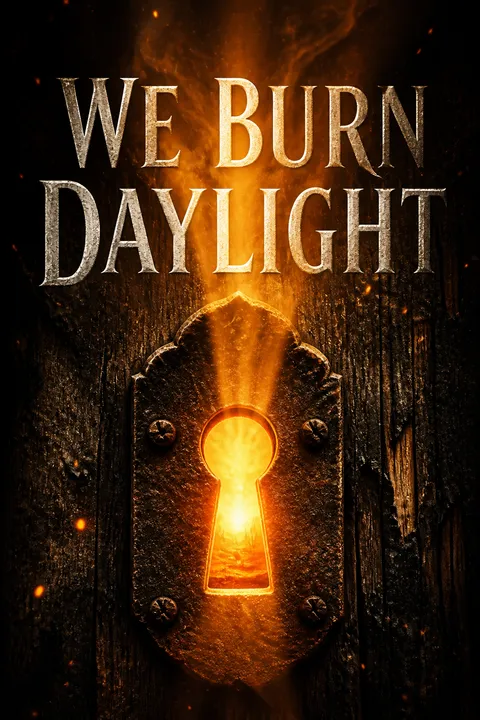
Symbolism of Locks, Tunnels, and Fire
Locks and lockpicking symbolize the desire to access hidden truths and the barriers between people. Tunnels represent both escape and entrapment, the possibility of survival and the fear of being buried alive. Fire is the ultimate purifier and destroyer, consuming both the cult and the illusions that sustained it. These symbols recur throughout, reinforcing the novel's themes of secrecy, revelation, and transformation.
The Cult as Microcosm
Perry's cult is both a specific, historically grounded community and a stand-in for any group defined by faith, fear, and the longing for meaning. The dynamics of power, manipulation, and belief within the cult mirror those in families, institutions, and nations. The siege becomes a metaphor for the ways in which people are held hostage by their own needs and the systems they inhabit.
Love as Resistance
Roy and Jaye's relationship is not just a subplot but a central device, offering hope and agency in a world bent on their destruction. Their love is a form of rebellion against the forces—familial, religious, political—that seek to define and limit them. It is also a source of guilt and risk, forcing them to choose between safety and authenticity.
The Unreliable Narrator and the Limits of Truth
The novel is suffused with uncertainty: characters lie to themselves and each other; official accounts are contradicted by personal testimony; the truth of what happened is always just out of reach. This ambiguity is both a narrative device and a thematic statement about the impossibility of closure and the necessity of living with doubt.








































