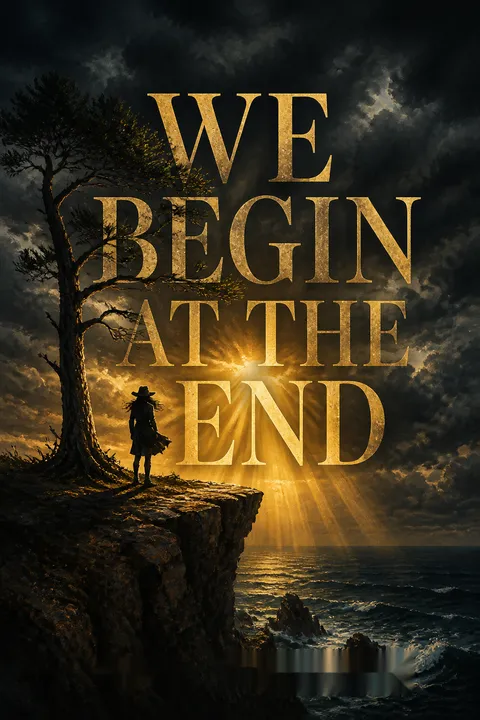

Plot Summary
Shadows of the Past
In the small coastal town of Cape Haven, a decades-old tragedy still casts a long shadow. Chief Walker "Walk" Walker and his childhood friends—Star Radley, Vincent King, and Martha May—were forever changed when Star's little sister, Sissy, was killed in a hit-and-run. Vincent, only fifteen, was convicted and sent to prison, fracturing the group and leaving wounds that never healed. The town, too, is marked by the event, its people quietly carrying the weight of what happened. Walk, now the local police chief, is a man defined by loyalty and regret, still tending to the ghosts of his youth, while Star struggles as a single mother, her life unraveling under the burden of loss and addiction.
Outlaw's Oath
Star's daughter, Duchess Day Radley, is thirteen and fiercely protective of her younger brother, Robin. She calls herself an outlaw, a badge of defiance against a world that's failed her family. Duchess's life is a daily battle: she mothers Robin, shields him from their mother's instability, and faces the cruelty of classmates and neighbors. Her outlaw persona is both armor and curse, a way to survive in a town that judges her for her mother's failings. Walk, ever watchful, tries to help, but Duchess trusts no one. The Radleys' poverty and Star's self-destruction isolate the children, and Duchess's anger simmers, ready to ignite at any threat to her brother or herself.
The Return of Vincent
After thirty years, Vincent King is released, returning to a town that remembers him as a killer. Walk, torn between duty and friendship, brings Vincent home, hoping for redemption. Vincent's presence stirs old resentments and fears, especially for Star, who cannot forgive him for Sissy's death. The town's undercurrents of gossip and suspicion intensify, and Duchess, wary of this stranger, senses danger. Vincent, haunted and changed by prison, struggles to find his place, his home now a decaying relic on the eroding cliffs. His return is a catalyst, setting in motion a chain of events that will test the limits of loyalty, forgiveness, and justice.
Fractured Families
Star's downward spiral accelerates, culminating in a near-fatal overdose. Duchess and Robin are left to fend for themselves, their home a battleground of neglect and fleeting hope. Walk intervenes, but the system offers little comfort. The children's resilience is tested as they navigate hunger, humiliation, and the constant threat of being separated by social services. Duchess's outlaw identity hardens, her love for Robin the only constant. The fragile bonds between Walk, Star, and Vincent are strained as old secrets and new dangers surface, and the children's world grows ever more precarious.
The Weight of Guilt
The past's grip shapes the present. Walk is consumed by guilt over his role in Vincent's conviction, while Star is tormented by memories and regrets. Vincent, ostracized and broken, is drawn back into the orbit of his former friends and the Radley family. The town's real estate shark, Dickie Darke, circles Vincent's family home, eager to profit from the land. Tensions rise as Walk investigates minor crimes and tries to keep the peace, but the community's wounds fester. Duchess, sensing threats from all sides, becomes increasingly reckless, her outlaw code both a shield and a weapon.
Burning Bridges
When Star is assaulted by Dickie Darke, Duchess's rage explodes. She sets fire to Darke's strip club, destroying evidence and igniting a feud. The act is both vengeance and a desperate plea for control in a world that offers her none. The fire draws police attention, and Darke, a man with dangerous connections, begins to close in on the Radleys. Duchess's actions, meant to protect her family, instead escalate the danger. Walk, torn between his duty and his love for the children, tries to shield them, but the consequences of Duchess's outlaw justice spiral beyond anyone's control.
The Price of Protection
One night, Star is found murdered in her home. Vincent is discovered at the scene, covered in blood, and is arrested for the crime. Robin, traumatized, is found locked in his room, and Duchess is left reeling. The fragile safety net collapses. Walk, devastated, is sidelined from the investigation as state police take over. The town's judgment is swift, and the children are uprooted, sent to live with their estranged grandfather, Hal, in Montana. The murder exposes the limits of protection, the cost of secrets, and the ways in which love can both save and destroy.
Montana Exile
In Montana, Duchess and Robin are strangers in a vast, indifferent landscape. Hal, a man hardened by loss and regret, struggles to connect with his grandchildren. Duchess resists his attempts at kindness, her anger and grief a barrier to healing. Robin, younger and more adaptable, begins to find solace in the routines of farm life. The siblings cling to each other, their bond both a comfort and a reminder of all they've lost. Duchess's outlaw identity is tested as she confronts new challenges, and the possibility of a different future flickers, fragile and uncertain.
New Roots, Old Wounds
As the seasons change, Duchess and Robin slowly adapt. Hal's efforts to provide stability are met with suspicion, but small moments of connection begin to grow. Duchess befriends Thomas Noble, an awkward but loyal classmate, and finds a reluctant mentor in Dolly, a glamorous neighbor with a painful past. Yet the wounds of Cape Haven linger—Duchess's anger, Robin's nightmares, and the ever-present threat of being separated by the foster system. The children's resilience is tested anew as they navigate schoolyard cruelty, the ache of missing their mother, and the struggle to trust in the possibility of belonging.
The Murder of Star
As Vincent's trial approaches, Walk and Martha May, now Vincent's reluctant lawyer, dig into the case. Evidence is circumstantial, but the town's thirst for closure is strong. Walk's health deteriorates, his hands shaking with the onset of Parkinson's, but he refuses to give up. Clues emerge: a missing gun, a break-in years ago, and the involvement of Dickie Darke. The investigation reveals layers of betrayal, obsession, and sacrifice. Duchess, far away, senses the storm building, her own guilt and longing for justice mirroring the adults' desperate search for truth.
The Boy Who Remembers
Robin, traumatized and silent, begins to recall fragments of the night Star died. His memories are confused, but they point to a truth more complex than anyone suspects. Duchess, fiercely protective, tries to shield him from the burden, but the past cannot be contained. Walk, piecing together evidence, realizes that Robin may be the only witness who can exonerate Vincent—or condemn him. The cost of remembering is high, and the siblings' fate hangs in the balance as the trial looms and the forces that destroyed their family threaten to finish the job.
The Trial of Truth
In a tense courtroom drama, Martha May fights for Vincent's life, Walk risks his career and reputation, and the town's secrets are laid bare. The prosecution's case is strong, but Martha and Walk uncover evidence that casts doubt on Vincent's guilt: the missing gun was stolen years before, and the real killer may still be free. Walk's testimony, and his confession of illness and error, sway the jury. The trial becomes a crucible for forgiveness, sacrifice, and the possibility of redemption. Duchess and Robin, watching from afar, are caught between hope and despair.
The Unraveling
The verdict is not guilty, but the truth is more complicated. Robin's memories reveal that he accidentally shot Star while trying to protect her from Darke. Vincent, knowing the boy's innocence, took the blame to save him. Walk, Martha, and Duchess must confront the cost of their choices—the lies told to protect, the violence done in the name of love, and the impossibility of perfect justice. Darke, wounded and desperate, is finally confronted by Walk, who must decide whether mercy or vengeance will define his legacy. The cycle of violence and sacrifice comes to a head, demanding a reckoning from all.
The Last Outlaw
Duchess, now fourteen, faces the hardest choice of all: whether to reclaim Robin and try to build a life together, or to let him go to a family that can give him the safety and love she cannot. In an act of true selflessness, she leaves Robin with his adoptive parents, ensuring his chance at happiness even as it breaks her heart. She wanders, carrying the weight of her outlaw identity, her love for her brother, and the scars of all she's survived. The story comes full circle as Duchess, like the outlaws she idolizes, rides into an uncertain future, her legend both a burden and a beacon.
A Place to Begin
In the aftermath, Walk retires, Martha finds purpose in helping the broken, and Duchess finds a home with Dolly, who adopts her as her own. Robin thrives with his new family, his memories of pain fading into the background of a safe, loving life. Duchess, still an outlaw at heart, learns that selfless acts can heal even the deepest wounds. The story ends not with perfect justice or restoration, but with the hard-won knowledge that we begin at the end—that every ending is a chance to start again, and that love, though imperfect, is the only thing that endures.
Analysis
A modern tragedy of love, loss, and the search for redemptionWe Begin at the End is a profound meditation on the ways in which the past shapes the present, and how cycles of violence, guilt, and sacrifice can only be broken by acts of radical selflessness. Through its unforgettable characters—especially Duchess, whose journey from outlaw to selfless protector is both heartbreaking and inspiring—the novel explores the limits of justice, the complexity of forgiveness, and the enduring power of love. Whitaker's narrative refuses easy answers, insisting that every ending is also a beginning, and that healing is possible even in the aftermath of unimaginable loss. The story's emotional arc is one of descent and ascent: from the depths of trauma and betrayal to the hard-won hope of new beginnings. In a world where fairness is elusive and happy endings are rare, the novel suggests that meaning is found not in perfection, but in the courage to care for others, to let go, and to begin again.
Review Summary
We Begin at the End receives overwhelmingly positive reviews, with readers praising its emotional depth and unforgettable characters, particularly thirteen-year-old Duchess Radley, a self-proclaimed "outlaw" caring for her younger brother Robin. Set in Cape Haven, California and Montana, the novel follows Chief Walk as he navigates his guilt over imprisoning his best friend Vincent while protecting Star Radley's children. Reviewers describe it as heartbreaking, beautifully written, and character-driven, though some critics found Duchess's dialogue unrealistic for her age and felt the story dragged.
People Also Read





Characters
Duchess Day Radley
Duchess is the emotional heart of the novel—a thirteen-year-old girl hardened by poverty, neglect, and the failures of the adults around her. She is fiercely protective of her younger brother, Robin, and adopts the persona of an outlaw as both shield and identity. Duchess's psychological complexity lies in her simultaneous vulnerability and aggression; she is both a child and a parent, desperate for love but unable to trust. Her journey is one of survival, sacrifice, and ultimately, selflessness, as she learns that true strength lies not in vengeance but in letting go. Her relationships—with Robin, Walk, and her mother—are fraught with longing, anger, and a deep, unspoken need for connection.
Walker "Walk" Walker
Walk is the town's police chief, a man defined by his loyalty to his childhood friends and his inability to move beyond the past. He is gentle, dependable, and deeply moral, but also paralyzed by regret—especially over his role in Vincent's conviction and his failure to save Star. Walk's struggle with Parkinson's disease adds a layer of vulnerability, forcing him to confront his own mortality and limitations. His relationship with Duchess is paternal, protective, and tinged with helplessness; he wants to save her but knows he cannot. Walk's arc is one of acceptance, as he learns that doing the right thing sometimes means breaking the rules and letting go of control.
Vincent King
Vincent is a man shaped by tragedy and thirty years in prison. Once a promising athlete and Walk's best friend, he returns to Cape Haven a ghost of his former self. Vincent is haunted by guilt over Sissy's death and later, by the burden of protecting Robin at the cost of his own freedom. His silence is both penance and protection, and his actions are driven by a deep sense of responsibility for the Radley family. Vincent's relationship with Star is complex—rooted in love, loss, and the impossibility of forgiveness. He is both victim and perpetrator, a man who sacrifices himself for others even as he cannot save himself.
Star Radley
Star is a woman broken by grief, addiction, and the weight of her family's history. She loves her children fiercely but is unable to care for them, her moments of tenderness undermined by her self-destructive impulses. Star's relationship with Walk is one of mutual rescue and disappointment, while her connection to Vincent is fraught with unresolved love and blame. She is both victim and agent of her own downfall, her choices shaped by trauma and longing. Star's death is the novel's central tragedy, setting off the chain of events that forces every character to confront their own capacity for harm and healing.
Robin Radley
Robin is Duchess's six-year-old brother, a gentle soul caught in the crossfire of adult failures. He is deeply attached to his sister, relying on her for comfort and protection. Robin's psychological journey is one of survival and recovery; his trauma manifests in silence, nightmares, and bedwetting, but also in moments of resilience and hope. His memory of the night Star died becomes the key to the novel's central mystery, and his eventual placement with a loving family offers a glimmer of redemption. Robin represents the possibility of healing, the hope that the cycle of pain can be broken.
Hal Radley
Hal is Star's estranged father, a man hardened by loss and regret. He is emotionally distant, struggling to connect with Duchess and Robin, but his actions reveal a deep desire to atone for past failures. Hal's relationship with Duchess is contentious but ultimately transformative; through their shared pain, they find a measure of understanding and forgiveness. Hal's death is both a loss and a release, allowing Duchess to step into her own strength and agency. He embodies the novel's themes of generational trauma, the difficulty of change, and the possibility of second chances.
Dickie Darke
Darke is the town's real estate mogul and a figure of both threat and tragedy. He is physically imposing, emotionally detached, and capable of violence, but his actions are motivated by a desperate need to provide for his comatose daughter. Darke's relationship with Star is predatory, and his pursuit of the Radley children is relentless. Yet, he is not a simple villain; his final acts reveal a capacity for sacrifice and a recognition of his own moral limits. Darke is a study in the corrupting power of need and the ways in which love can justify even the worst actions.
Martha May
Martha is Walk's childhood friend and Vincent's reluctant lawyer. She is sharp, compassionate, and deeply ethical, but also scarred by her own losses—an abortion forced by her father, the end of her relationship with Walk, and the shattering of her youthful ideals. Martha's role in the trial is pivotal; she fights for Vincent not out of sentimentality, but out of a commitment to justice. Her relationship with Walk is one of mutual respect, unresolved longing, and the possibility of renewal. Martha represents the struggle to do good in a world where the lines between right and wrong are blurred.
Thomas Noble
Thomas is Duchess's classmate in Montana, a boy marked by physical difference and social isolation. He is earnest, kind, and persistent, offering Duchess a rare friendship based on acceptance rather than pity. Thomas's own struggles with disability and belonging mirror Duchess's, and his willingness to stand by her—even at personal risk—demonstrates a quiet heroism. Their relationship is a source of warmth and humor in the novel, a reminder that connection is possible even in the bleakest circumstances.
Dolly
Dolly is a neighbor in Montana who becomes a surrogate mother to Duchess. She is elegant, sharp-tongued, and carries her own scars from an abusive past. Dolly's home is a refuge, and her adoption of Duchess is an act of radical kindness. She teaches Duchess that strength can coexist with vulnerability, and that healing is possible even after profound loss. Dolly's presence in the novel is a testament to the power of chosen family and the importance of selfless love.
Plot Devices
Interwoven Timelines and Generational Trauma
The novel's structure weaves together past and present, using flashbacks, memories, and shifting perspectives to reveal how a single tragedy reverberates across generations. The unresolved trauma of Sissy's death infects every relationship, shaping the destinies of Walk, Star, Vincent, and their children. This device allows the narrative to explore the cyclical nature of pain, the difficulty of escape, and the ways in which history repeats itself until someone is brave enough to break the pattern. The intergenerational focus deepens the emotional stakes, making every choice feel both inevitable and fraught with possibility.
The Outlaw Motif and Self-Mythologizing
Duchess's self-identification as an outlaw is both a coping mechanism and a narrative device. It frames her actions, justifies her defiance, and provides a lens through which the reader understands her struggle for agency. The motif recurs throughout the novel, linking Duchess to a lineage of rebels and survivors, and ultimately challenging the idea that anyone is beyond redemption. The outlaw myth is deconstructed, revealing the loneliness and cost of living outside the law, and the possibility that true heroism lies in acts of selflessness rather than violence.
Mystery, Misdirection, and Moral Ambiguity
The central mystery—who killed Star Radley?—drives the plot, but the novel resists easy answers. Clues are scattered, suspects abound, and the truth, when it emerges, is both shocking and deeply human. The use of misdirection keeps the reader off-balance, while the moral ambiguity of every character ensures that no one is wholly innocent or guilty. The narrative structure mirrors the characters' psychological confusion, forcing the reader to confront the limits of knowledge, the dangers of certainty, and the complexity of justice.
Symbolism and Foreshadowing
The novel is rich with symbols—the wishing tree, the outlaw hat, the eroding cliffs, the missing gun—that foreshadow key events and reflect the characters' inner lives. These symbols serve as anchors in a world of uncertainty, offering moments of clarity and connection. Foreshadowing is used to build tension, hint at betrayals, and prepare the reader for the novel's devastating twists. The careful placement of these devices ensures that every revelation feels both surprising and inevitable.
About the Author

Download PDF
Download EPUB
.epub digital book format is ideal for reading ebooks on phones, tablets, and e-readers.








































