
Key Takeaways
1. War's Paradox: Violence as a Path to Peace and Prosperity
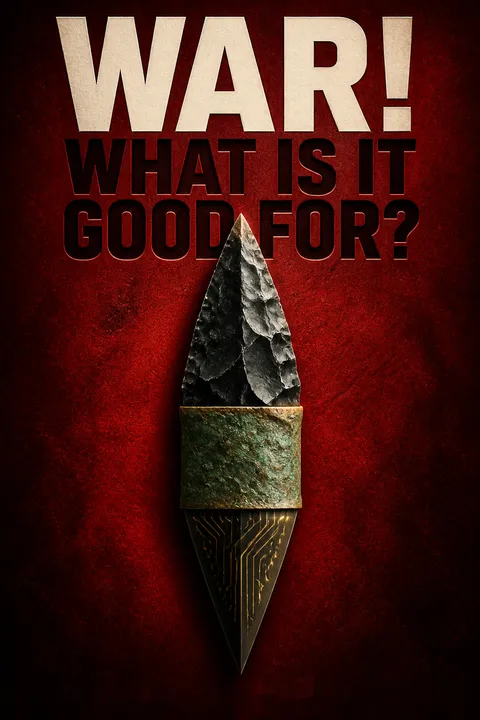
War is mass murder, and yet, in perhaps the greatest paradox in history, war has nevertheless been the undertaker’s worst enemy.
A startling claim. Contrary to popular belief, the author argues that war, despite its horrific nature, has paradoxically made humanity safer and richer over the long run. This is a "lesser-evil proposition," suggesting that the alternatives to war would have been worse, leading to constant, low-level violence and poverty. The evidence, drawn from archaeology, anthropology, and history, points to a significant decline in violent death rates over millennia.
Declining violence. Stone Age societies, characterized by small, disorganized groups, experienced shockingly high rates of violent death, with 10-20% of all people dying at the hands of others. In stark contrast, the tumultuous 20th century, despite two world wars and numerous genocides, saw only 1-2% of the global population die from war-related causes. This represents a tenfold decrease in the likelihood of dying violently.
The mechanism of peace. The author posits that war achieved this by forcing the creation of larger, more organized societies. The winners of conflicts incorporated the losers, and to manage these larger entities, rulers developed stronger governments. These governments, in turn, suppressed internal violence to maintain power and collect taxes, inadvertently creating more peaceful and prosperous conditions for their subjects.
2. Caging the Beast: How Farming Made War Productive
Only when climate change generated farming and sent people in the lucky latitudes down the road toward caging could war become productive, with winners incorporating losers into larger societies.
The agricultural revolution. Around 10,000 years ago, as the Ice Age ended, specific regions ("lucky latitudes") saw the rise of farming due to abundant domesticable plants and animals. This led to a population explosion, with hundreds of farmers per square mile, a stark contrast to the thinly spread hunter-gatherers. This increased density created "caging," where people could no longer easily flee conflicts.
The shift to productive war. In this caged environment, losing a conflict meant losing everything – land, homes, and generations of labor. This forced communities to either organize more effectively to fight back or be absorbed by a more powerful entity. This dynamic transformed war from unproductive, tit-for-tat raiding into a "productive" force, where winners incorporated losers into larger societies, leading to the formation of early states.
Leviathan's emergence. The need to manage these larger, settled populations led to the development of centralized governments, or "Leviathans." These stationary bandits, unlike roving bandits, had an incentive to protect and even promote their subjects' prosperity, as well-behaved and productive subjects were easier to govern and tax. This self-interest inadvertently led to greater internal peace and rising living standards.
3. The Evolution of Warfare: From Stone Axes to Chariots
The ten thousand years that it took to turn the first violent, poor farmers in the lucky latitudes into the peaceful, prosperous subjects of the Roman, Han, and Mauryan Empires were basically one long string of revolutions in military affairs.
Continuous innovation. The path from early farming societies to ancient empires was marked by a relentless series of military revolutions, each driven by the pressures of "caging." These innovations were not unique to the "Western way of war" but emerged across Eurasia's "lucky latitudes" in a similar sequence.
Key military revolutions:
- Fortifications (ca. 9300 B.C. onwards): Walls and ditches to defend settlements, leading to the development of siege warfare.
- Bronze Arms and Armor (ca. 3300 B.C. onwards): Metal weapons and protection, requiring new fighting techniques.
- Military Discipline (ca. 3300-2450 B.C. onwards): Training soldiers to stand their ground and follow orders in pitched battles.
- Chariots (ca. 2100 B.C. onwards): Fast, mobile platforms for archers, revolutionizing battlefield tactics and logistics.
- Mass Iron-Armed Infantry (ca. 900 B.C. onwards): Cheap, abundant iron weapons enabling huge armies and shock tactics.
Leviathan's growth. Each military revolution demanded stronger, more centralized governments to fund, organize, and command larger, more complex armies. This constant arms race between offense and defense pushed Leviathans to become more efficient, leading to greater internal pacification and prosperity within their expanding borders.
4. The Cycle of Empires: Rise, Fall, and the Steppe Challenge
Between the second century and the fourteenth, there were few years when every part of the lucky latitudes was moving in the same direction. For every empire that rose, another fell. One society’s golden age was another’s dark age.
Culminating point of conquest. By the first century A.D., ancient empires like Rome and Han China reached a "culminating point" where further expansion became counterproductive. The costs of projecting power into distant, less fertile regions, particularly the vast steppes, outweighed the benefits. This led to a shift from expansion to defense, marked by the construction of walls and the stationing of large frontier armies.
The steppe entanglement. The empires' success in pushing their borders and trade routes into Central Asia led to increasing entanglement with highly mobile steppe nomads. These horsemen, initially hired as mercenaries or bought off with bribes, became formidable adversaries. Their hit-and-run tactics and ability to exploit imperial weaknesses made them difficult to defeat, leading to a new form of "asymmetric warfare."
Cycles of counterproductive war. From roughly A.D. 200 to 1400, Eurasia's "lucky latitudes" were trapped in a cycle of productive and counterproductive wars. Nomad invasions, plagues carried along trade routes, and climate change repeatedly shattered large empires, leading to periods of "feudal anarchy" where violence surged and prosperity declined. However, new Leviathans would eventually rise from the chaos, only to face the same challenges, in an endless oscillation.
5. Europe's Global Conquest: Guns, Ships, and the Five Hundred Years' War
Europeans had got the top guns, and Asians, who had invented gunnery, had not.
A new military revolution. While Eurasia was locked in cycles of conflict, Europe, initially a "distant marginal peninsula," began a new military revolution. Though gunpowder and oceangoing ships were invented in Asia, Europeans rapidly perfected them. This was driven by Europe's fragmented political geography, which fostered constant warfare and innovation, and its physical geography, which made transatlantic exploration and colonization feasible.
The rise of European firepower. By the 15th century, European gunnery advanced rapidly, with innovations like corned powder, lighter cannons, and the "laager" tactic (wagons bristling with guns). The 1494 French invasion of Italy demonstrated that "no wall exists, however thick, that artillery cannot destroy in a few days." Simultaneously, the development of galleons transformed naval warfare, creating floating firing platforms that dominated the seas.
Global expansion. This technological superiority allowed Europeans to wage a "Five Hundred Years' War" (1415-1914), conquering 84% of the world's land and 100% of its seas. This expansion was facilitated by:
- Firepower: Overwhelming military advantage against indigenous forces.
- Disease: European diseases decimated Native American populations.
- Diplomacy: Exploiting divisions among local powers.
- Distance & Demography: Overcoming vast distances with advanced ships and eventually overwhelming local populations.
6. The Globocop Emerges: Policing a World of Trade and Power
By 1850 the invisible hand and the invisible fist were cooperating in entirely new ways.
The invisible fist. Europe's global conquests created an unprecedented intercontinental market, particularly across the Atlantic. This "Goldilocks Ocean" fostered a triangular trade that generated immense wealth. To function effectively, this new "open-access order" required a new form of governance: a "globocop" that would impartially umpire international trade and suppress violence.
Britain's role. Britain, having stumbled into the Industrial Revolution and perfected naval power, emerged as the first globocop. Its Royal Navy policed sea-lanes, suppressed piracy, and enforced free trade, creating a "Pax Britannica." This system, while often brutal and exploitative, inadvertently led to a significant decline in violent death rates in Europe and, eventually, in many of its colonies.
Creative destruction. The globocop's actions, though driven by self-interest, fostered economic growth and rising living standards globally. This "creative destruction" replaced old economic systems with new ones, leading to increased productivity and wealth. The "invisible hand" of the market, as Adam Smith observed, worked in concert with the "invisible fist" of military power to create a safer and richer world.
7. The Age of Extremes: World Wars and the Nuclear Dilemma
The twentieth century was the best of times and it was the worst of times, what the great historian Eric Hobsbawm called an “age of extremes,” combining the bloodiest war ever fought with the greatest peace ever known.
Globocop's decline. The very success of the British globocop in fostering industrialization and wealth creation led to its decline. New industrial powers like the United States and Germany emerged, challenging Britain's economic and naval dominance. This proliferation of rivals multiplied "unknown unknowns" and made the globocop's job untenable, leading to a breakdown of the global order.
The storm of steel. The resulting power vacuum and strategic uncertainties culminated in World War I, a "counterproductive war" that killed 15 million people and crippled the British globocop. The interwar period saw the rise of aggressive totalitarian regimes (Germany, Japan, Soviet Union) that embraced violence as a solution to their problems, leading to World War II, which claimed 50-100 million lives and turned much of Eurasia into a wasteland.
The nuclear revolution. World War II, despite its horrors, was also "productive" in that it cleared the way for a new global order. However, the invention of nuclear weapons fundamentally changed the game of death. A war between nuclear-armed powers became "mutual assured destruction" (MAD), making direct conflict suicidal. This forced a new strategic calculus, where the costs of great-power war became prohibitively high.
8. The American Globocop: Containing Chaos in a Nuclear World
The United States had won the greatest and most unexpected triumph in the history of productive war... The world had a new globocop.
Containment and the Cold War. After World War II, the United States emerged as the new globocop, facing the Soviet Union as a rival hemispherical power. The US adopted a strategy of "containment," using its "invisible fist" to protect and expand free markets and democratic values around the "inner rim" of Eurasia, while avoiding direct military confrontation with the nuclear-armed Soviets.
Liberal war. The Cold War was a "liberal war," fought as much with economic and ideological tools ("nylons, cigarettes, and other goods for sale") as with military might. The US leveraged its dynamic, open-access economy to demonstrate the superiority of its system, while the Soviet Union, relying on repression and a centrally planned economy, struggled to compete. This war of attrition ultimately undermined the Soviet will to resist.
Peace and prosperity. The American globocop oversaw an unprecedented era of peace and prosperity in its sphere of influence. Rates of violent death in Western democracies fell to historic lows, and economies boomed. This "Pax Americana" was characterized by:
- Deterrence: Nuclear weapons prevented great-power war.
- Economic aid: Massive investment in war-torn economies (e.g., Marshall Plan).
- Open-access order: Promotion of free trade and democratic institutions.
- Internal pacification: Strong governments and social programs reduced internal violence.
9. The Endgame of Death: Technology's Promise and Peril
If we play it well, before the end of the twenty-first century the age-old dream of a world without war might become reality.
The new culminating point. The American globocop's success, like Britain's before it, is creating new rivals, particularly China, whose economic rise is shifting the global balance of power. This, combined with other "tectonic shifts" like climate change and the proliferation of lethal technologies, suggests that the next 40 years could be the most dangerous in history, potentially leading to a new "storm of steel" with nuclear weapons.
Technological transformation. However, humanity is also entering an "endgame of death" driven by the accelerating "computerization of everything." Technologies like artificial intelligence, advanced robotics, and "brain-to-brain interfacing" are rapidly changing the payoffs in the game of death. These advancements could lead to a "Singularity" where human and machine intelligence merge, potentially making violence irrelevant.
The pacifist's dilemma revisited. The author argues that the decline in violence over millennia is due to "productive war" creating Leviathans that penalize aggression. Technology is now pushing these penalties towards infinity, making cooperation overwhelmingly more rational. The challenge is to navigate the transition from a "Pax Americana" to a "Pax Technologica" without succumbing to the dangers of a weakening globocop and the uneven, destabilizing effects of rapid technological change.
People Also Read

Download PDF
Download EPUB
.epub digital book format is ideal for reading ebooks on phones, tablets, and e-readers.








































