
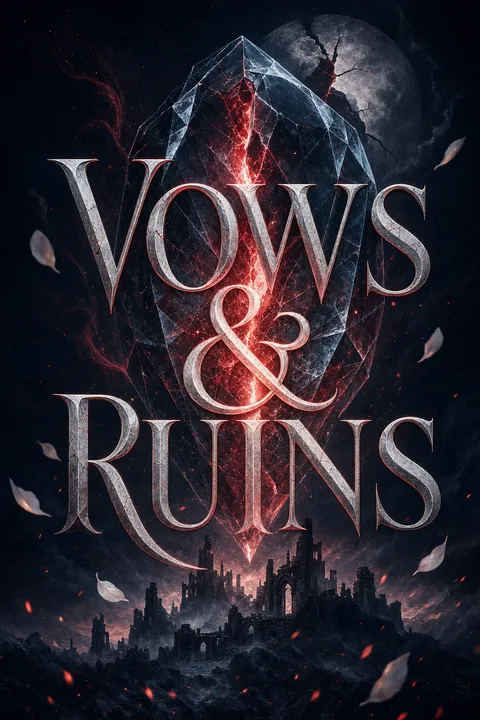


Plot Summary
Prologue
The prophecy of the midrealms speaks in riddles of ruin: in the shadow of a fallen kingdom, in the eye of a storm, a daughter of darkness9 will carry a blade in one hand and rule death with the other. When the skies blacken at the end of days, the Veil that separates the world from the horrors beyond it will fall.
The tide turns when her blade is drawn. What waits at the end is a dawn of fire and blood. These verses have shaped Thezmarr's fears for over twenty years, and now the guild believes the foretold hour has arrived.
The prophecy functions as a loaded gun on the mantel, priming readers to hunt for the daughter of darkness among the cast. Its deliberate ambiguity (a blade in one hand, death in the other) invites misreading, which the novel exploits. By foregrounding fate and inevitability, Scheuerer establishes the book's central tension between destiny and self-determination. The imagery of storms, blackened skies, and a falling Veil frames climate and cosmology as moral weather: the world's darkness mirrors its politics. Crucially, the verse withholds identity, making prophecy less a map than a trap, a structure the narrative weaponizes for its final reversals.
Rage in the Training Ring
Three weeks of self-destruction have hardened Thea1 into a blade with no sheath. After Wilder Hawthorne,2 the infamous warrior sworn to mentor her, vanished without a word the morning they discovered her true nature (a lost heir of the ruined kingdom of Delmira and a wielder of storm lightning ), she pours her fury into the ring. She dislocates two knuckles, cracks her ribs, and refuses to rest.
A jade stone at her chest marks her death at twenty-seven, leaving barely two and a half years to earn the rank of Warsword. Cal5 and Kipp,6 her loyal fellow apprentices, cannot reach her. Neither can Torj,4 the golden-haired Bear Slayer standing in as temporary mentor. She trains to outrun a grief and a longing she refuses to name.
The opening weaponizes abandonment into discipline, showing how Thea metabolizes emotional wounds as physical punishment. Her refusal to stop is less ambition than avoidance, a somatic strategy for not feeling. The fate stone introduces mortality as a ticking constraint, collapsing the usual coming-of-age timeline into urgency. Scheuerer frames identity as accumulation and erasure (girl, alchemist, shieldbearer, heir), each label burning away toward the only one Thea claims: Warsword. The chapter also establishes the central romantic ache through absence rather than presence, a smart inversion that makes longing legible without the beloved onstage, and positions rage as both engine and cage.
The Rain-Soaked Reunion
He storms back into her life by pressing steel to her throat mid-drill, furious at what she has done to herself. Their reunion detonates into a rain-soaked duel across the muddy grounds, blades ringing until she pins him beneath her and kisses him. He kisses back, then wrenches away, insisting that what happened between them in the Bloodwoods was a mistake that will never repeat.
He hands her a grueling training schedule and orders her, as his apprentice, to move into his mountain cabin and live by his rules. Thea1 seethes. Malik,8 Wilder's2 gentle mute brother and a broken former Warsword, quietly resets her dislocated fingers. That first night she learns Wilder2 sleeps bare, and that he keeps a woman's sapphire necklace hidden away.
The duel-as-foreplay establishes the book's core erotic grammar: violence and desire are indistinguishable, each strike a displaced caress. Wilder's contradiction (he cannot stop touching her, yet forbids it) dramatizes avoidant attachment, protecting the beloved by pushing her away. His insistence on cohabitation, ostensibly protocol, is self-sabotage disguised as duty. The sapphire seeds a jealousy subplot and a mystery about his past. Malik's tenderness contrasts Wilder's harshness, offering a portrait of the man Wilder fears becoming and the brother he failed. The rain, summoned partly by Thea's untrained magic, externalizes their emotional turbulence as literal weather.
You Must Choose
Desperate to weaponize her lightning, Thea1 seeks out her estranged sister Wren3 and the fortress librarian Audra,7 who proves to be the granddaughter of the tutor who once taught Delmira's royals.
Audra7 names the bloodline: they are Embervale princesses, daughters of King Soren and Queen Brigh, storm wielders remembered as tyrants who dragged their kingdom into ruin. Then comes the blow that guts Thea's1 dream. The laws of the midrealms forbid a born magic wielder from undertaking the Great Rite.
She cannot be both a storm-wielding heir and a Warsword. She must choose. Wren,3 thrilled, urges her to reclaim the throne and rebuild Delmira. Thea,1 who wants only to defend the realm with a blade, refuses both the crown and the choice, and storms out.
The chapter reframes heritage as inheritance of guilt: Thea learns she descends not from noble warriors but from tyrants, a genealogy at war with her self-image as protector. The forced binary (heir or Warsword) literalizes the identity crisis, converting internal conflict into codified law. Audra's revelation that names carry meaning (her own name means storm) threads onomastics through the book, suggesting destiny is encoded in language. The sisters' rupture, born of Wren's protective deception, stages a familiar tension between being managed for one's own good and being deceived. Thea's refusal to research her lineage reveals fear that knowing her origin might dissolve the self she forged.
The Guild Master's Warning
In a mandatory council, Guild Master Osiris10 announces that the prophesied Daughter of Darkness9 has risen and is massing an army of sympathizers and half-wraiths in the fallen kingdom of Naarva. Worse, she hunts the lost heirs of the midrealms, offering to spare whichever kingdom surrenders them.
The rulers respond by placing bounties on anyone showing signs of magic. Wilder2 realizes with dread that his own apprentice1 and her sister3 are the exact prey, and that his sworn duty binds him to hand them over.
Afterward, he and Audra7 agree to conceal the sisters in plain sight at Thezmarr, telling neither girl of the manhunt. Rather than shatter Thea,1 Wilder2 privately resolves to forge her into a warrior strong enough to survive whatever is coming for her.
This is the engine of dramatic irony that powers the rest of the book: the reader and Wilder know Thea is hunted while she does not. His decision to withhold, framed as protection, foreshadows the corrosive cost of secrets between people who later vow honesty. The council also enlarges the political stakes, revealing kingdoms willing to sell magic-touched innocents for safety, a study in how fear manufactures collaborators. Audra's cryptic composure hints at agendas of her own. The scene converts Thea's personal identity crisis into a geopolitical target on her back, fusing the romance and war plots into a single tightening knot.
Blood on the Shore
Against Wilder's2 unspoken wishes, Thea1 rides north with Cal5 and Kipp6 to scout a reported disturbance. They discover an unmarked force landed on Thezmarr's shore, ships anchored near the Veil.
Kipp,6 the weapons master's secret strategy apprentice, orders sabotage: Cal5 torches their supplies while Thea1 and Kipp6 bore holes in the boats. Ambushed, Thea1 kills her first human without hesitation and rips a wraith-winged sigil from the corpse. Their report forces Osiris10 to declare war on the Daughter of Darkness.9
Furious that Thea1 risked herself in ignorance of the hunt, Wilder2 channels his fear into a gift: a set of black leather armor forged to a woman's body, which he laces onto her himself, kneeling at her feet, an intimacy neither of them can disguise.
Thea's first human kill marks a threshold: monster-slaying is heroic abstraction, but killing a man implicates her in war's moral murk, which she absorbs without flinching. The wraith-wing sigil transforms rumor into confirmed threat, escalating from personal training arc to full mobilization. Kipp's competence quietly reframes him from comic relief to tactician, honoring the ensemble. The armor sequence is the chapter's emotional core: Wilder cannot say he loves her, so he speaks through craft, translating fear into protection stitched to her measurements. Devotion expressed as labor rather than language becomes the novel's recurring love-dialect, culminating later in mended clothes and peppermint tea.
The Man in the Vines
On the black cliffs above Thezmarr, Wilder2 leads Thea1 to a putrid nest of poisonous creeping vines called a blight, and caught within its grip writhes something new: a creature part human and part shadow wraith, membranous wings sprouting from skin webbed with black veins.
Wilder2 insists on calling it he, betraying an unsettling familiarity with these half-wraiths, or shadow-touched, whom reapers create by only half-turning their victims. When Thea1 tries to cut it free, tendrils of shadow nearly strangle her before Wilder2 drives his sword through its heart.
He turns the blight to stone with an alchemical vial rather than burning it. The encounter plants a seed of doubt in Thea1 about how much Wilder2 truly knows, and teaches her the enemy wears human faces.
The half-wraith destabilizes the story's moral binary, introducing beings who are neither fully monster nor fully man, and therefore invite pity rather than reflexive slaughter. Wilder's grammatical insistence (he, not it) is a tell the reader files away, an early crack in his opacity that rewards attentive rereading. The blight, a parasite that colonizes a host before consuming everything, functions as an ecological metaphor for how darkness spreads through the vulnerable. Thea's growing suspicion establishes her as an intelligent reader of Wilder's silences, ensuring later revelations feel earned rather than arbitrary. The chapter quietly complicates who deserves mercy in a war of extermination.
A Pact and a Road
After Audra7 deliberately provokes Thea1 during a magic lesson, taunting that her uncontrolled lightning could kill her friends or Wilder,2 Thea1 nearly splits the sky. Wilder2 intervenes, and in that instant Thea1 grasps the trap of loving him: while he shields her from pain, she will never harden enough to earn the Great Rite.
On the cliffs she proposes a pact of mentor and friend, mutual respect, complete honesty, and absolutely no sex. Wilder2 agrees, then counters that Thezmarr cannot teach her what she needs.
Warswords find their power on the open road. He proposes they ride to the ruins of Delmira, her ancestral homeland, hoping it might awaken her buried memories and untamed magic. They shake hands, and a bolt of raw power passes between them.
The pact is a beautifully doomed instrument, a contract that names the very intimacy it forbids and therefore keeps it constantly present. Its clause of total honesty is dramatic dynamite, since Wilder is already lying by omission about the hunt. Thea's insight (that being loved makes her weaker as a warrior) inverts the romance genre's usual logic, framing tenderness as a liability to ambition. Audra's cruelty is pedagogical, using fear to force control, a debatable ethics of instruction that mirrors Wilder's own harsh methods. The decision to travel to Delmira transforms the war plot into a psychological pilgrimage toward origin, memory, and self-knowledge.
Ghosts of Dorinth
On the road, honesty and abstinence crumble fast. They give in to each other in a cave, then knit the ache back with tenderness while Wilder2 teaches her to hunt, gut game, and fight, forcing her to eat and rest. Nightmares of a one-eyed girl named Anya9 stalk Thea's1 sleep. Reaching Delmira's ghost-city of Dorinth, they find a vine blight coiled around a shattered throne, bait for an ambush.
Thea1 guts a shadow wraith, but a rheguld reaper appears and plunges Wilder2 into a living memory of Islaton, where his brother Malik8 and his mentor Talemir were maimed. Thea1 summons a storm and drives the reaper off, saving him. The monster flees having learned two things: her devastating power, and her single weakness, Wilder.2
Delmira externalizes Thea's fractured inheritance as literal rubble, a home she grieves without ever having lived in, dramatizing inherited loss. The reaper's attack functions as forced exposure therapy in reverse, weaponizing Wilder's survivor guilt over Malik and Talemir to incapacitate him. That Thea sees his trauma while saving him deepens their intimacy through witnessed vulnerability, a reversal of their usual mentor-apprentice hierarchy. The recurring Anya dreams operate as prophetic bleed, the narrative smuggling the true antagonist into Thea's subconscious long before revelation. Crucially, the reaper reports her weakness, converting love into strategic liability and foreshadowing how the enemy will later exploit those she cannot bear to lose.
Twelve Men, One Storehouse
A raven summons Wilder2 to Harenth to face a threat against King Artos's13 kingdom. But near the palace guardhouse, mid-kiss, darts drop them both: mercenaries have answered an anonymous bounty on the Hand of Death2 and his apprentice.1
Thea1 wakes bound in a storehouse surrounded by a dozen men who leer and threaten worse than death. Feigning helplessness, she frees herself with hidden throwing stars, then becomes a whirlwind of blades, killing eleven with a dancer's grace while Wilder2 dispatches their leader after wringing out that a hooded man arranged the contract.
The carnage seeds her reputation across the realm. Instead of horror at the slaughter, Wilder2 feels only awe, and a dawning certainty that Thea1 is becoming something the midrealms has never witnessed.
The storehouse massacre crystallizes Thea's transformation from underestimated girl to lethal force, and pointedly stages her competence without magic, proving her worth is trained rather than merely inherited. The mercenaries' misogynist threats are a recurring social wound the book keeps reopening, framing her violence partly as answer to a world that reduces her to a body. Wilder's awe rather than fear rewrites the classic protective-male script, positioning him as witness to her power rather than shield against it. The anonymous bounty widens the paranoia, planting suspicion that will later misdirect toward the wrong culprit, while quietly gesturing at the true architect of the sisters' danger.
The King's Borrowed Warmth
King Artos13 reveals his true crisis: two captured half-wraiths raving of a Shadow Prince who serves the Daughter of Darkness.9 Wilder2 interrogates them and quietly ends them. At the evening feast, Artos,13 a powerful empath, dances with Thea1 and subtly manipulates her emotions with his magic until Wilder2 cuts in, breaking the spell and warning her never to fall into debt with a king.
Shaken and overcharged, Thea1 drags Wilder2 to the Laughing Fox tavern, then back to their shared chamber, where he finally admits he feels everything for her. They abandon every clause of their pact and sleep together as lovers, only to be discovered the next morning by Torj,4 Cal,5 and Kipp6 bursting in, howling with delighted horror.
Artos's empathic manipulation is a sinister study in consent and interiority: he counterfeits feeling inside Thea, making her question which warmth is authentic. Wilder's intervention (breaking the false spell to reveal true feeling) becomes an inadvertent test that clarifies real love against magical simulation. The chapter interrogates power itself, warning that benevolence from the mighty is rarely free, foreshadowing debts that bind. The consummation shatters the pact's central prohibition, and the friends' comic intrusion punctures the intensity with ensemble warmth, reminding us this is also a story of chosen family. The Shadow Prince intel meanwhile advances the war's mythology, tightening the noose of coming catastrophe.
The Storm That Wasn't Hers
Torj,4 Cal,5 Kipp,6 and Wren3 arrive, the Bear Slayer having escorted Wren3 from Thezmarr on Audra's7 warning of danger. Over drinks, a freak storm rolls in, and it is not Thea's1 making. It seizes both sisters and drags them into a shared vision of the winged Daughter of Darkness,9 the one-eyed woman named Anya, tearing open the Veil with cords of shadow.
Their friends watch the sisters stand entranced at the storm's heart and finally understand what they are: storm wielders and lost heirs of Delmira. As the vision breaks, a vast blanket of obsidian darkens the sky and sweeps east. Wilder2 reads it in an instant. An army of monsters is marching on the neighboring kingdom of Tver.
The involuntary vision reveals that the sisters' magic is not merely elemental but relational, a bloodline resonance that binds them to a stranger they do not yet recognize. Anya's introduction as the vision-woman who literally rends the Veil makes her the prophecy's apparent fulfillment, luring readers to a comfortable conclusion the book will later detonate. The friends' witnessing forces the sisters' secret into the open, dissolving the protective concealment Wilder and Audra engineered and marking a point of no return. The eastward darkness converts private revelation into public emergency, yoking the intimate and the apocalyptic, and propelling the entire ensemble toward war.
Sailing Into Ash
Aboard a trade ship, the company sails for Tver. In a private cabin, Thea1 and Wilder2 deepen their bond, and she convinces her friends of her heritage while Wren3 privately nurses the ambition that Thea1 should reclaim a throne. Landing, they ride inland and are attacked by a lone half-wraith that seems to hunt them specifically.
When Torj4 and Cal5 bring it down, Wilder2 flinches at a flash of mutual recognition and drives his sword through its heart before it can be questioned, refusing to explain himself. Soon after, Cal's5 home village appears burned to ash, but Torj4 reads cart tracks proving the villagers evacuated toward Notos before the flames. Cal5 rides on, sick with fear that his family fled one slaughter straight into another.
The sea passage offers a false idyll, the calm cabin intimacy that romance uses to raise stakes before disaster. Wilder's flinch and hasty mercy-kill escalate the reader's suspicion into near-certainty that he shares some bond with the shadow-touched, a slow-drip revelation that respects the audience's intelligence. Cal's burned village personalizes the war's cost, shifting the ensemble's motivation from abstract duty to protecting specific loved ones. The evacuation tracks introduce a grim strategic irony: safety in numbers becomes concentration for slaughter, foreshadowing the trap awaiting at Notos. Wren's silent throne-ambition also plants seeds of divergence between the sisters' futures.
Lightning in the Forest
A swarm of shadow wraiths ambushes the party in a Tverrian forest. When a wraith seizes Wren3 by the throat, she calls down lightning of her own, and Thea1 rips off her fate stone and unleashes a storm that burns the monsters' hearts to cinders without a blade. Both sisters stand revealed as living tempests.
Afterward, unable to contain his terror at nearly losing her, Wilder2 hauls Thea1 to a hot spring and roars the truth he has buried: he loves her, and it terrifies him. She confesses the same. They claim each other fully in the steaming water, power answering power. For the first time Wilder2 speaks of Talemir with peace instead of rage, describing how his old mentor's love outlasted every law and distance.
The battle stages the sisters' powers in tandem, dramatizing kinship as shared magic and previewing the bloodline resonance that will define the climax. Thea removing her fate stone to fight is a symbolic loosing of restraint, letting mortality-denial fuel destruction. Wilder's confession, extracted by fear rather than courage, reveals love as a wound he cannot cauterize, and his reframing of Talemir marks genuine emotional growth: he can finally narrate loss without self-annihilation. The hot spring, water meeting fire, offers a rare pastoral of mutual vulnerability before the war engulfs them. It is the relationship's zenith, deliberately positioned to make the coming fall devastating.
Armies Gather at Notos
At Notos, King Leiko17 shows them a gaping black tear in the Veil through which the enemy poured before vanishing, and reports an entire army unit gone missing. Allied forces converge: Osiris10 with the Guardians, Queen Reyna of Aveum, King Artos,13 along with Audra7 and Malik.8
Thea1 catches Seb,12 Vernich's11 vicious apprentice, torturing the mute Malik,8 and breaks his nose with a single punch while Wilder2 vows to expel him from the guild. As the siege looms, Wren3 insists on being rowed out to the Veil with the master alchemist Farissa15 to patch the tear, arguing her craft is as vital as Thea's1 blade. Sick with dread yet unwilling to deny her sister's right to walk her own path, Thea1 lets her go.
The gathering of every army in one citadel is dramatic irony rendered as strategy, the reader sensing a trap the commanders cannot yet name. Seb's cruelty toward Malik crystallizes the book's theme that the truly monstrous are often human, contrasting the pity-worthy half-wraiths with a man who chooses malice. Thea defeating him without a weapon reprises her competence while restraining her rage, a maturation from earlier chapters. Wren's insistence on the Veil mission reframes heroism to include the alchemist's mind alongside the warrior's arm, honoring non-martial courage. Thea's reluctant release of her sister echoes the book's motif of loving people enough to let them risk themselves.
The Shadow of Death
At dusk the enemy assaults Notos with ladders, battering rams, and skyborne wraiths. Wilder2 commands the southern wall while Thea1 fights beside him and then holds the north.
Midway through, the missing Tverrian unit returns warped into monsters, and Wilder2 grasps the trap: the enemy waited for every army to gather in one place, ripe for extermination. When a massive horned reaper lands in the courtyard hunting Thea1 specifically, Wilder2 throws her his Naarvian blade and refuses to fight her battle for her.
She duels the creature alone, sets her swords ablaze, and tears out its heart to roaring cheers. Soldiers hoist her onto their shoulders, naming her the Shadow of Death.1 Out at the Veil, though, Farissa15 is flung overboard and Wren's3 little boat is found empty.
The siege delivers the book's martial spectacle while advancing character: Wilder's refusal to intervene is his hardest act of love, trusting Thea to survive rather than shielding her, the culmination of his mentorship. Her solo reaper kill completes the arc from scorned orphan to venerated legend, the crowd's reverence inverting the earlier tavern insults. The revelation that the assault is a lure exposes the enemy's cold intelligence and reframes the whole war as ambush. Wren's empty boat detonates hope at the peak of Thea's triumph, the narrative refusing clean victory and yoking public glory to private catastrophe, sharpening the emotional whiplash to come.
Beware the Patient Delmirian
Shadow magic snatches Thea1 mid-run and hurls her into a forest clearing where the Daughter of Darkness9 waits, Wren3 bound in her power beside a winged general. Anya9 taunts Thea1 into wielding her true storm, and the sisters trade lightning against shadow. Cal's5 flaming arrow buys an opening, and Wren3 breaks free of her bonds.
But before vanishing, Anya9 touches a necklace of dried flowers and asks whether Thea1 recognizes her own blood. Her single unmarred eye is the same green as Thea's1 and Wren's.3 The devastating truth lands: Anya9 is their eldest sister, the genuine firstborn heir of Delmira, cast out in a rowboat to die decades ago. The prophecy's daughter of darkness9 was never Thea.1 It was the sibling the guild abandoned.
The reveal recontextualizes the entire prophecy, converting the presumed villain into a victim of Thezmarr's own cruelty, a scathing indictment of the institution the protagonists serve. Anya embodies the return of the repressed, the discarded child who becomes the reckoning, and her flower necklace ties her to the sisters' fragmentary childhood memories, making kinship visceral rather than abstract. The scene reframes the war as family tragedy: three storm-wielding sisters scattered by politics, now on opposing sides. Thea's grief at recognizing blood she must treat as enemy dramatizes the impossible ethics of loving what you must fight. Prophecy here becomes self-fulfilling, born of the very fear meant to prevent it.
The Traitor at the Cage
By dawn, whispers spread: Wilder2 changed the battle's tactics, sent Farissa15 to her doom, strangled Seb12 without cause. Waking to his empty bedroll, Thea1 follows Terrence, the hawk that always carried messages from his Naarvian source, Dratos.14
In the western woods she finds a steel prison flung open and Wilder2 himself cutting loose the captured half-wraiths beside Anya9 and her winged general, who is Dratos.14 Every buried clue snaps into place: the hidden letters, the flinch at the dying half-wraith, calling monsters he.
The most powerful Warsword in Thezmarr's history has been aiding the enemy all along. As shadow swallows the three of them, Thea1 looses an arrow at the one flaw she knows, the ill-fitting joint in his armor, her love dying in the same breath.
The betrayal detonates the novel's central irony: the man who forged Thea into a warrior did so partly to survive a cause he secretly serves. Every act of devotion is retroactively poisoned with ambiguity, forcing reader and heroine alike to reinterpret tenderness as possible manipulation. Yet the book leaves his motive deliberately opaque (he shows mercy, not malice), refusing simple villainy and preserving the mystery of whether he is corrupted, compassionate, or playing a longer game. Thea's arrow at his armor's weak joint, the very vulnerability she once made him a gift to protect, is a bitter symbol of love turned to weaponized intimacy. Trust becomes the deadliest wound.
The Hunt Begins
Before the assembled rulers, Osiris10 declares Wilder Hawthorne2 a fallen Warsword, corrupted from within, now the midrealms' second great enemy. Thea,1 hollowed by betrayal, claims him for herself. Torj4 and Vernich11 concede that no one knows his weaknesses better than she does. Osiris10 grants it: hunt him down, deliver Thezmarr's justice, and his swords, the very rank of Warsword, will be hers.
Thea1 packs the map marking the Veil's weak points and the sapphire she never understood. Wren3 burns the alchemy from her fate stone so her sister rides at full power, and offers a parting truth: stop fighting the storm, become it. Refusing all pity, Thea1 sets out east with loyal Cal5 and Kipp,6 vengeance sharp on her tongue, and the hunt begins.
The resolution transmutes heartbreak into purpose, granting Thea the Warsword rank she has chased through the entire book, but only as blood price for hunting the man she loved. This is a cruel fulfillment of desire, the wish granted with its heart cut out. Wren burning the fate stone's suppression marks Thea's acceptance of her full, dangerous self, embracing the storm she once feared. The ending refuses closure, seeding the sequel while completing an emotional arc: the girl who trained to outrun grief now rides toward it deliberately. Vengeance replaces longing as her fuel, a darker engine, and the chosen family (Cal, Kipp) endures as her last unbroken bond.
Analysis
Vows and Ruins is a romantasy that weaponizes its genre conventions to interrogate trust, fate, and inherited guilt. Structurally it braids two arcs: an enemies-to-lovers romance built on the erotic grammar of combat, and a war narrative propelled by a prophecy the book ultimately reveals as self-fulfilling. Scheuerer's central move is dramatic irony. From the council scene onward, Wilder2 and the reader know Thea1 is hunted while she does not, and the honesty pact converts every withheld secret into moral debt, so that the climactic betrayal feels both shocking and inevitable, seeded by a hundred small tells (the hidden letters, the flinch, the pronoun 'he').
Thematically the novel worries at the line between man and monster. Half-wraiths who invite pity sit beside human villains like Seb12 who choose cruelty, and the final reveal that the Daughter of Darkness9 is a sister Thezmarr exiled to die indicts the heroes' own institution. Evil here is manufactured by fear: kingdoms bounty their own magic-touched citizens, and the prophecy comes true precisely because those in power tried to prevent it. This is a sharp meditation on how cruelty breeds the reckoning it dreads.
The fate stone anchors an existential thread: Thea1 lives under a countdown, which makes ambition frantic and love unbearable. Her arc traces the conversion of grief into discipline, then discipline into vengeance, a darkening engine that the ending refuses to resolve cleanly. Wilder's2 love-as-labor (armor, mended clothes, tea) offers a tender counterpoint to his catastrophic secrecy, dramatizing how protection curdles into betrayal when it denies the beloved the truth. Ultimately the book argues that being loved and being free are entangled, and that identity, whether heir, warrior, or traitor, is less inherited than chosen. Its final image, a wish granted with its heart cut out, is romantasy at its most bittersweet.
Review Summary
Vows & Ruins receives mixed reviews, with many praising its world-building, character development, and intense romance. Readers appreciate the expanded lore and high-stakes plot. However, some criticize the abundance of intimate scenes, feeling they overshadow the story. The book's pacing and repetitive conflicts between characters are points of contention. Despite these issues, fans eagerly anticipate the next installment, especially after the shocking cliffhanger ending that left many readers reeling.
Characters
Thea (Althea)
Storm-wielding warrior heirAn orphan raised at Thezmarr who claws her way from lowly shieldbearer to Guardian, driven by a singular obsession to become the first woman Warsword in decades. A jade fate stone marks her death at twenty-seven, lending her ambition a frantic urgency. Beneath ferocious skill with blade and throwing star runs raw, barely leashed storm magic and a lifelong rage that doubles as armor. Newly revealed as a lost Embervale heir of ruined Delmira, she rejects any crown, insisting she is a defender, not a ruler. Fiercely loyal to her friends Cal5 and Kipp6 and torn between love and duty for her sister Wren3, Thea fears that intimacy will make her weak. Her deepest wound is abandonment; her deepest hunger, to matter beyond her short allotted years.
Wilder Hawthorne
The Hand of DeathThe most infamous Warsword of the midrealms, trained by the legendary Talemir Starling, feared for lethal skill and famed for surly silence. Sworn to mentor Thea1, he wages a losing war against his desire for her, convinced that everyone he loves ends up hurt on his watch. Haunted by the battle of Islaton, where his brother Malik8 and his mentor were maimed, he carries guilt like a second spine. He expresses tenderness through labor rather than words: mended clothes, custom armor, peppermint tea. Guarded to the point of self-sabotage, he hoards secrets even from those he vows honesty to. His fussing over Thea's1 wellbeing coexists with brutal training, a man torn between softness and the cold discipline he believes will keep her alive.
Wren (Elwren)
Alchemist sister and heirThea's1 younger sister, a brilliant master alchemist in training who spent years secretly using her craft to suppress Thea's1 magic, a deception that fractured their bond. Also a storm-wielding Embervale heir, Wren embraces her heritage and dreams of reclaiming Delmira's throne to reshape the midrealms. Where Thea1 fights with steel and fury, Wren wields poisons, explosive florets, and ingenuity, insisting her mind is as vital a weapon as any blade. Sharp-tongued and stubborn in ways that mirror her sister, she is driven by a fierce protectiveness that sometimes curdles into control. Her guilt over past lies and her yearning for reconciliation give her a tender vulnerability beneath the scientist's composure.
Torj Elderbrock
The Bear Slayer WarswordA golden-haired, good-natured Warsword and Wilder's2 closest thing to a friend, who steps in as Thea's1 temporary mentor and later mentors Cal5. Blunt, teasing, and reliably decent, he urges the guarded Wilder2 to let people in. He balances battlefield ferocity with an easy warmth, treating the younger Guardians like brothers. His loyalty is tested when secrets bigger than the guild land in his lap.
Cal (Callahan)
Loyal archer apprenticeThea's1 steadfast friend, a lean, chestnut-haired Guardian and gifted archer apprenticed to Torj4. Homesick for the three sisters he left in a Tverrian village, he is earnest, occasionally naive, and quietly brave. His flaming arrows earn him the aspirational name Callahan the Flaming Arrow. Devoted to Thea1, he protects her even when she needs no protecting, and dreams of proving himself worthy of the Warsword rank.
Kipp (Kristopher)
Strategist and tavern's sonThea's1 irrepressible, wisecracking friend, raised at the Laughing Fox tavern and secretly apprenticed to the weapons master Esyllt16 as a strategist. Beneath relentless jokes and appetite lies a serious tactical mind that repeatedly saves the group. He knows more about the midrealms than he lets on, keeps confidences well, and uses humor to defuse tension, becoming the emotional glue of the friend group.
Audra
Librarian with a hidden pastThezmarr's stern librarian, secretly a former warrior and granddaughter of the tutor who taught Delmira's royals storm magic. She becomes the sisters' reluctant magic instructor, employing harsh, provocative methods to force control. Cryptic and calculating, she guards agendas of her own, possibly grooming Thea1 as a figurehead for the return of women warriors. Her words, she says, are her sharpest weapons.
Malik
Wilder's broken brotherWilder's2 older brother, once the formidable Warsword called the Shieldbreaker, now mute and tremor-plagued after a monster shattered his mind at Islaton. Gentle and warm where Wilder2 is cold, he communicates through gesture, braided leather, and fond looks. He gave Thea1 her Naarvian dagger years ago and has quietly known her secrets all along, a steady, comforting presence.
Anya, the Daughter of Darkness
Prophesied winged enemyThe prophesied Daughter of Darkness, a fierce winged woman with a shaved head and a brutal scar through one eye, who commands shadow magic and an army of the downtrodden, cursed, and half-wraith. She hunts the lost heirs of the midrealms and can tear the Veil itself with cords of obsidian power. Terrifying, composed, and merciless toward her tortured prisoners, she rallies her followers as brothers and sisters wronged by the ruling kingdoms. She haunts Thea's1 dreams long before they meet, a figure whose familiarity Thea1 cannot place, radiating a grief and purpose as old as the storms she wields.
Osiris
Grim Guild MasterThe severe Guild Master of Thezmarr who declares war, orders the hunt for the lost heirs, and metes out the guild's justice. Duty-bound and quick to fury when the guild is betrayed.
Vernich
The Bloodletter WarswordA cruel, brutal Warsword mentor to Seb12, long suspected by Thea1 of being a fallen Warsword. Vicious in battle and unpleasant in temperament, yet fiercely loyal to Thezmarr, complicating Thea's1 suspicions about who the real traitor is.
Seb (Sebastos)
Cruel rival apprenticeVernich's11 spineless, spiteful apprentice and Thea's1 longtime tormentor, a bully who wears a Guardian totem he never earned honestly. Cowardly and cruel, he schemes for advancement while sacrificing others to save himself.
King Artos
Empath king of HarenthThe prosperous, powerful king of Harenth and one of the strongest empaths in its history. Charming and generous toward Thea1, whom he favors, yet capable of subtly manipulating emotions with his magic, a reminder that royal kindness carries hidden costs.
Dratos
Wilder's Naarvian contactA ranger and self-described 'Dawnless' figure in fallen Naarva who sends Wilder2 reports about monsters and the Veil via the hawk Terrence. An enigmatic correspondent whose true allegiances and closeness to Wilder2 run deeper than Thea1 realizes.
Farissa
Master alchemist mentorThezmarr's master alchemist and Wren's3 teacher, an expert in battlefield healing and craft who accompanies Wren3 on the perilous mission to patch the torn Veil.
Esyllt
Gruff weapons masterThezmarr's cranky weapons master who secretly mentors Kipp6 in strategy and helps orchestrate the defense of Notos, valuing competence over pleasantry.
King Leiko
King of besieged TverThe practical ruler of Tver whose kingdom becomes the enemy's target, hosting the gathered armies and revealing the torn Veil and his vanished army unit.
Plot Devices
The fate stone
Counts down her deathA piece of jade pressed into Thea's1 hand by a seer, engraved with the number twenty-seven, marking the age at which she will die. It hangs constantly at her chest, its number darkening as her death approaches, a relentless memento mori that fuels her frantic ambition and reckless disregard for danger. Treated with Wren's3 alchemy, it also suppresses Thea's1 storm magic, muting the power that makes her a target. The stone becomes the central obstacle between Thea1 and Wilder2, a limit on their love neither can overcome, and a symbol of fate versus self-determination. Its physical presence, removed and restored across the book, tracks Thea's1 relationship to both her mortality and her power.
Storm magic
Her lethal buried powerThe inherited lightning of the Embervale bloodline, one of the most unstable and dangerous magics in the midrealms, which answers and conjures storms. Thea1 can summon lightning in moments of rage or terror but cannot control it at will, risking harm to those she loves and exposure as a hunted heir. Audra7 teaches that mastery requires finding an inner calm Thea1 lacks, while Wren3 counsels her to stop fighting the storm and become it. The magic links the sisters through a shared bloodline resonance, connects them to the antagonist9, and repeatedly turns the tide of battle. It embodies the book's tension between raw feeling and disciplined control, power as both salvation and threat.
The Great Rite
Trial to become WarswordA mysterious, unpredictable trial that grants Furies-given strength and magic to those who survive it, transforming warriors into Warswords. It opens without pattern or warning across the midrealms, welcoming a challenger who must feel its call and go at once. Wilder2 describes climbing a perilous mountain for weeks of harrowing trials, emerging unscarred but changed, with time itself distorted. The Rite is Thea's1 ultimate goal and the engine of her arc, complicated by the law that a born magic wielder cannot undertake it. It functions as an unreachable horizon that structures her training, her sacrifices, and the impossible bargain she is eventually offered to claim the rank.
The honesty pact
Vow binding the loversAn agreement Thea1 proposes on the cliffs to salvage her relationship with Wilder2: mentor and friend, mutual respect, complete honesty, and no sex. The pact names the very intimacy it forbids, keeping desire constantly present, and its central clause of total honesty becomes a moral tripwire, since Wilder2 is already concealing enormous secrets. Repeatedly broken in body and violated in truth, the pact measures the widening gap between what the lovers promise and what they hide. It transforms every withheld letter and evasive answer into a betrayal of a sworn word, escalating small omissions into fractures. The device makes trust itself the relationship's battleground and the eventual site of its deepest wound.
Half-wraiths
Human-monster hybridsVictims only half-turned by reapers, beings caught between human and shadow wraith, with membranous wings, taloned fingers, and skin webbed with black veins, some still lucid, some nearly lost. Also called the shadow-touched, they blur the line between man and monster and complicate the story's moral binaries, inviting pity rather than reflexive slaughter. Wilder's2 unsettling familiarity with them, insisting on calling one 'he,' recurs as a subtle clue throughout the journey. They form the backbone of the enemy's army, appear as hunters, prisoners, and casualties, and force the characters to confront who deserves mercy in a war of extermination. Their existence quietly reframes the entire conflict as tragedy rather than simple good against evil.
FAQ
Synopsis & Basic Details
What is Vows & Ruins about?
- A Warrior's Race Against Fate: Vows & Ruins follows Thea Zoltaire, a fierce Guardian of Thezmarr marked by a fate stone counting down her remaining years, as she strives to become a Warsword, the realm's most elite warrior. Her journey is complicated by her burgeoning, uncontrollable storm magic and the return of her enigmatic mentor, Warsword Wilder Hawthorne.
- Forbidden Magic and Royal Secrets: Thea discovers she is a lost heir to the fallen kingdom of Delmira, a storm wielder whose magic is forbidden to Warswords by ancient law. This revelation forces her to confront her hidden heritage and the prophecy that links her bloodline to the rising Daughter of Darkness.
- Looming War and Personal Betrayal: As monsters pour through tears in the Veil and kingdoms prepare for war, Thea navigates a complex relationship with Hawthorne, marked by intense training, forbidden desire, and deep-seated secrets. The narrative builds towards a climactic battle and a devastating betrayal that shatters Thea's world and sets her on a path of vengeance.
Why should I read Vows & Ruins?
- Intense Emotional Depth: The novel delves into the psychological complexities of its characters, particularly Thea's struggle with rage, vulnerability, and identity, and Wilder's internal conflict between duty, desire, and past trauma, offering a raw and compelling emotional core.
- Action-Packed Fantasy with High Stakes: Readers seeking thrilling combat, dangerous magic, and a world on the brink of war will find the narrative gripping, featuring brutal battles against monsters and men, strategic planning, and a constant sense of impending doom.
- Complex Relationships and Moral Ambiguity: The story explores layered relationships, from the volatile mentor-apprentice dynamic between Thea and Wilder to the strained but enduring bond between Thea and her sister Wren, challenging conventional notions of heroism, loyalty, and betrayal.
What is the background of Vows & Ruins?
- A Realm Scarred by Darkness: The story is set in the midrealms, a world recovering from past conflicts with forces from beyond the Veil, particularly the fall of Delmira and Naarva, which left cursed lands and lingering threats. The Warswords of Thezmarr are the primary defenders against these supernatural dangers.
- Ancient Prophecy and Strict Laws: The midrealms are governed by ancient laws, including the prohibition of magic wielders becoming Warswords, and haunted by a prophecy foretelling a daughter of darkness who will bring fire and blood, shaping the political and personal conflicts within the story.
- Warsword Lore and Hierarchy: The Warswords are legendary figures, chosen through a perilous Great Rite, possessing Furies-given strength and wielding Naarvian steel. Their history, internal politics (like the council meetings and rivalries), and the concept of "fallen" Warswords form a significant part of the world-building and plot.
What are the most memorable quotes in Vows & Ruins?
- "Death finds us all in the end... and whether it's today, tomorrow, or fifty years from now, ask yourself: what will your death mean?": Spoken by Wilder Hawthorne during the siege of Notos (Chapter 40), this quote encapsulates the pervasive theme of mortality and legacy, particularly poignant given Thea's limited time and her quest for meaning through becoming a Warsword.
- "To love you… is to be free.": Wilder's declaration to Thea in the hot spring (Chapter 37) reveals the depth of his feelings and the liberation he finds in their connection, contrasting sharply with his usual guarded nature and highlighting the transformative power of their love amidst chaos.
- "He's mine... Hunt him down. Bring him Thezmarr's justice.": Thea's chilling vow after Wilder's betrayal (Chapter 45) marks her dramatic transformation, showcasing her capacity for cold fury and her embrace of a singular, vengeful purpose that defines the book's ending and sets up the next installment.
What writing style, narrative choices, and literary techniques does Helen Scheuerer use?
- Dual Perspective and Emotional Intensity: The narrative primarily employs a close third-person perspective, alternating between Thea and Wilder, allowing readers deep access to their internal thoughts, emotional turmoil, and conflicting motivations, enhancing the psychological analysis.
- Sensory and Visceral Descriptions: Scheuerer uses vivid, often brutal, sensory details, particularly in combat scenes and descriptions of monsters and cursed landscapes ("blood-spattered training ring," "putrid, rotting stench," "wet, sickening thud"), immersing the reader in the harsh reality of the world and the physical toll of violence.
- Symbolism and Foreshadowing: Recurring symbols like the fate stone, storm magic, Naarvian steel, and specific locations (Delmira ruins, the Veil) are woven throughout the narrative, often subtly foreshadowing future events and deepening thematic resonance, such as the blurring lines between man and monster or the inescapable nature of destiny.
Hidden Details & Subtle Connections
What are some minor details that add significant meaning?
- The Sapphire Necklace's True Owner: The blue jewel Thea finds in Hawthorne's cabin (Chapter 5) and later sees him discard (Chapter 6) is revealed to be from Adrienne (Chapter 23), a past lover Wilder "cared about a lot." This seemingly small detail underscores Wilder's emotional history and the depth of his past relationships, contrasting with his guarded present and highlighting the significance of Thea being the first person he's been with in six years.
- Malik's Dagger Engraving: The foreign words etched on Malik's dagger, "Glory in death, immortality in legend," (Chapter 3) are later revealed to be tattooed down Wilder's spine (Chapter 5), signifying a shared motto and vow between the brothers. This subtle connection highlights their deep bond and shared philosophy, adding weight to Wilder's trauma when Malik is injured and foreshadowing the high stakes of their warrior lives.
- The Hawk Terrence's Role: The hawk Terrence, initially presented as a messenger bird from Wilder's Naarva contact Dratos (Chapter 13), is later seen circling above Anya and Dratos in the forest (Chapter 44). This seemingly innocuous detail reveals the long-standing connection between Wilder, Dratos, and the Daughter of Darkness's forces, subtly hinting at Wilder's betrayal long before it is explicitly shown.
What are some subtle foreshadowing and callbacks?
- Environmental Symbolism in Delmira: The description of Delmira as a "ghost city" with heather growing amid the ruins (Chapter 19) subtly foreshadows Thea's connection to the land and her family's history, linking the scent of heather to her fragmented memories and the vision of Anya in Thezmarr's courtyard, suggesting a deeper, perhaps violent, past tied to her heritage.
- Wilder's Reaction to Half-Wraiths: Wilder's immediate recognition and mercy towards the first half-wraith they encounter (Chapter 14), calling it "He" rather than "It," and his later swift killing of the second (Chapter 35), foreshadow his deeper knowledge of these creatures and his hidden connection to Dratos and the forces from Naarva, hinting that his actions are not random but tied to a secret agenda.
- The Prophecy's Misdirection: The repeated recitation of the prophecy ("A daughter of darkness will wield a blade... and rule death...") throughout the book (Chapters 1, 4) is subtly reframed by Anya's appearance and claims (Chapter 42). The prophecy wasn't about Thea, but Anya, revealing how interpretation and hidden information can twist perceived destiny and highlighting the author's subversion of typical chosen-one tropes.
What are some unexpected character connections?
- Audra's Delmirian Lineage: The revelation that Audra is a descendant of the tutors who taught the Delmirian royal family (Chapter 3) is unexpected, positioning the seemingly stern librarian as a key figure with deep historical ties to Thea and Wren's heritage and explaining her knowledge of storm magic and the laws governing heirs.
- Wilder's Connection to Dratos: Wilder's seemingly casual mention of a ranger contact in Naarva named Dratos (Chapter 22) becomes a crucial, unexpected connection when Dratos is revealed to be Anya's winged general (Chapter 42), confirming Wilder's long-standing ties to the Daughter of Darkness's inner circle and highlighting the depth of his deception.
- Kipp's Knowledge of the Midrealms: Kipp's seemingly random knowledge of taverns across the midrealms (Chapter 28) and his strategic insights (Chapter 33) are subtly linked to his upbringing around the Laughing Fox and his unofficial apprenticeship with Esyllt, revealing a hidden depth and network of information beneath his often-joking exterior.
Who are the most significant supporting characters?
- Wren: As Thea's sister and fellow heir, Wren is crucial for revealing Thea's heritage and magic, providing emotional support, and actively working to counter the darkness by attempting to patch the Veil. Her journey mirrors Thea's in embracing their shared destiny, making her a vital ally.
- Torj Elderbrock: Beyond being a temporary mentor, Torj serves as a moral compass and loyal friend to Wilder, challenging his secrecy and providing a grounded perspective. His willingness to defy Osiris and protect Thea and Wren, despite the risks, highlights the strength of his character and the bonds within the Warsword guild.
- Audra: The librarian's knowledge of Delmirian history, storm magic, and the laws governing heirs is essential to Thea and Wren understanding their identities. Her pragmatic approach and hidden agenda to restore women warriors add layers of complexity and influence the sisters' paths.
Psychological, Emotional, & Relational Analysis
What are some unspoken motivations of the characters?
- Thea's Pursuit of Warsword Status: Beyond simply wanting to be a warrior, Thea's relentless drive to become a Warsword is deeply motivated by her fate stone (Chapter 1). It's an unspoken race against time, a desperate attempt to achieve legendary status and perhaps even immortality before her predetermined death at 27, adding a tragic urgency to her ambition.
- Wilder's Emotional Distance: Wilder's tendency to push Thea away and maintain emotional distance, despite his clear desire, is heavily motivated by his past traumas, particularly the injuries sustained by Malik and Talemir (Chapter 20). He fears losing Thea or causing her harm, projecting his guilt and regret onto their relationship and believing distance is a form of protection.
- Wren's Secrecy: Wren's initial decision to hide Thea's heritage and magic (Chapter 3) is motivated by a deep-seated protective instinct, stemming from their shared traumatic past as orphans. Her unspoken fear is that revealing the truth will put Thea in greater danger, even if it means sacrificing their honesty and Thea's right to know herself.
What psychological complexities do the characters exhibit?
- Thea's Duality of Rage and Vulnerability: Thea constantly battles between channeling her intense rage into strength and allowing herself moments of vulnerability, particularly with Wilder and her friends (Chapters 1, 5, 8). Her fury is a defense mechanism and a source of power, but her underlying fear of abandonment and her limited lifespan create moments of profound emotional fragility.
- Wilder's Burden of Guilt and Control: Wilder is psychologically complex due to the heavy burden of guilt he carries over past failures (Chapter 20). This manifests as a need for control, both over himself and his environment, leading to his stoic demeanor and difficulty expressing emotion, which ultimately contributes to his downfall when his control shatters.
- Cal's Resilience in the Face of Trauma: Cal exhibits psychological resilience, particularly after witnessing the destruction of his home village (Chapter 35). Despite his initial shock and grief, he quickly channels his pain into determination, highlighting the human capacity to endure horrific events and find strength in loyalty and purpose.
What are the major emotional turning points?
- Thea's Discovery of Her Heritage: Learning she is a Delmirian heir and storm wielder (Chapter 3) is a major emotional turning point for Thea, shattering her self-perception as solely a Zoltaire warrior and forcing her to grapple with a new, complex identity tied to a fallen kingdom and forbidden magic.
- Wilder and Thea's Pact of Honesty: The agreement between Thea and Wilder to be honest with one another (Chapter 16) marks a significant emotional shift, opening a space for vulnerability and deeper connection after periods of secrecy and conflict. This brief period of openness makes the subsequent betrayal even more devastating.
- Wilder's Declaration of Love: Wilder finally admitting he loves Thea (Chapter 37) is a pivotal emotional climax, breaking through his carefully constructed walls and revealing the depth of his feelings. This moment of raw honesty intensifies their bond just before the ultimate betrayal, heightening the tragedy of their relationship.
How do relationship dynamics evolve?
- Thea and Wilder: From Mentor/Apprentice to Lovers to Enemies: Their dynamic undergoes a dramatic evolution, starting as a tense mentor-apprentice relationship (Chapter 1), progressing through periods of intense physical and emotional intimacy (Chapters 2, 9, 15, 26, 29, 32, 37, 39, 43), attempting a friendship pact (Chapter 16), and culminating in devastating betrayal and becoming sworn enemies (Chapters 44, 45). This complex arc explores themes of power, trust, and the destructive nature of secrets.
- Thea and Wren: From Estrangement to Reconciliation: The sisters' relationship is initially strained by Wren's deception (Chapter 3), leading to Thea's anger and avoidance. Their shared experience facing the Daughter of Darkness and the storm magic (Chapter 30) forces a reconciliation (Chapter 33), rebuilding their bond based on shared heritage and mutual support in the face of overwhelming threats.
- Thea, Cal, and Kipp: From Friends to Unwavering Allies: Their friendship deepens significantly throughout the book, moving from shared training and lighthearted banter (Chapter 1, 8) to facing deadly missions and personal traumas together (Chapter 6, 35). Their unwavering loyalty is highlighted when they immediately choose to join Thea's dangerous hunt for Wilder (Chapter 46), solidifying their bond as chosen family.
Interpretation & Debate
Which parts of the story remain ambiguous or open-ended?
- The Full Extent of Anya's Power and Goals: While Anya is revealed as the true Daughter of Darkness and a powerful storm wielder (Chapter 42), her ultimate goals beyond rallying an army and tearing the Veil remain somewhat ambiguous. Her connection to the half-wraiths and her specific plans for the midrealms are not fully detailed, leaving her motivations open to interpretation.
- The Nature of Half-Wraiths and Their Allegiance: The half-wraiths are presented as both victims (captured, tortured) and monsters (serving Anya, attacking). The question of whether they are inherently evil or corrupted, and the possibility of redemption or alternative allegiances, remains open, particularly concerning Dratos and the half-wraith Wilder showed mercy to.
- The Fate of the Immortal Warsword: The existence of an immortal Warsword living in the mountains near Delmira is mentioned (Chapter 35), but his identity and whether he will play a role in the coming conflict are left unresolved. His refusal to help despite his vow raises questions about the nature of immortality and duty.
What are some debatable, controversial scenes or moments in Vows & Ruins?
- Wilder's Decision to Free the Half-Wraiths: Wilder's choice to release the captured half-wraiths and join Anya (Chapter 44) is highly debatable. Was he truly corrupted by darkness, as Osiris claims, or was he acting on a deeper, hidden understanding of the situation, perhaps believing Anya's cause was justified or that freeing them was a necessary evil? This moment challenges reader perception of his character.
- Audra's Manipulation of Thea and Wren: Audra's methods of pushing Thea to embrace her magic, particularly her harsh words during training (Chapter 13, 27), can be seen as controversial. While she claims it's for their own good and the realm's safety, her willingness to provoke Thea's fear and anger raises questions about the ethics of her mentorship and whether her agenda outweighs the sisters' well-being.
- Thea's Embrace of Brutality in Battle: Thea's increasing comfort and even relish in the brutality of combat, particularly her dispassionate killing of mercenaries (Chapter 25) and her fierce monster slaying (Chapter 41), can be a point of debate. While framed as necessary for survival and becoming a Warsword, it raises questions about the psychological cost of war and whether she is losing a part of her humanity.
Vows & Ruins Ending Explained: How It Ends & What It Means
- Wilder's Betrayal and Fall: The climax reveals Wilder Hawthorne is allied with the Daughter of Darkness, Anya, and frees her half-wraith forces during the siege of Notos (Chapter 44). This act of treason leads to his declaration as a fallen Warsword by the rulers and Osiris (Chapter 45), shattering his heroic image and positioning him as a primary antagonist.
- Thea's Transformation and Vow of Vengeance: Devastated by Wilder's betrayal, Thea claims the right to hunt him down and bring him to justice (Chapter 45). This heartbreak fuels her transformation; she embraces her power, sheds her vulnerability, and is recognized as "The Shadow of Death" (Chapter 43), setting her on a path driven by vengeance and a fierce determination to become a Warsword.
- The Hunt Begins and Future Conflict: The book ends with Thea, joined by her loyal friends Cal and Kipp, setting out to hunt Wilder across the midrealms (Chapter 46). This signifies the start of a deeply personal conflict intertwined with the larger war against Anya and the forces of darkness, promising a future narrative focused on Thea's quest for justice, her continued growth as a warrior and magic wielder, and the confrontation with the man she once loved.
The Legends of Thezmarr Series
About the Author
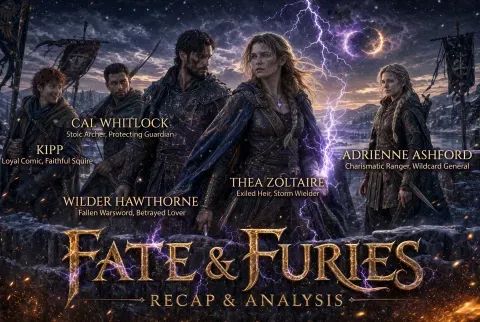
Other books by Helen Scheuerer


Download PDF
Download EPUB
.epub digital book format is ideal for reading ebooks on phones, tablets, and e-readers.








































