
Plot Summary
Harbor of Stories
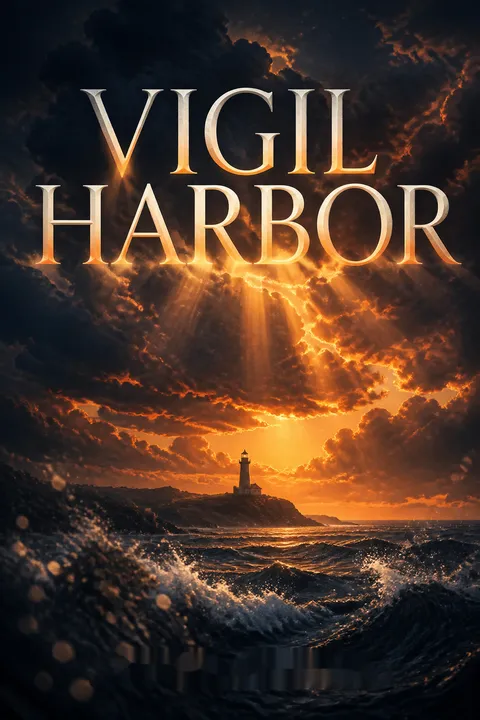
Vigil Harbor, a picturesque, almost-island town on the Massachusetts coast, is defined by its geography and the stories its people tell. The town's annual rituals, like the Fourth of July parade, reinforce a sense of tradition and belonging, but also a subtle myopia. Outsiders see the residents as privileged and insular, clinging to their history and wary of change. The harbor itself is a symbol of both safety and isolation, a place where generations have lived, loved, and lost, and where the past is never far from the present. The town's lore is filled with tales of heroism, heartbreak, and resilience, setting the stage for a new story to unfold—one that will test the boundaries of community, memory, and fate.
Generations in the Wake
The lives of Vigil Harbor's residents are deeply entwined with those who came before them. The town's families, some tracing their roots back centuries, carry the weight of history in their names, homes, and rituals. The scars of war, loss, and migration are visible in the landscape and in the hearts of those who remain. The younger generation, including Brecht and his peers, struggle to find their place in a world that feels both precarious and predetermined. The town's sense of continuity is both a comfort and a constraint, as old wounds and unresolved grief resurface in unexpected ways.
The Town's Fragile Peace
Vigil Harbor prides itself on its stability and civility, but beneath the surface, anxieties simmer. Recent waves of divorce, political unrest, and environmental threats have unsettled the community. The town's resistance to change is tested by new arrivals and shifting allegiances. The threat of storms—both literal and metaphorical—looms large, as residents grapple with the realities of climate change, economic uncertainty, and the ever-present possibility of violence. The peace of the harbor is fragile, maintained by unspoken agreements and the collective will to believe in the town's exceptionalism.
Brecht's Return and Retreat
Brecht, a college dropout haunted by the loss of his father and the trauma of surviving a terrorist bombing in New York, returns to Vigil Harbor seeking refuge. He moves back in with his mother and stepfather, Austin, and finds work with Celestino, the town's landscaper. Brecht's friendship with Noam, another young man adrift, offers solace but also reinforces their shared sense of inertia. Brecht's internal battles—his guilt, anxiety, and longing for meaning—mirror the larger uncertainties facing his generation. His story is one of searching for purpose in a world that feels increasingly unstable.
Petra's Secret Mission
Petra arrives in Vigil Harbor under the guise of writing a profile on Austin, the town's architect, but her true purpose is more personal and mysterious. Driven by the unresolved disappearance of her former lover, Issa, Petra is determined to confront Austin and uncover the truth about the past. Her presence stirs old memories and hidden tensions, as she navigates the town's social landscape with both charm and subterfuge. Petra's journey is one of grief, obsession, and the search for closure, as she seeks to reclaim a story that has haunted her for decades.
Love, Loss, and Longing
The novel's characters are bound together by a web of relationships marked by love, betrayal, and longing. Austin's marriage to Miriam is shadowed by his past with Issa, while Miriam's own grief over her first husband's death shapes her bond with Brecht. Mike, a marine biologist, is reeling from his wife's sudden departure and the fracturing of his family. Margo, the town's former English teacher, copes with her own divorce and the loss of her sense of purpose. Each character is searching for connection and meaning, even as they are pulled apart by the tides of change.
The Web of Relationships
Vigil Harbor's small-town intimacy means that everyone's lives are interconnected, for better or worse. Friendships, rivalries, and old grudges shape daily interactions. The town's social fabric is tested by new arrivals, shifting alliances, and the secrets, revelations, and the unreliable past that people keep from one another. The arrival of Ernesto, an old acquaintance of Celestino's, brings both nostalgia and unease, as his presence stirs memories of past betrayals and unresolved conflicts. The community's ability to weather crisis depends on the strength—and the limits—of these relationships.
Storms and Shadows
The town is battered by literal storms—hurricanes, nor'easters, and the ever-present threat of rising seas—but also by the storms of human conflict. The specter of terrorism, political extremism, and environmental collapse hangs over Vigil Harbor. The characters' personal struggles are mirrored by the larger forces at work in the world, as the boundaries between safety and danger, past and present, are blurred. The sense of impending catastrophe is both a source of anxiety and a catalyst for change, forcing the residents to confront what they value most.
The Outsider's Arrival
Ernesto, a charismatic and enigmatic figure from Celestino's past, arrives in Vigil Harbor, claiming to be a climate scientist passing through. His arrival unsettles Celestino and Connie, as old secrets and fears resurface. Ernesto's true motives are ambiguous, and his interactions with the town's residents are marked by both charm and manipulation. As he ingratiates himself with the community, the lines between friend and foe, insider and outsider, become increasingly blurred. Ernesto's presence is a catalyst for revelations and reckonings that will shake the town to its core.
The Bombings Echo
News of terrorist bombings in New York and Cambridge sends shockwaves through Vigil Harbor, exposing the town's vulnerability and the limits of its insularity. The attacks are linked to Oceloti, a radical environmental group, and the involvement of young, privileged Americans unsettles the community's sense of innocence. The threat becomes personal as Ernesto's connection to the bombings is revealed, and the town is drawn into a web of violence, fear, and suspicion. The illusion of safety is shattered, forcing the residents to confront the realities of a world in crisis.
Unraveling Truths
As the investigation into the bombings intensifies, long-buried secrets and hidden histories are brought to the surface. Petra's confrontation with Austin forces him to reckon with his past and the unresolved trauma of Issa's disappearance. Celestino's history with Ernesto is revealed, exposing the complexities of immigration, loyalty, and survival. The town's residents are forced to confront uncomfortable truths about themselves and each other, as the boundaries between victim and perpetrator, hero and bystander, are called into question. The unraveling of these truths is both painful and necessary for healing.
The Night of Hostages
The crisis reaches its peak when Ernesto and his accomplices take several residents hostage, including Margo, Mike, Egon, Pearl, and Brecht. The night is one of fear, confusion, and unexpected acts of courage. The hostages are forced to confront their own vulnerabilities and the fragility of the lives they have built. The ordeal exposes the deep connections—and the deep divisions—within the community. The resolution is both harrowing and redemptive, as the town comes together to survive the unthinkable.
Aftermath and Reckoning
In the wake of the hostage crisis, Vigil Harbor is left to pick up the pieces. The town is flooded with outsiders—law enforcement, journalists, and curiosity-seekers—disrupting the fragile sense of normalcy. The residents must reckon with the trauma they have endured, the choices they have made, and the changes that are now inevitable. Relationships are tested, old wounds are reopened, and the process of healing is slow and uncertain. The aftermath is a time of reflection, reckoning, and the search for new beginnings.
The Shape of Survival
As the town rebuilds, the characters find new ways to survive and adapt. Brecht leaves for New York, seeking a fresh start and a sense of purpose. Connie considers returning to teaching, while Celestino faces the challenges of recovery and reinvention. Margo and Mike forge an unexpected bond, finding solace in each other's company. The community's resilience is tested, but also affirmed, as they navigate the ongoing threats of climate change, violence, and loss. Survival is not just about endurance, but about finding meaning and connection in a changed world.
New Beginnings, Old Wounds
The characters embark on new journeys—literal and metaphorical—while carrying the scars of what they have endured. Petra sets out on a scientific voyage, seeking both escape and understanding. Mike travels west to be with his daughter, embracing the uncertainties of the future. The town itself is transformed, as old institutions close and new possibilities emerge. The process of moving forward is fraught with difficulty, but also with hope, as the residents learn to honor their past without being bound by it.
The Tides of Memory
The novel's final movement is a meditation on memory—its capacity to both heal and haunt, to connect and to divide. The stories of Vigil Harbor are passed down, revised, and reinterpreted, shaping the identities of those who remain and those who leave. The harbor itself becomes a symbol of endurance, a place where the tides of history, grief, and hope converge. The characters' memories are both burdens and blessings, guiding them as they navigate the uncertain waters of the future.
Harbor's Enduring Fate
In the end, Vigil Harbor endures—not unchanged, but resilient. The town's fate is bound to the tides, to the cycles of loss and renewal that define both nature and human life. The characters find meaning in their connections to each other, to the land, and to the stories that have shaped them. The harbor remains a place of beginnings and endings, of retreat and return, of vigilance and hope. The novel closes with a sense of possibility, as the next generation prepares to face the challenges—and the promise—of an uncertain world.
Analysis
Vigil Harbor is a profound meditation on community, memory, and the search for meaning in a world beset by crisis. Julia Glass crafts a narrative that is both intimate and expansive, using the microcosm of a coastal town to explore the larger anxieties of our time—climate change, political extremism, and the fragility of human connection. The novel's strength lies in its psychological depth and its refusal to offer easy answers; instead, it invites readers to grapple with ambiguity, to recognize the ways in which the past shapes the present, and to find hope in the resilience of ordinary people. The interwoven stories of love, loss, and survival are rendered with empathy and insight, reminding us that healing is a collective endeavor, and that the stories we tell—about ourselves, our families, and our communities—are both our inheritance and our legacy. Vigil Harbor ultimately asks what it means to be vigilant: to guard not only against external threats, but also against the erosion of compassion, memory, and hope.
Review Summary
Vigil Harbor received mixed reviews, with praise for its complex characters and vivid future setting but criticism for its slow pacing and numerous narrators. Set in a coastal town a decade after the pandemic, the novel explores climate change, terrorism, and human resilience. Readers appreciated Glass's writing style and thought-provoking themes, though some found the multiple perspectives challenging to follow. The book's blend of dystopian elements with everyday life resonated with many, offering a unique perspective on potential near-future scenarios.
People Also Read




Characters
Brecht
Brecht is a young man marked by trauma and loss, having lost his father to the pandemic and his friend Noam to a terrorist bombing. Sensitive, introspective, and adrift, he returns to Vigil Harbor in search of safety and belonging but finds himself caught between the expectations of his family and the uncertainties of his generation. His relationship with his mother, Miriam, is close but fraught with unspoken grief. Brecht's journey is one of gradual healing, as he confronts the limits of memory, the weight of survivor's guilt, and the challenge of forging a future in a world that feels precarious. His development is shaped by his friendships, his work with Celestino, and his eventual decision to leave home and seek his own path.
Petra
Petra is a woman driven by the unresolved disappearance of her lover, Issa. Intelligent, impulsive, and emotionally complex, she arrives in Vigil Harbor under false pretenses, determined to confront Austin and reclaim the story that has haunted her for decades. Petra's relationships are marked by both passion and loss—her marriage to Carly, her connection to Issa, and her fraught interactions with the town's residents. Psychologically, she is both vulnerable and fierce, unwilling to let go of the past until she has found answers. Her journey is one of reckoning with grief, obsession, and the possibility of renewal.
Austin
Austin is a talented architect who has built a new life in Vigil Harbor with his wife, Miriam, but remains shadowed by his intense, ill-fated relationship with Issa. Rational, creative, and emotionally reserved, he is both a pillar of the community and a man struggling with guilt and regret. His relationship with Brecht is that of a well-meaning but sometimes distant stepfather. Austin's psychological complexity lies in his need for control and his fear of emotional chaos. The arrival of Petra and the resurfacing of old secrets force him to confront the unresolved trauma of Issa's disappearance and the limits of his own capacity for love and forgiveness.
Miriam
Miriam is Brecht's mother and Austin's wife, a woman who has endured the loss of her first husband and the challenges of raising a sensitive son in a world marked by uncertainty. Compassionate, organized, and quietly strong, she is the emotional center of her family. Her relationship with Brecht is deeply empathetic but also marked by the pain of shared trauma. Miriam's psychological journey is one of learning to let go—of her son, of her grief, and of the illusion of control. Her development is shaped by her capacity for love, her willingness to face difficult truths, and her search for meaning in the aftermath of crisis.
Celestino
Celestino is a Guatemalan-born landscaper and arborist who has built a life in Vigil Harbor with his wife, Connie, and their son, Raul. Quiet, hardworking, and deeply principled, he is both an outsider and a vital part of the community. His past is marked by trauma, displacement, and the struggle for legitimacy. Celestino's relationship with Ernesto is fraught with old wounds and unresolved guilt. Psychologically, he is shaped by a sense of debt, fear of exposure, and the desire to protect his family. His development is a testament to resilience, as he faces both personal and collective threats with dignity and courage.
Connie
Connie is Celestino's wife, a former hairdresser and teacher who returns to Vigil Harbor to care for her ailing mother and ultimately builds a new life with Celestino and their son. Warm, practical, and quietly ambitious, she is the anchor of her family and the organizer of the town's home school collective. Her relationship with Celestino is marked by both love and the challenges of cultural difference. Connie's psychological journey is one of reconciling her own grief and guilt with the demands of motherhood and community. She is a bridge between past and future, tradition and change.
Mike
Mike is a marine biologist whose life is upended by his wife's sudden departure and the fracturing of his family. Analytical, introverted, and quietly passionate about his work, he struggles to find meaning in the face of personal and professional loss. His relationships with his children, Egon and Marinda, are marked by both love and distance. Mike's psychological complexity lies in his tendency toward placidity and avoidance, which is challenged by the crises that engulf him. His development is a journey from passivity to engagement, as he learns to confront his own needs and desires.
Margo
Margo is Vigil Harbor's former English teacher, recently divorced and grappling with the loss of her sense of purpose. Outspoken, witty, and fiercely intelligent, she is both a source of wisdom and a figure of vulnerability. Her relationships—with her ex-husband, her daughters, and her former students—are marked by both affection and regret. Margo's psychological journey is one of reclaiming agency and finding new meaning in the aftermath of betrayal and crisis. Her development is shaped by her willingness to confront her own flaws and to embrace the possibility of change.
Ernesto (Arturo)
Ernesto, also known as Arturo, is a climate scientist and former activist whose arrival in Vigil Harbor sets off a chain of events that expose the town's vulnerabilities. Charming, intelligent, and manipulative, he is both a catalyst for change and a source of danger. His relationship with Celestino is marked by old loyalties and betrayals. Psychologically, Ernesto is driven by a sense of mission that borders on fanaticism, as well as by unresolved guilt and the need for redemption. His actions force the community to confront the limits of trust and the consequences of radicalism.
Egon
Egon is Mike's son, an aspiring actor living in New York, whose return to Vigil Harbor during the crisis brings him face to face with his family's past and present. Sensitive, creative, and quietly determined, he is both a source of pride and anxiety for his father. Egon's relationships—with his sister, his father, and his friend Pearl—are marked by both intimacy and distance. Psychologically, he is shaped by the tension between ambition and belonging, as he seeks to define himself in a world that often feels hostile to his dreams.
Plot Devices
Interwoven Narratives and Multiple Perspectives
The novel employs a mosaic structure, with chapters told from the perspectives of different characters, each offering a unique lens on the events unfolding in Vigil Harbor. This narrative device allows for a deep exploration of individual psychology, as well as the complex web of relationships that bind the community together. The use of interwoven narratives creates a sense of simultaneity and interconnectedness, as personal stories are revealed to be part of a larger, collective drama. The shifting viewpoints also serve to withhold and gradually reveal key information, building suspense and emotional resonance.
Foreshadowing and Symbolism
The novel is rich in foreshadowing, with early references to storms, rising tides, and the threat of violence presaging the crises to come. Symbols such as the harbor, the tree house, and the painting left by Issa serve as touchstones for the characters' emotional journeys and the novel's larger themes. The use of local legends and town rituals grounds the story in a sense of place, while also highlighting the tension between tradition and change. The interplay of natural and human threats underscores the fragility of both community and individual identity.
Secrets, Revelations, and the Unreliable Past
Much of the novel's tension arises from secrets—personal, familial, and communal—that are gradually brought to light. The characters' efforts to conceal or confront the past shape their relationships and choices. The unreliability of memory, the selective nature of storytelling, and the difficulty of achieving closure are central concerns. The revelation of Ernesto's true identity and motives, Petra's confrontation with Austin, and the unmasking of old betrayals all serve as turning points that force the characters to reckon with the consequences of their actions.
Crisis and Catharsis
The novel's central crisis—the hostage-taking orchestrated by Ernesto and his accomplices—serves as a crucible that brings the characters' fears, desires, and loyalties into sharp relief. The ordeal exposes the strengths and weaknesses of the community, as well as the capacity for both courage and cowardice. The resolution of the crisis is both traumatic and redemptive, forcing the characters to confront their own limitations and to find new ways of moving forward. The aftermath is a time of reckoning, healing, and the search for meaning in the face of loss.
Thematic Resonance and Open-Endedness
The novel resists easy resolution, embracing the ambiguity and complexity of its characters' lives and the world they inhabit. The ending is open-ended, suggesting both the persistence of old wounds and the possibility of renewal. The themes of memory, resilience, and the search for connection are woven throughout, inviting readers to reflect on their own experiences of loss, change, and hope. The harbor itself stands as a symbol of endurance, a place where the tides of history and emotion continue to ebb and flow.
Download PDF
Download EPUB
.epub digital book format is ideal for reading ebooks on phones, tablets, and e-readers.








































