
Plot Summary
Through the Black Door
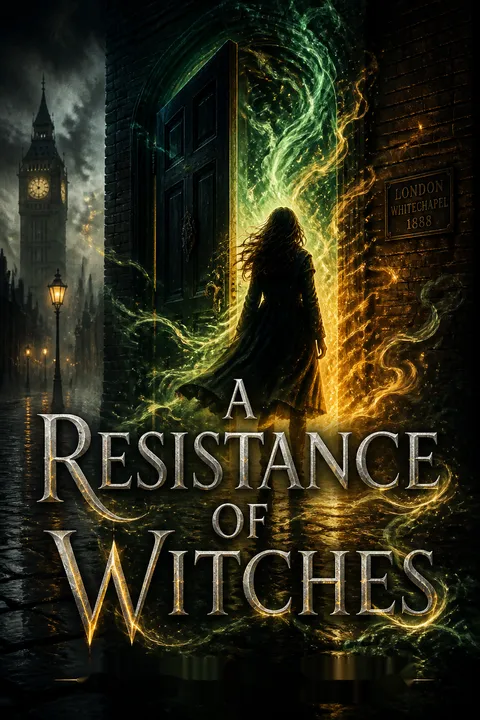
Sixteen-year-old Lydia Polk, apprentice to the formidable Isadora Goode, is ushered through the iconic black door of 10 Downing Street during the London Blitz. The ordinary world falls away as Lydia witnesses Isadora offer the aid of Britain's secret witches to Winston Churchill, breaking centuries of magical isolation. Lydia's awe and anxiety are palpable as she senses the weight of history and the cost of stepping into a war that threatens both the mundane and magical. The moment marks Lydia's passage from sheltered student to participant in a conflict that will test her courage, loyalty, and the very boundaries of her identity. The door is both literal and symbolic—a threshold into danger, responsibility, and the unknown.
Oaths and Apprenticeships
Lydia's apprenticeship is both an honor and a burden, as Isadora reveals the witches' decision to join the war without the high council's approval. Lydia's own mother, Evelyn, a gifted but "low" witch, is both proud and wary of her daughter's path. The tension between tradition and change, secrecy and action, is embodied in Lydia's struggle to reconcile her upbringing with the demands of her new role. Isadora's mentorship is exacting, and Lydia's honesty and stubbornness are both her greatest strengths and vulnerabilities. The emotional distance between Lydia and her mother deepens, foreshadowing the sacrifices to come.
Project Diana Unveiled
As the war intensifies, Lydia is drawn into Project Diana—a covert operation to track and secure magical artifacts before the Nazis can exploit them. Her best friend, Kitty, is revealed as a daring agent, and their bond is tested by secrets and the ever-present threat of betrayal. The witches' efforts are complicated by internal politics and the growing realization that the Nazis are assembling their own coven. Lydia's projection abilities become crucial, but the cost of using them—physically and emotionally—mounts. The looming presence of the Grimorium Bellum, a legendary book of war magic, casts a shadow over the entire academy.
The Grimoire's Shadow
Lydia learns that the Nazis are close to finding the Grimorium Bellum, a book rumored to contain spells of unimaginable destruction. The witches' only hope is to locate it first, using a scrap of its page and the psychic imprint left on Kitty. The ritual to track the book is fraught with tension, as the high council's support is wavering and the threat of Nazi infiltration grows. Lydia's projection into the artifact's trail is a harrowing journey through memory, fear, and the boundaries of self. The book's malevolent influence is felt even at a distance, and the witches' unity is fragile.
Betrayal in the Circle
During the ritual, the unthinkable happens: Kitty is revealed to be an imposter, a Nazi witch in disguise. In a moment of horror, Isadora is murdered, and the academy is thrown into chaos. Lydia's grief is compounded by the loss of her true friend, whose body is found lifeless. The high council is paralyzed by fear and self-preservation, and Lydia's rage at their cowardice isolates her further. The witches' sanctuary is violated, and the realization that the enemy has infiltrated their ranks shatters any illusion of safety. Lydia is left to pick up the pieces, haunted by guilt and the need for justice.
Blood and Ashes
In the aftermath, Lydia is nominated to succeed Isadora as grand mistress, but the council is divided and self-serving. Sybil, a trusted mentor, urges Lydia to take up the mantle, but the young witch is wracked with grief and self-doubt. The academy's magical defenses are found to be deliberately compromised, suggesting a traitor within. Lydia's investigation is stymied by politics and the council's reluctance to face uncomfortable truths. The emotional toll of leadership, betrayal, and the deaths of loved ones weighs heavily, as Lydia is forced to confront the reality that the war is as much within as without.
The Enemy Within
Lydia's suspicions fall on Vivian, a powerful seer, but the true enemy is closer than she realizes. The witches' tradition of secrecy is both shield and shackle, and the debate over whether to continue fighting or withdraw from the war divides the council. Lydia's confrontation with Vivian exposes the generational rift and the dangers of isolationism. Meanwhile, the Nazi coven grows stronger, and the Grimorium Bellum remains elusive. Lydia's sense of purpose is sharpened by loss, but her ability to trust is eroded, setting the stage for a reckoning that will demand everything she has.
Flight and Pursuit
Lydia's quest takes her to occupied France, where she is aided by Rebecca, a hardened resistance fighter, and Henry, a curator with hidden magical heritage. The trio's journey is fraught with danger, as they evade Nazis, navigate betrayals, and confront the moral ambiguities of war. The search for the Grimorium Bellum becomes a race against time, with the winter solstice—the only moment the book can be fully harnessed—looming. The emotional bonds between Lydia, Rebecca, and Henry deepen, forged in adversity and shared trauma. Each is haunted by ghosts, literal and figurative, and the line between friend and foe blurs.
Allies and Ghosts
The trio's journey is shaped by the ghosts of their histories—Rebecca's lost family, Henry's connection to the dead, and Lydia's longing for her mother's approval. The Grimorium Bellum's influence grows, feeding on pain and desire. The witches' magic is revealed to be as much about connection and memory as about power. The dead are never far, and the living must reckon with the legacies they carry. The emotional stakes are heightened as the solstice approaches, and the cost of failure becomes unthinkable.
The Book's Hunger
The book is not merely a weapon, but a living entity, hungry for blood and suffering. Lydia's attempt to bind the book to herself is an act of desperation and sacrifice, as she realizes that only by becoming one with the book can she hope to destroy it. The ritual is interrupted by Sybil, whose betrayal is finally unmasked—she is the architect of the Nazi coven, driven by a vision of witches' supremacy at any cost. The lines between good and evil, victim and perpetrator, are blurred, and Lydia is forced to confront the darkness within herself.
The Solstice Approaches
As the winter solstice arrives, Lydia is initiated into the Nazi coven under false pretenses, planning to use the Unmaking spell to destroy the Grimorium Bellum and its wielders. The ritual is a harrowing ordeal, as Lydia channels the power of the book and the spirits of her ancestors. Evelyn, her mother, is captured and mortally wounded, but her love and strength enable Lydia to complete the spell. The cost is immense—Evelyn's life, the destruction of the coven, and the near loss of Lydia's own soul. The emotional climax is both devastating and redemptive.
The Unmaking Spell
Lydia, aided by the spirits of her lineage and the love of her friends, completes the Unmaking spell, turning the Grimorium Bellum's power against itself and the Nazi witches. The coven is reduced to ash, and Sybil is left to face justice. The book's destruction is both a personal and cosmic victory, but the scars remain. Lydia's grief for her mother and the losses endured by all are tempered by the knowledge that the world has been changed—not just saved, but remade by sacrifice and love.
The Price of Power
The survivors—Lydia, Henry, and Rebecca—emerge from the ordeal forever changed. Sybil is brought before the high council to answer for her crimes, and the witches' world is forced to reckon with its own complicity and the dangers of unchecked ambition. Lydia's leadership is forged in pain, and her understanding of power is deepened by loss. The bonds of friendship and love are tested, but endure. The world outside celebrates victory, but the true cost is known only to those who fought in the shadows.
The Mother's Sacrifice
Lydia mourns her mother, whose spirit lingers as a source of comfort and wisdom. The lessons of the past are woven into the future, as Lydia embraces her role as grand mistress and the witches' place in the world. The dead are honored, and the living carry their memory forward. The emotional arc comes full circle, as Lydia finds strength in vulnerability and hope in the possibility of renewal. The story is both an elegy and a hymn to resilience.
Ashes and Aftermath
The witches' world is forever altered by the events of the war. Lydia leads with humility and resolve, determined to break the cycle of secrecy and fear. The survivors find new purpose—Rebecca in the resistance, Henry in returning home, Fiona in the pursuit of justice. The legacy of the Grimorium Bellum is a warning and a call to responsibility. The emotional wounds are deep, but the possibility of healing remains.
The World Remade
On VE Day, Lydia walks through a changed London, the world outside celebrating peace while she carries the memory of all that was lost and gained. The witches' place in history is secure, but their future is unwritten. Lydia's journey—from apprentice to leader, from daughter to mother of her own legacy—is complete, but the story of resistance, sacrifice, and hope continues. The final note is one of bittersweet triumph, a testament to the enduring power of love, memory, and the courage to change the world.
Analysis
A Resistance of Witches is a profound meditation on power, sacrifice, and the cost of survival in times of crisis. Set against the backdrop of World War II, the novel reimagines the conflict as both a battle of armies and a struggle for the soul of magic itself. Through Lydia's journey—from apprentice to leader, from daughter to orphan, from survivor to savior—the story explores the dangers of secrecy, the seduction of power, and the necessity of resistance. The witches' world is a mirror for our own, grappling with questions of complicity, tradition, and the courage to change. The destruction of the Grimorium Bellum is both a literal and symbolic act—the rejection of violence as a means to peace, and the embrace of love, memory, and community as the true sources of strength. The novel's emotional arc is one of grief and hope, loss and renewal, reminding us that the world is remade not by those who seek power for its own sake, but by those who are willing to pay the price for a better future. In the end, A Resistance of Witches is a story about mothers and daughters, about the legacy of the past and the promise of tomorrow, and about the enduring power of love to heal even the deepest wounds.
Review Summary
A Resistance of Witches is a highly praised debut novel blending historical fiction and fantasy. Set during WWII, it follows Lydia, a young witch battling Nazi forces to find a powerful grimoire. Readers commend the well-developed characters, intricate magic system, and seamless integration of historical elements. The book is praised for its fast-paced action, emotional depth, and exploration of themes like grief and family relationships. While some found certain plot elements predictable, most reviewers were captivated by the unique premise and strong writing, eagerly anticipating future works from the author.
People Also Read


Characters
Lydia Polk
Lydia is the heart of the novel—a gifted projectionist, fiercely principled, and often at odds with both her magical and mundane heritage. Her journey is one of transformation: from insecure apprentice to grand mistress, from daughter to leader, from survivor to savior. Lydia's relationships—with her mother Evelyn, her mentor Isadora, her best friend Kitty, and her allies Henry and Rebecca—are fraught with love, disappointment, and the longing for acceptance. Psychologically, Lydia is driven by a need to do what is right, even when it costs her dearly. Her greatest strength is her refusal to compromise her values, but this also isolates her and makes her vulnerable to betrayal. Her arc is one of grief, sacrifice, and ultimately, the embrace of her own power and legacy.
Evelyn Polk
Evelyn is Lydia's mother, a "hedge witch" whose magic is rooted in herbs, cards, and intuition. She is both a source of comfort and frustration for Lydia, embodying the tension between tradition and change. Evelyn's love is fierce and unconditional, but she struggles to accept Lydia's choices and the dangers they bring. Her hidden power as a Force is revealed late, showing her as a protector and a formidable ally. Evelyn's sacrifice is the emotional fulcrum of the novel—her death is both a loss and a gift, enabling Lydia to complete her journey. Psychologically, Evelyn is pragmatic, nurturing, and wise, her humility masking a deep well of strength.
Isadora Goode
Isadora is the grand mistress of the Royal Academy of Witches, a master of political and magical influence. She is both admired and feared, her mentorship of Lydia shaping the young witch's destiny. Isadora's decision to break the academy's isolation and join the war is both visionary and fatal. Her murder is a turning point, exposing the academy's vulnerabilities and the cost of secrecy. Psychologically, Isadora is complex—ambitious, strategic, and deeply committed to her ideals, but also capable of great tenderness. Her legacy is both a burden and an inspiration for Lydia.
Sybil Winter
Sybil is Lydia's second mentor, a projectionist with a hidden agenda. Her betrayal is the novel's central twist—she is revealed as the architect of the Nazi coven, driven by a belief in witches' supremacy and a willingness to sacrifice anything for her vision. Sybil's relationship with Lydia is fraught with genuine affection and manipulation, making her both a mother figure and a nemesis. Psychologically, Sybil is brilliant, persuasive, and ultimately undone by her own hubris. Her arc is a cautionary tale about the dangers of unchecked ambition and the seduction of power.
Kitty Fraser
Kitty is Lydia's best friend, a gifted glamourer whose humor and courage are a source of light in the darkness. Her murder—by a Nazi witch in disguise—is a devastating blow, shattering Lydia's sense of safety and trust. Kitty's memory haunts Lydia, fueling her determination to fight and her fear of loss. Psychologically, Kitty is irrepressible, mischievous, and fiercely loyal. Her death is both a symbol of the war's cost and a catalyst for Lydia's transformation.
Rebecca Gagne
Rebecca is a French resistance fighter, haunted by the loss of her family and the brutality of occupation. Her alliance with Lydia is born of necessity, but deepens into friendship and mutual respect. Rebecca's pragmatism and anger are both shield and weapon, her vulnerability revealed in moments of grief and connection. Psychologically, Rebecca is driven by guilt, rage, and the need to make meaning from suffering. Her arc is one of reluctant hope, as she learns to trust and to fight for more than just survival.
Henry Boudreaux
Henry is an American art curator with a hidden magical heritage—his ability to communicate with the dead is both a gift and a curse. His journey is one of self-acceptance, as he moves from isolation and fear to connection and purpose. Henry's relationship with Lydia is tender and transformative, offering both solace and challenge. Psychologically, Henry is introspective, gentle, and burdened by the weight of history—both personal and collective. His arc is one of healing, as he learns to open the doors of his past and embrace the future.
Vivian Osborne
Vivian is a powerful seer and member of the high council, initially suspected of betrayal. Her opposition to Lydia's leadership and the war effort embodies the dangers of isolationism and the temptation to retreat from the world. Psychologically, Vivian is proud, conservative, and ultimately limited by her inability to adapt. Her role is to challenge Lydia and to force the academy to confront its own failings.
Ursula Wolfe
Ursula is the most dangerous member of the Nazi coven—a projectionist, glamourer, and traveler whose power is matched only by her pain. Her backstory is one of abuse and survival, making her both villain and victim. Ursula's pursuit of Lydia is relentless, driven by grief and the need for belonging. Psychologically, Ursula is fractured, her loyalty to Sybil and the coven masking a deep well of rage and longing. Her death is both a victory and a tragedy.
Fiona McGann
Fiona is a skilled traveler and Lydia's peer, whose loyalty and pragmatism are invaluable in the final battle. Her experiences in the war's aftermath—witnessing the horrors of the camps—ground the novel in historical reality. Psychologically, Fiona is resilient, adaptable, and quietly courageous. Her arc is one of endurance and the search for justice.
Plot Devices
Dual Worlds and Magical Realism
The novel's central device is the coexistence of the mundane and magical worlds, with the Royal Academy of Witches operating in secret alongside the events of World War II. The tension between secrecy and action, tradition and change, is embodied in the witches' decision to join the war. The magical system—projection, glamour, force, and travel—is both a metaphor for power and a literal means of shaping history. The use of magical realism allows the novel to explore themes of identity, trauma, and resistance in a heightened, emotionally resonant way.
The Grimorium Bellum as MacGuffin
The Grimorium Bellum is the novel's central plot device—a legendary book of war magic that is both the object of the witches' quest and a character in its own right. Its hunger for blood and suffering drives the action, and its destruction is both the climax and the resolution. The book's influence is felt on every level—personal, political, and cosmic—and its power is both seductive and destructive. The quest for the book is a vehicle for exploring the costs of power and the dangers of unchecked ambition.
Betrayal and False Allies
The novel is structured around a series of betrayals—Isadora's murder, Kitty's death, Sybil's treachery, and the infiltration of the academy. Foreshadowing is used masterfully, with clues to Sybil's true allegiance woven throughout. The theme of trust—who deserves it, how it is earned, and how it is lost—is central to the emotional arc. The revelation of the true traitor is both shocking and inevitable, forcing Lydia and the reader to question the nature of loyalty and the cost of survival.
Ancestral Spirits and the Power of Memory
The presence of ghosts—literal and metaphorical—shapes the narrative. Henry's ability to communicate with the dead, Lydia's connection to her mother and her lineage, and the spirits that aid in the final ritual all underscore the importance of memory, legacy, and the intergenerational transmission of trauma and hope. The dead are both burden and blessing, and the living must learn to honor them without being consumed by grief.
The Unmaking Spell and Ritual Structure
The novel's structure is built around the approach of the winter solstice, the only moment when the Grimorium Bellum can be destroyed. The ritual is both a magical and emotional climax, requiring the sacrifice of self, the aid of ancestors, and the willingness to let go. The use of ritual—initiation, binding, unmaking—mirrors the characters' internal journeys and the transformation of the world.
Download PDF
Download EPUB
.epub digital book format is ideal for reading ebooks on phones, tablets, and e-readers.








































