
Key Takeaways
1. "Indian Removal" was a state-sponsored mass expulsion, not a benign policy.
“Removal” is equally unfitting for a story about the state-sponsored expulsion of eighty thousand people.
Words are delusive. The author argues that the term "Indian Removal," coined by proponents, is a "soft word" that obscures the coercion and violence inherent in the policy. It falsely suggests a voluntary act, rather than a state-administered process of forced migration. The author prefers terms like "deportation," "expulsion," or even "extermination" to accurately describe the events of the 1830s.
Unprecedented scale. This policy was a first in North America, transforming centuries of piecemeal dispossession into a formal, bureaucratic process. Unlike earlier colonial conflicts, the 1830s saw the United States systematically producing censuses, property lists, and expulsion registries, culminating in forced journeys to "Indian Territory." This undertaking served as a model for other imperial states, with figures like Alexis de Tocqueville and even Hitler drawing unsettling comparisons to U.S. actions.
A turning point. The expulsion fundamentally altered the geographical relationship between Native Americans and the United States, creating a westward-moving frontier. It established a precedent for future policies, culminating in events like the Wounded Knee massacre in 1890, which the author sees as the "final period on a policy established in the 1830s." The author emphasizes that this outcome was not inevitable, but a political choice with profound and lasting consequences.
2. Georgia's insatiable demand for land fueled the drive for dispossession.
“We the people of Georgia,” he declared, meant the “white people of Georgia,” and those who objected to this self-evident truth deserved to be “laughed at for their folly.”
Cotton and power. Georgia, the largest state in the Union if native land claims were disregarded, harbored boundless ambitions for profit and political power, deeply intertwined with cotton production and the expansion of slavery. Planters saw indigenous land as a "birthright" for "white people of Georgia," believing that expelling Native Americans would increase their political strength in Congress by allowing for more partially enumerated slave laborers.
"Socrates" articulates supremacy. An influential essay by "Socrates" in the Georgia Journal laid bare the state's ideology: civilized nations had the right to seize "barbarous" lands, and "Indian title" was merely "permissive." This author explicitly linked the "Indian question" to the "Negro question," arguing that if Native Americans could become citizens, so could free blacks and even enslaved people, a terrifying prospect for the slaveholding elite.
Unwavering political will. Despite some internal dissent within Georgia, the state's politicians, led by figures like Governor George Troup, relentlessly pursued the goal of replacing "all the red for a white population." They defied federal authority, nullified treaties, and even threatened secession, demonstrating an uncompromising commitment to expropriating native lands for the expansion of their slave empire.
3. Andrew Jackson's administration enabled the systematic expulsion of Native Americans.
“There was no measure, in the whole course of his administration of which he was more exclusively the author than this,” recalled Martin Van Buren, Jackson’s secretary of state and then vice president.
A president's priority. Andrew Jackson, a veteran of brutal campaigns against Native Americans, made "Indian Removal" the defining policy of his presidency. His first annual message to Congress in December 1829 called for the "voluntary" emigration of native peoples, setting the stage for the legislative battle that followed. Jackson's personal history and unwavering commitment were crucial to the policy's advancement.
Political maneuvering and pressure. Jackson's administration actively lobbied Congress, using "threats and terrors" to secure votes for the expulsion act. The narrow passage of the bill (102 to 97 in the House) was achieved through intense pressure on swing voters, highlighting the political rather than inevitable nature of the policy. The author notes the perverse politics: slave states leveraged their "three-fifths clause" advantage to expand territory for more slaves.
Dismissal of dissent. Those within the administration who questioned the policy, like Superintendent of Indian Affairs Thomas McKenney, were swiftly dismissed. This ensured that the implementation of the expulsion policy was overseen by zealous, often inexperienced, patronage appointees who shared Jackson's hostility towards Native Americans and his commitment to the "liberal" "Great Father" narrative.
4. The illusion of voluntary migration masked widespread coercion and violence.
“It is not your lands, but your happiness that we seek to obtain”?
A cynical paradox. The government's claim that Native Americans were leaving "voluntarily" was a thinly veiled justification for coercion. Secretary of War John Eaton delighted in this paradox, insisting that while no force would be used, states would extend oppressive laws over native nations, leaving them with a "voluntary choice" between "extermination or expulsion."
State laws as weapons. Southern states, particularly Georgia, Alabama, and Mississippi, enacted discriminatory laws designed to make life "intolerably wretched" for Native Americans. These laws:
- Prohibited Native Americans from testifying against white people in court.
- Allowed white intruders to seize native property with impunity.
- Imposed taxes and forced labor on roads.
- Criminalized native governance and assembly.
This legal framework effectively stripped Native Americans of their rights and sovereignty, forcing them into impossible situations.
Native leaders' clear-sightedness. Leaders like the Choctaw George Harkins recognized the duplicity, comparing their situation to a man surrounded by fire, with plunging into water being his "voluntary act." The Choctaw composer of "The New Jaw Bone" satirized Eaton's "forked tongue and shallow hart," revealing the deep cynicism perceived by the victims.
5. A meticulous bureaucracy facilitated dispossession, prioritizing economy over humanity.
“It will not do to reason too closely where humanity has a claim to be heard,” but he did not live by this tenet.
The commissary general's role. George Gibson, the Commissary General of Subsistence, was tasked with the logistics of deportation. His office, staffed by clerks, meticulously documented every detail, from wagon numbers to ration distribution, driven by an obsession with "rule following and frugality." This bureaucratic precision masked the human cost of the operation.
Austerity over welfare. Gibson's relentless pursuit of economy meant minimal provisions and medical care for the deportees. Officers were forbidden from purchasing full medicine chests or employing doctors except in dire emergencies. Invoices for necessary medical supplies were rejected, and field agents were constantly admonished to "lop off or lesson" expenses, even when it meant suffering for the "perishing" Native Americans.
Disarray and incompetence. Despite the elaborate "systematic plan of operations," the reality on the ground was chaotic. Inaccurate maps, conflicting orders, and the sheer scale of moving thousands of people through unfamiliar territory led to widespread disorganization. The infamous case of William Ward, a drunken Indian agent, highlights the incompetence that plagued the process, particularly in the fraudulent registration of Choctaw land claims.
6. Northern financiers and land speculators profited immensely from stolen lands.
A day dream, bright as new dollars, / And aye the dream was about dollars! / Not about Indians as you know, / But about them t’would do to blow.
Wall Street's stake. Northern financiers, like J.D. Beers of Wall Street, played a crucial role in funding the dispossession. They invested heavily in southern state bonds, which were issued to finance the purchase of newly acquired native lands and the expansion of slave labor camps. Beers's firm, for example, purchased entire issues of Alabama and Mississippi bonds, directly profiting from the "transformation from indigenous farms to cotton plantations."
Land companies and collusion. Joint-stock companies, often with utilitarian names like the "New York and Mississippi Land Company," were formed to speculate directly in indigenous lands. These companies, capitalized at immense sums, colluded to suppress prices at auctions, ensuring they acquired prime cotton land for a fraction of its value. John Bolton, an agent for Beers's company, marveled at the "deep rich black" soil and the prospect of "immense profits."
Exploiting the vulnerable. Speculators employed ruthless tactics, including bribery, fraud, and intimidation, to acquire native reserves. They coerced Native Americans into signing blank deeds for meager advances, knowing that the original purchasers would disappear before full payment was due. The federal government, through its "scrupulous attention to accounting," even billed the Chickasaw Nation for the costs of its own dispossession, including surveying fees and administrative expenses, effectively making them finance their own removal.
7. Native leaders mounted tireless legal and political resistance against expulsion.
“The cup of hope is dashed from our lips; our prospects are dark with horror; and our hearts are filled with bitterness,” it read.
Cherokee Phoenix: A voice of defiance. The Cherokee Nation launched its own bilingual newspaper, the Cherokee Phoenix, in 1828, using Sequoyah's syllabary to disseminate information and mobilize resistance. The paper refuted stereotypes of savagery and served as a powerful tool to rally northern reformers, despite attempts by Georgia politicians to suppress it.
Legal battles and moral appeals. Leaders like John Ross pursued legal challenges, culminating in Worcester v. Georgia (1832), where the Supreme Court ruled that Georgia's laws had no force in the Cherokee Nation. Native leaders also penned eloquent memorials to Congress, appealing to American revolutionary values and exposing the hypocrisy of the government's actions, often quoting the Declaration of Independence.
Unwavering resolve. Despite internal divisions, the "Treaty Party" (who believed removal was inevitable) versus Ross's faction (who sought to remain), and immense pressure, many Native Americans steadfastly refused to leave their homelands. They resisted by refusing to register for removal, hiding in mountains, and enduring extreme poverty, demonstrating a deep attachment to their ancestral lands and the graves of their kin.
8. Deadly journeys and epidemics marked the "cholera times" of forced migration.
“The damnest time we ever saw / Was at the Post of Arkansas / The meanest place in all the world / The meanest place in all the world.”
Winter's cruel grip. The first Choctaw deportations in the winter of 1831–32 were plagued by a "ferocious winter storm," the worst in fifty years. Thousands of refugees, often shoeless and thinly clothed, were stranded in freezing temperatures at staging areas like Arkansas Post, where inadequate supplies and shelter led to widespread suffering and death.
Cholera's devastating sweep. The second wave of deportations in 1832 coincided with a cholera epidemic sweeping down the Mississippi River. Contaminated steamboats and unsanitary camps became breeding grounds for the disease, which decimated detachments of Choctaws and other native groups. Federal agents, prioritizing economy, often denied medical aid, leading to hundreds of deaths.
High mortality rates. The journeys were lethal. One Choctaw party lost nearly 20% of its members in two months. A Seneca and Delaware group saw over 20% attrition, with many disappearing or dying from disease and exposure. The "cholera times" exposed the government's callous disregard for human life, as officials blamed the victims for their "dissipated, idle, and reckless" nature.
9. Expulsion escalated into a brutal war of extermination, particularly in Florida.
“The country can be rid of them,” he said, “only by exterminating them.”
Seminole defiance. The Seminoles of Florida, with their deep knowledge of the terrain and strong alliances with African American fugitives, mounted fierce resistance. Their stunning victories, like the Dade Massacre in December 1835, shattered the illusion of easy conquest and forced the U.S. to escalate its policy from deportation to outright war.
A war of attrition. The Second U.S.-Seminole War (1835-1842) became a protracted and costly conflict. U.S. generals, cycling through seven commanders, struggled against Seminole guerrilla tactics and the "villainous climate" of Florida's swamps. Despite technological advantages, the army's ponderous movements and lack of local knowledge proved ineffective.
Extermination as policy. Frustrated by their inability to subdue the Seminoles, U.S. commanders like General Thomas Jesup openly advocated for "extermination." Soldiers were ordered to take no prisoners, and tactics included burning villages, destroying food supplies, and using bloodhounds. The war resulted in immense suffering for Seminole families, who were "hunted like wolves" and often killed or captured, with women and children facing unspeakable horrors.
10. The immense cost of dispossession created lasting wealth for some, ruin for others.
The wealth extracted by speculators, colonizers, and cotton barons has lasted for generations, as has the damage done to the victims.
Financial windfall for the Republic. The federal government expended approximately $75 million (equivalent to a trillion dollars today) on the expulsion, with over 40% of the federal budget dedicated to it in peak years. This enormous cost was largely offset by the nearly $80 million generated from selling expropriated native lands, effectively making Native Americans finance their own dispossession.
Cotton empire's foundation. The lands acquired through expulsion became the bedrock of the South's expanding cotton empire. By 1850, these former native territories produced 16% of the entire U.S. cotton crop and 40% of the agricultural output in Mississippi and Alabama. This transformation was fueled by the forced migration of hundreds of thousands of enslaved African Americans, whose labor generated immense wealth for planters and financiers.
Immeasurable human cost. Beyond the staggering financial losses for Native Americans (estimated at $7-10 million for Chickasaws, $10 million for Choctaws, and $4-8 million for Creeks), the human toll was devastating. Thousands died during the forced marches and in internment camps, and survivors lost generations of place-based cultural knowledge. The author concludes that "expulsion was the war the slaveholders won," leaving a legacy of racial hierarchy and compounded wealth for some, and enduring poverty and trauma for others.
Review Summary
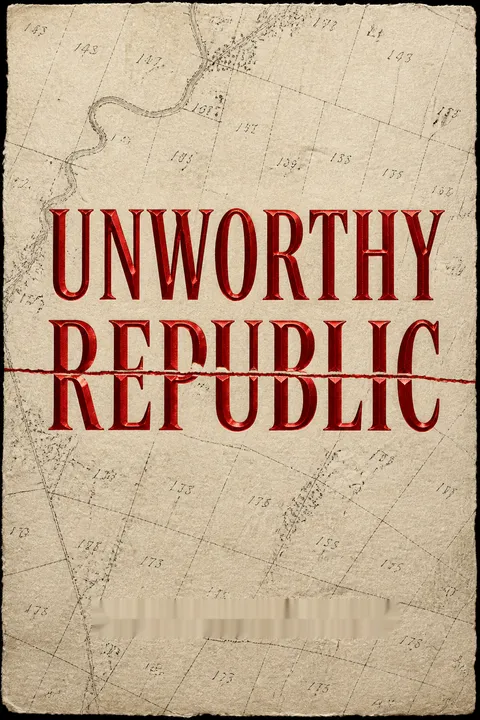
Unworthy Republic by Claudio Saunt examines the 1830s dispossession and forced removal of Native Americans from eastern territories, primarily under Andrew Jackson's administration. Reviewers praise the exhaustively researched, well-documented account revealing the greed, racism, and brutality behind Indian Removal. The book connects Native dispossession to slavery's expansion, showing how southern planters wanted fertile lands for cotton cultivation. While emotionally difficult and sometimes dense with details, readers find it essential for understanding this shameful period. Many note disturbing parallels to contemporary politics and emphasize this history should be widely taught.
People Also Read




Download PDF
Download EPUB
.epub digital book format is ideal for reading ebooks on phones, tablets, and e-readers.








































