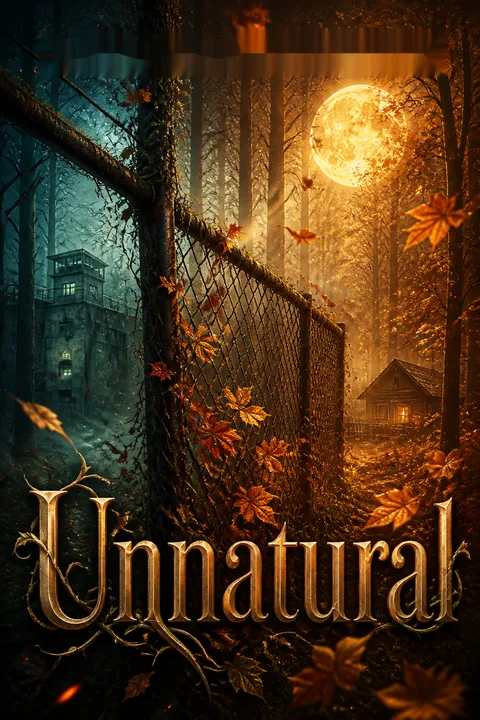

Plot Summary
Stolen Files, Stolen Past
Autumn, desperate to uncover the truth about her lost childhood, steals her own file from her social worker's office. The act is both a crime and a liberation, as she clings to the hope that the documents will reveal the secrets of her origins, her mysterious illness, and the identity of the "moonlight boy" who haunts her dreams. The theft is a catalyst, setting her on a collision course with the past she's been denied and the future she's yet to claim. The tension of the moment—her heart pounding, the threat of discovery—mirrors the lifelong anxiety of being denied her own story. Autumn's determination is fueled by loss, longing, and the need to reclaim agency over her life, even as she fears what the truth might cost her.
Moonlight Boy in the Woods
Haunted by recurring dreams of being chased through moonlit woods, Autumn's nightmares take on a new dimension when she's caught—not by a monster, but by a boy with silvery hair and scars, both terrifying and mesmerizing. The encounter is surreal, blending the boundaries between dream and waking life, and leaves Autumn questioning the nature of her own mind. The boy, more myth than man, becomes a symbol of hope and fear, of the unknown that both threatens and saves. In the sterile world of the hospital, where pain is constant and loss is routine, the dream offers a strange comfort—a reminder that even in terror, there can be wonder, and that the monsters we fear may sometimes be our protectors.
Hospital Dreams, Hidden Truths
Within the walls of Mercy Hospital, Autumn and her friends endure endless cycles of illness, surgery, and grief. The ADHM babies, children born to addicts and marked for early death, are treated as both patients and pariahs. Autumn's friendship with Mara, her struggle with the side effects of medication, and the ever-present specter of loss create a world where hope is both necessary and dangerous. The vivid dreams induced by their medication blur the line between fantasy and reality, and the discovery of dirt under Autumn's fingernail hints that her dreams may be more than mere hallucinations. The hospital is both sanctuary and prison, a place where the search for truth is as urgent as the fight for survival.
The Price of Strength
Autumn, emboldened by a nurse's subtle encouragement, begins to secretly wean herself off the medication that keeps her alive but half-dead. As her body grows stronger, she experiences a taste of normalcy—color in her cheeks, the ability to climb stairs, the joy of movement. But the price of this strength is fear: fear of discovery, fear of the inevitable return of illness, and fear of what she might lose if her secret is found out. The absence of her favorite nurse, Salma, and the rumors of her dismissal, add to the sense of isolation and risk. Autumn's rebellion is both an act of self-preservation and a gamble with fate, a desperate bid to live before she dies.
Running Toward the Nightmare
On the night of the full moon, Autumn takes the sleep medication to summon the moonlight boy once more. This time, the dream is different—she is strong, she runs, she fights back. The encounter with the boy is electric, a dance of fear and fascination, but it ends in violence as another presence intrudes. Waking in her hospital bed, Autumn finds physical evidence—a bruise, a missing journal—that suggests her dreams are not dreams at all. The boundaries between reality and fantasy collapse, leaving her both exhilarated and terrified. The loss of her friend Mara to illness deepens her grief, but the memory of the moonlight boy lingers, a promise of something more.
Monsters Behind Closed Doors
Sam, the moonlight boy, lives in a parallel world of training, violence, and manipulation. Raised in a secret program, he is both victim and weapon, taught that mercy is weakness and that his only value lies in his ability to kill. The program's leader, Dr. Heathrow, is both father and tormentor, offering conditional affection and demanding absolute obedience. Sam's encounters with Autumn are both a lifeline and a liability, awakening feelings he's been taught to suppress. The threat of another surgery, the constant surveillance, and the presence of other "monsters" like Amon and Morana create a world where trust is impossible and survival is never guaranteed.
Crossing the Forbidden Fence
Driven by the need to find the moonlight boy, Autumn sneaks across the hospital grounds, scaling a fence to reach the mysterious research building. The journey is fraught with danger—security cameras, the threat of discovery, the sight of a dying child being wheeled away. The experience is both a literal and symbolic crossing, a step into the unknown that cannot be undone. The glimpse of the program's hidden world, the sense of being watched, and the realization that she is closer to the truth than ever before fill Autumn with both dread and determination. The fence is a barrier, but also a threshold, and crossing it changes everything.
Cured or Cast Out
Autumn is abruptly declared "cured" and released from the hospital, sent to live with a foster father in a distant town. The suddenness of her release, the lack of explanation, and the loss of her friends and familiar world leave her reeling. The new home is both a refuge and a reminder of all she has lost. Bill, her foster father, is kind but grieving, and together they navigate the awkwardness of their new relationship. Autumn's sense of displacement is profound, but the possibility of a new life—one not defined by illness or institutionalization—offers a fragile hope. The past, however, is not so easily left behind.
Journal of a Dreamer
Sam, now separated from Autumn, treasures the journal she left behind, memorizing her words and sketches as a way to hold on to his own humanity. The journal becomes a talisman, a reminder that beauty and hope exist even in the darkest places. Sam's longing for connection, his struggle with the violence he's been trained to inflict, and his sense of being both more and less than human are all bound up in the pages of Autumn's writing. The journal is both a comfort and a curse, a link to a world he fears he can never truly join.
A New Home, Old Fears
Autumn and Bill slowly build a life together, each haunted by their own losses and fears. The small town offers safety and routine, but also the constant threat of being found out, of the past catching up. Autumn's work as a nurse, her friendships, and her growing sense of belonging are hard-won victories. Yet the mystery of her origins, the unanswered questions about the hospital and the moonlight boy, and the trauma of her childhood remain unresolved. The new home is a place of healing, but also a reminder that some wounds do not close easily.
Ordinary Miracles
Years pass, and Autumn grows into adulthood, finding purpose in her work and love in her chosen family. Bill becomes the father she never had, and the town embraces her as one of their own. Yet the search for answers continues, driven by the need to understand not just her own story, but the fate of the other children from Mercy Hospital. The ordinary miracles of daily life—sunlight, laughter, the touch of a friend—are both a balm and a challenge, reminders of what was lost and what can still be found. The past is never far away, but the future is no longer something to be feared.
Motherless Reunion
Autumn tracks down her birth mother, only to find a woman broken by addiction and regret. The reunion is painful, offering few answers and little comfort. The revelation that Autumn may never have been an ADHM baby at all, that her illness and suffering may have been the result of a bureaucratic or deliberate error, is both liberating and infuriating. The encounter forces Autumn to confront the reality that some mysteries have no satisfying resolution, and that forgiveness—of others and of herself—is a necessary part of healing. The search for truth becomes a search for peace.
The Program's Children
Sam's life in the program is revealed in all its horror: children selected for their lack of family, subjected to surgeries, drugs, and psychological conditioning to become perfect weapons. The program's leaders, including Dr. Heathrow and the shadowy Dr. Swift, justify their actions as necessary for the greater good. Sam's struggle to retain his humanity, his longing for connection, and his memories of Autumn are all that keep him from becoming the monster they intend. The other children—Amon, Morana, and the rest—are both comrades and competitors, each shaped by trauma and loss. The program is a crucible, forging killers from the raw material of abandoned children.
Orders and Betrayals
Sam is sent on missions, ordered to kill without question, and punished for any sign of weakness or mercy. His growing attachment to Autumn, his refusal to carry out certain orders, and his ultimate act of defiance—saving a child instead of completing an assassination—mark him as a liability. The program's response is swift and brutal: banishment, the expectation of suicide, and the threat of retribution against anyone who helps him. Sam's sense of betrayal is profound, but so is his determination to survive, to find meaning beyond the violence he's been forced to inflict. The cost of disobedience is high, but the price of obedience is higher still.
Schoolyard of Shadows
A school shooting orchestrated as a false flag operation brings Sam and Autumn back together in the most harrowing of circumstances. Sam intervenes, saving children and taking bullets meant for others, while Autumn risks everything to help him escape. The violence is both a culmination of the program's evil and a turning point for both characters. The aftermath—flight, hiding, and the search for sanctuary—forces them to confront the reality of the world they inhabit, the depth of the corruption they face, and the strength of their bond. The schoolyard becomes a battleground, not just for survival, but for the soul.
Flight and Sanctuary
Autumn and Sam, fugitives from both the law and the program, find refuge in a remote cottage. The isolation is both a blessing and a curse, offering time to heal and to rediscover each other, but also the constant threat of discovery. Their relationship deepens, moving from shared trauma to shared hope, from fear to love. The outside world recedes, and for a time, they are able to imagine a future together. But the past is never truly gone, and the dangers they face are as much internal as external. The cottage is a sanctuary, but also a crucible, testing the limits of their trust and their capacity for forgiveness.
The Good Samaritan's Secret
As investigators close in, Autumn and Sam are forced to confront the reality of their situation. The truth about the program, the extent of the cover-up, and the complicity of those who were supposed to protect them come to light. The arrival of Agent Mark Gallagher, a man dedicated to exposing the program's crimes, offers both hope and new dangers. The search for justice is complicated by guilt, fear, and the knowledge that the system is designed to protect the powerful, not the vulnerable. The question of what it means to be good, to do the right thing in a world built on lies, becomes central.
Healing and Haunting
In the safety of the cottage, Autumn and Sam begin to heal—not just physically, but emotionally and spiritually. Their love becomes a source of strength, a way to reclaim what was stolen from them. Yet the scars of the past remain, haunting their dreams and shaping their fears. The process of healing is slow and painful, marked by setbacks and moments of despair. But the possibility of a new life, of building something beautiful from the ruins, is real. The journey from victim to survivor, from haunted to whole, is neither linear nor easy, but it is possible.
False Flags and Cover-Ups
The investigation into the school shooting and the program's activities reveals a web of corruption that extends from the hospital to the highest levels of government and industry. False flag operations, cover-ups, and the exploitation of vulnerable children are exposed, but justice remains elusive. The power of those who profit from suffering is immense, and the cost of speaking out is high. Yet the determination of Autumn, Sam, and their allies—Bill, Agent Gallagher, Jak, and Harper—proves that even in the face of overwhelming odds, the fight for truth and justice is worth waging. The personal becomes political, and the stakes are nothing less than the soul of society.
Truths Unravel, Love Remains
As the truth about their pasts is finally revealed—neither Autumn nor Sam was ever truly sick, both were used as control subjects in a monstrous experiment—their sense of self is shattered and remade. The knowledge is both devastating and liberating, forcing them to confront the lies they've been told and the people they've become. The choice to stay together, to build a life in the aftermath of betrayal, is both an act of defiance and of hope. Love, in the end, is what remains when all else is stripped away, the one thing that cannot be stolen or destroyed.
The Final Command
Sam, driven by rage and the need for closure, confronts Dr. Heathrow, the man who shaped his life and his suffering. The encounter is explosive, a reckoning years in the making. The doctor's justifications—claims of saving Sam from a wasted life, of serving the greater good—are revealed as self-serving lies. The violence that Sam was trained to inflict is turned back on its creator, but in the end, Sam chooses not to kill, breaking the cycle of violence and reclaiming his own agency. The final command—to die, to disappear—is rejected, and with it, the power of the program is broken.
The End of Experiments
The program's remaining "monsters" turn on their creator, enacting a brutal justice that is both cathartic and horrifying. The files documenting the program's crimes are released to the world, sparking outrage, lawsuits, and the collapse of those who profited from the suffering of children. Yet the cost of survival is high—many of the program's victims are lost, unable to reclaim their lives. Autumn and Sam, among the few who endure, are left to pick up the pieces, to mourn the dead and to fight for a future that is still uncertain. The end of the experiments is not the end of the story, but the beginning of something new.
Pilgrimage and Postcards
Sam, freed from the program but haunted by its legacy, embarks on a pilgrimage across the country, sending postcards to Autumn as he seeks meaning and redemption. Each message is an answer to one of her old questions, a testament to the power of love and the possibility of healing. Autumn, waiting and hoping, finds solace in her work, her friends, and the knowledge that Sam is alive and searching for his place in the world. The journey is both literal and metaphorical, a process of becoming, of learning to live with scars and to find beauty in brokenness.
Full Moon, New Life
On the night of the full moon, Sam returns to Autumn, arriving just in time for the birth of their daughter. The moment is both an ending and a beginning, the culmination of years of suffering, searching, and love. Surrounded by friends and family, Autumn and Sam welcome new life, a symbol of hope and the promise of a future untainted by the sins of the past. The journey from victim to survivor, from experiment to parent, is complete. The full moon, once a harbinger of nightmares, now shines on a family forged in fire and redeemed by love.
Analysis
Unnatural is a searing exploration of trauma, agency, and the redemptive power of love in a world shaped by systemic cruelty. Through the intertwined journeys of Autumn and Sam, Mia Sheridan interrogates the ways in which institutions—medical, governmental, familial—can both harm and heal, and how the search for truth is both a personal and political act. The novel's use of dual narratives, rich symbolism, and a blend of psychological realism and speculative intrigue creates a story that is both emotionally resonant and intellectually provocative. At its heart, Unnatural is a meditation on what it means to be human: to suffer, to seek connection, to fight for agency, and to choose love in the face of overwhelming odds. The lessons are clear—healing is possible, but it requires courage, community, and the willingness to confront even the most painful truths. The story's ultimate message is one of hope: that even in a world marked by unnatural suffering, the most natural thing—love—can still prevail.
People Also Read






Characters
Autumn Sterling/Clancy
Autumn is the emotional and moral center of the story, a young woman whose life has been defined by loss, illness, and the search for answers. Raised in a hospital as an "ADHM baby," she is both a victim and a survivor, marked by trauma but driven by an unyielding desire to reclaim her story. Her relationships—with her friends, her foster father Bill, and especially with Sam—are characterized by empathy, courage, and a refusal to accept easy answers. Autumn's journey is one of self-discovery, healing, and the reclamation of agency. Her love for Sam is transformative, offering both of them a path out of darkness. Psychologically, Autumn is marked by a deep need for connection and understanding, but also by a fierce independence and a willingness to risk everything for the truth.
Sam (Samael)
Sam is both a product and a victim of the program that raised him—a boy turned weapon, trained to kill and denied his own humanity. His relationship with Autumn is the one thread that keeps him tethered to hope, offering a glimpse of a life beyond violence and control. Sam's psychological landscape is shaped by trauma, guilt, and the constant struggle to reconcile the monster he was made to be with the man he longs to become. His journey is one of redemption, as he learns to accept love, to forgive himself, and to choose his own path. Sam's development is marked by moments of profound vulnerability and strength, and his ultimate act of defiance—refusing the final command—signals his reclamation of self.
Bill Clancy
Bill is Autumn's foster father and later adoptive parent, a man marked by loss but defined by kindness and resilience. His relationship with Autumn is one of mutual healing, as they both learn to trust and to build a family from the ashes of their respective tragedies. Bill's role is both practical and symbolic—he offers safety, stability, and unconditional love, serving as a counterpoint to the institutional neglect and betrayal that shaped Autumn's early life. Psychologically, Bill is cautious but open-hearted, willing to risk vulnerability for the sake of connection. His support is crucial to Autumn's journey, and his acceptance of Sam is a testament to his capacity for growth and forgiveness.
Dr. Heathrow
Dr. Heathrow is the primary antagonist, a man whose intelligence and charm mask a profound moral emptiness. As the leader of the program, he justifies his actions as necessary for the greater good, but his true motivations are power, control, and self-aggrandizement. His relationship with Sam is complex—part father figure, part tormentor—and his betrayal is both personal and systemic. Psychologically, Dr. Heathrow is a classic narcissist, incapable of empathy and skilled at rationalizing cruelty. His downfall is both a reckoning and a cautionary tale, illustrating the dangers of unchecked authority and the dehumanization of the vulnerable.
Salma Ibrahim
Salma is a rare figure of warmth and integrity within the cold world of Mercy Hospital. Her care for Autumn and the other children is genuine, and her subtle acts of defiance—encouraging Autumn to question her treatment, risking her career to do what is right—make her a quiet hero. Salma's dismissal and subsequent struggles highlight the cost of resistance in a corrupt system, but her legacy endures in the lives she touched. Psychologically, Salma is driven by empathy and a strong moral compass, willing to sacrifice her own well-being for the sake of others.
Amon
Amon is one of Sam's fellow program members, a boy shaped by the same violence and conditioning but who embraces his role as a killer more fully. His relationship with Sam is marked by rivalry, camaraderie, and ultimately, tragedy. Amon's fate—used as a pawn in a false flag operation, dying by his own hand—serves as a stark reminder of the program's cost. Psychologically, Amon is both a victim and a perpetrator, his capacity for violence both learned and innate. His story is a warning about the dangers of dehumanization and the loss of agency.
Morana
Morana is another product of the program, a girl whose intelligence and skills are weaponized for the program's ends. Her relationship with Sam is complex—marked by shared trauma, mutual understanding, and a longing for a different life. Morana's ultimate act of rebellion—sabotaging the program's orders and choosing her own end—reflects both her strength and her despair. Psychologically, Morana is marked by isolation, longing, and a deep sense of loss. Her fate is both a tragedy and a testament to the power of choice, even in the face of overwhelming control.
Agent Mark Gallagher
Mark is the outsider who becomes an ally, a man driven by his own losses to seek justice for the program's victims. His investigation is both professional and personal, and his willingness to believe, to listen, and to act makes him a crucial figure in Autumn and Sam's journey. Mark's psychological landscape is shaped by grief, guilt, and a need for redemption, but also by a deep well of empathy and determination. His role as a connector—bringing together survivors, exposing the truth, and offering protection—underscores the importance of community and solidarity in the face of evil.
Jak and Harper
Jak, a survivor of a similar program, and his wife Harper offer Autumn and Sam a model of what healing and love can look like after trauma. Their relationship is marked by mutual support, honesty, and the willingness to confront pain together. Jak's journey from victim to advocate, and Harper's role as both partner and friend, provide hope and guidance for Autumn and Sam. Psychologically, Jak is marked by resilience and a hard-won sense of self, while Harper embodies compassion and strength. Together, they represent the possibility of building a new life from the ruins of the old.
Dr. Swift
Dr. Swift is the unseen hand behind the program, a figure whose motivations are as inscrutable as they are malevolent. His presence looms over the story, a reminder that the fight against dehumanization and exploitation is ongoing. Psychologically, Dr. Swift is a cipher, a symbol of the systemic nature of evil and the difficulty of achieving true justice. His elusiveness is both a source of frustration and a call to action, underscoring the need for vigilance and resistance.
Plot Devices
Dual Narratives and Shifting Perspectives
The novel employs a dual narrative structure, alternating between Autumn's and Sam's perspectives to create a tapestry of experience that is both intimate and expansive. This device allows the reader to see the same events from different angles, to understand the psychological complexity of both characters, and to appreciate the ways in which their lives are shaped by forces beyond their control. The shifting perspectives also serve to build suspense, as revelations in one narrative often foreshadow or echo developments in the other. The use of dreams, memories, and journal entries further blurs the line between reality and fantasy, creating a sense of uncertainty and possibility.
Foreshadowing and Symbolism
The novel is rich in foreshadowing and symbolism, with recurring images—the moon, the woods, scars, and journals—serving as touchstones for the characters' journeys. The full moon, in particular, is both a harbinger of danger and a symbol of transformation, marking key moments of change and revelation. Scars, both physical and emotional, are reminders of the past but also of survival. The journal is a symbol of memory, hope, and the power of words to heal and connect. These motifs are woven throughout the narrative, creating a sense of unity and depth.
False Flag Operations and Conspiracy
The use of false flag operations—violent acts orchestrated to distract from political scandals or to serve the interests of the powerful—serves as both a plot device and a commentary on the nature of evil. The conspiracy at the heart of the novel is both personal and systemic, implicating not just individuals but entire institutions. The cover-ups, the manipulation of vulnerable children, and the complicity of those who look away are all explored in detail, forcing the characters (and the reader) to confront uncomfortable truths about the world.
Healing Through Love and Community
At its core, the novel is about the power of love and community to heal even the deepest wounds. The relationships between Autumn and Sam, between Autumn and Bill, and between the survivors and their allies are all testaments to the possibility of redemption. The journey from isolation to connection, from victimhood to agency, is marked by moments of vulnerability, forgiveness, and courage. The narrative structure reinforces this theme, as the characters' individual stories are ultimately woven into a collective tapestry of survival and hope.






Download PDF
Download EPUB
.epub digital book format is ideal for reading ebooks on phones, tablets, and e-readers.








































