
Key Takeaways
1. Union with God is the Universal Call
Union with God had been the hidden treasure and the pearl of great price for which he sacrificed everything else and to which he showed others the way by his teaching, his spiritual direction, and his writings.
Sanctity for all. St. John of the Cross, a Doctor of the Church, teaches that the pursuit of intimate union with God is not reserved for religious but is the sublime vocation of all Christians. This profound respect for every person is reflected in his ministry, which extended to both Carmelite students and simple laypeople. He believed that God desires all His children to live in deep intimacy with Him.
Beyond mediocrity. The world often suffers from being alienated from God, and even good souls can be distant due to immersion in worldly concerns. SJC's doctrine is for those who refuse mediocrity and seek to correspond fully to their divine calling, giving God absolute preference in their hearts. This means loving creatures in conformity with God's will, without attachment.
Contemplative life defined. The contemplative life is the direct search for divine intimacy, achieved primarily through the assiduous exercise of prayer and mortification. This life prepares the soul for contemplation, which is an experiential knowledge of God through love, a foretaste of heavenly beatitude. It's a gift, but one for which we must actively prepare.
2. The Path to Union: Renunciation and Prayer
The two wings with which the soul rises to divine union are mortification and prayer — that is, spoliation and recollection, or, in other words, detachment and prayer.
Two indispensable instruments. To achieve intimate union with God, the soul must diligently employ two fundamental means: mortification (also called abnegation, renunciation, or sacrifice) and prayer. Mortification detaches the soul from created things, freeing its capacity to love God, while prayer, an affectionate colloquy with God, kindles divine love in the heart.
Beyond material withdrawal. SJC clarifies that "withdrawing from all creatures" does not mean material separation, like becoming a hermit. Instead, it signifies "leaving all things according to the affection of the will"—that is, avoiding inordinate attachments. God wants us to love creatures, but always in conformity with His will and without giving them preference over Him.
Disinterested prayer. Prayer, for SJC, is a "pure prayer" where the soul seeks God and His pleasure, not its own satisfaction. It's about aligning our will with God's, prioritizing "Hallowed be Thy name; Thy kingdom come; Thy will be done" over personal desires. This theocentric approach ensures that our prayer truly elevates us to God.
3. Embrace Total Abnegation ("Nada")
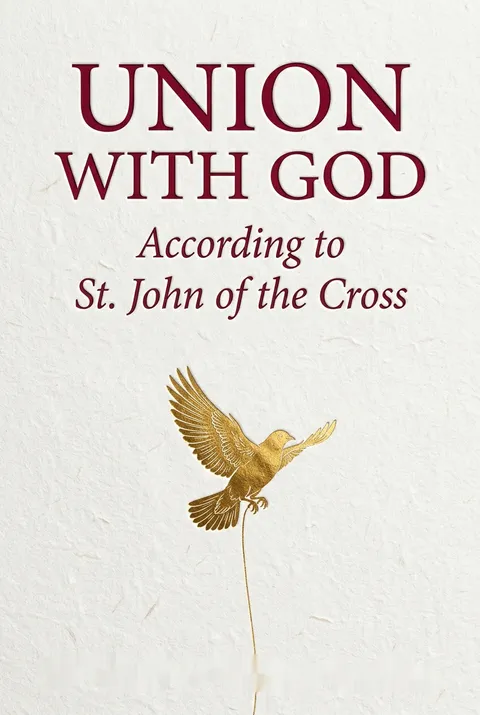
Whether the bird be tied with a rope or a thread, it cannot fly; obviously the thread is broken more easily than the rope, but as long as it be not effectively broken, the bird truly cannot fly.
Necessity of total spoliation. The essence of union with God lies in having the soul's will wholly transformed into God's will, so that only the divine will moves it. Any attachment, no matter how small—even a "thread" of imperfection—prevents this complete transformation. Therefore, total abnegation is absolutely necessary to achieve this singular will.
Imitating Christ. To undertake this arduous task, the soul must cultivate a lively desire to imitate Christ, the ultimate model of perfect abnegation. Reflecting on His life, especially His total self-emptying and suffering for love, inspires the courage needed to renounce personal pleasures and embrace difficulties for God's glory.
Rules of detachment: SJC provides practical rules for this active purification:
- Desire the difficult: Be inclined not to what is easiest or most pleasant, but to what is more difficult, insipid, and laborious.
- Renounce pleasure: Abstain from any sensitive pleasure not purely for God's honor and glory. If unavoidable, rectify intention and avoid dwelling on the pleasure.
- Cultivate poverty: Desire, for Christ's love, to be poor, naked, and empty of all worldly things.
4. Contemplative Meditation: A Loving Gaze
The purpose of meditation and of mental discourse on divine things is to derive from them a little loving knowledge of God.
Loving knowledge of God. For SJC, meditation's primary aim is to foster a "loving knowledge of God," leading to affectionate conversation with Him. This aligns with St. Teresa's view that prayer is "a friendly converse of the soul with God, in which the soul often speaks intimately with Him by whom she knows she is loved."
From discourse to gaze. Meditation begins with intellectual consideration of divine mysteries (e.g., Christ's Passion) to deepen the conviction of God's love. As the soul progresses, reasoning gives way to a simpler, more tranquil "loving attention" or "gaze" upon the Lord. This quiet colloquy, sustained by a recollected gaze, is the true goal of prayer.
Practical resolutions. Mental prayer should not end in mere sentiment but translate into practical impact on daily life. The latter part of prayer involves thanksgiving, offering, and requests, which strengthen resolutions of self-denial and commitment to God's will. This ensures that the love nurtured in prayer manifests in generous actions and a continuous purification of intentions.
5. Aridity: God's Purifying Invitation
If the soul is seeking God, its Lord is seeking it much more.
A divine intervention. When a soul generously commits to God, it often experiences initial spiritual consolations. However, God, seeking to purify the soul from subtle self-seeking in these comforts, introduces it to aridity—a suppression of spiritual pleasure, making prayer obscure and cold. This is not a punishment but a divine favor, a call to a higher spiritual plane.
Signs of purifying aridity: SJC provides three signs to distinguish divine aridity from culpable (due to faults or tepidity) or natural (due to physical indisposition) aridity:
- No pleasure in anything: The soul finds no pleasure or consolation in God or in creatures.
- Anxious remembrance: It remains occupied with a solicitous and painful remembrance of God, fearing it is not serving Him.
- Inability to meditate: It can no longer meditate discursively with the imagination, despite effort, but finds pleasure in simple, loving attention to God.
From meditation to contemplation. This "night of aridity" is God's way of transitioning the soul from discursive meditation to infused contemplation. In this state, the soul begins to know God not through concepts, but experientially through love, developing a "sense of God" that is profound yet indistinct. This "crusty bread" of contemplation, though hard, truly nourishes the soul.
6. The Power of Theological Virtues
The more the soul remains purely and totally recollected in faith, so much the more does it possess the infused charity of God, and the greater the amount of charity it contains, so much the more does charity illumine it and communicate to it the gifts of the Holy Spirit, because charity is the cause and the means through which it communicates them.
Direct relation to God. The theological virtues—faith, hope, and charity—are essential for drawing near to God, as they place the soul in direct relation with Him, the author and goal of its supernatural life. After the purification of aridity, intense practice of these virtues becomes the primary means of progress.
Faith as obscure light. Faith, for SJC, is the obscure but certain adhesion to the divine word, presenting God in His proper essence and Trinitarian life, surpassing natural reason. In contemplation, this becomes a "general loving attention to God," where the intellect, aided by the gifts of the Holy Spirit (especially wisdom), gains an experiential "sense of God" without forming precise concepts.
Hope and charity's role. Hope cultivates an ardent desire for eternal life as the supreme aim, fostering profound trust in God's mercy and aid. Charity, or pure love, unites the soul to God, seeking only His pleasure, not self-satisfaction. This love, intensified by virtuous actions done "with all one's heart," grows continually, preparing the soul for deeper union.
7. Jesus Christ: The Indispensable Guide and Spouse
The loving Lord was vilified and humiliated in everything: as regards the reputation of men, since, seeing Him die on the trunk of a tree, . . . they mocked Him; as regards nature, since, in it, He was annihilated, dying; and concerning the spiritual comfort of the Father, who, in those moments, abandoned Him so that He might pay the debt of human sins and unite man to God.
Model of annihilation. Jesus Christ is the beloved master and model for the soul's journey of renunciation. His total annihilation on the Cross—in reputation, nature, and even spiritual comfort from the Father—serves as the ultimate example for the soul undergoing purification. SJC emphasizes that the more one is annihilated for Christ's love, the more one is united to Him and the greater the spiritual work accomplished.
Spouse of the soul. For SJC, Christ is the spouse of the soul, a concept rooted in the Mystical Body of Christ. Through grace, Christ shares His life, assimilating the soul to Himself and making it a unique copy of His humanity. This mystical espousal signifies a profound, life-giving influence where all grace flows from Christ, preparing the soul for union with the Divinity.
Object of contemplation. The contemplative soul should never abandon the humanity of Christ. While contemplation often draws the soul towards the Divinity, the thought of Christ is not an obstacle. Rather, contemplating Christ, especially in the Eucharist, can be a starting point for divine contemplation. Furthermore, deeper contemplation of the Divinity can, in turn, enrich the understanding of the Incarnation, revealing the profound humility and mercy of God made man.
8. The Dark Night of the Spirit: Final Purification
O night that guided me, O night more lovely than the dawn, O night that unites The lover with the beloved, The beloved transformed in the Lover!
God's passive work. The "passive night of the spirit" is the darkest and most painful period of purification, a work initiated and sustained by God. The soul, incapable of fully eradicating subtle self-love and attachments, is plunged into profound obscurity and suffering. This trial is God's final intervention to prepare the soul for perfect union.
Purification of love. In this night, God frees the soul from attachment to the sentiment of love, even legitimate spiritual joys. The soul feels miserable, unworthy, and unloved, convinced it does not love God and is not loved in return. This torment, however, is a profound purification, generating a real hatred for all that opposes God and an immense esteem for Him, making the soul willing to endure anything rather than offend Him.
A great grace. Despite its desolation, this night is a tremendous divine favor, a "mystical purgatory" that, unlike purgatory after death, is meritorious and immensely increases the soul's love. It roots the soul in perfect humility, making it capable of receiving higher divine gifts without pride. The soul, protected by God's infused love and the gifts of the Holy Spirit, is drawn closer to Him, emerging completely purified and ready for union.
9. Transforming Union: A Mutual Divine Embrace
The will of God and that of the soul being then but one, they unite in one spontaneous and free consent; the soul possesses God through grace of will, and possesses all that it can have by way of will and grace, because to its “yes,” God has corresponded with the true and entire “yes” of His grace.
Union of will (Spiritual Espousals). This first degree of union is characterized by the soul's "perfect yes" to God's will, extending to all His desires, not just commands. The human will is so assimilated to the divine that it becomes the soul's sole motive, directing all actions to God's glory. Love truly dominates, enabling heroic virtue and often accompanied by profound contemplation.
Total union (Spiritual Marriage). This is a "total transformation into the beloved," where God takes possession of the soul, becoming its principal mover and the "soul of the soul." The abundant influence of the Holy Spirit's gifts brings all faculties, including the sensibility, into perfect harmony with the spirit. The soul experiences a continual sense of God's presence, possessing Him as He possesses it.
Mutual self-giving. In this highest state, the soul's entire being rises to God in a concert of all powers, with every faculty and passion directed solely by divine love. This leads to a profound, often Trinitarian, experience where the intellect penetrates God's depths, and the will delights in divine love. The soul can truly say, "I live, now not I, but Christ lives in me."
10. Pure Love: The Highest Service to God and Church
An instant of this pure love,” he declares in a text now become famous, “is more precious in the sight of the Lord and of the soul itself, and of greater use to the Church than all other (external) works united together.
The fruit of union. The state of transforming union culminates in pure love, where the soul's entire life becomes a "canticle of love." Every action is performed for love, and every suffering is endured with the relish of love, without seeking any personal satisfaction. This love, purified from all self-seeking, is the most perfect form of charity.
Immeasurable value. SJC asserts that "an instant of this pure love is more precious in the sight of the Lord and of the soul itself, and of greater use to the Church than all other (external) works united together." This highlights the immense spiritual efficacy of a soul completely united to God, whose interior life becomes a powerful source of grace for the entire Mystical Body of Christ.
Interiority fuels apostolate. The example of Mary Magdalen, who spent thirty years in the desert in pure love, illustrates this truth. External apostolic activity, to be truly fruitful, must flow from and remain under the influence of a deep interior life of union with God. This profound love, though hidden, is the most beneficial contribution a soul can make to the Church.
People Also Read








Download PDF
Download EPUB
.epub digital book format is ideal for reading ebooks on phones, tablets, and e-readers.








































