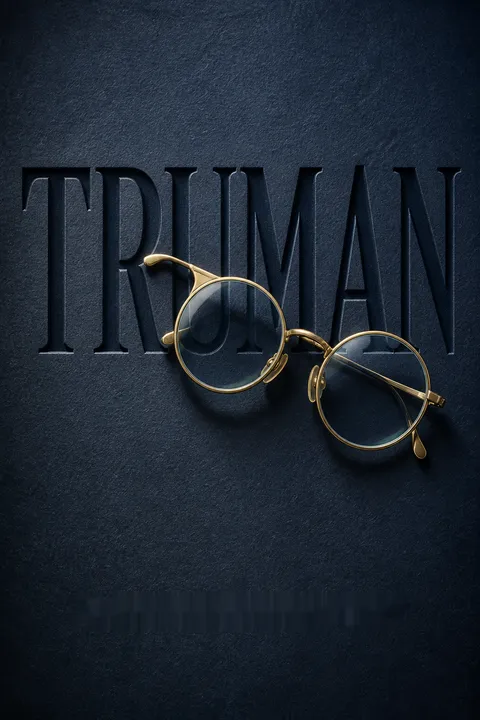

Key Takeaways
1. From Frontier Roots to Political Awakening
"Lord, grant that I may always be right, for Thou knowest I am hard to turn," was a line from an old Scotch-Irish prayer.
Formative Values. Harry Truman's early life in rural Missouri, shaped by his Scotch-Irish and English farming ancestors, instilled a deep sense of independence, hard work, and unwavering conviction. His family, particularly his strong-willed mother Martha Ellen Young Truman and successful grandfather Solomon Young, imparted values of self-reliance and perseverance amidst the challenges of frontier life. This upbringing, marked by both prosperity and hardship, laid the groundwork for his later political steadfastness.
Childhood Influences. Despite poor eyesight that made him "blind as a mole" without glasses, young Harry developed a profound love for reading, especially history and biography, which he pursued with exceptional diligence. His mother taught him to read before age five, fostering an intellectual curiosity that would define his approach to public service. These early years, though sometimes lonely due to his physical limitations, were remembered as happy, filled with family, music, and the rhythms of farm life.
Early Hardship. The devastating Border War (Civil War in Missouri) and its aftermath, including General Order No. 11 which forced his grandmother's family from their home, left an indelible mark on Truman's understanding of conflict and injustice. His grandfather Solomon Young, a successful farmer and freighter, exemplified resilience, recovering from financial setbacks and war losses. This blend of strong family values, intellectual curiosity, and exposure to hardship prepared Truman for a life of unexpected turns and immense responsibility.
2. Integrity Forged in Adversity
"Went into business all enthusiastic. Lost all I had and all I could borrow," he would write in a private memoir. "Mike Pendergast picked me up and put me into politics and I've been lucky."
Business Failures. After serving in World War I, Harry Truman's attempts at business, including a haberdashery and a zinc mine, ended in financial ruin, leaving him deeply in debt. This period of personal failure, however, instilled in him a profound empathy for those struggling economically and a fierce determination to uphold his financial obligations, paying off debts for years rather than declaring bankruptcy. This experience shaped his later political philosophy and his commitment to the common person.
Entry into Politics. His entry into politics was facilitated by the Kansas City Pendergast machine, specifically through Mike Pendergast, whom Truman "loved as I did my own daddy." Despite the machine's reputation, Truman was seen as an ideal candidate for Eastern Judge of Jackson County due to his war record, farming background, and perceived honesty. This alliance, though controversial, provided him with a platform to serve and rebuild his reputation.
A Reputation for Honesty. As Presiding Judge, Truman earned widespread respect for his integrity and efficiency. He drastically cut county debt, improved services, and oversaw the construction of a modern road system, insisting on honest contracts and quality work despite pressure from the machine. His commitment to public welfare over personal gain, even when it meant defying powerful figures like Tom Pendergast, solidified his image as a principled public servant.
- Key Achievements as Presiding Judge:
- Reduced county debt by half.
- Improved county credit rating.
- Oversaw construction of 224 miles of new concrete roads.
- Built a new county hospital and remodeled courthouses.
3. The Senate's Unlikely Watchdog
"The thing to do is to dig this stuff up now and correct it."
Rising to Prominence. Harry Truman's Senate career began under the shadow of his Pendergast connections, earning him the moniker "the Senator from Pendergast." However, his relentless work ethic and dedication to his committee assignments, particularly on railroad finance, gradually earned him respect. He diligently studied complex issues, often surprising colleagues with his depth of knowledge, and consistently voted in favor of New Deal legislation, aligning himself with President Roosevelt's progressive agenda.
The Truman Committee. His most significant contribution as a senator was chairing the Special Committee to Investigate the National Defense Program, known as the Truman Committee. Established to expose waste and corruption in wartime spending, the committee saved billions of dollars and significantly improved the efficiency of the war effort. Truman's leadership was characterized by fairness, thoroughness, and an unwavering commitment to facts, earning him national recognition and a reputation as a "hard-boiled prober" despite his unassuming demeanor.
- Committee's Impact:
- Saved an estimated $15 billion (though exact figures are debated).
- Exposed mismanagement in camp construction and defense production.
- Challenged corporate monopolies and unethical labor practices.
- Forced the reorganization of the Office of Production Management.
Civil Rights and Internationalism. Even before the war, Truman demonstrated an early commitment to civil rights, consistently supporting anti-poll tax and anti-lynching legislation. He also became a staunch internationalist, advocating for American leadership in global affairs and warning against isolationism. These positions, often ahead of his time, showcased a principled stance that transcended narrow political interests and foreshadowed his future presidential policies.
4. An Accidental President's Burden
"I felt like the moon, the stars, and all the planets had fallen on me."
Sudden Succession. Franklin D. Roosevelt's unexpected death on April 12, 1945, thrust Harry Truman into the presidency, a role he neither sought nor felt prepared for. His initial reaction was one of profound shock and humility, famously expressing the immense weight of responsibility that had suddenly fallen upon him. This "accidental" presidency began with a deep sense of inadequacy, contrasting sharply with Roosevelt's towering figure and long tenure.
Navigating the Unknown. Truman inherited a nation at the cusp of victory in World War II but facing unprecedented challenges, including the secret of the atomic bomb, deteriorating relations with the Soviet Union, and the complex task of post-war reconversion. Roosevelt had kept Truman largely uninformed on critical matters, leaving the new President to quickly grasp the intricacies of global diplomacy and military strategy. His first days were a whirlwind of briefings and decisions, including the crucial choice to proceed with the United Nations conference.
Asserting Authority. Despite his initial bewilderment, Truman quickly asserted his authority, making decisive choices and demanding accountability from his Cabinet. His direct confrontation with Soviet Foreign Minister Molotov, where he insisted on adherence to agreements, signaled a new, firmer approach to Soviet relations. This early display of resolve, coupled with his genuine desire to serve, began to earn him respect, even from those who initially doubted his capabilities.
5. Defining the Cold War Era
"Our policy is directed not against any country or doctrine, but against hunger, poverty, desperation and chaos."
Post-War Challenges. Following World War II, Truman faced immense domestic and international pressures, including economic reconversion, labor strikes, and the looming threat of Soviet expansion. His ambitious 21-point Fair Deal program, aimed at expanding New Deal reforms, met resistance from a conservative Congress. Internationally, the collapse of European economies and the aggressive posture of the Soviet Union demanded a decisive American response.
The Truman Doctrine. In March 1947, in response to Britain's inability to support Greece and Turkey against Communist threats, Truman articulated the Truman Doctrine, committing the U.S. to support "free peoples who are resisting attempted subjugation." This landmark declaration marked a pivotal shift in American foreign policy, establishing the principle of containment and signaling active engagement in global affairs to counter Soviet influence.
The Marshall Plan. Building on this, Secretary of State George C. Marshall proposed the European Recovery Program (Marshall Plan) in June 1947, a massive economic aid initiative to rebuild war-torn Europe. Truman wholeheartedly supported the plan, recognizing its dual purpose:
- Humanitarian aid: Alleviating widespread suffering and preventing economic collapse.
- Strategic imperative: Countering the appeal of communism by fostering economic stability and democratic institutions.
The plan's success, despite Soviet opposition, solidified America's leadership in the post-war world and became a cornerstone of the Cold War strategy.
6. Commander-in-Chief in Crisis
"General MacArthur was insubordinate and I fired him. That's all there was to it."
The Korean War Erupts. The North Korean invasion of South Korea in June 1950 plunged Truman into a new military crisis, testing his resolve as Commander-in-Chief. Viewing the aggression as a direct challenge to international law and a potential precursor to World War III, Truman swiftly committed American forces under the United Nations flag. This "police action" was a pivotal decision, demonstrating America's commitment to collective security and marking a significant escalation of the Cold War.
MacArthur's Insubordination. The war's initial setbacks and subsequent successes, including the daring Inchon landing, were overshadowed by General Douglas MacArthur's growing insubordination. MacArthur, a revered but often defiant commander, repeatedly challenged Truman's policy of a "limited war," advocating for an expanded conflict against China. His public statements and unauthorized communications undermined presidential authority and threatened to draw the U.S. into a wider, potentially nuclear, war.
The Firing of MacArthur. Despite MacArthur's immense popularity and the political storm it would unleash, Truman made the courageous decision to relieve him of command in April 1951. This act, though deeply unpopular at the time, firmly reasserted the principle of civilian control over the military, a cornerstone of American democracy. Truman's unwavering commitment to this principle, even at great personal and political cost, is considered one of his most significant presidential acts.
7. A President's Enduring Character
"I believe the American people, to the fullest extent consistent with national security, are entitled to be informed of all developments in the field of atomic energy."
Integrity Under Fire. Truman's presidency was marked by relentless political attacks, particularly from Senator Joseph McCarthy, who accused his administration of being "soft on communism" and riddled with spies. Despite the intense pressure and personal toll, Truman refused to engage in McCarthy's smear tactics, believing that truth would ultimately prevail. He initiated a federal loyalty program to protect government employees from unfounded accusations, though he harbored misgivings about its potential for abuse.
Commitment to Civil Rights. Truman's unwavering commitment to civil rights, culminating in his bold message to Congress in 1948 and executive orders desegregating the armed forces and federal civil service, alienated many Southern Democrats. This principled stand, taken at significant political risk, demonstrated his deep belief in equality of opportunity for all Americans, regardless of race or background. He saw it as a moral imperative, not a political calculation.
The "Give 'Em Hell" Campaign. Facing seemingly insurmountable odds in the 1948 election, Truman embarked on an unprecedented "whistle-stop" campaign, traveling thousands of miles by train and delivering hundreds of extemporaneous speeches. His direct, feisty style, attacking the "do-nothing" Republican Congress and championing the common person, resonated with voters. This underdog victory, defying all polls and predictions, became a testament to his resilience, fighting spirit, and profound faith in the American people.
8. The Return to Citizen Truman
"I want to be out there so I can get up and walk into my office if I want to."
Life After the Presidency. After leaving office in 1953, Harry Truman embraced his role as a private citizen, returning to Independence, Missouri, without a government pension or staff. He famously carried his own bags and lived modestly, refusing to "commercialize" the presidency. This adherence to the Cincinnatus ideal, a leader returning to civilian life, deeply resonated with the American public and further cemented his image as a man of integrity.
Building a Legacy. Truman dedicated his post-presidency to establishing the Harry S. Truman Library, personally raising funds and overseeing its construction. He envisioned it as a place for young people to learn about the presidency and American history, reflecting his lifelong passion for both. He also embarked on writing his memoirs, a monumental task that, despite his initial reluctance, provided a detailed account of his momentous years in office.
Enduring Influence. In his later years, Truman's reputation steadily grew, with increasing recognition for his courage, decisiveness, and foresight in shaping the post-war world. He became a beloved elder statesman, sought after for his wisdom and plain-spoken insights. His friendships with figures like Dean Acheson deepened, and he continued to engage with public life, offering sharp commentary and unwavering support for democratic principles until his death in 1972.
Review Summary
Truman by David McCullough is widely praised as a masterful presidential biography that brings Harry Truman to life through meticulous research and engaging storytelling. Reviewers consistently highlight McCullough's balanced portrayal of Truman as a principled, honest, down-to-earth leader who faced extraordinary challenges during pivotal moments in history—including dropping the atomic bomb, the Korean War, and the Cold War. While the 1,000-page book is lengthy, readers found it compelling and difficult to put down, appreciating how it reveals Truman's character through his extensive letters and personal writings, making him feel remarkably human and relatable.
People Also Read

About the Author
Other books by David McCullough

Download PDF
Download EPUB
.epub digital book format is ideal for reading ebooks on phones, tablets, and e-readers.








































