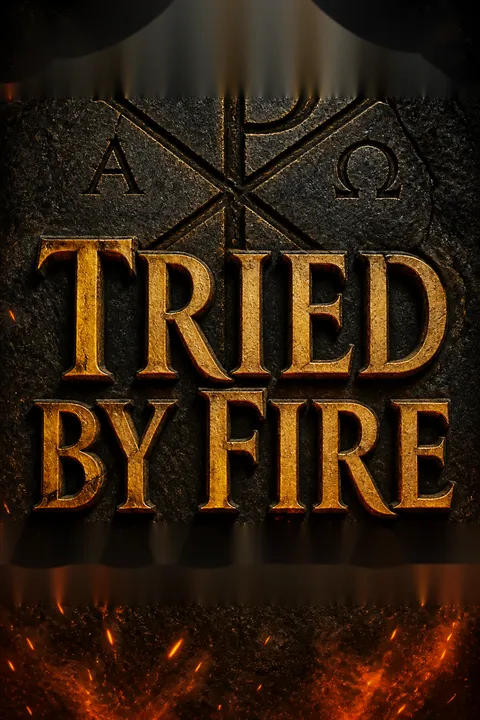

Key Takeaways
1. The blood of the martyrs served as the seed of the early Church
"The blood of the martyrs is the seed of the church."
Endurance through suffering. The early Christian movement faced brutal, state-sponsored violence beginning under Emperor Nero after the Great Fire of Rome in AD 64. Rather than extinguishing the nascent faith, these horrific public executions—where believers were gored by beasts, crucified, or burned as human torches—only served to strengthen the resolve of the community.
A counterintuitive growth. The supernatural resilience of the early saints confounded the pagan Roman world, which equated physical dominance with divine favor. This endurance was fueled by several core appeals of the Christian message:
- The promise of eternal life and salvation from earthly misery.
- An egalitarian community that welcomed slaves, women, and outcasts as equals.
- A radical valuation of human life that contrasted sharply with Greco-Roman cruelty.
Apostolic foundations. The first generation of leaders, including the apostles Peter and Paul, sealed their testimonies with their lives in Rome. Their willingness to suffer and die without seeking earthly wealth or power provided undeniable proof of their convictions to those they left behind.
2. Defining orthodoxy and canon was essential to defeating early heresies
"By transferring passages, and dressing them up anew, and making one thing out of another, they succeed in deluding many through their wickedness and in adapting the oracles of the Lord to their opinions."
Internal theological threats. As the apostles died out, the early Church faced insidious internal threats from Gnosticism and teachers like Marcion and Valentinus. These groups attempted to rewrite Christian doctrine by rejecting the physical reality of Christ's resurrection or discarding the Old Testament entirely.
Establishing the boundaries. To protect the flock from these "ferocious wolves," early church fathers like Irenaeus of Lyon worked tirelessly to define which writings were truly inspired. This process of settling the New Testament canon was crucial for several reasons:
- It preserved the historical truth of Christ's life, death, and resurrection.
- It maintained the theological continuity between the Old and New Testaments.
- It provided an objective standard of truth to expose and refute false teachings.
Apostolic succession. Irenaeus argued that the true interpretation of Scripture belonged exclusively to the bishops who stood in a direct line of succession from the apostles. This institutional structure prevented breakaway sects from arbitrarily inventing new doctrines and fracturing the universal Church.
3. Apologists bridged the gap between Christian faith and classical philosophy
"No one who is right thinking stoops from true worship to false worship."
Intellectual defense. In the second century, Christian thinkers known as apologists began to systematically defend the faith against pagan intellectual attacks. Foremost among them was Justin Martyr, a philosopher who wore his traditional cloak to signal that Christianity was the ultimate and true philosophy.
Reason and revelation. The apologists did not reject classical learning; instead, they used the tools of Greek philosophy to explain Christian truths to the Roman elite. They argued that:
- Christianity was a highly rational and morally superior way of life.
- Pagan myths were inconsistent, superstitious, and morally bankrupt.
- The Logos, or universal reason, was fully personified in Jesus Christ.
Faith unto death. Justin's bold defenses, addressed directly to the Roman Emperor and Senate, demanded that Christians be judged on their actions rather than rumors. His refusal to sacrifice to pagan gods ultimately led to his beheading, proving that his philosophy was worth dying for.
4. State-sponsored persecution culminated in the Great Persecution under Diocletian
"And they received the final sentence of death with joy and laughter and cheerfulness; so that they sang and offered up hymns and thanksgivings to the God of the universe till their very last breath."
Systematic imperial onslaught. While early persecutions were sporadic and localized, the third and fourth centuries saw systematic, empire-wide campaigns to eradicate Christianity. Emperors like Decius, Valerian, and ultimately Diocletian viewed the growth of the Church as a threat to traditional Roman values and imperial unity.
The Great Persecution. Launched in 303, Diocletian's "Edict Against the Christians" initiated the most brutal purge in the history of the empire. The state deployed horrific methods to force compliance:
- Burning Christian scriptures and demolishing newly built churches.
- Stripping Christian nobles and soldiers of their titles and civil rights.
- Executing clergy and laypeople through drowning, burning, and wild beasts.
The failure of force. Despite the unprecedented scale of the violence, the imperial state failed to crush the Church. The courage of martyrs like Saint Sebastian and countless unnamed believers ultimately forced the dying emperor Galerius to rescind the persecution edicts in 311.
5. Constantine's conversion transformed Christianity from a persecuted sect to an imperial power
"When we, Constantine and Licinius, emperors, had an interview at Milan, and conferred together with respect to the good and security of the commonweal, it seemed to us that, amongst those things that are profitable to mankind in general, the reverence paid to the Divinity merited our first and chief attention, and that it was proper that the Christians and all others should have liberty to follow that mode of religion which to each of them appeared best..."
A political revolution. Following his decisive victory at the Milvian Bridge in 312 under the sign of the cross, Constantine transformed the Roman world. By co-authoring the Edict of Milan, he officially ended state-sponsored persecution and granted Christians full religious freedom.
Imperial patronage. Constantine did not merely tolerate Christianity; he actively championed it by integrating the Church into the fabric of the empire. His patronage resulted in:
- The construction of magnificent basilicas, including Old Saint Peter's in Rome.
- Exempting Christian clergy from taxes and civic duties.
- The founding of Constantinople as a new, explicitly Christian capital.
The double-edged sword. While Constantine's reign brought much-needed peace, it also introduced the dangerous precedent of imperial interference in church affairs. The church-state alliance, known as caesaropapism, would blur the lines between spiritual and secular authority for centuries to come.
6. The Desert Fathers pioneered monasticism as a pursuit of pure devotion
"For he said, that as fishes are nourished in the water, so the desert is the world prepared for monks; and as fishes die when thrown upon dry land, so monastics lose their gravity when they go into cities."
Fleeing the worldly church. As Christianity became the favored religion of the empire, many believers feared the Church was losing its spiritual purity. In response, pioneers like Paul the Hermit and Anthony of the Desert fled into the Egyptian wilderness to seek a life of radical, uncompromised devotion.
The monastic lifestyle. These "Desert Fathers" subjected themselves to extreme physical discipline, fasting, and constant prayer to mortify the flesh and combat demonic temptation. Over time, monasticism evolved from solitary hermits to organized communities under the rule of Pachomius:
- Anchorite monasticism: Solitary hermits living in complete isolation.
- Cenobitic monasticism: Monks living in community under an abbot's rule.
- A focus on manual labor, silence, and memorization of Scripture.
Preserving the faith. The monasteries of Egypt, Syria, and later western Europe became spiritual powerhouses. By rejecting the wealth and political compromises of the cities, the monks preserved a rigorous, orthodox faith that would later revitalize the entire Church.
7. The Council of Nicaea established the foundational doctrine of Christ's divinity
"And whosoever shall say that there was a time when the Son of God was not, or that before he was begotten he was not, or that he was made of things that were not, or that he is of a different substance or essence [from the Father] or that he is a creature, or subject to change or conversion all that so say, the Catholic and Apostolic Church anathematizes them."
The Arian crisis. In the early fourth century, the teachings of Arius threatened to tear the Church apart by claiming that Jesus was a created being, inferior to the Father. To resolve this existential crisis, Constantine convened the first ecumenical council at Nicaea in 325.
Defining the Godhead. The council brought together over three hundred bishops, many bearing the physical scars of Diocletian's persecutions. Led by the brilliant young deacon Athanasius, the orthodox majority formulated the Nicene Creed, which declared that:
- Jesus Christ is "begotten, not made."
- The Son is of "one substance" (homoousios) with the Father.
- Those who deny Christ's co-eternal divinity are anathematized.
The triumph of orthodoxy. Although Arianism persisted for decades through political intrigue and imperial favor, the Nicene Creed became the permanent wall of Christian orthodoxy. Athanasius's tireless defense of the Trinity ensured that the true divinity of Christ remained the cornerstone of the faith.
8. The translation of the Vulgate and preservation of texts saved classical and Christian knowledge
"A literal translation sounds absurd; if, on the other hand, I am obliged to change either the order or the words themselves, I shall appear to have forsaken the duty of a translator."
The common Bible. In the late fourth century, Pope Damasus commissioned the brilliant scholar Jerome to produce a unified Latin translation of the Bible. Working from Bethlehem, Jerome translated the Old Testament directly from the original Hebrew, creating the "Vulgate" which became the standard Bible of the West for a millennium.
Preserving the light. As the Western Roman Empire collapsed under the weight of barbarian invasions, the preservation of written knowledge fell to the monasteries. Scholars like Cassiodorus and Isidore of Seville recognized that classical learning was essential for understanding Scripture:
- Cassiodorus established scriptoriums where monks copied Christian and pagan texts.
- Isidore compiled the Etymologies, the great encyclopedia of the Middle Ages.
- Alcuin of York developed Carolingian minuscule, making copying and reading far easier.
The monastic legacy. By copying and preserving both sacred and secular manuscripts, medieval monks saved the intellectual heritage of Greece and Rome. This preservation of literacy and philosophy laid the groundwork for the eventual rebirth of European education.
9. The growing divide between East and West eventually resulted in the Great Schism
"The bishop of New Rome [i.e., Constantinople] shall enjoy the same honour as the bishop of Old Rome, on account of the removal of the empire."
Divergent paths. Over the first thousand years, the Latin-speaking Western Church and the Greek-speaking Eastern Church drifted apart. Differences in language, culture, and political environments created deep-seated misunderstandings that councils could not easily resolve.
Key points of friction. The theological and political disputes that fractured the unity of the Church included:
- The filioque clause: The West's addition of "and the Son" to the Nicene Creed.
- Papal supremacy: Rome's claim of ultimate authority over all other patriarchates.
- The Iconoclast controversy: Eastern disputes over the use of images in worship.
- Different liturgical practices, such as the use of unleavened bread in the West.
The final rupture. The tension culminated in 1054 when Cardinal Humbert placed a decree of excommunication on the altar of the Hagia Sophia, prompting a reciprocal excommunication from Patriarch Michael Cerularius. This "Great Schism" permanently divided Christendom into the Roman Catholic and Eastern Orthodox churches.
Review Summary
Tried by Fire receives generally positive reviews, averaging 4.05 out of 5. Readers appreciate Bennett's accessible, engaging writing style and comprehensive coverage of Christianity's first millennium, from the martyrs through the Great Schism. Many praise it as an excellent primer for those new to church history. Common criticisms include its superficial treatment of complex topics, an overwhelming number of names and dates, and a perceived pro-Catholic bias. Most agree it serves well as an introductory overview, though serious scholars may find it lacking in depth and rigor.
Download PDF
Download EPUB
.epub digital book format is ideal for reading ebooks on phones, tablets, and e-readers.








































