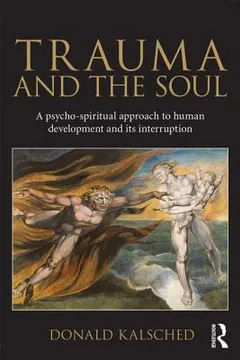

Key Takeaways
1. The Dual Nature of Reality and the Soul
Citizens of two realms, we all must sustain a dual allegiance...
Dual existence. Humans inherently exist in two interconnected realms: a material, everyday world filled with human tragedy and embodied suffering, and a sacred, boundless, and eternal dimension that soothes the soul. This "binocular metapsychology" acknowledges both the finite limitations and material determinants of the self, as well as its infinite reach and spiritual potential.
Bridging worlds. The soul acts as the vital animating core, linking us to the divine, to each other, and to the beauty of the natural and cultural world, constantly navigating between these two seemingly incommensurable realities. The challenge lies in living a full, "en-souled" life without using either realm as an escape from the other, honoring our citizenship in both.
Spiritual potential. An adequate theoretical understanding of the self must encompass this dual allegiance, recognizing that our personal identity is implicitly founded on both our material existence and our spiritual potential. This perspective frames the exploration of trauma, understanding its interruption of human development within this broader psycho-spiritual context.
2. Trauma's Impact: Dissociation and the Self-Care System
Dissociation seals over non-being. It prevents annihilation of the unit self, substituting multiplicity and an archetypal story that implicitly holds the parts together.
Unbearable experience. Trauma arises when individuals, especially in early childhood, are exposed to more suffering than their psyche or brain can consciously bear or metabolize. This overwhelming experience threatens the psychosomatic unity of the personality, risking "soul murder" or the extinction of one's vital spark.
Life-saving split. To prevent complete annihilation, the psyche initiates a life-saving split called dissociation, fragmenting unbearable affects and experiences into compartmentalized parts. This self-division has survival value, preserving an innocent core of the self by splitting it off from conscious awareness and surrounding it with an implicit narrative.
Paradoxical cost. While dissociation protects a vulnerable part of the self, it comes at a terrible price: the loss of animation, vitality, and the feeling of being real, which are intrinsically linked to ensouled living. The unfolding process of the soul's incarnation is suspended, and a "second world" is pressed into service to provide a mytho-poetic matrix for survival.
3. The Soul-Child: A Sacred Core in Hiding
This heart of the self,” Jung discovered, often had an aura of numinosity around it which was a marker of its roots in the collective unconscious and its “spiritual” qualities.
Innocent core. At the heart of the personality lies a sacred, innocent core, often symbolized in dreams as a child or a magical animal, representing the "imperishable personal spirit" or soul. This vital spark is the essence of aliveness, a pre-traumatic part of the self that is inherently good and connected to the divine.
Preservation through retreat. When faced with overwhelming trauma, this vulnerable soul-child retreats into an inner sanctuary—an "inner cocoon" or "psychic retreat"—sequestered from the unbearable pain of reality. This defensive action, while isolating, preserves the seed of the self for future growth, albeit in a state of suspended animation.
Archetypal significance. Jung recognized this "divine child" as the germ of wholeness, a manifestation of the God-image in the individuation process, whose miraculous birth and early adversities reflect the precariousness of achieving psychic wholeness. Its appearance in dreams signals a longing for integration and the potential for renewed life, revealing its roots in the collective unconscious.
4. The Ambivalent Nature of Inner Protectors
Inner protectors turn into persecutors... and the “better angels of our nature” are displaced by the demons of dismemberment, disembodiment, psychic deadening, and primitive defense.
Dual function. The self-care system, born from the psyche's need to protect itself from trauma, embodies a profound ambivalence, manifesting as both benevolent and malevolent forces. Initially protective, these inner figures can transform into persecutors under the pressure of repeated disappointments and disillusionments.
Demonic manifestations. What begin as "guardian angels" or "life-givers" can devolve into sadistic tyrants, demonic entities, or "false gods" that attack, shame, and humiliate the trauma survivor from within. This "dark spirituality" leads to dismemberment, psychic deadening, and primitive defenses, resisting healing and undermining the ego's agency.
Transformative aim. Psychotherapy aims to overcome these resistances and redeem these inner persecutors, returning these spiritual powers to their original nature and purpose: supporting psychic integration and wholeness. This process involves confronting the "god who turns suffering into violence" and transforming it into "the true god who turns violence into suffering."
5. From Neurotic to Authentic Suffering
Behind a neurosis there is so often concealed all the natural and necessary suffering the patient has been unwilling to bear.
Two forms of pain. The book distinguishes between "neurotic suffering"—chronic, repetitive, and seemingly eternal pain that avoids deeper truths—and "authentic suffering," which is acute, transformative, and necessary for psychological growth. Trauma often traps individuals in the former, preventing engagement with the latter.
Dis's dominion. The self-care system, personified as "Dis" (from "to divide or negate"), instigates neurotic suffering to prevent the ego from experiencing the unbearable acute pain of early trauma. This creates an inner "Hell" where realistic hope cannot enter, leading to severe depression and a "Faustian bargain" with the devil.
Path to liberation. Healing involves a conscious, witnessed descent into this inner "Hell," confronting Dis and the dissociated pain. This "harrowing of Hell" allows the "innocent" part of the self to suffer authentically, breaking the cycle of neurotic suffering and leading to renewed life, as exemplified by Dante's journey from Inferno to Purgatorio.
6. Wholeness Through Hemispheric and Psycho-Spiritual Integration
The rational, biological goals are unable to express the irrational wholeness of human life.
Beyond parts. Wholeness, in a psycho-spiritual sense, transcends the mere integration of fragmented parts; it involves realizing the "irrational wholeness" of human life, a profound unity that encompasses both material and spiritual dimensions. This longing for the "Great" and the "Whole" is a fundamental human instinct.
Hemispheric perspectives. Neuroscience, particularly the work of Iain McGilchrist, reveals that the brain's hemispheres mediate distinct "worlds" of experience: the right hemisphere for holistic, implicit, emotional, and contextual understanding, and the left for analytical, explicit, and decontextualized processing. Optimal functioning requires integrated communication between them.
Trauma's dis-integration. Early trauma disrupts this delicate balance, impeding hemispheric integration and potentially damaging the right hemisphere, leading to lasting deficits in emotional processing and a premature reliance on the left. Healing necessitates restoring this balance through "right-brain-to-right-brain" communication, allowing for the re-embodiment of the self and the integration of implicit memories.
7. Dreams and Mythopoetic Imagination as Healing Pathways
Dreams are the guiding words of the soul.
Royal road to the soul. Dreams serve as the "via regia" to the unconscious, offering a non-distorting mirror that reflects our larger potential selfhood and providing a unique language for the soul. They bridge the gap between the "ineffable subject of the unconscious" (the dream-maker) and the "phenomenal subject" (the dreamer).
Symbolic communication. Through mythopoetic imagery, narrative, and drama, dreams tap into the "daimonic stratum" of the psyche, making implicit, body-based memories and undifferentiated emotional pain accessible for symbolic processing. This language resonates with latent stories within the dreamer, creating meaning and fostering integration.
Re-membering the self. Dreams help differentiate and process components of experience, transforming raw "beta bits" into meaningful "alpha function" images. They provide a "mythic fingerprint" or "dream of dreams," connecting individual suffering to universal human themes and guiding the fragmented self toward coherence and wholeness.
8. The Transformative Power of Relational Healing
Relationship that makes a difference is the kind of transformative relationship actualized in the best contemporary psychotherapy and psychoanalysis.
Relational repair. Trauma, often originating in early relational failures, necessitates relational repair. Psychotherapy creates a "potential space" where the patient's lost self can re-emerge and re-attach, fostering a new, corrective emotional experience.
Therapist's role. The therapist acts as a compassionate witness, "tuning in" to dissociative gaps and co-creating a new intersubjective reality through affectively focused, right-brain-to-right-brain communication. This process allows for the re-experiencing and integration of early relational injuries within a safe, containing environment.
Embodied return. Through this transformative relationship, rigid neural networks wired into defensive patterns can be re-configured, allowing the soul to return to its rightful, embodied place at the center of the individual's emotional life. This re-establishes connections between affects and images, the body and the past, leading to ensouled living.
9. Jung's Journey: A Paradigm of Living Between Worlds
In the end the only events in my life worth telling are those when the imperishable world irrupted into this transitory one.
Divided self. C.G. Jung's life exemplifies the profound impact of early relational trauma, leading to a lifelong division between his "No. 1" (outer, adapted) and "No. 2" (inner, spiritual) personalities. This split, born from loneliness and unmet needs, drove him inward, where he found solace and meaning.
Inner sanctuary. Jung's dissociation, triggered by unbearable experiences like childhood humiliation, opened him to a rich inner world of mythopoetic images, visions, and "spiritual powers." This "God's world" served as a life-saving sanctuary for his innocent soul, providing a resource for psychological survival and later, the foundation of his theories.
Integration and humility. Through arduous inner work, including writing the Red Book, Jung gradually integrated his two worlds, moving from inflated identification with archetypal energies to a humble acceptance of his human mortality. This process, akin to a "crucifixion" of the ego, led to a profound sense of wholeness and the realization that his "Spirit was a candle of the Lord."
10. Innocence Transformed: From Primal to Higher Consciousness
True suffering belongs to innocence, not guilt.
Primal innocence. Innocence, the guileless, trusting core of the self, is often lost through traumatic experience, leading to a "hostaged self" sequestered in an inner world. This primal state, like The Little Prince on his planet, is preserved but isolated from the suffering necessary for growth.
The journey of disillusionment. The transformation of innocence involves a painful journey into "the forest of experience," where illusions are shattered, and the individual confronts the realities of loss and betrayal. This "disillusionment" is a necessary suffering that allows for the integration of experience and the development of ego-strength.
Higher innocence. Through conscious suffering, "taming" (establishing ties), and embracing grief, a "higher" or more mature innocence is recovered. This process, symbolized by "wheatfields" and "laughing stars," bridges the two worlds, allowing the soul to re-enter embodied life with renewed aliveness, meaning, and a profound appreciation for the tragic beauty of existence.
Review Summary
People Also Read







Download PDF
Download EPUB
.epub digital book format is ideal for reading ebooks on phones, tablets, and e-readers.








































