
Key Takeaways
1. Toxic Empathy: A Deceptive Force
Empathy has been hijacked for the purpose of conforming well-intentioned people to particular political agendas.
Empathy's manipulation. While empathy, the ability to understand and share the feelings of another, is a natural and often good human trait, it can be weaponized. Progressive ideologies exploit this desire to be kind and compassionate, pressuring individuals to suppress their moral objections and align with specific political positions. This manipulation often targets the desire to be perceived as a "good person," making it difficult to disagree without feeling cold-hearted.
Red flags. Identifying toxic empathy involves recognizing certain tactics. These include:
- Euphemisms: Obscuring harsh realities (e.g., "reproductive rights" for abortion).
- Contradictions to God's Word: Presenting unbiblical ideas alongside partial truths.
- Exclusively political ends: Using emotional appeals to achieve specific policy changes rather than genuine individual care.
- Christian-sounding words with un-Christian meanings: Redefining terms like "justice" or "equity."
- Emotional language: Replacing logical arguments with accusations of callousness or bigotry.
Beyond feelings. True love, unlike toxic empathy, is not merely an emotion but a conscious choice to seek what is best for another person, as defined by God's truth. Empathy can help us understand pain, but it cannot dictate what is morally right or beneficial. When feelings-based arguments override truth, the very people intended to be helped often suffer greater harm.
2. Abortion: Not Healthcare, But the Taking of Life
The fact is, abortion purposely kills an innocent person.
Brutal reality. Abortion is not merely a medical procedure but the intentional termination of a human life, regardless of gestation stage. Euphemisms like "reproductive health" or "pregnancy termination" are used to sanitize this reality, masking the gruesome methods involved, such as aspiration, dilation and extraction (D&X), or medication abortions that starve the developing child. These procedures often involve the dismemberment or poisoning of a fully formed, albeit small, human being.
Personhood debate. The core of the abortion debate hinges on the definition of personhood. Scientifically, a baby in the womb is a human being from conception, with unique DNA and developing organs. Arguments for abortion often implicitly adopt a logic that human value and rights begin sometime after birth, based on arbitrary criteria like size, location, dependence, age, or perceived "unwantedness." This creates a dangerous precedent, as such criteria could logically be applied to born individuals.
Dark history. The abortion movement has deep, disturbing roots in eugenics and population control, championed by figures like Margaret Sanger. These movements sought to minimize the existence of people deemed "undesirable," often targeting poor, working-class, and minority populations. Today, statistics show a disproportionate number of abortions among black women, fulfilling the eugenicist vision. True compassion for mothers in crisis is found in supporting life-affirming alternatives, like pregnancy centers, which offer comprehensive care and resources, rather than promoting a procedure that ends a life and often leaves women with lasting physical and emotional scars.
3. Transgenderism: Rejecting God's Design Leads to Harm
While empathy for someone who is deceived about their gender may lead us to affirm their stated identity, it is not possible to become the opposite sex, and this lie leads to policies that compound their deception and jeopardize the safety of women and children.
Irreversible damage. Affirming a "gender identity" that contradicts biological sex, especially in children, leads to severe and often irreversible physical and psychological harm. Medical interventions like puberty blockers, cross-sex hormones, and surgeries carry significant health risks, including infertility, bone density loss, cardiovascular issues, and chronic pain. These procedures do not change a person's underlying biology or DNA, leaving individuals in a state of profound confusion and regret, as exemplified by detransitioners like Laura Perry Smalts.
Exploiting vulnerability. The surge in gender dysphoria, particularly among adolescents, is linked to "rapid-onset gender dysphoria" (ROGD), often spread through social contagion, internet use, and pornography. Vulnerable youth with pre-existing mental health conditions or trauma are targeted by an ideology that promises happiness through "transition." This movement is fueled by:
- Ideological commitments to deconstructing traditional norms.
- False scientific claims about gender fluidity.
- Significant financial incentives for the medical industry, which profits from lifelong "treatments."
Societal consequences. Beyond individual harm, transgender ideology erodes women's rights and safety by allowing biological males into female-only spaces like sports, locker rooms, and prisons. This undermines fair competition, privacy, and security for women and girls. Christians are called to speak truth in love, refusing to affirm lies about gender, even when pressured by "pronoun politeness," because God's design for male and female is foundational to human flourishing and reflects His divine order.
4. "Love Is Love": Undermining Marriage and Harming Children
The marriage of a man and a woman, as an earthly metaphor of Christ the Bridegroom and His bride, is meant to reflect this good news.
Marriage's purpose. The redefinition of marriage from a union between one man and one woman to "love is love" fundamentally misunderstands its purpose. Historically and biblically, marriage is primarily a procreative and child-rearing institution, essential for societal stability. While individual heterosexual couples may not have children, the principle of male-female union is inherently life-giving. Redefining marriage based on adult desires, rather than this foundational purpose, inevitably harms children and society.
Children's rights. The shift to "gay marriage" has led to the normalization of reproductive technologies like sperm/egg donation and surrogacy for same-sex couples. These practices intentionally create children who are separated from a biological parent or the woman who carried them, inflicting what is often called a "primal wound." Children have a right to a mother and a father, and studies consistently show that children raised in intact, biological married families with their own mother and father tend to flourish more. Prioritizing adult desires over children's fundamental needs is a profound injustice.
Biblical foundation. Scripture consistently defines marriage as between a man and a woman, rooted in creation (Genesis 1:27), reiterated throughout the Old Testament, affirmed by Jesus (Matthew 19:4-5), and representative of Christ and the Church (Ephesians 5:31-32). To deny this definition is to deny biblical authority and the gospel itself. True love, as defined by God, "rejoices with the truth" (1 Corinthians 13:6) and calls for self-denial and obedience, not the affirmation of sin. Christians must advocate for policies that align with God's design for marriage, even if it means facing opposition.
5. "No Human Is Illegal": Borderlessness Invites Chaos and Danger
Every sovereign nation must have the right to enforce immigration policy that protects its citizens and their rights.
Consequences of open borders. The slogan "no human is illegal" is a prime example of toxic empathy, ignoring the severe consequences of unchecked illegal immigration. While individual stories of immigrants seeking a better life are heartbreaking, a nation's primary responsibility is to protect its own citizens. Loose border policies lead to:
- Increased crime, including violent felonies, drug trafficking (e.g., fentanyl), and human smuggling.
- Exploitation of immigrants by cartels, leading to rape, robbery, and death during dangerous journeys.
- Economic strain on communities and displacement of citizens from resources.
- Compromised national security, with potential terrorists entering undetected.
Sovereignty and order. Strong borders are essential for national sovereignty, which is a nation's right to govern its territory and protect its citizens. Without borders, a nation loses its legitimacy, its ability to enforce laws, and the meaning of citizenship itself. God, as a God of order, established nations and their boundaries (Acts 17:26-27), and Scripture often depicts walls as a defense against disorder and evil (Nehemiah 2:17, Psalm 122:6-7).
Biblical hospitality vs. policy. While the Bible commands compassion for the "sojourner," this does not equate to advocating for open borders. Ancient Israel's laws for foreigners required assimilation and adherence to their laws, demonstrating a balance between hospitality and national order. Christians are called to be good stewards of their nations, seeking the welfare of their cities (Jeremiah 29:7), which includes advocating for secure borders and just immigration policies that prioritize the safety and well-being of all citizens, both native-born and legal immigrants.
6. "Social Justice Is Justice": A Flawed Ideology of Unequal Outcomes
Social justice is an inherently collectivist, power-seeking ideology.
Perverting justice. "Social justice," as defined by progressive ideology, aims for "equity" or equal outcomes among groups, rather than true justice, which focuses on equal treatment and impartial processes. This ideology often attributes all disparities between racial or other identity groups to systemic oppression, ignoring other contributing factors like individual choices, cultural differences, or economic decisions. This leads to policies that:
- Punish groups deemed "oppressors" (e.g., white people) through "antiracist discrimination."
- Favor certain groups based on identity, violating principles of impartiality.
- Undermine law enforcement and criminal justice, leading to increased crime and victimization, particularly in minority communities.
Myth of systemic racism. The claim that all disparities, such as those in policing or income, are solely due to systemic racism is a "fallacy of the excluded middle." It ignores complex realities and historical nuances, such as the fact that many black-white disparities widened after the Civil Rights era and the welfare state. Furthermore, if America were truly a white supremacist nation, Asian Americans would not consistently outperform white Americans in metrics like income and education.
God's impartial justice. Biblical justice (mishpat) is characterized by truthfulness, proportionality, impartiality, and direct accountability. God explicitly condemns favoritism, even to the poor (Leviticus 19:15), and demands that punishment fit the crime. Social justice, by contrast, judges individuals based on group identity and seeks to reallocate resources or power based on perceived historical grievances, often leading to new injustices and societal chaos, as seen in historical examples like Robert Mugabe's Zimbabwe. Christians must uphold God's impartial justice, which protects the defenseless and punishes wrongdoing, rather than embracing an ideology that divides and harms.
7. God's Truth and Love: The Only Reliable Guide
Christians are called to love, not just empathy.
Love rooted in truth. While empathy can be a catalyst for love, it is insufficient as a moral guide. True, biblical love is inextricably linked with truth (1 Corinthians 13:6). God, who is love, defines what is good, right, and true, and His commands are always for our ultimate well-being. Toxic empathy, by contrast, encourages affirming sin or lies in the name of kindness, ultimately leading to spiritual and physical harm.
Divine authority. God's Word is the ultimate authority for Christians, not fleeting emotions or cultural trends. When faced with controversial issues, our response must be grounded in what God has revealed in Scripture. This means:
- Believing God's definition of life, gender, and marriage.
- Trusting His principles for justice and national order.
- Rejecting worldly wisdom that contradicts His truth.
Courage over compromise. It is tempting to soften biblical truths to gain acceptance or avoid criticism, but this is both unbiblical and ineffective. People are won over by Christian courage and genuine love, not by compromise or silence on difficult issues. The Holy Spirit uses truth, spoken in love, to transform hearts and minds, as demonstrated by testimonies of individuals who found redemption by confronting their sin and embracing God's design.
8. Children: The Primary Victims of Toxic Empathy
Children, helpless and needy as they are, are always the first victims of the reign of the god of self.
Vulnerable prey. Children are consistently the most vulnerable victims of progressive social experiments driven by toxic empathy. Their physical and mental immaturity makes them susceptible to exploitation and manipulation. Policies rooted in self-deification—where adult desires supersede objective truth—disproportionately harm children.
Examples of child sacrifice. This pattern is evident across the issues discussed:
- Abortion: Directly murders unborn children to satisfy adult convenience or perceived necessity.
- Gender ideology: Mutilates children's bodies and confuses their identities to affirm adult feelings about gender.
- Redefining marriage: Robs children of a mother or father, creating "primal wounds" to fulfill adult desires for family structure.
- Lawlessness: Exposes children to increased crime, violence, and exploitation (e.g., trafficking at the border) due to lax enforcement.
Historical parallel. Historically, cultures controlled by paganism or destructive ideologies often exploited children, treating them as objects for sacrifice or political advancement. Christianity, by introducing the radical concept of innate human worth rooted in God's image, revolutionized the treatment of children, elevating them to a specially protected class. This historical shift, from viewing children as disposable to precious, was a direct result of the gospel.
9. The Church's Role: A Beacon of Clarity and Courage
At her best, the church has stood as a refuge of clarity and courage in an age of chaos and confusion.
Resisting manipulation. In a world saturated with toxic empathy, the church is called to be a steadfast beacon of truth and love. This means actively resisting emotional manipulation that pressures Christians to affirm sin or compromise biblical principles. Our engagement in culture and politics is not "Christian nationalism" but a faithful stewardship of the places God has sovereignly placed us, driven by love for our neighbors as image bearers of God.
Speaking truth in love. Christians must speak boldly and gently, even when it invites criticism and persecution. Jesus and Stephen, both "full of grace and truth," faced death for their unwavering commitment to God's message. We cannot be "nicer than God" or believe that silence on controversial issues will lead people to Christ. Instead, we trust that God's Word, spoken with courage and compassion, will accomplish His purposes.
Stewarding God's order. Our faith informs our worldview, and our worldview should inform our political engagement. Every law is based on a moral belief, and Christians have a right and responsibility to advocate for laws that align with God's principles of justice, order, and human dignity. This involves:
- Prioritizing the protection of the vulnerable, especially children.
- Upholding God's design for life, gender, and family.
- Promoting justice that is impartial and proportionate.
- Working for the welfare of our nations, recognizing their God-given purpose.
Review Summary
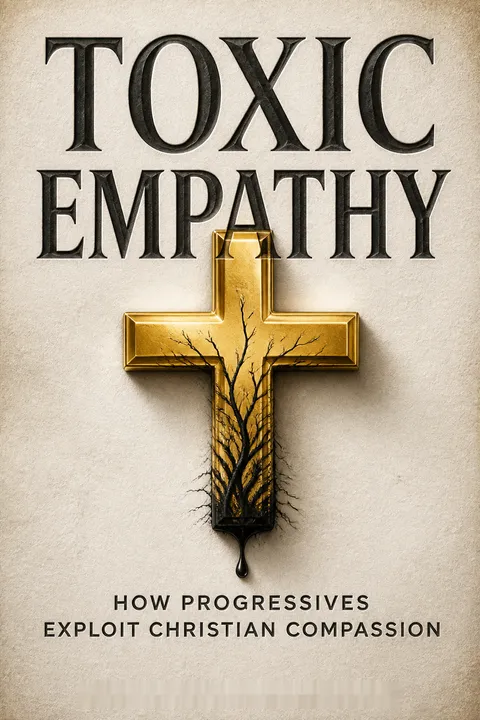
Toxic Empathy by Allie Beth Stuckey receives polarized reviews, averaging 4.32/5 stars. Five-star reviewers praise her biblical worldview on abortion, transgenderism, immigration, marriage, and social justice, calling it courageous, well-researched, and timely. One-star reviewers criticize the book as politically biased rather than genuinely Christian, accusing Stuckey of lacking compassion, using anecdotal arguments while condemning others for the same, and misrepresenting Jesus's teachings. Critics describe it as Christian nationalism disguised as faith literature. Both sides acknowledge her articulate presentation, though they fundamentally disagree on whether her arguments reflect authentic Christianity or harmful political rhetoric.
People Also Read

About the Author
Other books by Allie Beth Stuckey
Download PDF
Download EPUB
.epub digital book format is ideal for reading ebooks on phones, tablets, and e-readers.








































