


Plot Summary
Prologue
A child with no memory hides beneath a bed in Castle Noir, teeth chattering, her screams trapped in a throat that makes no sound. A man named Baze4 arrives, drags her into the light, and wraps her in arms she claws and bites. His hands radiate warmth that thaws the ice crystallizing in her veins.
He tells her small seeds grow into big, strong things — but they need sunlight and warmth to set their roots. She doesn't know the name they keep calling her: Orlaith.1 She knows only the cold, the whispers, and the black hole in her chest that swallows everything. Baze4 promises he'll be there for her. Always.
Blood on Her Hands
Orlaith1 rocks beside a waterfall, Rhordyn's2 blood cracking on her skin. She watched him fall with a talon through his chest — a weapon Cainon3 taught her to wield against the man she's only now realizing she loved. She slashes crystal blooms from her own shoulder, trying to wake from a nightmare that won't dissolve.
When she nearly steps off the cliff's edge, a krah's cry breaks the moment: two sprites plummet from the canopy, and Irilak swarm toward the helpless prey. Orlaith1 screams at the shadow creatures to stop — and they obey, cowering from a darkness splitting through her skin.
She rescues the sprites, then begins forging crystal domes inside her chest, sealing every emotion beneath lustrous shells. A technique for surviving what she's done. A technique she'll need for everything coming.
Cainon Brushes the Septum's Hair
While Orlaith1 stumbles through Parith, Cainon3 — High Master of Bahari — prepares vanilla-folded cream for his monthly tea with Heira,9 the High Septum who leads the Shulák religious order. He brushes her golden hair while she reports progress hunting Shadow's Hand, the Aeshlian prophesied to end the world.
Cainon3 confides his true aim: once he becomes Orlaith's1 consort, Heira9 gains access to Ocruth's vast resources. But he also confesses something that unsettles even her — he wants to keep Orlaith1 personally, regardless of the trial's outcome.
He'll accept a public whipping instead of a burning if she fails. Heira9 warns that big feelings can wound, stabbing you while you sleep. Cainon3 already knows. The scar above his heart proves it — a mark his own mother put there.
Gifts From a Dead Man
At Graves Inn, where Rhordyn's2 smuggled soldiers drink in disguise, Cindra6 — his Warrior General — forces Orlaith1 to eat chowder and hands her a key to his room. Inside, his scent punches through her defenses.
Under the bed, placed exactly where she used to hide things in her tower, she finds a black parcel: her diamond pickaxe, recovered and returned, and a drawing of her in the mural corridor at Castle Noir — a moment of private devastation he witnessed from the shadows. The bluebell heads, the sheath, this.
Silent declarations she slashed and stabbed. Her crystal dome detonates. She shoves caspun between her teeth and crawls into his bed, overdosing. Zali,5 High Mistress of Rouste and Rhordyn's2 political promised, arrives and saves her — then delivers a verdict: Ocruth now belongs to Orlaith.1
Beyond Cainon's Wall
Against Rhordyn's2 prior warning, Orlaith1 scales the massive wall encircling Parith. On the other side: a cramped band of shantytown squeezed between two walls, crammed with people rotting from the Blight. Their lesions weep with maggots, their eyes sightless, and the stench of decay coats her throat.
A man grabs her hand, begging. A young woman attempts to follow the rope upward — still beautiful, the disease barely begun. Orlaith1 realizes that letting her climb free will spread sickness through the city, killing thousands. She cuts the rope.
The woman screams too short. The fall carves itself into Orlaith's1 conscience alongside everything else. Cainon3 isn't just cruel — he's weaponized his dying citizens as a buffer against invasion, and Orlaith1 has never felt more certain that she chose the wrong monster in that jungle.
Confession and Checkmate
Captured by palace guards, Orlaith1 is brought before Cainon3 for breakfast. She intended to play the broken girl — but the memory of those Blight victims hardens her spine.
She slams her dagger through a roasted hog to demonstrate how she killed Rhordyn,2 then threatens: release ships to Ocruth, open the underground tunnels for refugees, or she'll halt all trade and send Rhordyn's2 army through his jungle. Cainon's3 counter is surgical. A servant named Lyra overheard the confession.
If word spreads, Zali5 must challenge Orlaith1 to a death duel or appear weak. Cainon3 hurls a knife into Lyra's chest to silence her, then offers terms: complete the coupling ceremony, become his entirely, and the secret stays buried. Orlaith1 is boxed in from every angle.
Wildflowers Over Cages
Old Hattie,10 the mute palace weaver, urgently signals Orlaith1 toward a clifftop tree. At sunrise, Orlaith1 sees an island carpeted in thousands of wildflowers — the same image woven into a tapestry at Castle Noir that Hattie10 secretly sent as a cry for help.
Orlaith1 rows there by moonlight and discovers a burrow beneath the blooms: cells lining a curling hallway, each holding battered prisoners. Men, women, children, an Aeshlian boy with iridescent curls.
At the center, a massive chained Unseelie — Calah12 — draped over a dead man in a beam of moonlight. Cainon3 appears behind her, pins her to the bars, and confesses: this beast is his father, an Unseelie broken by the Great Purge. He feeds him prisoners to keep him alive. He cannot let Orlaith1 leave.
Orlaith Bares Her Throat
Trapped in the burrow, Orlaith1 makes a calculation that corrodes her soul. She plays on Cainon's3 deepest wound — his desperate hunger to be loved despite the scar his mother carved above his heart — and offers herself. Her blood first, fingertip to his lips, performing an intimacy Rhordyn2 never showed.
Then her neck. Cainon3 latches on with teeth that lack full-blooded precision, tearing deep. Crystal blooms erupt across her shoulder as he drains her toward a dark void where an ancient eye watches. Zali's5 slaps and scalding water drag her back.
The ploy works: Cainon3 releases her from the burrow. But the wound on her throat throbs with its own shameful heartbeat, and Orlaith1 tucks it beneath her hair — a filthy brand she'll have to wear while she schemes to free every life trapped below.
Baze Torches the Temple
Using a captured runner's identity, Baze4 crosses the river to the Shulák temple and discovers their Candescence operation: Aeshlian thorns ripped from living prisoners, ground with sugar, sold to addict children and recruit converts.
The production rooms reek of his own stolen past — he was once a child kept as a blood slave, his thorns plucked while he was drugged. To complete his induction, he meets Madame Strings, a woman maintaining eternal youth by consuming the drug. She forces Candescence on him, triggers his deepest trauma, and takes him to bed.
Afterward, Baze4 douses her quarters in spirits and kicks over a bowl of flaming oil. He seals the screaming doors, burns the production rooms, and walks through the smoke chanting a promise in the old tongue to find his brothers.
Broken Glass in The Bowl
The Ether Trial demands Orlaith1 climb out of The Bowl — a deep pool — while the creature she chose swims below. The High Septum9 substituted electric eels for her chosen rockfish. Orlaith1 refuses the rigged game.
She kicks the empty eel tank off its plinth, shattering glass across the floor, then spider-climbs the metal arch spanning the pool and saws through the rescue bell's rope with a shard. When she drops in, the eels bump and slither against her but don't shock — until she grabs the rope and hauls herself toward the rim.
The jolt paralyzes her, drops her to the bottom. She forces her muscles to remember a promise made to a red-haired girl in a cage, breaks the surface choking, and drags herself over the lip. The crowd erupts. The High Septum's9 lips flatten to a blade.
The Poisoned Kiss
Preparation involves liquid bane mixed into red lip lacquer, senka seed petals hidden in her braids, and knocking out a handmaiden18 who caught her. At the ceremony, Candescence smoke floods a ritual pit, reducing Orlaith1 to a sightless, giggling participant led across stepping stones above writhing bodies.
On a moonlit rooftop, human sacrifices are nailed to stone spires — their chest cavities opened, their eyes possessed by watching gods. She snaps back to consciousness just as Cainon3 kneels before her, ready to consummate.
She coaxes him to kiss her poisoned lips. He does — and collapses. His weight pins her, and a trickle of bane slides down her own throat. Kolden,8 her guard-turned-ally, rips Cainon3 aside and carries her out. She vomits while the possessed eyes of dead sacrifices watch without blinking.
Baze Kills the Beast
Through the tunnel Old Hattie10 broke open, Orlaith1 and Kolden8 enter the burrow. Thirty-three prisoners file toward freedom while Kolden8 unlocks cells with a key that sickens Orlaith1 — he'd been ordered to tend these captives under Cainon,3 and he obeyed.
Only the Aeshlian boy remains, pinned beneath Calah's12 massive arm. Orlaith1 cuts her palm and steps across the chalk line, drawing the beast's attention with her blood. Calah12 prowls closer while Kolden8 frees the boy behind him. Then Calah12 charges, slams into Orlaith,1 and tears into her already ravaged throat.
Baze4 — who'd tracked her after spotting the bite mark at a public burning — appears from the tunnel and drives a Vruk talon through the Unseelie's back. Calah's12 eyes clear to the brightest blue. He whispers relief before going still.
The Pier Shatters
The freed prisoners board Gunthar's16 ship as the storm rages. Young Zane11 — a street-smart boy who smuggled messages between Orlaith1 and her allies — chases his blown-off cloak, and she catches him just as the horn blasts: Cainon3 is awake. Palace guards swarm.
Orlaith1 slaughters them with Rhordyn's2 sword, something feral and macabre hatching inside her chest. But Cainon3 emerges holding Zane11 by the hair over churning water. The boy waves a stolen gold token, trying to buy his life. Cainon3 pockets it and lets go.
Orlaith1 rips off her necklace, baring her Aeshlian form — crystal blooms, pointed ears, iridescent hair — but her darkness won't release. A black-veined bolt of lightning cleaves from the sky, strikes Cainon's3 sword, and detonates the pier into glass. She plummets into the ocean.
Zali Takes the Ships
While Orlaith1 fought on the pier, Zali5 and Cindra6 led seven whaling ships through a storm to coordinates Kolden8 provided. They found thirty-five blue-sailed vessels at a sheltered island outpost guarded by ten drunk soldiers.
Cindra6 decapitated the commanding officer when he refused to cooperate, and Rhordyn's2 disguised soldiers overwhelmed the rest. In caves behind the shipyard, they discovered what refugees fleeing to Bahari for safety actually found: chains and forced labor building Cainon's3 fleet.
Zali5 freed the enslaved builders and offered passage to Ocruth. With crews distributed across the captured vessels, they sailed into the storm — carrying ships, refugees, and the families of every recruited sailor hidden in barrels below deck. Cainon's3 fleet was gone before dawn.
The Dead Man Returns
Orlaith1 washes up on a beach and wades into the ocean, ready to drift into nothing. A baritone command stops her cold. She turns and sees Rhordyn2 — shirtless, scarred, tattoos flickering, alive. His chest bears a risen scar where she stabbed him; his eyes are obsidian flints.
He slams her against a palm tree and tells her that if she bares her throat to death again, the entire world will suffer for it — and he won't be held accountable for what rips out of him. He tells her Baze4 pulled Zane11 from the water. Both alive. Then he hands her back the talon, orders her to pick it up. She refuses. He stalks every backward step she takes, his fury a weather system pressing against her skin. He's taking her home.
The Mother's True Killer
For days they trek through the jungle — sharing a cabin, a meal, a bed when nightmares drag her screaming from sleep. She cuts her hair with his help, each severed strand a purged memory of Cainon's3 possessive hands. She builds salves for his wounds and he lets her tend them.
But when basilisks attack and she turns her sword on her own reflection — screaming that she hates herself, that she destroys everything she touches — Rhordyn2 blocks her blade and forces her to look.
He tells her the truth he's carried for years: he killed her mother. Not Orlaith's1 darkness. He found her Vruk-wounded and put his sword through her heart as mercy. The revelation cracks Orlaith1 open — not to more pain, but to sunlight. She is not the monster she believed herself to be.
Run and He Will Chase
Freed from a lifetime of false guilt, Orlaith1 kisses Rhordyn.2 He sets terms: no more reckless acts, no more lies to hide her hurt. If she runs, she's his. She turns and sprints through a half-glassed jungle. He hunts her down.
In a cave striped with refracted light, they collide — consuming each other with a force born from too long pretending not to need this. Her Aeshlian canines descend for the first time, and he produces a leather sheath for her to bite instead of him — the consequences of her bite too dangerous to risk.
They move together in a slow tide that builds until it breaks them both apart and reassembles them around each other. She wakes tangled against his heartbeat, relief blooming through her chest in buttery yellow flowers. She tries to call it a mistake. He calls her a liar.
Blood Bond at Castle Noir
The Blight finds Orlaith1 — contracted when she climbed the quarantine wall in Parith. Boils devour her skin. Her lungs fill with rot. Kai,7 her sea-drake friend, catches her falling body in his jaws and tends her in his trove for days, but nothing helps.
Rhordyn2 pounds rocks above the water until Kai7 surrenders her. He carries her to Castle Noir, bites his own lip, and presses a kiss to hers — feeding her his blood through their most devastating act of intimacy. The Blight dissolves.
But the cure is a chain: she'll need his blood daily or wither and die. She wakes healed in his room, wearing his shirt. A massive black Vruk lies by the fireplace — Rhordyn's2 beast form, watching with fathomless eyes. She scratches behind his ear. He shifts back. She asks why they are a tragedy.
Epilogue
Before any of this began, Rhordyn2 climbed Mount Ether to consult the Prophet Maars13 — a blind, bestial seer who carves prophecies pulled from a crater lake. After feeding the seer a goat's raw heart, Rhordyn2 asked whether Orlaith's1 death prophecy had changed.
It hadn't. The world would keep trying to kill her until he sealed their bond — buying only borrowed months before the final verses sank their teeth. The God Jakar wove their fates together as punishment, and no distance could rewrite the ending.
In the story's wake, Cainon3 — half his face turned to glass — captures Baze4 and Zane11 in the emptied burrow. He knows Orlaith1 is Shadow's Hand. He plans to hunt her down. At Castle Noir, a word pulses from the seed in Orlaith's1 chest, absolute and foreign: mate.
Analysis
Parker's second volume operates as a sustained meditation on what happens when protection becomes indistinguishable from control — and when love is expressed through silence rather than speech. Every major relationship replicates this pattern: Rhordyn2 hid Orlaith's1 identity to keep her safe, inadvertently keeping her helpless. Cainon3 cages his father12 in chains he calls devotion. Baze4 wears a ring that conceals his scars from the world and himself. The Shulák extract thorns from living bodies and call it divine service. Even Orlaith's1 crystal domes — the novel's most original psychological device — are protection systems that slowly kill their architect by starving her of her own light.
The central question is not whether monsters deserve love, but whether love itself becomes monstrous when it refuses to let go. Rhordyn's2 climactic act — feeding Orlaith1 his blood without consent — is simultaneously the most romantic gesture and the most troubling. He saves her life by making her permanently dependent on him, mirroring the exact dynamic she escaped from with Cainon.3 Parker doesn't flinch from this parallel. The prophecy Maars13 delivers confirms the bond buys time but cannot rewrite fate — a structural acknowledgment that codependency is not resolution.
What elevates the narrative is the treatment of Orlaith's1 suicidal ideation not as dramatic flair but as the logical consequence of compounding trauma. Her dome-building, her willingness to serve as bait, her throat-baring on the pier — these aren't noble sacrifices but symptoms of a woman who has internalized her own expendability. Rhordyn's2 fury at her self-destruction is the book's moral axis: he refuses to let her mistake survivor's guilt for worthlessness. The revelation that her mother's death wasn't her doing doesn't erase her damage — it removes the keystone lie holding her self-hatred in place, allowing everything else to finally begin collapsing toward healing rather than further ruin.
Review Summary
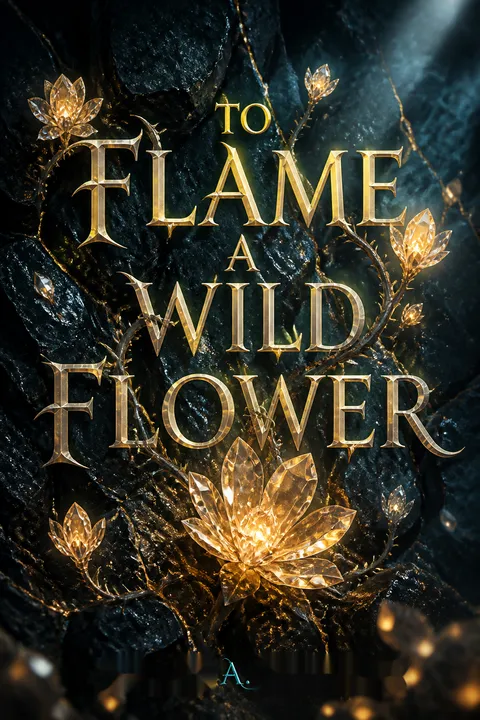
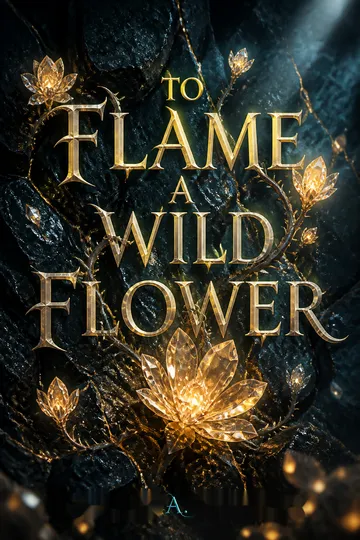
To Flame a Wild Flower receives mostly positive reviews, with readers praising its complex characters, intricate world-building, and emotional depth. Many find it a gripping continuation of the Crystal Bloom series, appreciating the character development and plot twists. Some criticize the pacing and writing style as confusing or overly flowery. The book deals with dark themes and leaves readers eagerly anticipating the next installment. While some find it challenging to follow, others consider it a masterpiece of dark fantasy romance.
People Also Read
Characters
Orlaith
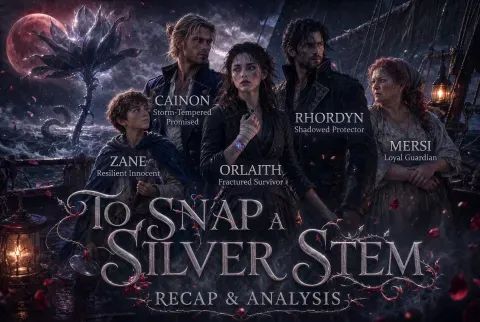
Aeshlian in a borrowed faceOrlaith is an Aeshlian—a nearly extinct race hunted for their crystal thorns—hidden beneath a dead girl's face by a necklace containing a god's blood. Raised as Rhordyn's2 ward in Castle Noir, she grew up sealed inside a safety perimeter, her identity kept from her, developing a pathological need for control manifested in art, gardening, and meticulous routine. She carries a darkness inside her chest that she fears after believing it killed her mother, and suppresses emotion through crystalline internal architecture. Her psychology is defined by survivor's guilt, attachment anxiety, and compulsive self-sacrifice that masks suicidal ideation. She loves fiercely but destroys reflexively, oscillating between feral competence and devastating self-recrimination. Her growth lies in learning that protecting others requires accepting she deserves protection too.
Rhordyn
Cursed beast who kneels to oneHigh Master of Ocruth, Rhordyn is an Unseelie bearing divine runes tattooed across his body that chain a beast capable of turning living matter to glass. His exterior is granite stoicism: he communicates through silence, sketches, and acts of service so subtle they pass unnoticed. Beneath this, he carries catastrophic guilt—for failing his sister15, for his kind's genocide, for purchasing Orlaith's1 mother's blood and failing to keep her safe. His psychology centers on hypervigilance and emotional foreclosure: he denies himself closeness because every prophecy promises he'll lose her. He fed on Orlaith's1 blood nightly for nineteen years through a goblet—a bond she never understood. His love language is protection delivered so quietly it resembles indifference, and his rage, when it surfaces, reshapes terrain.
Cainon
Half-blood tyrant craving loveHigh Master of Bahari, Cainon is half-Unseelie through his father12 and half-mortal through his mother10—a heritage granting bloodlust without significant power, a source of bitter inadequacy. His mother tried to kill him as a child, leaving a scar above his heart and a bottomless need to be loved by women who fear him. He controls through manipulation, obsessive grooming rituals, and surgical emotional precision: he reads vulnerability the way a predator reads terrain. He weaponized Orlaith's1 trauma to assassinate Rhordyn2, then offered himself as her salvation. Beneath the calculation lives a boy desperate for parental recognition and maternal love—both denied, both pursued through increasingly violent proxies. His cruelty is not random sadism but attachment disorder wielded like a blade.
Baze
Orlaith's Aeshlian guardianBaze is an Aeshlian hidden by a ring, carrying centuries of trauma beneath dark humor and protective fury. As a child, he was enslaved by an Unseelie lord—kept as a blood slave, drugged on his own thorns, and exploited. Liberated by Rhordyn2, he became Orlaith's1 protector, teaching her to fight, to breathe through panic, to find silence inside chaos. His psychology is defined by profound shame masked as recklessness: he drinks to numbness, fights without self-preservation, and deflects intimacy with sarcasm. He burns a Shulák temple and its occupants without flinching, yet his hands gentle when he pulls a drowning boy from shark-infested water. His love for Orlaith1 is the single root keeping him tethered to existence—and the one vulnerability his enemies learn to exploit.
Zali
Desert queen, iron pragmatistHigh Mistress of Rouste and Rhordyn's2 unconsummated political promised, forged by desert survival. She slaps Orlaith1 back to consciousness with surgical precision and becomes her first true political ally. Her people desperately need ships and protection from Vruk raids, needs she pursues with calculating clarity while managing the emotional fallout of those around her. She leads the midnight fleet seizure with Cindra6, demonstrating that strategy outperforms sentiment in a world built on sacrifice.
Cindra
Ocruth's Warrior GeneralWhite-dreaded and scar-faced, Cindra oversees Rhordyn's2 smuggled soldiers in Parith with quiet ferocity. She forces Orlaith1 to eat when grief has stolen her appetite and co-leads the midnight raid to seize Cainon's3 fleet. She combines lethal competence with dry wit—threatening to boil a captain's testicles if he talks—and serves as the operational backbone of the resistance effort while others navigate the emotional wreckage.
Kai
Sea drake, devoted friendA sea drake who shifts between deeply tanned human form and a massive silver serpent. Orlaith's1 closest friend, bonded through a conch shell that carries whispered messages across oceans. He lives on the crystal island Lychnis with his mate Vicious14, guarding surviving Aeshlians. When Orlaith1 plummets from the shattered pier, Kai catches her in his drake's jaws and tends her dying body in his trove for days, unable to heal the Blight but refusing to let go.
Kolden
Turned guard, reluctant allyOrlaith's1 palace guard in Bahari whose loyalties shift from obedience to conviction. He carries keys to the burrow cells—complicit in Cainon's3 horrors under orders—but ultimately saves Orlaith's1 life twice: faking weapon searches to let her pass armed and rescuing her from poison at the coupling ceremony. His guilt over the prisoners he tended but never freed drives a redemption arc that costs him everything familiar.
Heira
Shulák's golden-haired leaderThe High Septum of the Shulák religious order, Heira wears a metal spur around her thigh as self-imposed penance and hunts the prophesied Shadow's Hand with zealous conviction. She serves as Cainon's3 surrogate mother figure, trading political favors and emotional nourishment over morning tea. She oversees the coupling ceremony's rituals—including the human sacrifices—and commands a growing militia positioned near Ocruth's borders.
Old Hattie
Cainon's silenced motherThe palace's mute weaver, revealed to be Cainon's3 mortal mother whose tongue he severed. She once tried to kill her infant son to protect the world from what he'd become. Now she communicates through tapestries—woven cries for help she ships across the continent. She guided Orlaith1 to the island burrow and broke through the tunnel wall with a kitchen knife, her blistered, fingerless hands testament to a courage that never needed a voice.
Zane
Street-smart boy messengerA resourceful boy and nephew of boat captain Gunthar16 who becomes Orlaith's1 covert messenger, smuggling notes and a senka seed between allies. His bravery far exceeds his years—and nearly costs his life when Cainon3 dangles him over shark-infested water.
Calah
Chained beast, broken fatherCainon's3 Unseelie father, reduced to a bestial state by the Great Purge and chained in the island burrow. He feeds on prisoners brought to him but retains flashes of lucidity, begging his son to end his suffering—a plea Cainon3 refuses to honor.
Maars
Blind prophet of Mount EtherA bestial, eyeless seer who carves prophecies pulled from a crater lake into stone monoliths. He feeds on raw hearts, speaks in riddles, and confirms that Orlaith's1 death prophecy remains unchanged—the world will keep trying to kill her.
Vicious
Kai's wild, wordless mateKai's7 barely verbal mate on Lychnis who lost her drake and with it most of her humanity. She communicates through single possessive words and fierce physicality, representing a love stripped to its most primal, aching elements.
Rai
Rhordyn's lost sisterRhordyn's2 younger Unseelie sister who lost her mate and spiraled into repeated suicide attempts. Her fall into Mount Ether's crater lake haunts Rhordyn2 and drives his desperate, sometimes suffocating protectiveness of Orlaith1.
Gunthar
Zane's uncle, escape captainZane's11 uncle and a seasoned boat captain who sails Cainon's3 personal ship as part of the rescue operation, ferrying freed prisoners out of Parith's bay through a raging storm.
Mersi
Castle Noir's loving caretakerCastle Noir's housekeeper who raised Orlaith1 from childhood. She challenges Rhordyn2 to prove his intentions aren't duty or self-service before allowing him to save Orlaith1, serving as the story's moral witness.
Izel
Handmaiden with poison berriesOrlaith's1 palace handmaiden in Bahari who laces her meals with bane bush berries. She catches Orlaith1 mixing poison before the ceremony and must be knocked unconscious to prevent her sounding the alarm.
Plot Devices
The Necklace (Kvath's Blood)
Hides Orlaith's true identityA black jewel containing the blood of Kvath, God of Death, strung on a chain with a conch shell. When worn, it cloaks Orlaith1 in the face and body of a dead Ocruth girl, concealing her Aeshlian features: iridescent hair, pointed ears lined with crystal thorns, and luminous skin. The necklace also explains why Irilak—creatures born from Kvath's shadow—obey her commands. Removing it reveals her true identity, including the crystal rose blooms growing from her shoulder and the mark identifying her as Shadow's Hand, the prophesied world-ender the Shulák are hunting. Every moment worn is safety; every moment removed is mortal danger. She rips it off on the pier in desperation, exposing herself to Cainon3 and the world.
Crystal Domes
Orlaith's emotional armorAfter stabbing Rhordyn2, Orlaith1 develops an internal coping mechanism: she plucks beads of her Aeshlian luster—the light sustaining her kind—and molds them into crystalline shells to trap emotions. Grief, rage, shame, and love are each sealed beneath separate domes stacked inside her chest. The technique keeps her functional but gradually dims her from within, each plucked bead draining the sunlight she needs to survive. The domes crack under pressure, leak thorny vines of feeling, and demand constant reinforcement. They represent Orlaith's1 dissociative response to trauma—effective short-term survival at the cost of long-term dissolution. Their gradual shattering mirrors her psychological breakdown and, ultimately, her capacity to feel again when Rhordyn's2 confession removes the guilt that required them.
The Vruk Talon
Only weapon that kills UnseelieA curved talon that serves as the sole weapon capable of killing a full-blooded Unseelie through the heart. Orlaith1 used one to stab Rhordyn2 at the end of the prior book—an act Cainon3 engineered by teaching her where to strike. The talon embodies guilt and consequence: Rhordyn2 survived because her strike narrowly missed, but he carries it lodged in his chest for days as he claws his way to survival. Baze4 later uses a different talon to kill Calah12, who welcomes the blow with visible relief. The weapon circulates through the story as both instrument of death and vehicle of mercy, each wielding charged with the question of whether killing can ever constitute love.
Candescence
Aeshlian thorns turned to drugsGround crystal thorns torn from living Aeshlian prisoners, diluted with sugar and distributed by the Shulák. It produces short-term amnesia and euphoria in Aeshlians while giving others a potent, addictive high. The Shulák use it to recruit children, control worshipers, and fund their militia through street runners. The drug represents the commodification of an oppressed race—their bodies harvested for profit and pleasure. It is pumped as smoke into the coupling ceremony chamber, nearly preventing Orlaith1 from executing her poison plan. Baze's4 destruction of the temple's supply is both a strategic blow against the Shulák infrastructure and a deeply personal act of revenge against the system that once consumed his childhood.
The Blood Bond
Cure that chains two soulsWhen Rhordyn2 feeds Orlaith1 his blood to cure her Blight, it plants a parasitic seed in her chest—a direct link between their souls. The bond allows him to sense her emotions, hear her thoughts at close range, and sustain her with his life force. But the cost is devastating: Orlaith1 will now need his blood daily or wither, go mad, and die. The bond mirrors the nineteen-year offering she unknowingly made through the goblet at Castle Noir—an asymmetric dependency now reversed and deepened. It represents both the deepest intimacy and the cruelest tether, making their love inseparable from survival. Rhordyn2 makes this choice without her consent, knowing she'd refuse the burden if given the option.
FAQ
Synopsis & Basic Details
What is To Flame a Wild Flower about?
- A journey of self-discovery: To Flame a Wild Flower follows Orlaith, a young woman with fragmented memories and a mysterious past, as she is thrust from her sheltered existence at Castle Noir into a world fractured by ancient conflicts and political machinations. The narrative explores her reluctant emergence from self-imposed darkness into a dangerous landscape where she must confront both external threats and her own burgeoning, terrifying power.
- Unraveling dark secrets: The story delves into the hidden cruelties of the ruling powers, particularly Cainon, the High Master of Bahari, and the fanatical Shulák religious order. Orlaith uncovers horrifying secrets, including hidden burrows where people are enslaved and sacrificed, forcing her to make morally ambiguous choices that challenge her perception of right and wrong.
- Love, trauma, and destiny: At its core, the novel is a dark fantasy romance exploring the complex, often painful, bond between Orlaith and Rhordyn, the enigmatic High Master of Ocruth. Their relationship is forged through betrayal, sacrifice, and a shared struggle against a world governed by ancient prophecies and the monstrous aspects within themselves.
Why should I read To Flame a Wild Flower?
- Psychological depth and raw emotion: Readers seeking a story that unflinchingly explores trauma, self-loathing, and the duality of human nature will find Orlaith's internal battles compelling. The narrative dives deep into her emotional landscape, making her journey of healing and self-acceptance profoundly resonant.
- Intricate world-building and symbolism: The book offers a richly detailed world filled with unique creatures, ancient prophecies, and a complex political landscape. Symbolism, from the "wild flower" motif to the significance of colors and specific locations, adds layers of meaning that reward close reading and invite deeper analysis.
- Complex, morally gray characters: If you appreciate characters who defy easy categorization as purely good or evil, To Flame a Wild Flower delivers. Rhordyn, Cainon, and even Orlaith herself are multifaceted, driven by a mix of noble intentions, deep wounds, and monstrous urges, leading to unpredictable and intense character arcs.
What is the background of To Flame a Wild Flower?
- A fractured continent and ancient purges: The story is set on a continent divided into distinct territories (Fryst, Rouste, Bahari, Ocruth, and the destroyed Arrin), still reeling from "The Great Purge" that wiped out the Unseelie race. This historical event casts a long shadow, influencing political power dynamics and fueling the fanatical Shulák faith, which hunts remaining Unseelie and "Impurists."
- Technological and societal contrasts: The world blends ancient, almost medieval elements (castles, swords, prophecies, drakes) with subtle hints of more advanced or unique technologies, such as the "glass" structures, the intricate sprite communication network, and the mysterious "whelves" that offer refuge. Society is stratified, with High Masters wielding immense power, often at the expense of the vulnerable, like the refugees used as slaves.
- Mystical and biological underpinnings: The narrative incorporates unique biological elements like the Blight (a spreading sickness), Caspun (a calming bulb), and Exothryl (a counter-drug), alongside mystical elements like the crystalline blooms that sprout from Aeshlians, the blood-bonding rituals, and the influence of various Gods (Kvath, Jakar, Bjorn) and their prophecies carved into stones at Mount Ether.
What are the most memorable quotes in To Flame a Wild Flower?
- "If I make myself small, nobody will know I'm here.": This opening line, spoken by a child Orlaith, powerfully encapsulates her initial trauma response and foreshadows her lifelong struggle with hiding from pain and responsibility, a core theme in To Flame a Wild Flower analysis.
- "You will never cut this, do you understand?": Cainon's possessive command regarding Orlaith's hair highlights his desire for control and ownership over her, symbolizing his attempt to dictate her identity and freedom, a pivotal moment in understanding Cainon's motivations.
- "Because I refuse to live in a world where you don't exist.": Rhordyn's raw confession to Orlaith, delivered after he saves her life, reveals the depth of his love and desperation, underscoring the powerful, almost fated, bond between them and the central themes in To Flame a Wild Flower of love and survival.
What writing style, narrative choices, and literary techniques does Sarah A. Parker use?
- Visceral and sensory prose: Parker employs a highly immersive and sensory writing style, frequently using vivid descriptions of smells ("reek of dust, death, and fear," "citrus punch"), tactile sensations ("prickling skin," "sizzling rays"), and internal physical reactions ("guts churn," "blood chills"). This draws the reader deeply into Orlaith's subjective experience, especially her trauma and heightened senses.
- Intimate first-person perspective with internal monologue: The narrative is primarily told from Orlaith's first-person perspective, heavily relying on her internal monologue. This allows for a deep exploration of her psychological state, self-loathing, and fragmented thoughts, often presented as a stream of consciousness that reflects her internal chaos and battle with her "domes" of emotion.
- Dual narrative and shifting perspectives: While Orlaith's POV dominates, the inclusion of Rhordyn's perspective (often marked by "Drift...") provides crucial insights into his motivations, internal struggles, and the broader mythological context. This dual narrative enriches the story by revealing hidden truths and contrasting emotional landscapes, enhancing the overall To Flame a Wild Flower analysis.
Hidden Details & Subtle Connections
What are some minor details that add significant meaning in To Flame a Wild Flower?
- Hattie's missing finger and tapestries: Old Hattie, the seemingly frail governess, is revealed to have lost a finger, implied to be at Cainon's hand, and her tapestries are not merely decorative but contain hidden historical truths and pleas for help. This subtle detail transforms her from a background character into a silent, suffering witness and a crucial, albeit indirect, ally who attempts to communicate vital information about the Unseelie Purge and Cainon's cruelty.
- Cainon's obsession with hair: Cainon's repeated actions of brushing Heira's hair and his command to Orlaith, "You will never cut this, do you understand?", subtly reveal his deep-seated need for control and his desire to "tame" what he perceives as wild or unruly. This links to his own insecurities and his attempt to exert dominance over others, reflecting a core aspect of Cainon's motivations.
- The glass bunny and purple blooms: The small glass bunny Orlaith finds in the cabin, which she uses as a vase for purple blooms, is a poignant detail. It symbolizes her innate desire for beauty and normalcy amidst chaos, and the purple flowers, reminiscent of her own eye color, subtly connect her to the natural world and her burgeoning identity, a quiet moment of self-reflection in To Flame a Wild Flower symbolism.
What are some subtle foreshadowing and callbacks in To Flame a Wild Flower?
- Orlaith's initial hiding and "cold" preference: From the prologue, Orlaith's preference for hiding under the bed and her comfort in the "cold inside my chest" subtly foreshadow her later emotional numbness and her tendency to retreat from overwhelming feelings. This early detail sets the stage for her journey of confronting and processing trauma, a key element in Orlaith's psychological analysis.
- Rhordyn's contradictory warnings about the city wall: Rhordyn's initial warning to Orlaith not to climb the city wall, despite his usual encouragement for her to "live" and step outside her "Safety Line," subtly foreshadows the horrific truth of the Blight-infested shantytown beyond. This inconsistency hints at his deeper knowledge and the terrible secrets he's trying to protect her from, adding layers to Rhordyn's motivations explained.
- The recurring "Don't cry" motif: The phrase "Don't cry" is repeated throughout the book, initially spoken by Baze to young Orlaith, then by Rhordyn, and later by Orlaith to herself. This callback highlights the characters' shared coping mechanism of suppressing emotion, but also signifies the deep, often unacknowledged, pain they carry, a powerful emotional thread in To Flame a Wild Flower themes.
What are some unexpected character connections in To Flame a Wild Flower?
- Baze's past with Calah: The revelation that Baze was the Aeshlian Rhordyn "extracted" from Calah's burrow years ago provides a shocking backstory for Baze's scars and his deep-seated trauma. This connection explains his profound loyalty to Rhordyn and his visceral reaction to Orlaith's encounter with Calah, adding significant depth to Baze's character analysis.
- Heira's relationship with Cainon and her own "third eye": High Septum Heira is not just Cainon's mother but also a figure he seeks approval from, despite his resentment. Her own "third eye" carving and her daughter Gael's sudden turn to faith, along with Heira's willingness to sacrifice her own daughter, reveal a twisted family dynamic and the extreme lengths she'll go to for the Shulák cause, highlighting the complex motivations of High Septum Heira.
- Kai's unique healing abilities and trove: Kai's ability to heal Orlaith from the Blight, and the existence of his "trove" filled with sparkling treasures, reveals a deeper, almost magical, aspect to his character beyond just being a drake. His connection to the crystal island and his unique healing methods hint at a lineage or power not fully explored, suggesting a broader magical system in To Flame a Wild Flower world-building.
Who are the most significant supporting characters?
- Old Hattie, the silent historian: Beyond her role as governess, Hattie is a crucial, albeit silent, keeper of history and a subtle guide for Orlaith. Her tapestries, particularly the one depicting the wildflowers on the island, serve as a hidden narrative, conveying truths about the Unseelie Purge and Cainon's atrocities that no one else dares to speak. Her personal mutilation by Cainon underscores his cruelty and her quiet resilience.
- Cindra, the pragmatic warrior: Cindra, Rhordyn's Warrior General, acts as a vital bridge between Orlaith and the Ocruth forces. Her blunt honesty, strategic mind, and unwavering loyalty to Rhordyn (and by extension, Orlaith) provide a grounding force. Her personal history of disliking men due to past experiences adds a layer of depth to her pragmatic approach, making her a compelling figure in To Flame a Wild Flower character analysis.
- Kolden, the conflicted guard: Kolden, initially Cainon's loyal guard, becomes a pivotal ally for Orlaith. His internal moral compass, evident in his subtle acts of defiance (like pretending to search Orlaith for weapons or helping her hide Izel), showcases the potential for goodness even within a corrupt system. His past role in guarding Calah's daughter adds to his internal conflict and his eventual decision to aid Orlaith's escape, highlighting the nuanced Kolden motivations.
Psychological, Emotional, & Relational Analysis
What are some unspoken motivations of the characters in To Flame a Wild Flower?
- Cainon's desperate need for validation: Beneath his ruthless ambition and desire for power, Cainon harbors a deep-seated insecurity stemming from his mother's (Heira's) perceived disapproval and his father's monstrous nature. His actions, including his obsession with Orlaith and his desire to "prove his worth" to the Gods, are driven by a desperate, unspoken craving for love and acceptance, making him a complex villain in To Flame a Wild Flower character analysis.
- Rhordyn's self-sacrificial love: Rhordyn's initial distance and seemingly harsh demeanor towards Orlaith are later revealed to be a form of self-preservation and protection. His unspoken motivation is to shield Orlaith from the burden of his true nature and the prophecy, even if it means pushing her away or allowing her to believe the worst of him. His willingness to absorb her pain and his eventual blood-bond are acts of profound, self-sacrificing love, a key aspect of Rhordyn's motivations explained.
- Orlaith's atonement through self-destruction: Orlaith's relentless drive to save others, even at great personal cost, is fueled by a deep-seated survivor's guilt and a need for atonement for past actions (her mother's death, Rhordyn's "death," Zane's near-death). Her willingness to put herself in harm's way and her struggle with self-loathing are unspoken attempts to punish herself and find redemption, central to Orlaith's psychological analysis.
What psychological complexities do the characters exhibit?
- Orlaith's "crystal domes" and emotional compartmentalization: Orlaith copes with overwhelming trauma by creating internal "crystal domes" to compartmentalize and suppress her emotions. This psychological defense mechanism, while initially protective, leads to emotional numbness, self-destructive tendencies, and a disconnect from her true feelings, making her journey a struggle to break down these barriers and integrate her fragmented self. This is a core element of Orlaith's psychological complexity.
- Rhordyn's duality of beast and protector: Rhordyn embodies the duality of man and monster. His internal struggle is to reconcile his Vruk nature and the violent power it entails with his inherent desire to protect and love. He fears losing control and harming those he cares for, leading to periods of brooding withdrawal and self-imposed isolation, a deep dive into Rhordyn's inner conflict.
- Cainon's twisted perception of love and control: Cainon's psychological complexity lies in his inability to distinguish love from possession and control. He believes that by dominating and manipulating others, he can earn their affection and loyalty, mirroring his own upbringing. His "love" for Orlaith is a twisted reflection of his own unmet needs, leading to abusive and destructive behaviors, a dark exploration of Cainon's psychological profile.
What are the major emotional turning points?
- Orlaith's "murder" of Rhordyn: The moment Orlaith stabs Rhordyn, believing him to be a monster, is a catastrophic emotional turning point. It plunges her into profound guilt, self-loathing, and a desperate need for atonement, driving many of her subsequent reckless actions and shaping her perception of herself as a "murderer." This event is central to Orlaith's emotional arc.
- Zane's near-death and Orlaith's unleashed rage: Witnessing Zane's fall and Cainon's callousness shatters Orlaith's emotional "domes," unleashing a primal, destructive rage. This moment marks a significant shift in her character, as she stops suppressing her power and embraces a more violent, protective instinct, highlighting the emotional impact of Zane's fate.
- The truth about Orlaith's mother's death: Rhordyn's confession that he killed Orlaith's mother, not her, is a pivotal emotional release. It frees Orlaith from years of crippling guilt and self-blame, allowing her to begin the process of true healing and forgiveness, and fundamentally altering her relationship with Rhordyn. This is a major turning point in To Flame a Wild Flower themes of forgiveness.
How do relationship dynamics evolve?
- Orlaith and Rhordyn: From perceived enemy to fated mate: Their relationship undergoes the most dramatic evolution. Initially, Orlaith views Rhordyn with suspicion and fear, culminating in her "betrayal." However, through shared trauma, Rhordyn's hidden protection, and the eventual revelation of his true nature and their blood-bond, their dynamic transforms into one of deep, fated love and mutual reliance, exploring the complexities of Orlaith and Rhordyn's relationship evolution.
Crystal Bloom Series
About the Author
Other books by Sarah A. Parker


Download PDF
Download EPUB
.epub digital book format is ideal for reading ebooks on phones, tablets, and e-readers.








































