
Key Takeaways
1. The Illusion of Glorious Warfare
Part of what draws us to this war, then, is the way it forever shattered the self-assured, sunlit Europe of hussars and dragoons in plumed helmets and emperors waving from open, horse-drawn carriages.
Pre-war confidence. Before 1914, Europe, particularly Britain, harbored a romanticized view of warfare, shaped by swift colonial victories against poorly armed adversaries. Figures like Field Marshal Lord Roberts and Major General Sir Horatio Herbert Kitchener were celebrated for triumphs like Omdurman, where Maxim guns decimated 10,800 Sudanese with minimal British losses. This fostered a belief that future conflicts would be similarly lopsided and glorious, reinforcing the idea of war as a "sport" or "game" where courage and skill, especially of the cavalry, would always prevail.
Boer War lessons ignored. The Boer War offered early glimpses of modern warfare's challenges, including the effectiveness of guerrilla tactics and the devastating impact of machine guns, though these were largely dismissed. The British cavalry's "charge" at Kimberley, which made John French's reputation, succeeded primarily because the Boers lacked machine guns and barbed wire, and the dust obscured the battlefield. German observers, however, misinterpreted this as proof of cavalry's enduring power, a shared delusion that would have catastrophic consequences.
Imperial hubris. The Diamond Jubilee of Queen Victoria in 1897 epitomized Britain's imperial confidence, with figures like Cecil Rhodes openly advocating for global dominance. This era of expansion and perceived invincibility blinded many to the true nature of the impending European conflict. The widespread belief in the "British race" as superior and destined to rule fueled a jingoistic fervor that made questioning the necessity or nature of war seem unpatriotic.
2. Clash of Loyalties: Family and Nation
What should any human being be most loyal to? Country? Military duty? Or the ideal of international brotherhood?
Divided families. The war exposed deep fissures within British society, often tearing families apart over fundamental questions of loyalty. The most striking example is the relationship between Field Marshal Sir John French, commander-in-chief on the Western Front, and his sister, Charlotte Despard, a fervent pacifist and socialist. Despite their opposing views, their personal bond endured for decades, with Despard even lending her brother money and French visiting her teetotal pub for soldiers.
Pankhurst family rupture. The Pankhurst family, iconic leaders of the suffragette movement, also fractured dramatically. Emmeline and Christabel Pankhurst abandoned their pre-war anti-militarist stance to become ardent patriots, actively campaigning for the war effort and even accepting government funding. In stark contrast, Sylvia Pankhurst, a committed socialist and pacifist, vehemently opposed the war, leading to a bitter and permanent estrangement from her mother and sister, whom she accused of betraying their principles.
Personal sacrifices. These familial divisions highlighted the immense pressure individuals faced to conform to wartime patriotism. For Violet Cecil, the wife of a prominent military officer and later Alfred Milner's lover, the loss of her son George at the Somme brought profound grief, yet she channeled it into supporting the war effort, donating a rifle range to his old school. Such personal tragedies underscored the complex interplay of love, duty, and conviction in a nation at war.
3. The Brutality of Industrialized War
This is not war. It is the ending of the world.
Unprecedented slaughter. The First World War quickly revealed itself as a conflict of unprecedented brutality, far removed from the romanticized notions of earlier colonial skirmishes. The sheer scale of casualties, exemplified by the 57,000 British dead or wounded on the first day of the Somme, shocked a nation accustomed to swift victories. New technologies like machine guns, long-range artillery, and later, poison gas and flamethrowers, transformed battlefields into landscapes of unimaginable destruction.
Trench warfare horrors. Soldiers on the Western Front endured a hellish existence in trenches, often knee-deep in mud, infested with rats, and surrounded by decomposing bodies. The "normal wastage" of up to 5,000 men a week from constant shelling and skirmishes underscored the grinding attrition. The introduction of poison gas, which caused agonizing suffocation and internal blistering, further dehumanized combat, making bravery seem futile against an unseen enemy carried by the wind.
Technological mismatch. Despite the new weaponry, military tactics remained stubbornly rooted in the past. Generals struggled to adapt to the defensive advantage offered by barbed wire and machine guns, repeatedly ordering suicidal frontal assaults. The tank, initially hailed as a breakthrough, was deployed prematurely and ineffectively, squandering its surprise factor. This technological mismatch, coupled with inadequate communication, led to prolonged stalemates and immense loss of life, as seen in the mud-choked fields of Passchendaele where thousands drowned.
4. Propaganda and Public Opinion Control
So far as Britain is concerned, the war could not have been fought for one month without its newspapers.
Mobilizing the media. Recognizing the need for sustained public support in a prolonged, industrialized conflict, the British government established the War Propaganda Bureau. This clandestine operation enlisted prominent authors like John Buchan and Rudyard Kipling to produce a torrent of books, pamphlets, and articles. These materials downplayed losses, exaggerated enemy atrocities (e.g., bayoneting babies), and celebrated British heroism, shaping public perception both at home and in neutral nations like the United States.
Censorship and manipulation. Strict censorship controlled information flow, with editors receiving instructions on "topics to be avoided or treated with extreme caution." Journalists at the front, often embedded in military units and dressed as officers, routinely "sugarcoated" reports, leading to a growing cynicism among soldiers who saw the reality of the trenches. The government also secretly funded "working-class" organizations like the British Workers' League, created by Alfred Milner, to counter anti-war sentiment and promote conscription.
New media, new impact. The nascent medium of film became a powerful propaganda tool. "The Battle of the Somme" documentary, despite its staged scenes and sanitized portrayal of casualties, drew millions, bringing the war "closer" to the public and reinforcing the narrative of noble sacrifice. This emotional manipulation, coupled with the "Tank Banks" that toured the country selling war bonds, demonstrated the government's sophisticated understanding of mass psychology and its willingness to use all available means to maintain morale.
5. The Courage of Dissent and Conscientious Objection
I knew that it was my business to protest, however futile protest might be.
Isolated voices. In the face of overwhelming patriotic fervor, individuals who opposed the war demonstrated immense courage. Keir Hardie, the socialist leader, was jeered and physically attacked for denouncing the war as a "catastrophe," his efforts to unite workers against the conflict largely failing. Bertrand Russell, a renowned philosopher, risked his career, friendships, and freedom by speaking out against the war's "carnage" and "barbarism," becoming a leading figure in the anti-conscription movement.
Conscientious objectors' plight. Conscription, introduced in 1916, led to over 20,000 men refusing military service, with more than 6,000 enduring harsh prison terms. These conscientious objectors (COs) faced public scorn, physical abuse, and even death threats. The "Boulogne Seventeen," forcibly sent to France, were sentenced to death (later commuted) for refusing orders, a stark reminder of the military's draconian discipline and the COs' unwavering principles.
Defiance and solidarity. Despite severe repression, including raids on their offices and censorship, anti-war groups like the No-Conscription Fellowship (NCF) persisted. They organized support for imprisoned COs, published underground newspapers on toilet paper, and exposed military injustices. Figures like Emily Hobhouse, who traveled to Germany in search of peace, and Alice Wheeldon, who faced a show trial for an alleged assassination plot, embodied a defiant spirit that, though often isolated, laid the groundwork for future peace movements.
6. Military Leadership's Blind Spots and Attrition
The nation must be taught to bear losses... Three years of war and the loss of one-tenth of the manhood of the nation is not too great a price to pay in so great a cause.
Unwavering optimism. Generals like Sir Douglas Haig, commander-in-chief on the Western Front, maintained an almost delusional optimism despite catastrophic losses. Convinced of divine guidance and the superiority of the "British race," Haig believed that relentless "wearing out fights" would eventually break the Germans. He dismissed the devastating impact of machine guns and barbed wire, clinging to outdated notions of cavalry charges and bayonet assaults.
Disregard for casualties. Haig's infamous quote about the "one-tenth of the manhood" being a justifiable price for victory reflected a chilling detachment from the human cost. He avoided visiting casualty clearing stations, relying on sanitized reports from his optimistic intelligence chief, General Charteris, who even manipulated POW visits to reinforce the impression of German weakness. This leadership style led to repeated, futile offensives like the Somme and Passchendaele, where hundreds of thousands died for minimal territorial gains.
Political entrenchment. Despite mounting criticism from politicians like Lloyd George and Milner, Haig's political power, bolstered by royal favor and press support, made him virtually unassailable. His ability to deflect blame and maintain control over military strategy, even in the face of disastrous failures, highlighted the deep-seated institutional resistance to change within the British military establishment. This entrenched leadership prolonged the war of attrition, sacrificing countless lives for a strategy that proved largely ineffective.
7. The Home Front's Hardship and Unrest
The world is my country.
Economic strain. Total war placed immense strain on the British home front. Food shortages, rising prices, and rationing became commonplace, leading to long queues and widespread hardship, particularly among the working class. The diversion of resources to the war effort meant that essential goods like coal and paper became scarce, impacting daily life in countless ways.
Labor unrest. Despite initial patriotic fervor, labor unrest surged as workers protested declining real wages and deteriorating conditions. Strikes, particularly in munitions factories and among transport workers, became a significant concern for the government, which feared the spread of "Bolshevism." Undercover agents from Scotland Yard and the Ministry of Munitions actively spied on union meetings and anti-war groups, often exaggerating the threat of revolution.
Civil liberties eroded. The Defence of the Realm Act (DORA) curtailed civil liberties, allowing for censorship, warrantless searches, and military trials for civilians. This created an atmosphere of paranoia, with "spy mania" fueled by sensationalized press reports and John Buchan's popular espionage novels. The Wheeldon family's show trial for an alleged plot to murder Lloyd George exemplified the government's determination to suppress dissent and intimidate anti-war forces, even through questionable means.
8. Revolutionary Echoes and Shifting Alliances
The control of events is rapidly passing out of the hands of the militarists of all countries... A new spirit is abroad.
Russian upheaval. The Russian Revolution of March 1917, which overthrew the Tsar and later brought the Bolsheviks to power, sent shockwaves across Europe. For British peace activists like Sylvia Pankhurst and Bertrand Russell, it was a "stupendous event," offering hope that popular pressure could end the war and usher in a new era of international solidarity. The Bolsheviks' immediate withdrawal from the war and their call for "peace without annexations or indemnities" resonated deeply with war-weary populations.
Fear of contagion. For ruling elites like Alfred Milner, the Russian Revolution was a terrifying "plague bacillus" that threatened to spread to Western Europe. Milner, now a powerful member of the War Cabinet, even contemplated a secret Anglo-German alliance to partition Russia and contain Bolshevism. This fear of revolution led to intensified surveillance of leftist groups in Britain and a hardening of resolve among Allied leaders to achieve a decisive victory before revolutionary ideas could take root.
American intervention. The German gamble of unrestricted submarine warfare, intended to starve Britain into submission, backfired by drawing the United States into the war. This provided the Allies with a crucial morale boost and, eventually, millions of fresh troops, fundamentally altering the balance of power on the Western Front. The arrival of American forces, though slow, offered a path to victory that seemed to negate the need for a negotiated peace, despite growing calls for it from various international bodies and figures like Pope Benedict XV.
9. The War's Devastating and Far-Reaching Legacy
The war that prevented a German conquest of Europe in 1914 virtually guaranteed the one that would begin in 1939.
Unimaginable human cost. The First World War left a "crippled, broken world," with over 8.5 million soldiers killed and 21 million wounded. Civilian deaths, from famine, massacres, and the influenza pandemic, soared to an estimated 12-13 million. The sheer scale of suffering, from mangled faces to shell shock, profoundly impacted an entire generation. The war's end did not bring peace for all, as the Russian Civil War and other conflicts continued to claim millions more lives.
Seeds of future conflict. The punitive terms of the Treaty of Versailles, imposed on a defeated Germany, sowed deep resentment and humiliation. Figures like Lord Lansdowne and even Douglas Haig warned that such harsh conditions would inevitably lead to a desire for revenge, a prophecy tragically fulfilled with the rise of Nazism and the outbreak of the Second World War. The war's legacy included the "prostitution of science for purposes of pure destruction," breaking moral barriers that led to chemical warfare, indiscriminate bombings, and ultimately, the atomic bomb.
Imperial unraveling. While the war initially strengthened imperial bonds, it ultimately accelerated their dissolution. Colonial troops, fighting alongside white soldiers and witnessing independent European nations, returned home with new ideas of equality and self-determination. This led to increased nationalist movements in India, Egypt, and the West Indies, challenging British rule and setting the stage for decolonization. The war, intended to preserve empires, ironically hastened their demise.
10. The Enduring Battle for Peace and Human Nature
The world is my country.
Post-war disillusionment. The Armistice brought widespread jubilation, but for many, like Bertrand Russell, it was tinged with a profound sense of solitude and disillusionment, as the crowds seemed to have "learned nothing during the period of horror." The war's senselessness and the immense sacrifices made for seemingly trivial gains left a deep cynicism, questioning the very nature of human progress and the capacity for collective madness.
The ongoing struggle. Despite the horrors, the war also highlighted the enduring human capacity for compassion and resistance. The Christmas Truce of 1914, where soldiers spontaneously fraternized across enemy lines, symbolized a fleeting moment of shared humanity. The unwavering commitment of conscientious objectors, socialists, and pacifists, who faced imprisonment and ostracism, demonstrated that even in the darkest times, individuals could stand firm for ideals of international brotherhood and peace.
A future yet to be won. The book concludes with a poignant reflection on an "imaginary cemetery" for those who resisted the war, from Russian deserters to British COs. Their struggle, though often futile in their time, set an example for future generations. The ultimate lesson is that the battle against militarism and for a world where "peace and joyousness shall fill all life" is an ongoing one, requiring constant vigilance and the courage to believe, as Alice Wheeldon did, that "The world is my country."
Review Summary
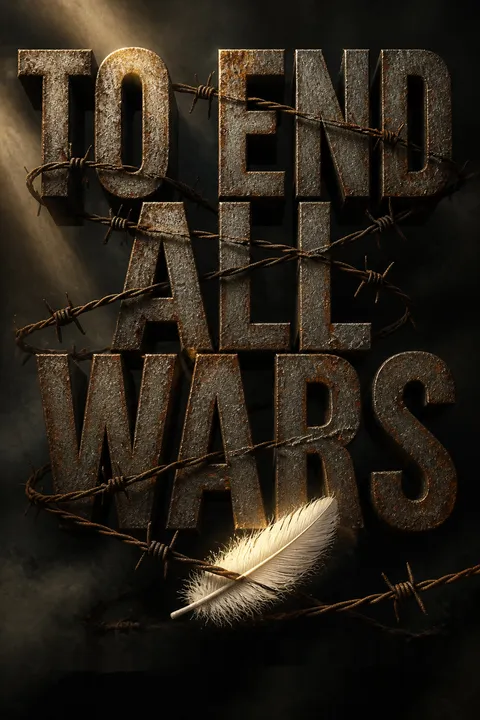
To End All Wars by Adam Hochschild examines World War I primarily from a British perspective, focusing on both war supporters and anti-war activists. Reviewers praise Hochschild's narrative skill in weaving together stories of conscientious objectors, suffragettes, and peace activists like Bertrand Russell and Charlotte Despard alongside military leaders. The book explores the war's brutality, incompetent military leadership, and the courage of dissenters who faced imprisonment and persecution. Most reviewers found it compelling and educational, though some wanted less military history and more focus on resisters. The human-centered approach makes complex history accessible and deeply moving.
People Also Read
About the Author


Download PDF
Download EPUB
.epub digital book format is ideal for reading ebooks on phones, tablets, and e-readers.








































