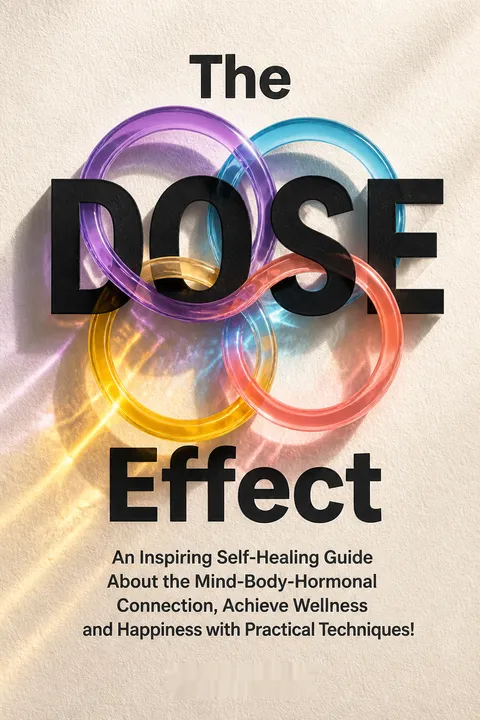


Key Takeaways
Dopamine, oxytocin, serotonin, endorphins: your wellbeing has four levers
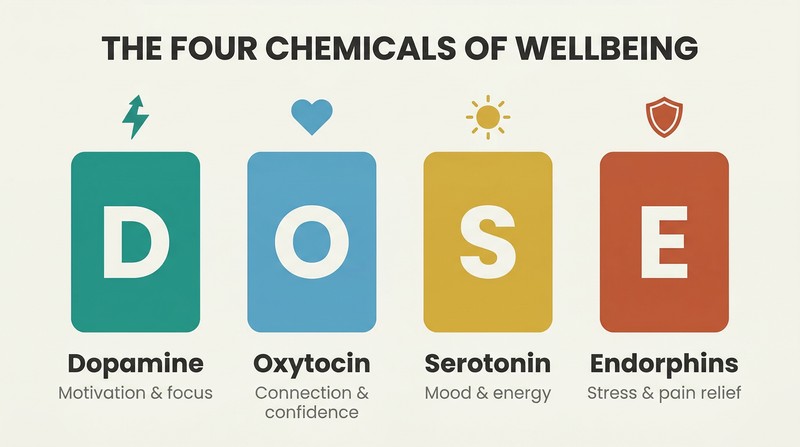
The DOSE Effect is a four-chemical framework for modern wellbeing. Each chemical has a distinct job: Dopamine drives motivation and focus. Oxytocin builds connection and confidence. Serotonin governs mood and energy. Endorphins relieve stress and physical pain. Our ancestors had all four firing constantly — hunting, bonding, sleeping under stars, moving all day. Modern life quietly suppresses each one through screen addiction, isolation, processed food, and sedentary routines.
The framework is backed by measurable results. Neuroscientist TJ Power personally trained over 50,000 people using DOSE and recorded 48 – 59% improvements across concentration, motivation, energy, and sleep quality. The book provides five science-backed actions per chemical — twenty total habits to rebuild what modern life has eroded.
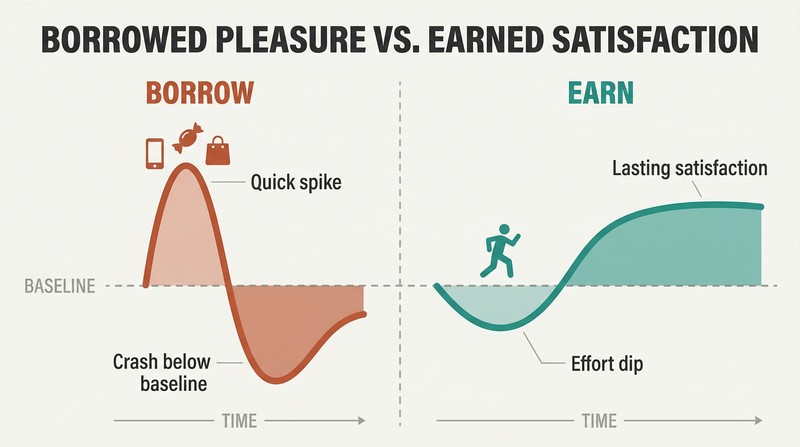
Scrolling and sugar borrow pleasure from tomorrow's motivation
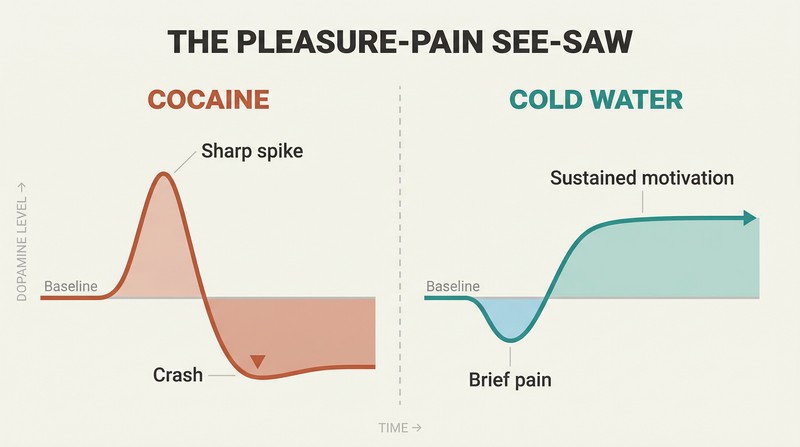
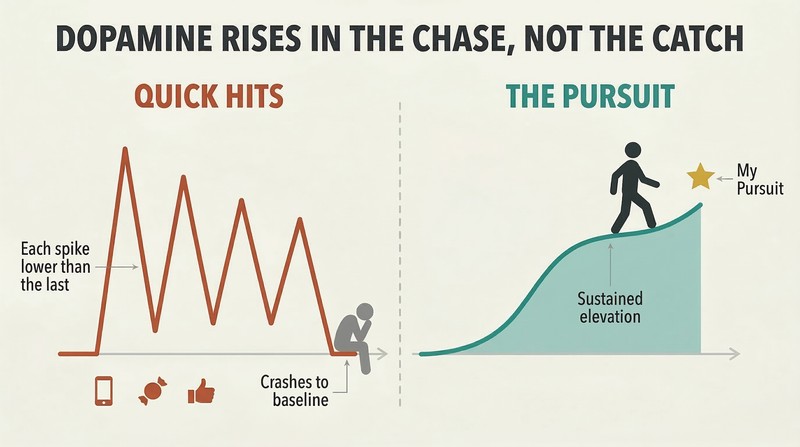
Pleasure and pain are co-located in your brain's hypothalamus and work like a see-saw. Hard tasks push toward pain first, then the brain rebounds with lasting satisfaction — "slow dopamine." Quick hits — sugar, alcohol, porn, social media, gambling, online shopping — spike the pleasure side instantly, but the rebound crashes you below baseline, leaving you demotivated and low.
This explains Monday morning blues. Weekend binges on quick dopamine deplete your system by Monday. Monday-through-Thursday effort gradually rebuilds it, creating Friday's excitement. Your brain also releases dynorphin during pleasurable binges — a neurochemical that actively creates discomfort to discourage overindulgence. The cycle only breaks when you start earning pleasure through effort instead of stealing it through shortcuts.
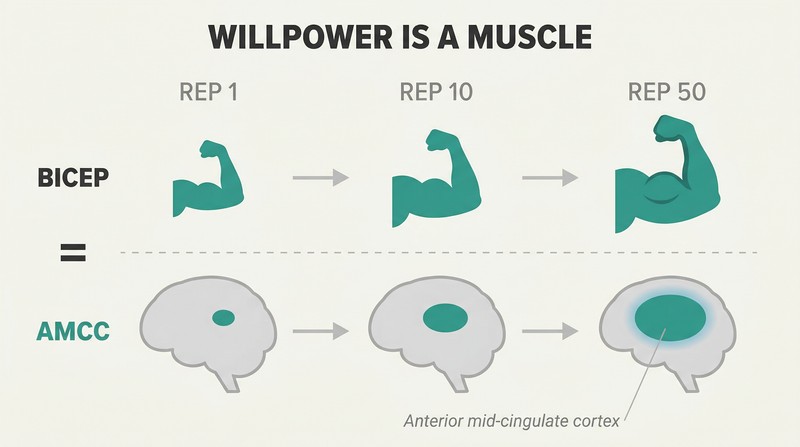
Every time you resist a craving, a specific brain region grows stronger
The anterior mid-cingulate cortex (AMCC) is a brain region that fires whenever you resist an addictive behavior or force yourself through something difficult. Like a bicep growing with each curl, the AMCC strengthens with each act of resistance — whether you're putting down your phone, skipping dessert, or dragging yourself to the gym when you'd rather not.
This is why disciplined people make it look easy. They've literally built a stronger willpower region through repetition. Pick one quick dopamine behavior — social media, sugar, alcohol, porn, gambling, or online shopping — and treat every urge as a training rep. Each successful resistance makes the next one neurologically easier, not just psychologically.
Fast from your phone mornings and evenings to restore dopamine
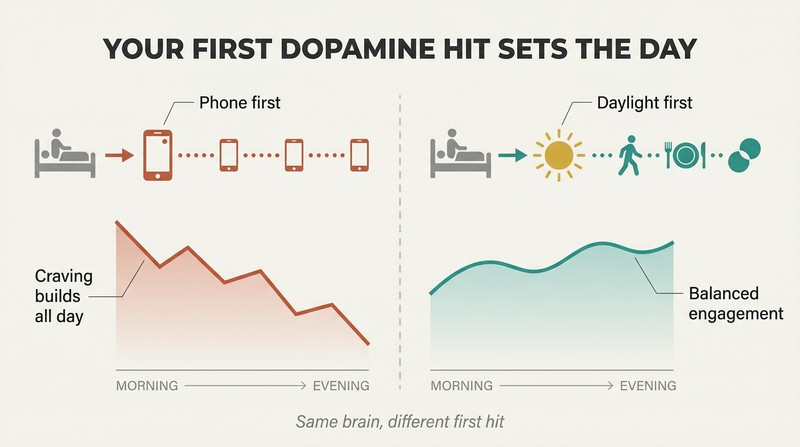
Phone Fasting means structured daily breaks from your phone. The morning rule: don't touch your phone until you've seen daylight or finished getting ready. Each evening, spend at least sixty minutes phone-free during exercise, dinner, or socializing. When your phone is within arm's reach, you inevitably grab it at the first flicker of boredom.
Three Social Media Moments (SMMs) further tame the habit: pick three guilt-free times daily to scroll (e.g., 10 a.m., 3 p.m., 8 p.m.) and resist outside those windows. Screen time guidance: one to two hours daily is healthy; above three, your brain struggles. Remove social apps from your homescreen, disable notifications, and beware anticipatory dopamine — seeing someone else grab their phone triggers your own craving.
Cold showers hack the pleasure-pain see-saw in your favor
The pain pathway creates lasting pleasure. When cold water hits your body, your brain perceives danger and releases adrenaline. Because adrenaline and dopamine are neurochemical "cousins," dopamine surges alongside it. Unlike cocaine — which spikes pleasure then crashes you — cold water starts with pain, and the see-saw rebounds into sustained motivation and focus.
Start small and build up. End your warm shower with five to ten seconds of cold; build toward thirty to sixty seconds over weeks. Finish cold rather than returning to hot — your body reheating continues dopamine production. Submerging your head activates the "mammalian dive response," helping regulate temperature faster. A Netherlands study found ninety days of daily cold showers made people 29% less likely to call in sick.
Chase a goal worth sacrificing your quick dopamine for
Dopamine rises during the chase, not the catch. Lottery winners and celebrities often face mental health crises after peak success — not because fame is harmful, but because they've run out of things to pursue. Having excited anticipation about your future is biologically essential; without it, your dopamine system atrophies. The author calls this identifying "My Pursuit" — one clear goal across five domains: career, family, health, creativity, or your DOSE journey.
The most impactful strategy is a phone-free morning walk. Power describes this as the single most transformative habit he added to his life — walking in nature without headphones, pondering his primary goal. Once he had a clear pursuit, his relationship with addictive behaviors shifted: he could weigh each quick dopamine temptation against the sustained joy of meaningful progress.
Loneliness cuts fifteen years off your life — call, don't text
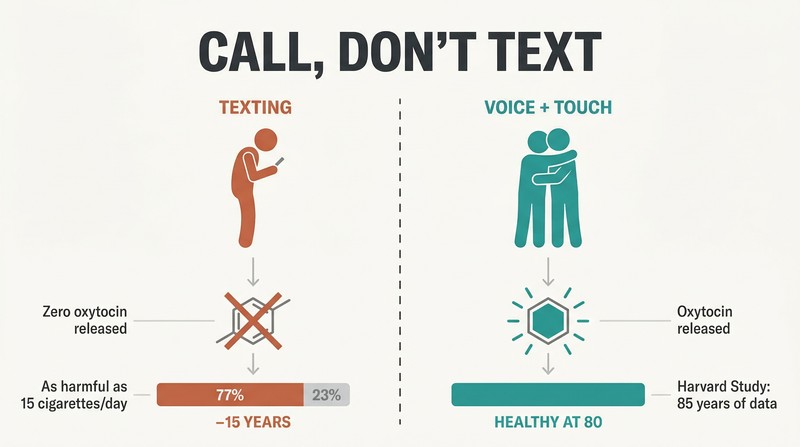
The Harvard Study of Adult Development has tracked over 700 people across three generations for 85 years — the world's longest happiness study. Its finding: quality of relationships, not wealth or fame, best predicts long-term health. The National Institute on Aging considers prolonged social isolation as harmful as smoking fifteen cigarettes daily, and loneliness may shorten lifespan by fifteen years.
Technology fools us into feeling connected. One study found that texting a loved one produced zero oxytocin release — hearing their voice was required to trigger the bonding chemical. Practical fixes: exercise together, walk in nature, eat phone-free meals, and aim for five hugs per day held three to five seconds each. Adults currently average just one to two hugs daily — nowhere near enough.
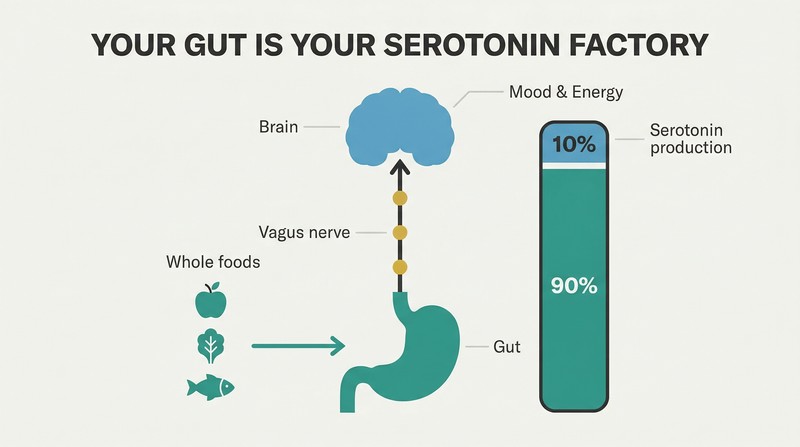
Feed your gut whole foods — 90% of serotonin is made there
Serotonin controls mood and energy, but unlike dopamine or oxytocin, up to 95% of serotonin is produced in your gut. The vagus nerve constantly relays your gut's state to your brain, shaping mood, energy, and immune function. Key nutrition strategies from Blue Zone centenarians:
1. Eat to 80% full
2. Swap processed snacks for fruit (tryptophan builds serotonin)
3. Consume 1 gram of protein per pound of bodyweight
4. Replace simple carbs with vegetables
5. Follow the 80:20 rule — 80% whole foods, 20% treats
Time your coffee carefully. Delay caffeine ninety-plus minutes after waking to preserve your natural cortisol rise and prevent afternoon crashes. Probiotics like kombucha and kefir further support gut bacteria and serotonin production.
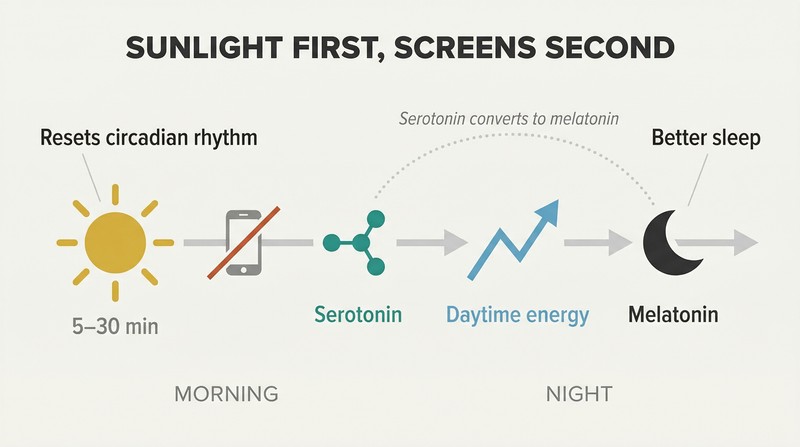
See sunlight before social media to reset your body clock
Your circadian rhythm is your body's 24-hour clock, governing alertness, sleep, and appetite. Morning sunlight triggers serotonin production and a natural cortisol rise that kickstarts your energy. The faster this starts, the more efficiently you'll fall asleep at night — because serotonin is the precursor to melatonin, your sleep chemical.
Timing varies by weather: sunny days require five to ten minutes outside; cloudy days, ten to fifteen; overcast, up to thirty minutes. A meta-analysis of over 85,000 research papers concluded that seeking daytime light and avoiding nighttime light is among the simplest methods to improve mental health. Thirty-one separate studies also confirm nature walks restore concentration — a phenomenon called Attention Restoration Theory. Japanese Forest Bathing research found breathing in tree phytoncides boosts immune system natural killer cells.
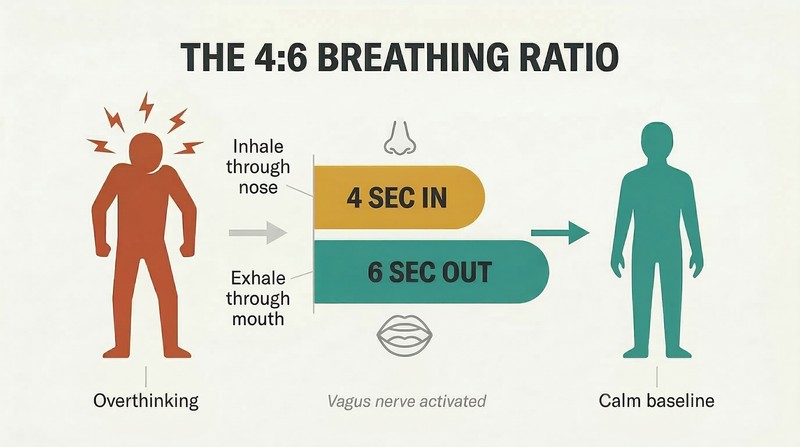
Breathe out longer than you breathe in to shrink anxiety
The author calls this "Underthinking" — a framework for calming overthinking through controlled breathing, vocalization, and gratitude. Two key techniques:
1. Resonance breathing: four seconds in through the nose, six seconds out through the mouth (six breaths per minute)
2. Physiological sigh breathing: double inhale through the nose, then a long sigh exhale — a pattern children naturally use when calming down after distress
Both activate the parasympathetic nervous system via the vagus nerve, slowing your heart rate and quieting the fight-or-flight response. Train daily for two to five minutes each morning. When overthinking persists, vocalize your worries to someone you trust or journal them, then redirect your mind to gratitude. Consistent practice builds vagal tone — the stronger it gets, the calmer your baseline mood becomes.
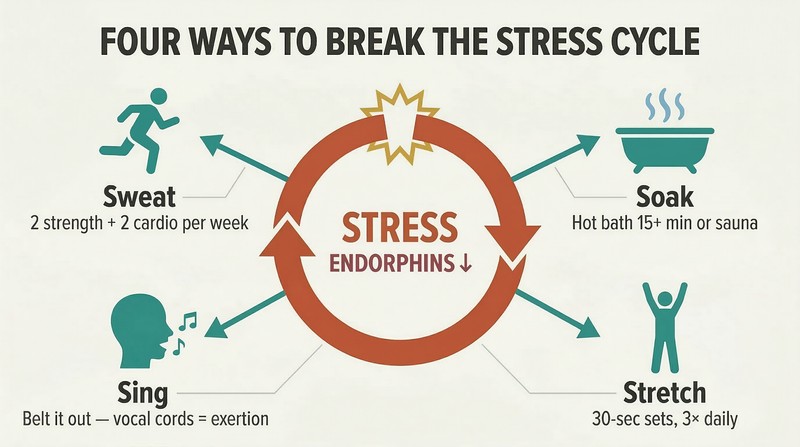
Stress won't break without physical exertion — sing, soak, or sweat
Endorphins are your body's built-in painkiller and stress eraser, but they require physical exertion to activate — evolution's reward for the hunting and fleeing that kept ancestors alive. Chronic stress suppresses endorphin function, creating a vicious cycle: more stress, less capacity to relieve it.
Breaking the cycle doesn't require a gym membership. Aim for two strength and two cardio sessions per week minimum. Hot baths (fifteen-plus minutes) and saunas trigger endorphin release through "heat stress" — a twenty-year study of 2,000 people found frequent sauna users dramatically less likely to develop dementia. Singing loudly engages physical exertion of your vocal cords; the author describes singing in his car after a stressful meeting to instantly shift his headspace. Even thirty-second stretching sets (reach-ups, reach-downs, twists) done three times daily boost endorphins and preserve lifelong mobility.
Analysis
The DOSE Effect occupies an interesting niche in wellness literature — a book that is deliberately simple in a field that often rewards complexity. TJ Power's core contribution is taxonomic rather than novel: he takes well-established neurochemistry (dopamine's role in motivation, oxytocin in bonding, serotonin in mood regulation, endorphins in pain relief), strips it to four letters, and wraps each in five actionable challenges. The framework's strength is its memorability and behavioral architecture, not its scientific depth.
The book's most original insights cluster around dopamine. The pleasure-pain balance concept (adapted from Anna Lembke's Dopamine Nation) provides a visceral, everyday explanation for why social media scrolling produces the opposite of its intended pleasure. The Phone Fasting protocol and Social Media Moments system are among the most practical digital wellness strategies in current popular literature — they don't demand abstinence, just structure.
Where the book is weakest is in its treatment of the underlying neuroscience. Attributing complex mood states to single molecules is a simplification that practicing neuroscientists would critique. Serotonin's role is far more nuanced than 'it's made in your gut, therefore eat well.' The sauna-dementia association may reflect selection bias toward healthier, more active individuals rather than a clean causal pathway.
However, judging this as a clinical text misses the point. Power has designed a behavioral prescription system, not a neuroscience textbook. His real innovation is the delivery mechanism: making each action a one-week challenge, linking accountability to social sharing, and structuring the book so that reading it is itself a dopamine-building activity. The ancestral lens — asking 'what would a hunter-gatherer's brain chemistry look like?' — works as a heuristic even when it oversimplifies evolutionary biology. For readers drowning in digital overstimulation and vague advice to 'just be mindful,' the DOSE framework provides something more useful: a checklist with a neurochemical rationale behind every item.
Review Summary
The DOSE Effect receives mixed reviews, with many praising its accessible approach to neuroscience and practical strategies for improving well-being. Readers appreciate the clear explanations of how dopamine, oxytocin, serotonin, and endorphins affect mood and behavior. Some find the content repetitive or basic, while others value its actionable advice. The book's layout and design receive criticism from some readers. Overall, it's seen as a helpful introduction to brain chemistry and lifestyle optimization, particularly for those new to the subject.
People Also Read








Glossary
The DOSE Effect
Four-chemical wellbeing frameworkA science-backed formula organized around four brain chemicals—Dopamine, Oxytocin, Serotonin, and Endorphins. Created by TJ Power, it provides twenty actionable behaviors (five per chemical) designed to rebalance brain chemistry disrupted by modern lifestyles including screen addiction, sedentary routines, and processed diets.
Quick dopamine
Instant, unearned pleasure hitsBehaviors that spike dopamine rapidly without requiring effort—including sugar, alcohol, drugs, pornography, social media, gambling, and online shopping. These fast spikes are followed by proportionate crashes below baseline, leading to demotivation and low mood. Contrasted with 'slow dopamine,' which is earned through effortful activities.
Slow dopamine
Pleasure earned through effortThe gradual, sustained rise in dopamine that comes from engaging in challenging activities such as reading, working on a project, exercising, or cleaning. Unlike quick dopamine, slow dopamine doesn't crash below baseline afterward. It builds over time and creates lasting feelings of satisfaction and motivation.
Pleasure-Pain Balance
Brain's pleasure-pain see-saw mechanismA concept popularized by Dr. Anna Lembke describing how pleasure and pain processing centers in the hypothalamus are co-located and operate as a see-saw. Pleasurable activities tip toward pain afterward (crash), while painful/effortful activities tip toward pleasure (reward). Used in the book to explain why hard work feels good and easy shortcuts feel bad.
Phone Fasting
Structured daily phone-free periodsA practice developed by TJ Power involving deliberate periods without phone use. The core rules are: don't check your phone when you first wake up (see sunlight or get ready first), and spend at least sixty minutes phone-free each evening during exercise, eating, socializing, or relaxing. Designed to let dopamine replenish naturally.
Social Media Moments (SMMs)
Three allocated daily scroll timesA rule for managing social media addiction by selecting three specific guilt-free times per day to scroll (e.g., 10 a.m., 3 p.m., 8 p.m.) and strictly avoiding social media outside those windows. Allows dopamine to regenerate between sessions and reduces compulsive checking behavior.
My Pursuit
Your primary meaningful life goalThe concept that having a clear, challenging goal provides sustained dopamine through the act of pursuing it—not just achieving it. Identified through reflection across five domains: career, family, health, creativity, or one's DOSE journey. Best clarified during phone-free walks in silence, which the author calls his most transformative daily practice.
AMCC
Brain's trainable willpower regionThe anterior mid-cingulate cortex, a brain region that activates each time a person resists a temptation or pushes through something difficult. Compared to a muscle that strengthens with each rep: the more often it fires, the easier future acts of discipline become. Explains why highly disciplined people appear to exert willpower effortlessly.
Anticipatory dopamine
Craving triggered by observing othersThe dopamine spike your brain produces when you see someone else engaging in a pleasurable activity—such as watching someone pick up their phone, drink wine, or eat unhealthy food. This rise creates an urge to engage in that behavior yourself. Explains why Phone Fasting is harder when the people around you are on their phones.
Underthinking
Framework for calming overthinkingTJ Power's term for a set of practices designed to counter overthinking, including resonance breathing (four seconds in, six seconds out), physiological sigh breathing (double inhale plus long exhale), vocalizing worries to someone trusted, and redirecting attention to gratitude. Based on activating the parasympathetic nervous system through the vagus nerve, building vagal tone over time.
DOSE Stacking
Combining multiple DOSE actions simultaneouslyThe practice of designing activities that stimulate multiple brain chemicals at once. For example, a social hike combines Phone Fasting (dopamine), socializing (oxytocin), nature and sunlight (serotonin), and exercise (endorphins). Maximizes neurochemical benefit from a single time block by layering complementary behaviors.
Vagal tone
Nervous system regulation capacityA measure of how effectively a person can shift between the sympathetic (alert/stressed) and parasympathetic (calm/restorative) nervous systems via the vagus nerve. Higher vagal tone correlates with better emotional regulation and increased serotonin. Trainable through daily breathing practices like resonance breathing and physiological sigh breathing.
FAQ
What's "The DOSE Effect" about?
- Author's Background: "The DOSE Effect" is written by T.J. Power, a neuroscientist and co-founder of Neurify, focusing on mental health and performance training.
- Core Concept: The book introduces the DOSE formula, which stands for Dopamine, Oxytocin, Serotonin, and Endorphins, aiming to optimize mental and physical health.
- Purpose: It provides a science-backed approach to harness these four key brain chemicals to improve motivation, relationships, mood, and stress management.
- Target Audience: The book is designed for anyone looking to enhance their mental health and well-being in a modern, digitally-driven world.
Why should I read "The DOSE Effect"?
- Holistic Approach: The book offers a comprehensive guide to improving mental health by focusing on both brain chemistry and lifestyle changes.
- Actionable Strategies: It provides practical, science-backed actions and challenges that can be easily integrated into daily life.
- Personal Development: Readers can expect to gain insights into improving motivation, relationships, and overall happiness.
- Expert Insights: Authored by a neuroscientist, the book combines academic research with real-world applications, making it both informative and practical.
What are the key takeaways of "The DOSE Effect"?
- Understanding Brain Chemicals: Learn how dopamine, oxytocin, serotonin, and endorphins affect your mental and physical health.
- Actionable Challenges: The book includes specific challenges for each chemical to help readers implement changes in their lives.
- Balanced Lifestyle: Emphasizes the importance of balancing modern technology use with natural, human-centric activities.
- Self-awareness and Growth: Encourages readers to listen to their bodies and emotions as guides for making healthier lifestyle choices.
How does the DOSE formula work in "The DOSE Effect"?
- Dopamine: Focuses on motivation and concentration, with actions like Flow State and Discipline to naturally increase dopamine levels.
- Oxytocin: Enhances relationships and confidence through social connections and self-talk, with actions like Contribution and Touch.
- Serotonin: Improves mood and energy by focusing on gut health and natural environments, with actions like Nature and Sunlight.
- Endorphins: Reduces stress and improves physical health through exercise and laughter, with actions like Exercise and Music.
What are the best quotes from "The DOSE Effect" and what do they mean?
- "Our goal throughout The DOSE Effect is simply to learn how to listen to them." This emphasizes the importance of understanding and responding to the signals from our brain chemicals.
- "A new life is on the horizon." This quote inspires hope and transformation, suggesting that following the DOSE formula can lead to significant life improvements.
- "We feel our best when we prioritize others." Highlights the role of oxytocin in fostering social connections and the importance of contribution to well-being.
- "The happier your body, the happier your mind." Stresses the interconnectedness of physical health and mental well-being, particularly through serotonin.
How can I naturally increase dopamine according to "The DOSE Effect"?
- Flow State: Engage in activities that require deep focus and concentration, which naturally increase dopamine levels.
- Discipline: Maintain an organized environment and complete tasks that require effort, reinforcing dopamine production.
- Phone Fasting: Limit phone use to avoid quick dopamine hits that lead to crashes, promoting a more balanced dopamine system.
- Cold Water Immersion: Use cold showers to stimulate dopamine production through physical discomfort and resilience training.
What strategies does "The DOSE Effect" suggest for boosting oxytocin?
- Contribution: Engage in acts of kindness and support for others, which naturally increase oxytocin levels.
- Touch: Prioritize physical connections, such as hugging and cuddling, to enhance emotional bonds and oxytocin release.
- Social Life: Foster meaningful social interactions and connections to boost oxytocin and improve mental health.
- Gratitude and Achievements: Practice gratitude and celebrate personal achievements to enhance self-belief and oxytocin levels.
How does "The DOSE Effect" recommend improving serotonin levels?
- Nature and Sunlight: Spend time outdoors in natural environments and sunlight to boost serotonin and improve mood.
- Gut Health: Focus on a nutritious diet rich in whole foods to support serotonin production in the gut.
- Underthinking: Practice calming techniques like slow breathing to reduce anxiety and enhance serotonin levels.
- Deep Sleep: Prioritize quality sleep to recharge serotonin levels and improve overall well-being.
What are the recommended actions for increasing endorphins in "The DOSE Effect"?
- Exercise: Engage in regular physical activity to naturally boost endorphins and reduce stress.
- Heat Exposure: Use saunas or warm baths to relax the body and stimulate endorphin release.
- Music and Laughter: Incorporate singing, dancing, and laughter into daily life to elevate mood and endorphin levels.
- Stretching: Practice regular stretching or yoga to enhance physical flexibility and promote endorphin production.
How does "The DOSE Effect" address phone addiction?
- Phone Fasting: Implement daily periods without phone use, especially in the morning and evening, to reduce dependency.
- Social Media Moments: Limit social media use to specific times of the day to prevent constant dopamine spikes.
- Notification Management: Turn off unnecessary notifications to minimize distractions and maintain focus.
- Accountability: Share phone usage goals with friends or family to increase accountability and support.
What role does gratitude play in "The DOSE Effect"?
- Daily Practice: Encourages a daily gratitude practice to shift focus from what is lacking to what is present and positive.
- Oxytocin Boost: Sharing gratitude with others enhances relationships and increases oxytocin levels.
- Mindset Shift: Helps combat the negative effects of social comparison by fostering a mindset of appreciation.
- Emotional Resilience: Builds emotional resilience by reinforcing positive self-talk and reducing critical inner dialogue.
How does "The DOSE Effect" suggest managing stress?
- Endorphin Boosters: Engage in activities like exercise, music, and laughter to naturally reduce stress levels.
- Underthinking Techniques: Use slow breathing and gratitude practices to calm the mind and manage anxiety.
- Heat Therapy: Utilize saunas or warm baths to relax the body and promote a sense of calm.
- Social Connections: Strengthen social bonds and seek support from others to alleviate stress and enhance well-being.
Download PDF
Download EPUB
.epub digital book format is ideal for reading ebooks on phones, tablets, and e-readers.








































