
Plot Summary
Dog Senses Death Coming
Mr. Bones, a loyal, aging mongrel, knows with mounting certainty that his master, the poet Willy G. Christmas, will soon die from a relentless sickness. This fear—both of Willy's impending death and his own uncertain future without him—overwhelms the dog. Willy has been everything: friend, protector, teacher, and purpose. Now, as they wander Baltimore's streets together, searching for their last hope, Mr. Bones feels the world shrinking, the bond between man and dog intensifying under death's shadow. Poignantly, Mr. Bones's dread coils not just around losing his beloved master, but around losing his own identity, his very existence, as if the end of Willy is the end of the world.
Baltimore's Last Quest
Willy, frail and coughing, drags himself and Mr. Bones through Baltimore on a desperate mission. He hopes to find Bea Swanson, his beloved former English teacher who inspired his writing. Willy has two goals: to entrust his manuscripts—the sum of his life's work—with someone worthy, and to secure a new home for Mr. Bones before he dies. Each passing block drains Willy further, and the fear of time running out propels both their journey and their anxiety. Willy's history as a failed son, shattered artist, and ailing wanderer shadows every step, but his stubborn devotion to both Bones and his art keeps them moving through an unfamiliar city toward a nearly hopeless outcome.
Willy's Life Unpacked
Willy's story unspools: the son of Polish immigrants, a boy shaped by tragedy, hunger, and the Holocaust's aftermath. He's haunted by loss—his father's early death, his mother's suffering, his own failed ambitions. His youth is marked by rebellion, addiction, and a breakdown that lands him in psychiatric care. Despite this, Willy's creative talent blooms, nurtured by Mrs. Swanson's encouragement. His life is both a testament to survival and a lament for what's lost, culminating in the self-invention of "Willy G. Christmas"—embracing a near-saintly mission but always falling short. Through all of it, Mr. Bones listens, learns, and absorbs the conflicting legacies of love, shame, and artistic yearning.
Saint Santa Vision
In an episode both tragic and comic, Willy, soaked in a night of bourbon and loneliness, experiences a mystical vision: Santa Claus appears on the TV and delivers a divine message, urging him to devote his life to goodness and generosity, to embody the spirit of Christmas every day. Willy, radically changed, gets a Santa tattoo, scandalizes his Jewish mother, and vows to be a force for good. This act of reinvention is earnest but imperfect—as Willy oscillates between saintliness and failure. It sets the tone of his future: giving, stumbling, laughing, and loving unconventionally, with Mr. Bones always at his side.
A Life of Wandering
Willy's middle years are a cycle of wintering with his mother and roaming America's roads with Mr. Bones. The two develop a companionship built on language—Willy speaks endlessly, Mr. Bones listens and learns "Ingloosh," making their bond unique. Forced by rough encounters and aging, Willy adopts Bones as his four-legged bodyguard, rescuing him from shelter life. Their wanderings are punctuated by disappointment, fleeting connections, poverty, but also joy—the simple pleasures of freedom, conversation, and the fundamental goodness that Willy, despite his failings, still tries to live.
Symphony of Smells
In a burst of creative energy, Willy conceives the "Symphony of Smells," a Masterpiece meant to bring aesthetic pleasure to dogs through scents. Bones becomes muse and guinea pig for the project, a labor of love and endless experimentation that draws Willy and his dog closer. The attempt to understand and celebrate the world from the canine perspective fills their winter with meaning, play, and affectionate silliness, even as the rest of life often feels harsh or futile. Yet after such highs, loss, and sadness follow—a reflection of the cyclical nature of hope and failure in both human and animal lives.
Death's Approach: Poe's Doorstep
Weak and spent, Willy and Mr. Bones stumble upon Edgar Allan Poe's house, not the intended goal, but to Willy, a poetic and fitting place to die. He sits, laughs at fate's ironies, and reflects on the path that led him here—his ancestors emigrating, literary failures piling up, and the cosmic bad jokes of existence. Willy acknowledges his journey has ended not in glory, but in humility and gentle togetherness with his faithful dog. As rain falls and time slows to a hush, Willy leans against Poe's wall, and Bones curls beside him, bracing for the world's end.
Dreaming of Timbuktu
As Willy fades, he spins rambling, tender, and sorrowful monologues for Mr. Bones about memory, failure, and love. The dog dreams doubly: Willy dying, being visited by Mrs. Swanson, and the dog finally orphaned and alone. Willy's "Timbuktu" is an oasis of spirits, where souls—and perhaps loyal dogs—find unity in death. Willy expresses remorse and affection, tasks Bones with surviving, and, when death comes, asks nothing but that love and memory persist. Their farewell is at once bitter, comic, and utterly human—resigned to the world's indifference but alive with small graces.
Orphaned and Alone
Bones, after Willy's death, expects annihilation but discovers the world simply keeps going. Bewildered and hungry, he faces a city that sees him only as a stray. He tries begging, foraging, even hunting, but is out of practice and outwitted by birds. A brief alliance with rowdy children results in pain and rejection. The lesson is cruel: the world is indifferent and often unkind. Bones's grief surfaces in bodily aches and howls of loneliness, an animal response to the existential solitude left by Willy's absence.
New Boy, New Bonds
Salvation materializes in the form of Henry Chow, an empathetic, lonely boy who sees Bones not as a nuisance, but as a blessing and friend. Bones, longing for connection, accepts a new master with cautious hope. Henry, clever and kind, offers food and a secret place to stay, but the arrangement is fraught—hidden from Henry's strict father, the shelter is precarious, and Willy's warnings about Chinese restaurants echo ominously. Still, for a shy boy and an abandoned dog, mutual love flourishes amid secrecy, fear, and the memory of loss.
Chinese Restaurant Dangers
Living behind Henry's family's Chinese restaurant, Bones enjoys plentiful food and Henry's company, but anxiety lingers. Willy's jokes about being served as dinner prey on Bones's mind. The kindness of Henry and delight in small joys are shadowed by the terror of discovery and the risk of destruction. Hiding in a cardboard box, trusting in love but haunted by doom, Bones is again reminded that in a world ruled by hunger, prejudice, and misunderstanding, happiness is rare, fragile, and can vanish at any moment.
Cardboard Box Shelter
The refuge with Henry is shattered when his father discovers Bones, resulting in violence and chaos. Bones is forced to flee—resentful of his own displacement, nostalgic for warmth and belonging, but acknowledging the impossibility of remaining. The bleakness of exile returns: homelessness is not just hunger, but a state of perpetual fear, where every new haven is temporary and love insufficient. The cardboard box becomes a symbol of transient comfort, a failed promise, and Bones is once more cast out, running toward an uncertain future.
A Family on the Lawn
Emaciated and exhausted, Bones stumbles onto a Virginia lawn where an American family—Polly, Dick, Alice, and toddler Tiger—unexpectedly take him in. Their compassion provides Bones with food, cleanliness, and affection, and through Alice's intervention, he is christened "Sparky" and offered a trial home. This new world is full of novel rules, family dramas, and moments of tentative hope. The edges of exclusion remain (no dogs in the house, conditional love), but Bones cautiously revels in suburban abundance, the thrill of being wanted, and the garden's simple pleasures.
Rules of Suburban Survival
Bones adapts to a domesticated rhythm: obeying house rules, enduring Dick's emotional distance, cherishing Polly's secret kindness, and bonding with Alice over games and imaginary escapades. The lawn, once alien, becomes hallowed ground, and the Joneses' routines offer stability laced with loneliness and friction. The veiled antagonism between Polly and Dick, the highs and lows of childlike adoration, and even the pain of being "fixed" at the vet become part of Bones's education in the meanings and limits of family, identity, and compromise.
Sparkatus Among the Joneses
As autumn fades toward winter, Bones grows into his new role as "Sparky"—or, as Willy's dream suggests, "Sparkatus." Through daily domestic adventures, the dog carves out a place in the Jones household, sensing Polly's emotional captivity and reflecting on the many detours his own fate has taken. The family's joys and disappointments—the routines, secrets, and the quiet ache for true belonging—become his. Yet the specter of exclusion, the cruelty of rules, and Polly's own unspoken longing deepen Bones's empathy: to live among people is to share their betrayals and heartbreaks as well as their love.
Illness and Exile
When the family leaves for vacation, Bones is exiled to a luxurious kennel. Suddenly stricken by illness, he is wracked with fever and nightmarish dreams in which Willy, appearing as a cruel, vengeful ghost, rebukes him for seeking solace in memories. Bones's agony, physical and spiritual, climaxes with a sense of being cast out by all he has loved—Willy, Henry, and now even the family. Yet within these torments also lie flashes of grace: the endurance of loyalty, the wisdom of forgiving those who hurt us, and the mysterious comfort found in hope against all odds.
Dog's Last Journey
Seizing a last burst of autonomy, Bones flees the kennel, attempting to return to the Joneses' home but succumbing to weakness and collapse en route. In the snow-covered woods, delirious and feverish, he experiences a final dream of reconciliation: Willy reassures him that in the end, he will be welcomed to Timbuktu, not because of perfection, but because of steadfast love. Memory, suffering, and the promise of reunion with those we love—these are all that remain for Bones as his body begins to fail.
Dodge-the-Car, Run to Light
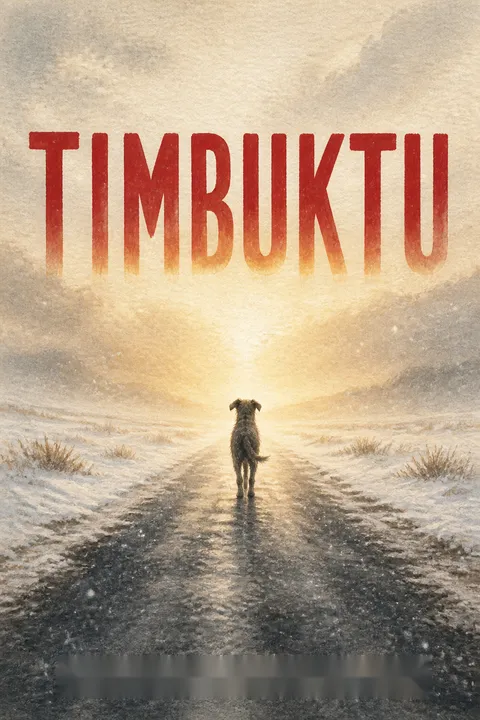
In his last moments, Bones stumbles through ice and exhaustion to a gleaming, busy highway. Clarity settles on him: the game is dodge-the-car, the boundary between life and death blurred, and each dangerous step becomes a leap toward the light of Timbuktu, the afterlife Willy promised. There is no surrender—just a dog's wild run through pain and noise, propelled by memory and longing, toward the hope of reunion beyond this world. The novel closes—as did the friendship—mid-stride, with a leap of faith into the unknown.
Analysis
Paul Auster's Timbuktu is a meditative parable, cloaked in the shaggy story of a dying poet and his dog, that explores the fundamental human (and perhaps animal) search for meaning, home, and transcendence in a world of randomness and loss. By using Mr. Bones as narrator—a dog intensely loyal but also possessed of a surprisingly human interiority—Auster blurs the line between species, inviting us to interrogate the porous boundaries of empathy, language, and mortality. The book is as much about kindness as it is about suffering, about how small acts of care or neglect can shape destinies. It is equally concerned with failure—Willy's failed art, Bones's failed hunts—and with the absurd hope that, against all odds, love and memory endure. Repeatedly, the novel circles death, not just as an end, but as the ultimate site where questions of loyalty, forgiveness, and existence are felt most keenly. In a world without certainties, Timbuktu proposes that stories, dreams, and bonds—however flawed or transient—are what rescue us, even if only for a moment, from oblivion. It is a profound meditation on what it means to be lost and found, to be seen and loved—and to keep running, despite everything, toward the light.
Review Summary
Timbuktu receives generally positive reviews, averaging 3.73/5. Readers praise Auster's unique narrative perspective through Mr. Bones, a loyal mongrel accompanying his homeless, mentally unstable owner Willy G. Christmas. Many dog lovers find the story deeply moving, appreciating how Auster authentically captures canine consciousness. The novel is noted for its philosophical undertones about life, death, and connection, while maintaining warmth and occasional humor. Some critics find it overly simple compared to Auster's other works, but most appreciate its tender, bittersweet exploration of loyalty and loss.
People Also Read
Characters
Mr. Bones
Mr. Bones is a mutt whose inner life, voice, and anxieties shape the novel. Endlessly devoted to his master Willy, Bones is more than a pet: he is a witness to human folly and an emblem of spiritual striving, experiencing profound fears about absence, loss, and meaning when his only anchor—Willy—faces death. Steeped in language and memory, Bones is at once animal and deeply human in his anxieties; he is ever caught between physical need and existential sorrow, loyal to the end yet forced to seek new masters when orphaned. As he journeys from companionship into loneliness, then through new, fraught attachments, Bones's psyche absorbs the complex blend of resignation, hope, hunger, and transcendent love: a wanderer forever searching for home in a world that can be both generous and cruel.
Willy G. Christmas
Willy is Mr. Bones's owner and the emotional and philosophical heart of the story—a man battered by trauma, mental illness, addiction, and failed ambitions. Driven by the schizophrenic vision of Santa Claus, Willy recreates himself as a self-appointed saint, seeking to spread goodness in a world that rarely reciprocates. His relationship with Mr. Bones is marked by affection, storytelling, and a sense of shared exile. He oscillates between clownish optimism and deep despair, obsessed with preserving his literary legacy even as he accepts his irrelevance. Willy's death triggers the main narrative crisis, but his presence haunts Bones and the novel's emotional architecture as both a source of longing and a standard of imperfect but stubborn love.
Bea Swanson
Bea is the high school teacher who recognized and nurtured Willy's early literary promise, providing encouragement, possibility, and a sense of being "seen." Her absence leaves a psychic void for Willy—her approval becoming a kind of lost paradise he seeks to recover on his deathbed. In his final days, the hope of reconnecting with Bea and entrusting her with his life's work gives Willy a last sense of purpose. She appears at the end as both a realistic figure and a symbol of intellectual salvation—calm, kindly, honest—helping Willy die in peace, and closing the book on his creative aspirations.
Mrs. Gurevitch (Willy's Mother)
Willy's mother is a survivor of Old World trauma—nervous, anxious, and loving in her own prickly, bewildered way. Her relationship with Willy is fraught with misunderstanding and habit, yet beneath the squabbles flows a deep, inarticulate bond. Her death ushers Willy and Mr. Bones deeper into exile and is absorbed into Bones's own sense of loss and the need for belonging. She epitomizes the paradox of family: a source of both wounds and resilience, affection and entrapment.
Henry Chow
Henry is the orphaned Mr. Bones's first chance at a new home and love after Willy's death. He is an only child, eager for companionship, and his nurturing imagination creates a fragile haven behind his parents' Chinese restaurant. Their secret alliance is genuine but doomed by fear and circumstance. Henry's innocence and emotional need mirror Bones's own vulnerabilities; their brief connection provides a glint of hope—reinforcing the story's belief in the redemptive power of unexpected friendships.
Polly Jones
Polly is the Jones family's mother—a kind, nurturing woman who sees in Mr. Bones/Sparky both a confidant and a means of gentle rebellion against her emotionally distant husband and confining domestic life. Sensitive and self-sacrificing, Polly becomes Bones's truest new anchor: her empathy embodies the healing potential of kindness and small acts of resistance. Her unhappiness and unrealized ambitions reflect universal themes of entrapment and quiet yearning for connection.
Alice Jones
Alice is the Jones family's daughter—a vibrant, intelligent, and sensitive girl who champions Mr. Bones's place in the family, renaming him, feeding him, and including him in her fantasies. Her absolute faith in his worthiness and her ability to sway adults lend the narrative a shot of optimism. Alice's world of play and stories allows Bones to experience belonging anew and makes the Jones house feel (briefly) like a real home.
Dick Jones
Dick is Polly's husband, the Jones children's father—an airline pilot and emblem of masculine practicality. He distrusts sentimentality, enforces rules (especially concerning dogs and domestic order), and resists emotional vulnerability. His approach to Bones is transactional—a "trial basis" with clear restrictions. Dick represents the authority that Bones and Polly both chafe against; his good intentions are often tinged with blindness to the deeper needs of those around him.
The Spauldings (Pat & Beth)
The owners and staff at Dog Haven, the Spauldings are empathetic but ultimately unable to save Mr. Bones from the consequences of abandonment and illness. They represent the limits of human benevolence: committed professionals whose care, however genuine, cannot overcome the severe isolation and existential despair haunting Bones in his final days.
Willy's Father
A survivor marked by war and migration, Willy's father casts an enduring shadow over his son's psyche. His early death and emotional remoteness underpin Willy's rebelliousness and hunger for validation. Though he appears mostly in memory, his presence symbolizes both the inheritance of trauma and the yearning for paternal approval that drives so many of Willy's choices and failures.
Plot Devices
Narration From the Dog's Perspective
The novel is uniquely narrated almost entirely via Mr. Bones's internal voice—a blend of canine sensibility and strangely articulate, human-like philosophical musing. This device enables readers to see the world refracted through instinct and language, complicating the familiar master-pet relationship and blurring the boundaries between animal need, human emotion, and existential dread. The result is a profound evocation of fragility, dependency, and the search for meaning in a world often indifferent to suffering.
Double Narrative Structure
The story entwines present events—Willy's dying days and Bones's subsequent wanderings—with extended flashbacks to earlier times: Willy's youth, psychiatric trauma, transformation by the Santa Claus vision, and their years of roaming. This layering creates emotional resonance and accentuates the sense of time's inexorability and the tangled links between past and present.
Metafictional Self-Reflection
Willy's continual storytelling, poetic riffs, and self-conscious examination of his own failures serve as a running metafictional commentary, both sincere and ironic. The book is aware of itself as a narrative construction—a story about the meanings and limits of stories, about the struggle to shape a life that is slipping away.
The "Symphony of Smells"
The Symphony of Smells is an audacious motif: Willy's attempt to bridge the human-canine divide through a multisensory art form that is intelligible to dogs. This failed project is emblematic of the novel's central quest—to make meaning across boundaries, to connect across the gulfs of language, mortality, and difference.
Foreshadowing and Mirrored Events
Bones's recurring dreams anticipate key events—his loneliness, his running, even his final moments on the highway. The book is replete with mirrored episodes: beginnings echoed in endings, sanctuary found and lost, masters gained and abandoned. Every new start circles back to themes of loss, but also the possibility of redemption and belonging.
Symbolism: Timbuktu and the Road
"Timbuktu" serves as a recurring metaphor for the afterlife—an half-invented, half-feared space where dogs and their masters might, at last, be reunited as equals. The act of running into the road, risking or embracing death, becomes both an existential gamble and a declaration of faith in a world that rarely offers guarantees.
About the Author


Download PDF
Download EPUB
.epub digital book format is ideal for reading ebooks on phones, tablets, and e-readers.








































