


Plot Summary
The Rain Stops
Noe Crowe,1 seventeen, arrives at his grandparents' farmhouse in Faha having abandoned the seminary, haunted by his mother's death and a terror that he might never learn how to live a fully human life. His grandfather Ganga,3 a round and blithe man, greets him with unconditional warmth.
His grandmother Doady,4 practical and sharp, takes him in without pressing questions. On Spy Wednesday of Holy Week, the endless rain that has defined this western parish for centuries simply stops. No one notices at first, but the sky lifts and the world drips and glistens.
That same afternoon, while Noe1 waits alone, a stranger with deep Atlantic-blue eyes and a wrinkled blue linen suit walks up the yard carrying a small tan suitcase. He sits on the damp windowsill, looks at the river, and offers a strong hand. His name is Christy.2 Doady4 has been expecting him: he is the electricity lodger.
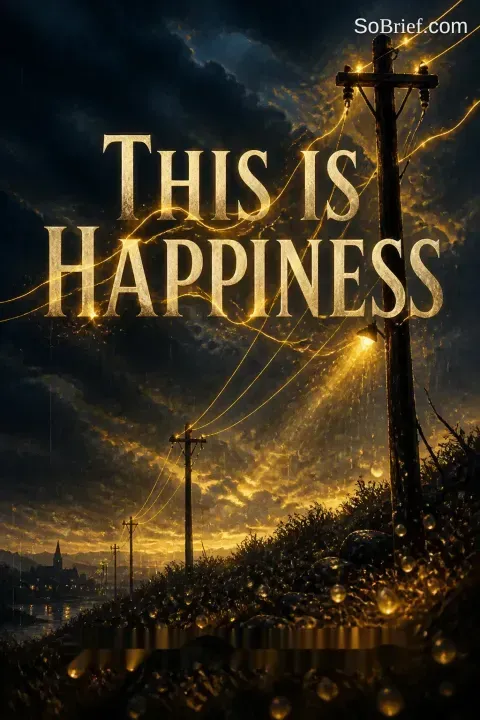
The convergence of two arrivals, Noe's and Christy's, with the apocalyptic suspension of rain signals that ordinary time has been interrupted. Williams uses the stopped rain as both literal weather and metaphysical opening, a crack in the familiar through which transformation can enter. Noe embodies the crisis of a young person who has lost the map provided by religion but has not yet found another. Christy appears as the antidote to that paralysis: a man who, though carrying his own burden of failure, moves through the world with an open hand and a willingness to be present.
Love Song in Craven's
That night, Noe1 takes Christy2 into the village. They end up in Craven's, a dim pub operated by a triple widow called Bubs, where despair is the usual fare. Christy2 drinks stout after stout while Noe1 watches, then suddenly stands and begins to sing.
He sings a love ballad with his eyes screwed shut and his fists clenched, his voice raw and full-throated, so nakedly passionate that every hardened drinker in the pub looks away. The song is not technically perfect, but it vibrates with a truth that stops breath.
Noe1 realizes he is witnessing something unguarded and sacred. After the song ends, there is no applause, only a charged silence. Later, Christy2 and Noe1 cycle home blind-drunk, declaiming poetry into the night, until Noe's1 front wheel sinks into a rut and he flies over the handlebars into cold muck.
The pub scene establishes Christy's defining trait: he feels deeply and expresses without shame. In a culture where men hide emotion behind silence and pints, his singing is a kind of trespass, an invasion of intimacy that is also a gift. Noe, who has been frozen by grief and self-consciousness, encounters a model of emotional bravery. The drunken bicycle crash that follows is both slapstick and baptismal, a plunge into the earthy reality of Faha that marks Noe's initiation into a different kind of living.
A Dozen Purple Tulips
In the days following, Christy2 joins Noe1 on rounds to secure signatures for the electricity memorial, and gradually his story emerges. He has spent decades wandering the Americas as a cook, barber, lumberjack, and sailor before returning to Ireland with nothing but the linen suit on his back.
On his sixtieth birthday, lying in a Boston boarding house, he received a clear realization: he still had time to go back and right every mistake. Since then he has pursued what he calls a career of reparation.
When Noe1 presses him about his connection to Faha, Christy2 grows quiet, then says one name: Annie Mooney.5 He once ate a dozen purple tulips for her. She is now Mrs. Gaffney,5 the chemist's widow. That is why he arranged to be sent to this parish. He does not say what wrong he committed.
Christy's 'career of reparation' is both absurd and profound, a moral vision that seems naive to the young, cynical Noe but contains a radical truth: that the past is not fixed, that amends can be attempted, that the arc of a life can bend toward healing. The purple tulips anecdote is crucial: it is comedy and devotion fused, a gesture so impractical that it becomes purely symbolic. Christy's story reframes Noe's understanding of what a life can be, offering an alternative to the rigid pathways of seminary or despair.
Serenade at Dawn
At Easter Sunday Mass, Christy2 spots Annie Mooney5 in the congregation. She is silver-haired now, her face graven with dignity and sorrow. He arranges to pass her at the Communion rail, but she shows no sign of recognition. Afterward, Noe1 lies and tells Christy2 that Annie5 smiled.
That night, fired by the false hope, they cycle out seeking the legendary fiddler Junior Crehan,14 drinking in a dozen pubs without success. At dawn, Christy2 parks his bicycle in Church Street, squares his shoulders, and sings the same love ballad outside the chemist's shuttered window.
The village dogs howl, doors crack open, faces appear, but the curtain above the chemist's never moves. Christy2 finishes the song, mounts his bicycle, and accepts that this first approach has failed. Noe1 is left to absorb the catastrophe.
Noe's well-intentioned lie catalyzes a disaster, illustrating how the young, in their eagerness to shape happy endings, can misunderstand the gravity of older wounds. The serenade is simultaneously magnificent and mortifying, a gesture from another century that collides with a parish unaccustomed to grand passion. The fact that Annie's curtain never stirs introduces the novel's central tension: Christy's romantic grandiosity may not be what she needs or wants. The scene dramatizes the gap between intention and reception in all acts of love.
Left at the Altar
Days later, sitting in a sun-baked field above the valley, Christy2 finally tells Noe1 the truth. In St. Michael's church, Sneem, County Kerry, fifty years earlier, he left Annie Mooney5 at the altar. He was young, overwhelmed by the magnitude of his own feelings, terrified that love would swallow him whole.
He ran. He never explained himself to her. He spent decades on other continents loving other women, but some part of him remained frozen on that day. Now he has come back not to reclaim her love but to ask her forgiveness.
Noe1 receives this confession with a young man's absolutism, first swinging to judgment, then recognizing in Christy's2 suffering something that transcends easy condemnation. The revelation reframes everything: the tulips, the serenade, the quest itself.
The altar confession transforms Christy from a charming eccentric into a figure of genuine tragedy. His flight was not cruelty but cowardice of a very specific kind: the terror of being consumed by a love so powerful it threatened identity itself. Williams offers a psychologically acute portrait of male emotional cowardice that is compassionate without being exculpatory. For Noe, the revelation forces a reckoning with his own idealized categories, teaching him that human failure is rarely simple villainy and that the line between weakness and wrongdoing is porous.
The Falling Pole
Continuing their work gathering signatures, Christy2 and Noe1 arrive at Quirke's field just as a crew is raising a new electricity pole. When the rope snaps and the horse rears, the men scatter. Noe1 alone stays, pressing his hands against the creosote timber in a deluded attempt to hold it upright.
The pole crushes down on him. He wakes in Avalon, Doctor Troy's9 once-grand house, his wrists bound and his head throbbing. A young woman in a blue dress is holding a book by his bedside. She introduces herself as Sophie Troy,6 the doctor's youngest daughter.
She places pills on his tongue, lifts his head to drink, and in that moment Noe1 experiences a sensation unlike anything in his life: the sheer, annihilating nearness of extraordinary beauty. He is lost before he can name what has happened.
The pole accident functions as a hinge in the narrative. Noe's attempt to hold up the falling timber is objectively idiotic, but psychologically it is his first act of full commitment, however misguided. He was trying to belong, to not be the one who lets the side down. The injury delivers him into the orbit of the Troy sisters, inaugurating the romantic subplot that will complicate his relationship to Christy's quest. Sophie Troy's entrance is rendered with a reverence that makes clear this is a conversion experience as profound as any religious awakening Noe has known.
Wait Here, Goodbye Now
While Noe1 lies unconscious, Christy2 volunteers to fetch medical supplies from the chemist's. He knocks on the locked door, and after decades, Annie Mooney5 opens it. His rehearsed speeches evaporate. He tells her he is there because of an accident, not for himself. She looks at him without anger, without warmth, and says only, 'Wait here.'
She returns with the supplies, hands them through the door, and says, 'Goodbye now.' That is the entirety of their first exchange in fifty years. When Christy2 tells Noe1 about it later, his voice is subdued, his eyes no longer shining. He has spent half a century imagining this moment, and it has come and gone in six words. Noe1 blames himself for the ruined reunion and resolves to intervene.
The brevity of this encounter is devastating precisely because it rejects drama. Annie does not slam the door, weep, or rage. Her composure is an achieved defense, the product of a lifetime of surviving the wound Christy inflicted. Her economy of language, paired with Christy's speechlessness, exposes the asymmetry of their positions: he has spent decades preparing, while she has spent decades moving on. The scene is a corrective to the fantasy that grand gestures can collapse time or undo damage. Annie's dignity affirms that some thresholds cannot be rushed.
The Mars Cinema
On a night when Noe1 has been treated for a second foolish injury (throwing himself down the stairs to see Sophie6 again), Charlie Troy7 slips into the dark surgery smoking a cigarette.
She is the middle sister, a reckless and magnetic beauty who renamed herself Charlie to honor her dead grandfather's belief that she was a boy. She finds Noe1 on the divan and, with imperious confidence, instructs him to take her to the Mars cinema on Friday. When Noe1 arrives at Avalon, Sophie6 opens the door and he is struck dumb.
Charlie7 sweeps him to the back row of the cinema balcony where, under the silver flicker, she teaches him the mechanics of kissing with a ferocity that leaves him breathless and bewildered. She commands him to return the following week.
Charlie Troy functions as a force of nature, a chaos agent who disrupts Noe's chaste adoration of Sophie. Her invitation to the cinema is not romantic interest but something more complex: a bored young woman testing her power, a refusal to be confined by her father's house. The Mars scene is comic and overwhelming, capturing teenage sexual awakening as a kind of delicious catastrophe. The fact that Noe is kissing Charlie while loving Sophie foreshadows the painful truth he will soon confront: he is in love with all three Troy sisters, which is to say he is in love with an impossible ideal.
Noe's Vigil
Determined to help, Noe1 visits Annie5 at the chemist's and tells her that Christy2 came to Faha solely to seek her forgiveness. She listens with weary calm and says it is best they not meet. When Noe1 calls again, Doctor Troy9 opens the door and leads him upstairs. Annie5 is in bed, her hair combed out, her eyes glistening with pain. She is dying. She makes Noe1 promise not to tell Christy.2
So begins a quiet conspiracy among Noe,1 Doctor Troy,9 and Father Coffey.10 Noe1 visits daily, making tea and toast, helping her sort through her belongings, listening to her speak about her life. He becomes, improbably, the bridge between two sundered lovers, bound by his promise to a dying woman and his loyalty to the man who sleeps in the room above his.
Noe's role as caregiver reverses the expected dynamic: the young man who needed guidance becomes the guide, the failed priest becomes a confessor. His promise to Annie places him in an excruciating ethical bind, torn between two loyalties. The secrecy also positions him as an insider to mortality at an age when death should be abstract, accelerating his maturation. His devotion to Annie mirrors Christy's devotion to her memory: both are forms of love that ask for nothing in return, which may be the novel's most insistent definition of the word.
Aren't We Happy
The electricity crews finish wiring the parish. When Purtill the electrician arrives to install light switches and sockets in the crooked house, Ganga3 interrupts with a gentle but final refusal. Harry Rushe,13 the Area Organiser, pays a second visit to pressure the old couple.
He deploys every argument: their neighbors will have light, they will be left behind in darkness and loneliness. Doady,4 who has secretly yearned for the ease of electric appliances, stands beside her husband.
Ganga,3 who has been losing his hearing and did not catch the particulars of Rushe's13 pitch, brings the negotiation to a close by smacking his hands together and asking, with genuine wonder, 'Aren't we happy as we are?' The State retreats, defeated by a contentment it cannot manufacture or measure.
Ganga's refusal is the novel's philosophical climax, a quiet act of resistance that asserts the sufficiency of the life he and Doady have built. It is not Luddism but a recognition that happiness is not a function of technology or progress. His deafness adds poignancy: he is literally unable to hear the arguments of the future, and his choice is therefore not a rebuttal but a statement of a different frequency entirely. Doady's silent support is an act of marital love that costs her something real, the last in a lifetime of surrenders, and it is rendered with a tenderness that places marriage at the heart of the novel's vision.
The Telephone Confessional
One evening the telephone, which Doady4 has always regarded with suspicion, rings for Christy.2 Annie5 is on the line. She has decided she wants to hear his story, but with one condition: they will not speak about her illness. So begins a nightly ritual.
Christy2 sits at the window with the receiver pressed to his ear and tells her everything: his flight from Sneem, his decades wandering North and South America, the women he loved and lost, the morning in Boston when he resolved to seek forgiveness. Annie5 listens, sometimes falling asleep mid-sentence, and when she wakes she asks, 'Where were we?'
Doady4 and Ganga3 and Noe1 sit outside in the garden, playing draughts and pretending not to eavesdrop as Christy's2 voice, tender and urgent, fills the house. Noe1 plays the fiddle, and sometimes Christy2 holds the receiver out the window so Annie5 can hear.
The phone calls transform the novel's central relationship from failed reunion into ongoing creation. By forbidding discussion of her illness, Annie asserts control over the terms of her dying and forces the focus onto life rather than death. Christy becomes a latter-day Scheherazade, spinning his narrative to keep her in the world a little longer. The image of the household gathered in the garden, pretending not to listen, is a portrait of community as collective care. Storytelling here is not entertainment but oxygen, an act of love made literal through the telephone wire that connects past to present and the living to the dying.
The Last Call
Annie Mooney5 dies in her sleep one night while Christy2 is talking to her. He had been telling her about the morning of their wedding, describing himself as a young man in a rain-heavy tweed suit squeaking down the aisle of St. Michael's, and then, suddenly, he realized she was gone. The line stayed open.
Mrs. Prendergast on the exchange listened, her headset pressed tight, as Christy2 said Annie's5 name softly, then louder, then fell silent. In the morning, the postmistress called the house with the news. Doctor Troy9 had found Annie5 in her chair beside the telephone. She had held on long enough to hear the story of the love she had lost, and in the hearing, perhaps, had found something that resembled peace.
Annie's death is rendered with an exquisite restraint that honors her dignity. She dies not in pain but in narrative, suspended in the story of her own beginning. The telephone, that instrument Doady mistrusted, becomes a sacrament, a means of grace. Mrs. Prendergast's silent listening on the exchange transforms her from minor character into witness and congregant. The image of Christy saying Annie's name into the open line, waiting for a response that will not come, is the novel's most distilled expression of love's helplessness before death.
Graveside Song
The funeral is enormous. People from seven parishes come, filling the church and spilling out into the graveyard by the river. Christy2 sits with Noe's1 family in a place of honor. The undertaker offers him the role of pallbearer, and he accepts.
When the prayers end and the crowd is about to disperse, Christy's2 voice rises. He sings the same love ballad he sang outside her window, and before that in Craven's pub, his eyes shut and his face tilted toward the sky. He sings all the verses.
The crowd freezes, making themselves invisible so as not to intrude on the intimacy. When he finishes, there is no sound but the river. Christy2 has sent the song after her, and for a long moment, it seems as though it might actually reach the next place where she is gone.
The graveside song completes an arc that began in Craven's pub on Noe's first night. The serenades that were inappropriate, foolish, or rejected become, in this final context, perfectly apt. Death strips away social embarrassment and reveals the gesture for what it always was: an offering. The community's silent witnessing is crucial, transforming a private grief into collective acknowledgment. Faha, which at first seemed to be a passive backdrop, reveals itself as a container for human feeling, a place where the unsayable can be sung and the irreparable can be mourned together.
The Light Comes On
Christy2 leaves Faha shortly after the funeral, heading to France to visit a brother he has not seen since he was sixteen. Noe1 stays on through the summer, playing his fiddle and gradually finding his way. He attends the fleadh in Miltown and finally hears Junior Crehan14 play, a moment of deep completion he wishes Christy2 could share.
On June 8th, the parish gathers in Church Street for the switch-on ceremony. A stage is built, banners strung, a washing machine and a bare light bulb displayed. Harry Rushe13 lifts his short arm, drops it, and the bulb glows.
The crowd applauds, then hurries home to see if the electricity has crossed their own thresholds. Ganga3 and Doady,4 who refused it, ride the horse and car home at their own unhurried pace. Somewhere past Considine's, Noe1 lifts his face and holds out his palm. It has started raining.
The novel's closing sequence orchestrates multiple resolutions without forcing concordance. The electricity arrives, but some households remain dark by choice. Noe hears the music he has sought all summer, but Christy is absent. The rain returns, ending the miraculous dry spell, restoring the ordinary conditions that the novel has taught us are themselves miraculous. Williams' final image, Noe holding out his palm to feel the first drops, is an act of acceptance that echoes the novel's epigraph from Don Quixote: after the bad has lasted so long, the good is close at hand. Or perhaps, more radically, the bad and the good are the same thing, differently attended.
Analysis
This Is Happiness is a novel about the stories we tell to keep love alive, to make sense of suffering, and to bridge the gaps time carves into every life. Set during the rare dry spell that accompanied Faha's electrification in 1950s Ireland, the novel uses the coming of modern light as a backdrop for older illuminations: forgiveness, community, and the stubborn human insistence on joy. Through the dual coming-of-age of seventeen-year-old Noe Crowe1 and the final pilgrimage of Christy McMahon,2 Williams argues that happiness is not a destination but a practice, a way of attending to the present moment even when that moment contains grief or failure. The novel's deep structural insight is that storytelling itself is an act of love. Christy2 keeps Annie Mooney5 alive through nightly telephone confessions, Noe1 becomes the bearer of their story into his own old age, and the entire book is framed as a grandfather's testament, a way of saying this happened, these people mattered. Against the bureaucratic coldness of the modern State, embodied in the officious Harry Rushe,13 Williams sets the homegrown wisdom of Ganga,3 who refuses electricity because he cannot imagine improving on the happiness he already possesses. Music serves as a parallel language of connection: Noe's1 growing fiddle playing links him to an ancient tradition and becomes the soundtrack to Christy2 and Annie's5 reconnection. The novel's view of love is both romantic and clear-eyed. It acknowledges that some wounds cannot be fully healed, that some apologies come too late, but insists that the attempt matters. Christy's2 'career of reparation' is quixotic and incomplete, yet it transforms both his life and Noe's1 understanding of what a life can be. The return of the rain at the novel's close is not a regression but a completion, a reminder that life's ordinary conditions, once endured as hardship, can become objects of profound gratitude. Paradise, Williams suggests, is not elsewhere but here, in the crooked houses and rainy fields, if only we have the stories and the courage to see it.
Review Summary
This Is Happiness receives high praise for its lyrical prose, evocative portrayal of rural 1950s Ireland, and exploration of life's simple joys. Readers appreciate Williams' richly drawn characters, nostalgic atmosphere, and philosophical insights. The novel's leisurely pace and meandering plot are seen as both a strength and weakness, with some finding it beautifully immersive while others struggle to stay engaged. Many reviewers highlight the book's ability to transport readers to a simpler time and celebrate life's small moments of happiness.
People Also Read








Characters
Noe Crowe
Seventeen-year-old narrator seeking a lifeNoe has abandoned the seminary after his mother's death from a degenerative illness, arriving in Faha burdened by grief, loneliness, and a fear that he will never discover how to live a fully human life. He is shy, self-conscious, and prone to grand gestures that fail spectacularly. Over the course of the summer, through his friendship with Christy2, his encounters with the Troy sisters, and his vigil at Annie Mooney's5 bedside, Noe moves from paralyzed self-doubt toward a hard-won acceptance of his own nature. He learns to play the fiddle, discovers that music and story will be his vocation, and comes to understand that love, in its many forms, is the only answer to suffering that holds. His retrospective narration from old age reveals a man who has spent a lifetime carrying the lessons of that singular season.
Christy McMahon
The lodger seeking forgivenessA man in his sixties who arrives in Faha with a small suitcase, a blue linen suit, and a consuming purpose. After decades wandering the Americas as a sailor, cook, and jack-of-all-trades, Christy returned to Ireland on a self-imposed mission: to make amends to everyone he has wronged. Central to this quest is Annie Mooney5, the woman he left at the altar in Sneem fifty years earlier. Christy is warm, impulsive, a chronic optimist who believes in grand romantic gestures. He sings love ballads in pubs and outside windows, buys drinks for strangers, and lives by the creed that any moment can be greeted with the words 'This is happiness.' His influence on Noe1 is transformative, even though his own quest for forgiveness unfolds on terms he could not have anticipated.
Ganga
Noe's grandfather, a happy manA short, almost perfectly round man with tufted hair and large ears, Ganga believes life is a comedy. He has an incomplete understanding of money, a boundless love for his wife Doady4, and a philosophy of blithe acceptance that cannot be toppled. He reads only Old Moore's Almanac, plays endless games of draughts, and befriends a German bicycle repairman by repeatedly breaking his own bicycle. When the electricity comes to Faha, Ganga refuses it with the guileless question, 'Aren't we happy as we are?' His deafness, which Noe1 only belatedly recognizes, adds a poignant dimension to his contentment. He represents a way of living that is about to vanish, one in which happiness is not pursued but simply inhabited.
Doady
Noe's sharp, practical grandmotherOriginally Aine O Siochru from Kerry, Doady survived raising twelve sons by paring away any surface softness. She is small and wiry with iron-grey hair, round glasses that magnify her eyes, and an unshakeable belief in both saints and older pagan protections. She regards her husband's impracticality with exasperated affection and maintains the household through sheer will. When Ganga3 refuses electricity, she supports him silently, though she has secretly yearned for the ease of modern appliances. Her letters to Kerry, her carefully darned clothes, and her fierce attachment to fresh air all testify to a woman who has learned to make a full life from very little. Her marriage, conducted through daily dispute, is, Noe1 realizes, one of the truest loves he has ever witnessed.
Annie Mooney
The chemist's widow, Christy's lost loveOnce a great beauty from Kerry, Annie was left at the altar by Christy2 fifty years before the novel's events. She fled Sneem, eventually married a chemist named Arnold Gaffney, and settled in Faha. After her husband's death, she runs the chemist's shop herself with quiet competence, illegally but indispensably. Her long silver hair and graven features carry both the memory of an earlier passion and the acceptance of a life lived on different terms. She is dignified, clear-eyed, and allergic to sentiment. When Christy2 reappears, she does not rush to embrace or condemn him; she waits, listens, and on her own terms, allows him back into the periphery of her life.
Sophie Troy
The doctor's youngest daughter, saintly beautyThe youngest of the three Troy sisters, Sophie is grave, serious, and possessed of a beauty that Noe1 experiences as a near-religious revelation. She is absorbed in medical texts and has a natural inclination toward healing. Her entrance into Noe's1 life is the catalyst for his first experience of romantic love, one that is entirely internal, worshipful from a distance, and carries no expectation of reciprocation. She treats Noe1 with professional kindness when he is injured, unaware that she has become the object of an adoration that will, in time, expand to encompass all three sisters.
Charlie Troy
The wild middle sister, a goddessBorn Charlotte but renamed Charlie to honor her grandfather's wish for a grandson, she is the untameable middle daughter. Possessed of a Hollywood glamour and a reckless pursuit of pleasure, she deploys her beauty as both weapon and toy. She pulls Noe1 into the back row of the Mars cinema and teaches him about physical desire with a ferocity that leaves him stunned. Her engagement to Eugene, a banker's son from Limerick with a new set of teeth, suggests that her wildness will be contained by convention, but on her own terms. She represents a kind of female agency that defies the parish's expectations.
Ronnie Troy
The eldest sister, burdened caretakerVeronica, called Ronnie, became the de facto mother of the household when Mrs. Troy died. At twenty-three, she manages the chaotic house, cares for her father, mediates between her two very different sisters, and carries a burden of sadness she hopes no one notices. She has the intelligence and temperament of a fine physician but, by era and circumstance, lost the opportunity to study medicine. She covers for Charlie's7 wildness, shows Noe1 uncomplicated kindness, and by the novel's end has become the sister Noe1 talks with most easily, though she has no romantic interest in him.
Doctor Troy
The parish doctor, widower with three daughtersA compact, silver-haired man in a waistcoat with a shoe-brush moustache, Doctor Troy operates his practice from Avalon, the decaying big house his father bought. Widowed and weary, he dispenses medical care with a famous threefold dictum: it will get better, stay the same, or get worse. He is taciturn, occasionally caustic, but unfailingly dedicated. He tends Annie Mooney5 through her final illness, keeps her secret, and regards Noe1 with a mixture of exasperation and grudging tolerance. His three daughters are the great project and mystery of his life.
Father Coffey
The young curate learning mercyPale, thin, and addicted to the Wilkinson Sword razor, Father Coffey serves the parish with an intensity that will last fifty-one years. He advocates for the electricity, writes furious letters to the Bishop that he tears up and feeds to the hens, and visits Annie Mooney5 during her illness without pressing unwanted prayers upon her. When Noe1 comes to the altar-rail unable to receive Communion, Father Coffey performs a quiet act of grace by miming the host to his closed lips so that no one notices. He embodies a pastoral wisdom that transcends doctrine.
Mother Acquin
Formidable nun, Noe's relationA large black-and-white albatross of a woman who could have commanded the Allied Forces, Mother Acquin is a distant relation on Noe's1 mother's side. She escorted Noe1 to Faha as a child, and now reappears at Easter dinner to pressure him back toward the priesthood. She represents the institutional Church in its least yielding form, a counterweight to Father Coffey's10 pastoral gentleness.
Mrs. Blackall
Elderly woman losing her memoryThe last of the Blackall family, once land agents infamous in the parish, she now lives alone in a decaying big house. Her mind is a shattered bookcase, memories jumbled together. Christy2 helps her whitewash her outbuildings because he once knew her in Sneem when she ran a shop where he bought his wedding suit. Her fragmented dignity evokes the cruelty of time.
Harry Rushe
The electricity organiser, face of the StateA ginger, no-neck man from Limerick with short arms and a legalistic mind, Rushe represents the Electricity Supply Board. He is efficient, officious, and utterly baffled by the Fahaean refusal to cooperate with progress. He interrogates Noe1 about liability and tries to pressure Ganga3 into accepting electricity, failing both times because he cannot comprehend the values he is up against.
Junior Crehan
Legendary fiddler, elusive musicianMartin 'Junior' Crehan lives in Ballymackea in the parish of Mullagh and carries so much traditional music in his memory that he is a one-man repository of the tradition. All summer, Noe1 and Christy2 cycle from pub to pub hoping to hear him play, but they never find him. Noe1 finally hears him at the fleadh in Miltown, after Christy2 has left, experiencing a moment of musical transcendence that confirms his vocation.
Bat Considine
Ganga's bachelor neighborA bachelor farmer who lives down the road, Bat buys all the Sunday newspapers and stuffs them into the pockets of an enormous greatcoat. He speaks in cryptic non-sequiturs about Napoleon and provides Ganga3 with news several days old. He is a fixture of the townland, one of the quiet solitaries who make up the fabric of Faha.
Plot Devices
Rural Electrification Scheme
Brings Christy and modernity to FahaThe Irish government's project to bring electricity to the remotest parishes is the engine that delivers Christy McMahon2 to Faha and frames the novel's meditation on change. The scheme requires lodgings for traveling crews, local labor for pole erection, and signatories to right-of-way memorials, all of which structure the plot. The electricity itself becomes a symbol of the future: some embrace it eagerly, some resist, and some, like Ganga3, refuse it altogether. The switch-on ceremony, with its stage, its bare light bulb, and its comic delays, provides the novel's closing set piece and marks the end of a world. By telling the story of electrification alongside the story of love and death, Williams argues that technological progress and human feeling operate on different clocks, and that the latter is not rendered obsolete by the former.
The Telephone (FAHA 4)
Reconnects separated lovers nightlyGanga3 has a telephone installed, the first private line in the parish, which Doady4 regards with deep suspicion and covers with a doily. The number is FAHA 4. The telephone becomes the literal and symbolic instrument of the novel's central reconnection. When Annie5 is dying, she uses it to call Christy2, initiating a series of nightly conversations in which he tells her the story of his life while she listens from her chair in the chemist's house. The telephone allows them to be intimate without being physically present, to talk without the complications of bodies and fifty years of aging. It enables Annie5 to control the terms of the reunion and to die on her own conditions, with Christy's2 voice in her ear. Mrs. Prendergast, listening on the exchange, becomes an accidental witness to love.
The Fiddle and Traditional Music
Noe's path to healing and vocationGanga3 gives Noe1 his fiddle early in the summer, and the instrument becomes the vehicle for his emotional and spiritual development. Playing music connects Noe1 to his grandfather3, to the ancient tradition of Clare musicianship, and to the community. It provides a wordless language for feelings too complex for speech. At night, Noe1 plays while Christy2 talks to Annie5 on the telephone, and the music becomes part of their bond. The novel's quest narrative, the repeated bicycle journeys seeking the legendary fiddler Junior Crehan14, structures the middle of the book and provides its most resonant payoff when Noe1 finally hears Crehan14 play at the fleadh in Miltown. The music represents an alternative to both the seminary and the modern world, a tradition that belongs to the people and carries their history.
The Unprecedented Dry Spell
Creates a suspended, miraculous timeThe rain that has defined Faha for centuries stops on Spy Wednesday and does not return for months, creating a prolonged drought that no one in living memory has experienced. The dry spell is both literal weather and metaphysical condition: it opens a window in ordinary time during which extraordinary things can happen. People air their houses, clothes dry completely, and an atmosphere of holiday descends. But the sun also exposes what was hidden, reveals dust and wigs and bad complexions, and eventually becomes an ordeal. The return of the rain at the novel's close, on the day the electricity is switched on, completes the circle. The rain is Faha's true element, and its return signals that the miraculous interlude is over, but also that the ordinary, properly attended, is itself a form of miracle.
The Quest for Junior Crehan
Chase that bonds Noe and ChristyThroughout the summer, Noe1 and Christy2 cycle out night after night searching for the legendary fiddler Junior Crehan14, a quest that becomes the structuring rhythm of their friendship. They never find him while Christy2 is in Faha, though they hear many other fine musicians in the pubs of west Clare. The repeated failure of their quest mirrors the deferred resolution of Christy's2 quest for Annie's5 forgiveness and teaches patience. After Christy2 leaves, Noe1 attends the fleadh in Miltown and at last hears Crehan14 play. The moment is both triumph and elegy, because Christy2 is not there to share it. The quest represents the pursuit of an elusive ideal that is more about the journey than the destination.
About the Author
Other books by Niall Williams

Download PDF
Download EPUB
.epub digital book format is ideal for reading ebooks on phones, tablets, and e-readers.








































