
Key Takeaways
1. Your Identity is Valid and Natural, Not a Choice
Your sexuality or gender is as natural as your eye color, and you should never be ashamed of it.
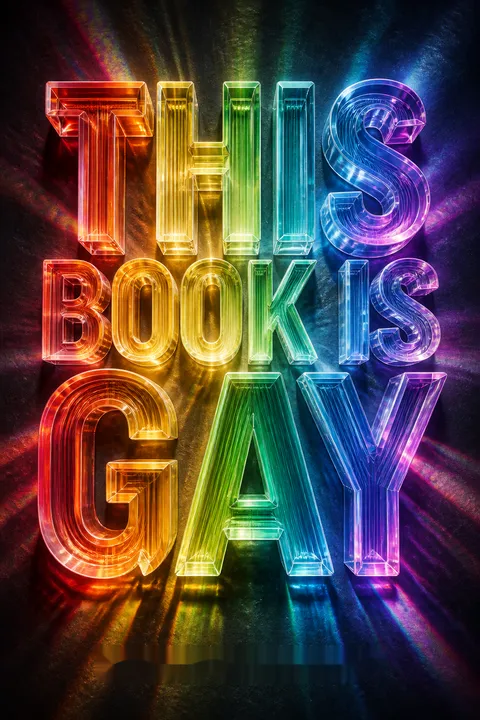
Wondering is natural. Many young people, regardless of their eventual identity, experience "sexthoughts" or questions about their gender. This internal questioning is a perfectly normal part of development, yet society often defaults to heterosexual and cisgender assumptions, leaving those who feel "different" without guidance or validation. This book serves as a crucial manual, filling the educational gaps left by schools that often ignore LGBT* experiences.
Challenging norms. The pervasive societal message that "straight = normal" and "not straight = not normal" can lead to confusion and self-doubt. However, being a minority does not equate to being abnormal. Just as people with blue eyes are a minority but not abnormal, LGBT* individuals are simply part of the diverse spectrum of human experience, born with their attractions and gender identities.
Biology's role. While the exact scientific reasons for sexual orientation and gender identity are complex and still being researched, various theories suggest biological underpinnings. These include:
- Twin studies indicating a "gay gene"
- Chromosome linkage (Xq28)
- Epigenetics influencing attraction
- Prenatal hormone exposure affecting brain structure
Regardless of the precise biological mechanisms, the core message remains: your feelings are not a choice, and you were born this way.
2. Labels Offer Community and Clarity, But Identity is Fluid
Your identity is as individual as your fingerprints.
Defining yourself. After recognizing your "sexthoughts" or gender questions, you have choices: ignore them, act on them without a label, or act on them and adopt an identity. While some choose not to define themselves, labels like lesbian, gay, bisexual, queer, curious, asexual, or transgender can provide a sense of belonging and access to a supportive community, making a confusing time feel less lonely.
Understanding terms. The book clarifies various identities, emphasizing that each is unique and valid.
- Lesbian: Woman attracted to women.
- Gay: Man attracted to men (also used for women).
- Bisexual: Attracted to both men and women, challenging binary thinking.
- Queer: A broad, often anti-label term for diverse sexual/gender identities.
- Asexual: Little to no sexual interest, but may have romantic feelings.
- Transgender: Feeling born into the wrong gender, distinct from sexual orientation.
- Cisgender: Gender identity matches assigned birth gender.
These labels are tools for self-understanding and communication, not rigid boxes.
Fluidity is key. It's important to remember that sexual preference and gender identity can be fluid and change over time. Just because you identify one way now doesn't mean it's permanent. This flexibility allows for personal growth and exploration, reinforcing that self-acceptance is the most crucial step, regardless of the label you choose or if you choose none at all.
3. Stereotypes are Harmful and Dehumanizing; Embrace Individuality
Stereotypes are useless for one very simple reason—they dehumanize people and allow terrible prejudices and discrimination to come creeping in.
Debunking myths. Media representation of LGBT* people is improving but remains limited, often perpetuating harmful stereotypes. These range from gay men being "fabulously campy" or "massive sluts" to lesbians being "man-haters" or "all having short hair." Such oversimplifications are not only inaccurate but also strip individuals of their unique personalities and experiences.
Internalized homophobia. Stereotypes can lead to internalized homophobia, where LGBT* individuals adopt negative views about themselves or their community. This manifests in various ways:
- Gay men fearing being "campy" or striving for hyper-masculine "Desperate Dan" bodies, sometimes leading to steroid use and eating disorders.
- "Girl wars" among lesbians, where "butch dykes" and "lipstick lesbians" criticize each other's adherence to or rejection of feminine norms.
This self-loathing is a sad consequence of societal prejudice, turning hate inwards.
Subcultures vs. stereotypes. While stereotypes are damaging, subcultures within the LGBT* community (like Bears, Twinks, Butch Dykes, Fems) offer diverse identities and aesthetics that individuals can choose to embrace. These are expressions of personal style and community, not rigid definitions. The core message is that being LGBT* means making your own rules and being true to yourself, without apology or conformity to external expectations.
4. Homophobia and Transphobia are Real Threats, Demand Action
If you can recognize how much hate there is in the world and still come out as LGBT*, you, my friend, are a fighter.
The pervasive fear. Coming out can be terrifying due to the widespread presence of homophobia and transphobia, both explicit and institutional. Explicit homophobia comes from small-minded bigots, often rooted in ignorance, disgust, or religious misinterpretations. Institutional homophobia is more insidious, manifesting as the near invisibility of LGBT* people in media, education, and public discourse, subtly reinforcing that "straight = normal."
Historical context. The AIDS epidemic in the 1980s tragically linked HIV/AIDS with gay men, creating lasting stigma and paranoia. Despite medical advancements and better understanding, this historical association continues to fuel fear and discrimination. Globally, many countries still criminalize same-sex activity, with some even imposing the death penalty, highlighting the severe human rights abuses faced by LGBT* individuals worldwide.
Bullying and its impact. Homophobic and transphobic bullying remains a significant problem in schools and workplaces, taking forms such as:
- Verbal abuse and name-calling
- Rumor spreading and exclusion
- Cyberbullying and death threats
- Physical violence and sexual assault
The impact is severe, leading to increased rates of school absenteeism, mental health issues, substance misuse, and suicidal thoughts among LGBT* youth. It is crucial to challenge such behavior, report incidents, and remember that "It Gets Better" with support and advocacy.
5. Coming Out is a Personal Journey; Prioritize Your Safety
At its core, coming out is the part where you tell someone what your sexual or gender orientation is—and that can be anything.
Why come out? While the decision to come out is deeply personal, there are significant benefits for those who can do so safely. It alleviates the burden of hiding a vital part of yourself, fostering greater confidence and more honest relationships with loved ones. Coming out also connects individuals to a supportive community and helps them find like-minded people, leading to a sense of freedom and personal pride.
Navigating the process. Coming out can be a minefield, but strategic steps can smooth the transition:
- Do: Tell a trusted friend first, gauge family attitudes, seek advice from LGBT* people or professionals, pick a quiet and safe moment, and celebrate your bravery.
- Don't: Leave incriminating internet history, be overly dramatic, do it via text/email, or come out because someone else pressures you.
Parents often have an inkling, and while initial reactions may vary, most eventually come around, as they stand to lose a valuable relationship with you.
Transgender coming out. Coming out as trans involves additional complexities, often leading to a physical transformation. This process typically involves:
- Counseling to confirm the decision
- Hormone treatment (estrogen for MTF, testosterone for FTM) with irreversible effects
- Potential gender reassignment surgery, which is a lengthy and painful recovery
Crucially, the most important aspect is the new identity, including chosen name and correct pronouns. While challenging, transitioning can be life-saving, leading to profound emotional improvement and a sense of being truly oneself.
6. Find Your Community and Connection in Safe Spaces
Being a part of the gay scene allows you to meet people and make friends that have a lot of the same experiences and interests as you do.
Gaydar and connection. While not a magical sixth sense, "gaydar" is a developed ability to read body language and subtle cues, like sustained eye contact, to identify other LGBT* individuals. In today's world, many young LGBT* people are openly out, making it easier to connect. However, for those in isolating environments, proactive steps are needed to find community.
Safe spaces. Historically, and still today, LGBT* people need dedicated "safe spaces" free from intimidation and judgment. These include:
- Youth groups: Offering support, advice, and a friendly atmosphere for young LGBT* individuals.
- College/university groups: Providing community and resources on campus.
- Pride parades: Annual celebrations of LGBT* identity and a powerful way to connect.
- Bars and nightclubs: For those over legal age, these offer social environments to meet friends and partners, though they are not for everyone.
Online connections. The internet has revolutionized how LGBT* people meet, offering platforms like dating websites (e.g., Gaydar, Match.com) and apps (e.g., Grindr). These tools remove the need for "gaydar" and facilitate connections, but users must prioritize safety:
- Never share personal information too soon.
- Meet in public, well-lit places for first dates.
- Be clear about intentions (chat, date, or casual sex).
- Always practice safe sex.
While convenient, these platforms can also be used for casual encounters, and it's important to distinguish between seeking sex and seeking love.
7. Safe Sex is Non-Negotiable, But Intimacy is Paramount
By all means, enjoy sex, but if you go looking for sex because you’re hungry for love, you’ll starve.
Inclusive sex education. Traditional sex education often neglects same-sex relationships, perpetuating the idea that gay sex is "icky" or "wrong." This book aims to fill that void, emphasizing that all individuals deserve comprehensive, inclusive information about safe and healthy sexual relationships, regardless of orientation. Pornography is not a substitute for real sex education, as it often misrepresents reality and safe practices.
Understanding same-sex sex.
- Boy-on-boy sex: Involves various forms of pleasure, including handies, oral sex ("blowies"), and anal sex ("bumming"). Anal sex requires careful pre-care (hygiene), lubrication, and consistent condom use due to the fragility of the anus and higher STI risk. Roles (top/bottom) are often fluid.
- Girl-on-girl sex: Focuses on clitoral and vaginal stimulation through fingers, oral sex, and toys/strap-ons. It's about mutual pleasure and exploration, not replicating heterosexual dynamics.
- Trans sex: Varies widely depending on whether a person has undergone surgery. Partners are typically aware of their paramour's anatomy, and intimacy is key.
Communication with partners about desires and boundaries is crucial for satisfying and respectful sexual experiences.
Promiscuity and STIs. While not all gay men are promiscuous, some studies suggest a higher inclination towards multiple partners within the gay male community. This can be attributed to factors like:
- Biological drives (testosterone)
- Normalized behaviors within gay subcultures
- Less societal shaming compared to women
However, promiscuity significantly increases the risk of sexually transmitted infections (STIs) like herpes, gonorrhoea, genital warts, syphilis, crabs, chlamydia, and hepatitis. HIV/AIDS remains a particular concern for gay and bi men, with rising infection rates due to decreased education and increased treatment efficacy (leading to longer infectious periods). Consistent condom use and regular testing are essential for everyone's health and safety.
8. Love, Commitment, and Family are for Everyone
Love is the same regardless of sexuality, and marriage does not belong to anyone, religious or otherwise—it is a human social construct, and it should be open to all couples who wish to commit to each other.
The desire for commitment. Humans are often programmed towards committed, monogamous relationships, offering benefits like love, companionship, comfort, security, and shared finances. While the "gay scene" might offer variety, many LGBT* individuals seek long-term partners. The "lockdown" phase requires careful consideration, prioritizing kindness, humor, loyalty, and love over fleeting physical attractions.
Monogamy vs. open relationships. Both monogamous and open relationships have pros and cons.
- Monogamy: Offers intimacy, comfort, and security, but can lack variety.
- Promiscuity: Offers variety and spontaneity, but can lead to loneliness and health risks.
- Open relationships: Some couples choose this, with rules to manage boundaries and prevent jealousy. However, emotions are hard to control, and safe sex is paramount. The decision rests on individual compatibility and trust.
Marriage and family. The legalization of same-sex marriage in the U.S. (and many other countries) was a monumental step towards equality, affirming that love and commitment are universal rights. Despite historical opposition, the world has not crumbled, proving that marriage is a social construct that should be open to all. Similarly, LGBT* individuals and couples are increasingly forming families through:
- Sperm donation (for female couples)
- Co-parenting arrangements
- Surrogacy (for male couples or those unable to carry a pregnancy)
- Adoption (with many children needing loving homes)
The argument that children need a mother and a father is outdated; two loving parents, regardless of gender or orientation, make great parents.
9. You Are More Than Your Sexuality or Gender Identity
You are joining this amazing global club filled with awesome people, but you are also just you, and you are so much more than just a lesbian, gay, bisexual, queer, or trans person.
A multifaceted self. While identifying as LGBT* is a significant part of who you are, it is not your sole definition. You are a complex, multifaceted individual, like a "harp squid" with many tentacles or strings. Your sexual or gender identity is just one of these, alongside your talents, interests, career aspirations, family roles, and personal dreams.
Intersectionality. Your identity is shaped by the interplay of various overlapping characteristics. For example, being gay, Asian, physically disabled, and a tap dancer means each of these aspects influences your life experience. While some identities may carry more weight or face more societal challenges, they all contribute to the unique person you are.
Living a full life. The ultimate goal, once you've embraced your identity, is to develop a rich and fulfilling life that extends beyond being LGBT*. Your love life is important, but it's just one piece of your "life pie." You will experience the same heartaches, first loves, and triumphs as everyone else. The aim is to reach a point where you introduce yourself by your profession, hobbies, or passions before mentioning your sexual orientation or gender, just as straight people do.
10. Embrace Your Icons and Actively Fight for Progress
With each generation, things are getting better for LGBT* people—what will YOU do to make sure this continues to happen?
Gay icons. Throughout history, certain individuals, films, and cultural phenomena have transcended celebrity to become "gay icons," inspiring and resonating deeply within the LGBT* community. These figures, whether LGBT* themselves or allies, often embody glamour, resilience, wit, or a spirit of overcoming adversity. Examples include:
- Musical Divas: Cher, Madonna, Beyoncé, Judy Garland, Kylie Minogue
- Actors/Performers: Ellen DeGeneres, Ian McKellen, RuPaul, David Bowie
- Activists/Writers: Harvey Milk, Peter Tatchell, Oscar Wilde
These icons provide a shared cultural heritage and a sense of belonging.
Activism is essential. While progress has been made, especially in the West, the fight for full equality is far from over. Many countries still persecute LGBT* people, and even in accepting societies, institutional homophobia and transphobia persist. It is crucial for everyone to contribute to this ongoing struggle.
How to help:
- Boycott: Refuse to support artists, companies, or countries that are openly homophobic or transphobic.
- Support charities: Donate to organizations like Amnesty International, ILGA, GLAAD, or The Kaleidoscope Trust, which actively campaign for LGBT* rights globally.
- Speak up: Challenge homophobic language and attitudes in your daily life.
- Be visible: Your authentic self is a powerful statement.
By embracing your identity, supporting your community, and actively working for change, you contribute to a future where everyone can live freely and proudly.
People Also Read




Download PDF
Download EPUB
.epub digital book format is ideal for reading ebooks on phones, tablets, and e-readers.








































