
Plot Summary
Shadows and Silver
Ivy, a streetwise thief with a hidden, monstrous power, survives by stealing from the corrupt and redistributing her spoils to the desperate poor of Florian's fringes. Haunted by scars—physical and emotional—she moves unseen, her soul fractured by a childhood tragedy and a forbidden magic she refuses to use. Ivy's world is one of hunger, cunning, and the constant threat of exposure, where hope is a rare currency. Her acts of justice are small rebellions against a city that has abandoned its most vulnerable, and her only solace is the anonymity of her alter ego, the Hand of Kosmel. But when a noblewoman dies in her arms, Ivy's carefully constructed life is upended, setting her on a collision course with powers both mortal and divine.
Blood in the Alley
Ivy's attempt to save a dying noblewoman in a filthy alley fails, but in the moment of death, something impossible happens: the woman's soul, Julita, is pulled into Ivy's body. Ivy reels from the shock, now sharing her mind with a ghost who claims to have been murdered for uncovering a conspiracy at the royal college. Julita's presence brings not only confusion but also a desperate plea—help finish what she started, or risk a catastrophe that could doom the entire city. Ivy, already burdened by guilt and secrets, is thrust into a new role as reluctant investigator, her own survival now tied to the fate of a stranger's unfinished business.
The Hanged Sorcerer
The city is gripped by fear as another riven sorcerer—those born with wild, destructive magic—faces public execution. Ivy watches, knowing she shares the same cursed power, and is reminded of the fate that awaits her if she's ever discovered. The spectacle is both warning and threat, a reminder that the city's peace is built on the blood of those like her. The king's speech, the crowd's cheers, and the sorcerer's death reinforce Ivy's resolve to remain hidden, even as Julita's mission threatens to drag her into the light. The city's foundations tremble with secrets, and Ivy's own are the most dangerous of all.
Ghost in the Attic
Alone in her attic refuge, Ivy is confronted by Julita's voice in her head. The dead noblewoman is determined, clever, and not above manipulating Ivy to achieve her goals. She reveals a plot of forbidden magic at the royal college—scourge sorcery, the very crime that once brought divine retribution upon the world. Julita's urgency is infectious, and Ivy, despite her reluctance, is drawn into the conspiracy. Their uneasy partnership is forged in necessity, with Ivy's street skills and Julita's insider knowledge their only weapons against a threat that could destroy them both.
Bargains and Beggars
Disguised as a noble, Ivy infiltrates the Sovereign College, guided by Julita's memories and a stolen bracelet. She navigates a world of privilege and suspicion, encountering Julita's four allies—Stavros, the disgraced general; Alek, the masked scholar; Benedikt, the charming royal bastard; and Casimir, the empathetic courtesan. Each man is striking, dangerous, and bound to Julita by secrets and loyalty. Ivy must convince them she is Julita's friend, passing on cryptic warnings and gathering clues, all while hiding her true identity and the ghost within. The stakes rise as Ivy realizes the conspiracy is deeper and deadlier than she imagined.
The College Conspiracy
Ivy's investigation leads her through the college's labyrinth of secrets—hidden passages, magical wards, and rivalries masked by courtly manners. She discovers that the scourge sorcerers are not only experimenting with forbidden magic but are also targeting the royal family. The daimon, spirit-creatures usually indifferent to mortals, grow increasingly agitated, their unrest a sign of the unnatural forces at work. Ivy's encounters with the four men deepen, each revealing their own wounds and desires, while Julita's past and the true nature of the conspiracy come into sharper focus. The danger is no longer abstract; it is immediate, and Ivy is at its center.
Masks and Motives
Ivy's dual life becomes more precarious as she juggles her role as Stavros's assistant and her covert investigation. She faces hostility from jealous students, suspicion from the college staff, and the ever-present threat of exposure. Poisonings, magical attacks, and social sabotage test her resolve. The ball—a glittering spectacle—turns to chaos when the daimon, driven to fury, attack, leaving blood and terror in their wake. Ivy's magic, long suppressed, threatens to break free, and her alliances with the four men are tested by secrets, desire, and betrayal. The masks everyone wears begin to crack, revealing motives as tangled as the city's streets.
The Four Allies
Ivy's relationships with Stavros, Alek, Benedikt, and Casimir deepen, each man drawn to her in ways that blur the lines between ally and lover. Their trust is hard-won, built on shared danger and confessions in the dark. Yet, the truth of Ivy's magic and Julita's presence remains a wedge, threatening to shatter their fragile unity. The men's own secrets—Stavros's bitterness, Alek's insecurity, Benedikt's longing for recognition, Casimir's yearning for meaning—mirror Ivy's own. Together, they form a team capable of challenging the conspiracy, but only if they can overcome the betrayals and desires that threaten to tear them apart.
Secrets in the Dorms
The investigation turns inward as Ivy and her allies search for the traitor within the college. Clues point to Ster. Torstem, a law professor with ties to orphanages and brothels, and to Wendos, Julita's childhood tormentor. The discovery of hidden sacrifices, switched identities, and manipulated students reveals the true horror of the scourge sorcerers' plan. Ivy's own past—her guilt over her sister's death, her refusal to use her magic—becomes both weapon and weakness. The walls of the college tremble, both literally and figuratively, as the daimon's unrest reaches a breaking point and the conspirators prepare their final move.
The Orphan's Exchange
The conspiracy's heart is exposed: orphaned children, hidden in brothels and temples, are groomed for ultimate sacrifice. Their gifts, torn from them through ritual and manipulation, fuel the scourge sorcerers' attempt to seize divine power. Ivy's horror is matched only by her determination to stop them. The cost of magic—always paid in suffering—becomes unbearably real. The city's foundations crack as the daimon, now under the sorcerers' control, threaten to bring down the college and the palace. Ivy must confront the limits of her own power and the price she is willing to pay to save those who cannot save themselves.
Poison and Paranoia
Ivy's circle is shattered by betrayal as Esmae, a trusted friend, is revealed as the knife-wielding traitor manipulated by Wendos. Poisonings, magical attacks, and the deaths of innocents escalate the crisis. Ivy is forced to kill Esmae in self-defense, a trauma that echoes her childhood tragedy and threatens to break her resolve. The men's trust is shaken, and Ivy's own secrets—her riven magic, her guilt, her longing for connection—threaten to consume her. The conspiracy is exposed, but the true battle is just beginning, as the sorcerers prepare their final, catastrophic ritual.
The Ball Shatters
The college's grand ball descends into chaos as the daimon, unleashed by the sorcerers' magic, attack the revelers. Ivy's magic, long suppressed, erupts in a desperate bid to save lives, revealing her true nature to her allies. The aftermath is a reckoning—confessions, accusations, and the shattering of trust. Ivy's relationships with the four men are tested to the breaking point, and Julita's own regrets and manipulations come to light. The city teeters on the brink of destruction, and Ivy must decide whether to embrace her power or be destroyed by it.
The Knife's Edge
Ivy is stabbed and left for dead, her life hanging by a thread. In the darkness, she is visited by a mysterious, divine voice—perhaps Kosmel himself—who offers her a bargain: use her magic to save herself, and the cost will be paid by her attacker. Ivy survives, but the price is blood and guilt. The city's collapse accelerates, the daimon's fury unchecked. Ivy's secret is now known, and her place among her allies is uncertain. The final confrontation with Wendos and the scourge sorcerers looms, and Ivy must choose between vengeance and mercy, between power and redemption.
The Riven Revealed
Ivy's forbidden magic is revealed to her allies in the most public and devastating way. The men's reactions—shock, fear, anger, and heartbreak—mirror Ivy's own self-loathing and longing for acceptance. The city's fate hangs in the balance as the scourge sorcerers' ritual nears completion. Ivy's only hope lies in embracing the truth of who she is, forging a new path not as a monster or a martyr, but as a hero who chooses her own destiny. The cost of magic, the weight of guilt, and the possibility of forgiveness converge in a final, desperate gamble.
The Hand of Kosmel
Ivy returns to her roots, redistributing stolen wealth to the poor as the Hand of Kosmel. Her acts of kindness are both penance and rebellion, a way to reclaim agency in a world that would see her destroyed. The city's collapse is mirrored by Ivy's own unraveling, but in the act of giving, she finds a measure of peace. Her allies, shaken but loyal, rally to her side, and together they prepare for the final confrontation. The gods themselves seem to take notice, and Ivy's fate becomes entwined with the divine in ways she never imagined.
The Final Sacrifice
The scourge sorcerers' plan is revealed in full: a ritual to seize control of the daimon and bring about a new retribution. Ivy, wounded but unbroken, ascends the temple tower to face Wendos and his mutilated accomplices. The cost of magic is laid bare—sacrifice, suffering, and the loss of self. Ivy's own power, guided by a mysterious divine hand, becomes the weapon that turns the tide. In a moment of clarity, she chooses mercy over vengeance, stopping Wendos without destroying him. The city is saved, but the scars remain, and Ivy's journey toward redemption is far from over.
The Tower's Collapse
As the scourge sorcerers' ritual reaches its climax, the city's foundations crack, towers collapse, and chaos reigns. Ivy's allies race to her side, each confronting their own fears and failures. The gods' silence is both judgment and challenge, and Ivy must find the strength to act without certainty of forgiveness. The final battle is fought not only with swords and magic, but with the choices that define who we are. In the aftermath, the city is forever changed, and Ivy's place in it is uncertain.
Ivy's Reckoning
The dust settles, and Ivy faces the consequences of her actions—her magic revealed, her relationships tested, her soul still fractured but no longer alone. The city is saved, but at great cost. Ivy's journey is not over; the wounds of the past and the dangers of the future remain. But for the first time, she allows herself to hope—not for forgiveness from the gods, but for the possibility of forging her own destiny, surrounded by allies who have seen her at her worst and still choose to stand by her side.
Analysis
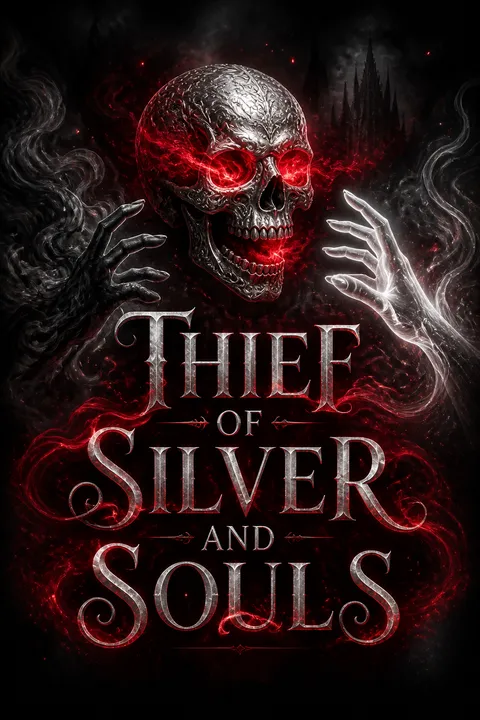
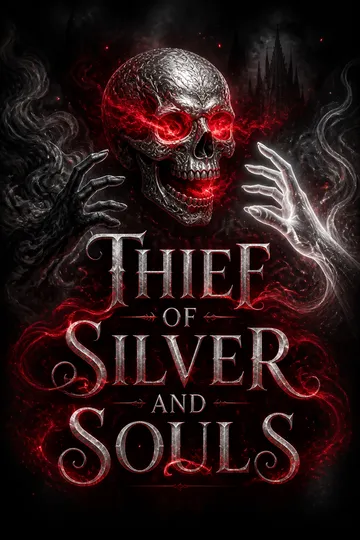
A tale of guilt, power, and hard-won hopeThief of Silver and Souls is a dark, emotionally charged fantasy that interrogates the cost of survival, the burden of guilt, and the possibility of redemption in a world where power is always paid for in suffering. Through Ivy's journey—from isolated thief to reluctant hero, from self-loathing outcast to the center of a found family—the novel explores the ways in which trauma shapes identity and the difficulty of trusting others when betrayal feels inevitable. The dual narrative with Julita adds depth and complexity, forcing both women to confront their own manipulations and regrets. The magic system, rooted in sacrifice, serves as both metaphor and mechanism, highlighting the dangers of unchecked ambition and the necessity of empathy. The novel's critique of privilege, its nuanced portrayal of desire and loyalty, and its refusal to offer easy answers make it a resonant story for modern readers. Ultimately, Thief of Silver and Souls argues that heroism is not the absence of darkness, but the courage to act in spite of it—and that forgiveness, from others and from oneself, is the hardest and most necessary magic of all.
Review Summary
Thief of Silver and Souls receives mostly positive reviews (3.84/5) for its unique sacrifice-based magic system, strong worldbuilding, and compelling mystery plot. Readers praise protagonist Ivy's Robin Hood-like character and the intriguing premise of her hosting a murdered noblewoman's soul. Most appreciate the slow-burn romance with four love interests, though some felt two weren't well-developed. The book ends on a cliffhanger. Common criticisms include slow pacing, minimal romance despite the "why choose" label, and limited character development for some male leads. Several readers DNF'd early due to pacing issues.
People Also Read



Characters
Ivy
Ivy is a survivor, a thief, and a reluctant hero, shaped by trauma and the burden of riven magic she refuses to use. Scarred by her childhood—her mother's abuse, her sister's death at her own hands, and her exile to the streets—Ivy is fiercely independent, cynical, and driven by a need to make amends. Her alter ego, the Hand of Kosmel, is both a mask and a mission, redistributing stolen wealth to the poor as penance and rebellion. Ivy's psychological complexity is rooted in guilt, shame, and a desperate longing for connection, which she both craves and fears. Her journey is one of self-acceptance, as she learns to wield her power not as a curse, but as a tool for justice, and to trust others with her secrets and her heart.
Julita
Julita is the murdered noblewoman whose soul possesses Ivy, bringing with her a mission to expose a conspiracy of scourge sorcerers at the royal college. Intelligent, determined, and sometimes manipulative, Julita is both ally and antagonist, pushing Ivy to act while hiding her own vulnerabilities. Her relationships with the four men—Stavros, Alek, Benedikt, and Casimir—are complex, built on need, strategy, and unspoken longing. Julita's psychological arc is one of regret and self-awareness, as she confronts the consequences of her own manipulations and the limits of her control. In death, she finds a measure of redemption through her partnership with Ivy, learning to value genuine connection over calculated alliances.
Stavros
Stavros is a former military hero, now a professor at the college, whose life has been defined by sacrifice, loss, and the pursuit of justice. His prosthetic hand and battle injuries are both literal and symbolic scars, marking him as a man who has given much and lost more. Stavros's relationship with Ivy is fraught with suspicion, attraction, and eventual respect, as he comes to see her not as a threat but as a partner. His psychological journey is one of humility and acceptance, learning to trust others and to find meaning beyond the battlefield. His need for control and glory is tempered by the realization that true strength lies in vulnerability and collaboration.
Alek
Alek is the intellectual heart of the group, a merchant's son who has fought for every scrap of respect in a world that values bloodlines over merit. His mask hides both physical scars and deep-seated insecurities, and his dedication to knowledge is both shield and sword. Alek's relationship with Ivy is marked by mutual respect, rivalry, and a longing for validation. He is both skeptical and loyal, his trust hard-won but fiercely given. Alek's psychological arc is one of self-worth, as he learns to value his own contributions and to accept the imperfections of those around him.
Benedikt
Benedikt is the royal bastard, a man on the fringes of power and privilege, whose wit and charm mask a deep yearning for acceptance. His sacrifices—literal and figurative—are attempts to carve out a place for himself in a world that will never fully claim him. Benedikt's relationship with Ivy is playful, flirtatious, and tinged with genuine affection, as he recognizes in her a fellow outsider. His psychological journey is one of self-acceptance, learning that belonging is not granted by birth but earned through loyalty and courage.
Casimir
Casimir is the group's heart, a courtesan trained to please but yearning for something real. His beauty and grace are both armor and invitation, and his gift—knowing what will make others happy—often leaves him empty. Casimir's relationship with Ivy is the most emotionally intimate, built on mutual vulnerability and the possibility of love. His psychological arc is one of self-discovery, as he learns to seek his own happiness and to accept love that is freely given, not bought or bargained for.
Wendos
Wendos is Julita's childhood tormentor and the mastermind behind the scourge sorcerers' plot. His psychological makeup is a toxic blend of resentment, ambition, and self-justification, convinced that his actions serve a higher purpose. Wendos's manipulation of Esmae and others reveals his skill at exploiting weakness, while his ultimate downfall is rooted in his inability to see others as anything but tools. His arc is a cautionary tale of the dangers of unchecked ambition and the corrosive power of envy.
Esmae
Esmae is Ivy's friend and eventual betrayer, manipulated by Wendos into becoming a weapon against Julita and Ivy. Her sacrifice—an eye for a gift of communication—mirrors her psychological vulnerability, always watching but never truly seen. Esmae's arc is one of tragedy, as her longing for recognition and fear of failure lead her to commit unforgivable acts. Her death is both a consequence of her choices and a reflection of the larger theme of sacrifice and the cost of ambition.
Ster. Torstem
Ster. Torstem is the law professor whose ties to orphanages and brothels mask a deeper involvement in the scourge sorcerers' conspiracy. His psychological profile is one of compartmentalization and rationalization, able to justify any act in the name of a greater good. Torstem's manipulation of children and the vulnerable is both his crime and his undoing, as the web of lies he spins ultimately ensnares him. His arc is a study in the dangers of unchecked authority and the ease with which power corrupts.
The Daimon
The daimon are spirit-creatures whose agitation mirrors the city's descent into chaos. Their behavior is both symptom and warning, a supernatural barometer of the forbidden magic at work. Psychologically, they represent the consequences of collective guilt and the dangers of ignoring the suffering of the marginalized. Their eventual rampage is both a literal and metaphorical reckoning, forcing the characters to confront the cost of their actions and the need for redemption.
Plot Devices
Dual Narratives and Possession
The central device of the novel is the possession of Ivy by Julita's soul, creating a dual narrative that explores identity, agency, and the tension between self-interest and collective good. This device allows for both internal conflict and external action, as Ivy and Julita must negotiate their differences and learn to trust each other. The possession also serves as a metaphor for the ways in which the past haunts the present, and for the possibility of redemption through shared purpose.
Hidden Identities and Masks
The use of disguises, false names, and hidden motives permeates the narrative, reflecting the characters' need to navigate a world where trust is dangerous and secrets are currency. Ivy's alter ego as the Hand of Kosmel, her masquerade as a noble, and the literal masks worn at the ball all underscore the theme of identity as performance. The revelation of true selves—often at great cost—is both the climax and the emotional core of the story.
Sacrifice and the Cost of Magic
The novel's magic system is built on the principle of sacrifice—every gift requires a loss, and every act of magic exacts a toll. This device is both literal and thematic, exploring the ways in which ambition, guilt, and love are intertwined with suffering. The scourge sorcerers' willingness to sacrifice others for power is contrasted with Ivy's refusal to use her magic at the expense of innocents, and with the smaller, everyday sacrifices made by the characters in pursuit of justice and connection.
Foreshadowing and Divine Intervention
The unrest of the daimon, the cracks in the city's foundations, and the recurring references to the Great Retribution all foreshadow the coming catastrophe. The mysterious voice that intervenes to save Ivy's life suggests that the gods are not as absent as they seem, and that redemption may be possible even for the most broken souls. This device adds a layer of mythic resonance to the narrative, connecting personal struggles to cosmic stakes.
Found Family and Chosen Bonds
The formation of Ivy's unlikely alliance with the four men, and her gradual acceptance of their loyalty and affection, is both a plot engine and an emotional anchor. The found family trope is subverted by the constant threat of betrayal and the weight of secrets, but ultimately affirmed by the characters' willingness to risk everything for each other. The novel suggests that redemption is not found in isolation, but in the messy, imperfect bonds we choose to forge.
Rites of Possession Series Series

About the Author



Download PDF
Download EPUB
.epub digital book format is ideal for reading ebooks on phones, tablets, and e-readers.








































