
Plot Summary
Raindrop's Journey Begins
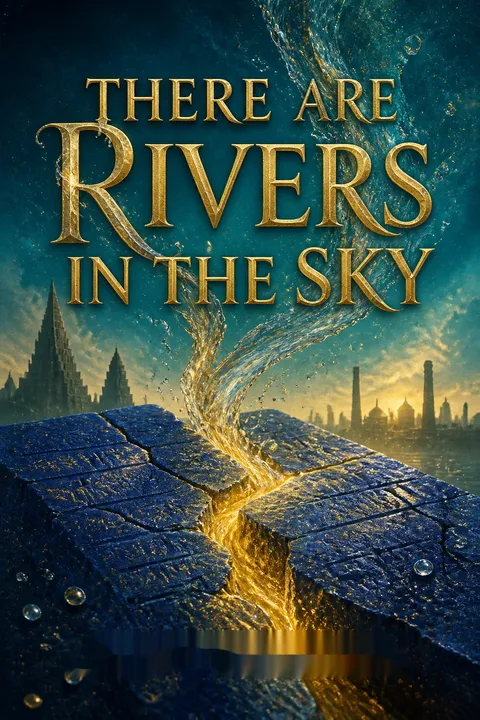
In ancient Nineveh, a storm brews, and a solitary raindrop falls from the sky, setting in motion a chain of events that will ripple through centuries. The city, ruled by the mighty Ashurbanipal, is both a marvel and a powder keg, its fate tied to the unpredictable rivers that sustain and threaten it. The raindrop, insignificant yet infinite, lands on the king's head, unnoticed but pivotal. This moment, seemingly trivial, becomes the seed for stories of power, memory, and loss, as water's cycle of descent and return mirrors the cycles of human history and forgetting.
The Librarian King's Secret
King Ashurbanipal, proud of his vast library, treasures stories above all else, yet fears the storytellers' power. Among his collection is a blue lapis lazuli tablet, inscribed with verses of the Epic of Gilgamesh and a blasphemous dedication to the forgotten goddess Nisaba. The king's reign is marked by both intellectual achievement and ruthless violence. When his trusted mentor is accused of betrayal, Ashurbanipal's response is brutal, burning the man alive and sealing away the blue tablet. The raindrop, witness to this cruelty, absorbs the memory, beginning its eternal journey as a vessel of remembrance.
Birth by the Thames
In 1840s London, under the shadow of the polluted Thames, Arabella gives birth to a boy on the riverbank, aided by a band of scavengers. The newborn, named Arthur, receives a snowflake—once the Nineveh raindrop—on his tongue, blending the taste of milk and memory. Marked by extraordinary recall, Arthur's life is shaped by hardship, hunger, and the relentless flow of the river. His birth, coinciding with that of Queen Victoria's child, sets him on a path where memory is both a gift and a curse, and where water's journey becomes his own.
Water Remembers, Humans Forget
The narrative weaves through time, following the raindrop as it transforms—rain, snow, river, tear—carrying with it the imprint of all it has witnessed. Water, indifferent to human hierarchies and suffering, persists, while people forget the lessons of the past. The rivers of Mesopotamia and London become silent witnesses to cycles of violence, exile, and renewal. The story of Arthur, the Yazidi healer's descendants, and the blue tablet are all bound by water's unbroken memory, even as generations struggle to remember what truly matters.
The Gifted Child's Curse
Growing up in the slums, Arthur's prodigious recall sets him apart but isolates him. He excels in school but faces cruelty and misunderstanding, especially from those in power. His talent draws the attention of mentors and abusers alike, shaping his path toward the world of books and ancient stories. The trauma of loss—his mother's decline, his brother's death from cholera—haunts him, as does the realization that knowledge and memory can be as painful as they are precious. Arthur's journey becomes a quest to piece together what has been broken, in history and in himself.
Rivers of Exile and Memory
The story shifts to the Yazidi community by the Tigris, where Narin, a young girl, is baptized with sacred water. Her grandmother, a healer and water-dowser, teaches her the importance of memory, resilience, and the stories of their persecuted people. As dams threaten to erase their ancestral lands, and as Narin faces the loss of her hearing, the family's journey becomes one of survival and remembrance. The rivers, both literal and metaphorical, carry the weight of exile, connecting the fates of those who are forced to leave and those who remain.
The Yazidi Healer's Lineage
Narin's grandmother, Besma, embodies the wisdom and pain of generations. Her stories, rituals, and plant knowledge are acts of resistance against erasure. The family's history is marked by firman—decrees of massacre—and by the survival of women who carry memory through oral tradition. The healer's gift, passed down from Leila, is both a source of strength and a reminder of trauma. As Narin's world is shattered by violence, the legacy of healing becomes a fragile thread holding her to life and hope.
Lost and Buried Stories
Arthur, now a young man, becomes an apprentice at the British Museum, deciphering cuneiform tablets from Ashurbanipal's library. He discovers the Epic of Gilgamesh, piecing together its fractured verses. The museum, a place of both preservation and forgetting, mirrors the fate of the stories it houses—some celebrated, others hidden or lost. The blue tablet, with its forbidden dedication to Nisaba, resurfaces, its journey paralleling that of the raindrop and the exiled peoples. The act of translation becomes an act of resurrection, but also of appropriation and loss.
The Flood and Its Echoes
The narrative returns to the theme of the flood, both as a historical event and as a recurring trauma. The Epic of Gilgamesh's flood story predates the Bible, challenging established narratives and provoking controversy. In the modern era, floods—natural and man-made—displace communities, destroy memories, and force reckonings with the past. The Yazidi genocide, the drowning of Hasankeyf, and the personal floods of grief and guilt all echo the ancient deluge, reminding characters and readers alike that catastrophe is both an end and a beginning.
The Forgotten Goddess
The blue tablet's dedication to Nisaba, the goddess of writing and memory, becomes a symbol of all that is lost and suppressed—women's voices, minority histories, forbidden knowledge. In the present, Zaleekhah, a scientist and descendant of exiles, encounters the legacy of Nisaba through tattoos, stories, and her own research into water's memory. The struggle to remember and honor the forgotten goddess mirrors the broader fight against erasure, whether of people, places, or truths. Nisaba's spirit lives on in those who refuse to let memory die.
Love, Loss, and Survival
Across centuries and continents, love—familial, romantic, platonic—offers moments of solace and connection. Arthur's unspoken love for Leila, Narin's bond with her grandmother, Zaleekhah's relationships with family and lovers—all are tested by loss, exile, and trauma. Survival often comes at great cost, and the wounds of violence and betrayal linger. Yet, through acts of kindness, storytelling, and remembrance, the characters find ways to endure, to heal, and to pass on what matters most.
The Price of Memory
The act of remembering—whether through stories, rituals, or scholarship—is fraught with difficulty. Arthur's quest to recover the Epic of Gilgamesh leads him to confront the limits of knowledge and the burden of history. Narin's survival depends on holding fast to her memories, even as they threaten to overwhelm her. Zaleekhah's scientific and personal journey reveals that memory, like water, is both vital and dangerous. The price of memory is high, but forgetting is a greater loss.
Rivers Converge, Fates Collide
The narrative threads of Arthur, Narin, and Zaleekhah converge as the rivers of their lives—Thames and Tigris—meet. The blue tablet, the legacy of Nisaba, and the memory of water bind them together, even as they are separated by centuries. The convergence is marked by acts of rescue, sacrifice, and revelation. The past is never truly past; its currents shape the present and the future, for individuals and for peoples.
The Blue Tablet's Legacy
The blue lapis lazuli tablet, inscribed with forbidden words, becomes the novel's central symbol. Passed from hand to hand, lost and found, it embodies the persistence of memory against all odds. Its journey mirrors that of the raindrop, the exiles, and the stories that refuse to die. The tablet's legacy is one of resistance—to erasure, to violence, to the tyranny of forgetting. It is a testament to the power of words, and to the endurance of those who carry them.
Water's Final Witness
As the rivers rise and fall, as cities are drowned and rebuilt, as generations are born and lost, water remains. It witnesses all—cruelty and kindness, destruction and renewal. The novel ends with the image of water ascending, evaporating, and returning, carrying within it the memories of all it has seen. The journey of a single drop becomes the journey of humanity itself, a cycle of loss and remembrance, of forgetting and return. In the end, it is water that remembers, even when humans cannot.
Analysis
Elif Shafak's There Are Rivers in the Sky is a sweeping meditation on memory, trauma, and the cycles of forgetting and remembrance that shape both individuals and civilizations. By tracing the journey of a single drop of water across millennia, the novel collapses the boundaries between past and present, East and West, personal and collective. At its heart, the book is a plea for the preservation of stories—especially those of the marginalized, the exiled, and the forgotten. Through its interwoven narratives, Shafak interrogates the ethics of memory: who gets to remember, who is forced to forget, and at what cost. The blue tablet, dedicated to the erased goddess Nisaba, becomes a symbol of all that is lost to violence, patriarchy, and the tides of history, yet also of the resilience of those who refuse to let memory die. The novel's modern relevance is acute, addressing the destruction of cultural heritage, the plight of refugees, and the ongoing struggle for justice and recognition. Ultimately, Shafak suggests that, like water, memory is both fragile and indestructible—capable of being buried, polluted, or diverted, but always finding a way to return. In a world threatened by amnesia and erasure, the act of remembering—however painful—is an act of resistance, healing, and hope.
Review Summary
People Also Read









Characters
Ashurbanipal
Ashurbanipal, ruler of ancient Nineveh, is both a patron of knowledge and a perpetrator of violence. His pride in his library and his love of stories are matched by his fear of the power of storytellers. His reign is marked by intellectual achievement and ruthless suppression, especially of dissent and forbidden beliefs. His relationship with his mentor reveals a capacity for both attachment and betrayal. Ashurbanipal's legacy is double-edged: he preserves the world's oldest stories, yet also embodies the dangers of power unchecked by empathy. His actions set in motion the cycles of memory and forgetting that haunt the novel.
Arthur Smyth (King Arthur of the Sewers and Slums)
Born in poverty by the Thames, Arthur's prodigious memory and sensitivity set him apart from childhood. His journey from slum child to apprentice, scholar, and archaeologist is marked by loss, trauma, and a relentless quest to piece together what has been broken. Arthur's relationships—with his mother, mentors, and the Yazidi healer Leila—are shaped by longing and the pain of exile. His work on the Epic of Gilgamesh becomes both a personal and collective act of remembrance. Arthur's psychological arc is one of seeking belonging and meaning in a world that often rejects or misunderstands him.
Narin
Narin, a Yazidi girl baptized by the Tigris, is marked by both vulnerability and resilience. Her gradual loss of hearing parallels the erasure of her people's history. Raised by her grandmother Besma, she inherits a legacy of healing, storytelling, and survival amid persecution. Narin's journey through violence, captivity, and eventual rescue is a testament to the endurance of memory and the possibility of renewal. Her psychological development is shaped by trauma, but also by the love and wisdom passed down through generations.
Besma (Grandma)
Besma embodies the strength and sorrow of the Yazidi people. As a water-dowser and herbalist, she connects the physical and spiritual worlds, teaching Narin the importance of stories, rituals, and resilience. Her own history is marked by firman—decrees of massacre—and by the burden of remembering what others wish to forget. Besma's psychoanalytic depth lies in her ability to hold pain and hope together, to nurture and to resist, and to pass on a legacy of survival through love and knowledge.
Leila (Faqra)
Leila, Narin's great-great-grandmother, is a seer whose gift is both blessing and curse. Her visions of catastrophe and her role as a memory-keeper place her at the center of the novel's exploration of trauma and resilience. Leila's relationship with Arthur is one of mutual recognition and unfulfilled longing, a connection that transcends language and culture. Her survival amid massacre and her transmission of knowledge to future generations make her a symbol of both loss and continuity.
Zaleekhah Clarke
Zaleekhah, a hydrologist and descendant of exiles, navigates the complexities of identity, belonging, and memory. Her scientific work on water's memory mirrors her personal quest to understand her family's past and her own trauma. Marked by loss, depression, and the burden of gratitude, Zaleekhah's relationships—with family, lovers, and the past—are fraught but ultimately redemptive. Her psychological journey is one of moving from numbness to connection, from forgetting to remembrance, and from isolation to solidarity.
Nen (Brennen)
Nen, owner of the Forgotten Goddess tattoo shop, is a bridge between past and present, embodying the spirit of Nisaba. Her passion for ancient Mesopotamia, her struggles with addiction, and her role as a storyteller and healer make her a vital link in the novel's chain of memory. Nen's relationship with Zaleekhah is one of mutual recognition and support, offering both women a path toward healing and self-acceptance. Her tattoos become acts of remembrance and resistance.
Malek (Uncle)
Malek, Zaleekhah's uncle, is a complex figure—generous, ambitious, and deeply marked by exile. His desire to protect and provide for his family leads him to moral compromise, especially in the organ-trafficking subplot. Malek's psychological depth lies in his struggle with guilt, gratitude, and the limits of love. His actions force a reckoning with the costs of survival and the ethics of memory.
Mabel
Mabel, Arthur's wife, represents the pressures and limitations of Victorian domesticity. Her relationship with Arthur is marked by misunderstanding, disappointment, and the gulf between personal ambition and societal roles. Mabel's psychological arc is one of frustration and resignation, highlighting the costs of conformity and the pain of unmet needs.
The Blue Tablet (Object/Character)
The blue lapis lazuli tablet, inscribed with the Epic of Gilgamesh and dedicated to Nisaba, is both an object and a character in the novel. Its journey through time, hands, and places mirrors the cycles of memory, loss, and survival. The tablet's presence catalyzes acts of remembrance, resistance, and healing, embodying the persistence of what is meant to be forgotten.
Plot Devices
Water as Memory and Metaphor
The novel's central plot device is the journey of a single drop of water, which becomes a metaphor for memory, exile, and the persistence of the past. Water's transformations—rain, snow, river, tear—parallel the characters' experiences of loss, survival, and renewal. The motif of water remembering, while humans forget, structures the narrative, linking disparate times and places. This device allows the story to flow non-linearly, weaving together ancient and modern, personal and collective, in a tapestry of interconnected fates.
Fractured Narrative and Interwoven Timelines
The novel employs a braided narrative, shifting between ancient Mesopotamia, Victorian London, and contemporary Turkey and England. Each timeline is anchored by a central character—Ashurbanipal, Arthur, Narin, Zaleekhah—whose stories echo and inform one another. The use of recurring symbols (the blue tablet, the raindrop, the tattoo) and mirrored events (floods, exiles, massacres) creates a sense of cyclical history and the inescapability of trauma. Foreshadowing and callbacks reinforce the theme that the past is never truly past.
The Blue Tablet and the Forgotten Goddess
The blue lapis lazuli tablet, dedicated to Nisaba, serves as both a literal and symbolic plot device. Its journey through time—hidden, lost, found, and fought over—drives the action and connects the characters. The erasure of Nisaba, the goddess of writing and memory, becomes a metaphor for the suppression of women's voices, minority histories, and forbidden knowledge. The tablet's presence in key moments (betrayal, rescue, revelation) marks turning points in the narrative and underscores the stakes of remembering versus forgetting.
Trauma, Survival, and the Ethics of Memory
The novel explores the psychological costs of survival—guilt, numbness, the burden of gratitude—through its characters' experiences of violence, exile, and loss. The act of remembering is shown to be both necessary and painful, with characters forced to confront the limits of knowledge, the dangers of forgetting, and the responsibilities of bearing witness. The ethical dilemmas faced by Malek, Zaleekhah, and others highlight the complexities of survival in a world marked by injustice and erasure.
Storytelling as Resistance and Healing
The novel foregrounds the power of storytelling—oral, written, tattooed—as a means of resistance, healing, and survival. Characters like Besma, Leila, Nen, and Arthur become custodians of memory, passing on knowledge and hope in the face of violence and forgetting. The act of telling and retelling stories, even in fragments, becomes a way to honor the dead, heal the living, and imagine a future where memory endures.
About the Author





Download PDF
Download EPUB
.epub digital book format is ideal for reading ebooks on phones, tablets, and e-readers.








































