
Key Takeaways
1. Cultivate a strong inner core of integrity and humility
Moving from desire to actually doing better is only achieved with self-discipline, and self-discipline only works effectively when you trust in Him to help.
Character over reputation. True integrity is defined by what you do when no one is watching. While the world obsesses over outward results and public reputation, a life of significance focuses on the condition of your heart and your commitment to honesty.
The power of humility. Humility is not about thinking less of yourself, but thinking of yourself less. It means resisting the cultural urge to self-promote and instead focusing on lifting others up.
- Letting your "yes be yes" and your "no be no" without excuses.
- Avoiding "trash talk" and unwholesome language that compromises your witness.
- Accepting constructive feedback to correct personal blind spots.
Developing self-control. Building a strong core requires daily repetition and spiritual training. When you discipline your mind and tongue, you establish a foundation that keeps you steady when temptations arise.
2. Prioritize family by being present and modeling love
Seeing God in your tomorrow is the key to having confidence and courage today.
The gift of presence. Success in life is meaningless if it comes at the expense of your family. Being a great parent or spouse requires you to show up and invest both quality and quantity of time.
Modeling Christlike love. Children are natural imitators who learn more from your actions than your words. If your behavior contradicts your instructions, they will follow what you do rather than what you say.
- Establishing a daily routine of prayer and reading Scripture together.
- Resolving conflicts quickly before the sun goes down on your anger.
- Affirming your children's unique, God-given identities rather than forcing expectations.
Striving for balance. It is easy to let the urgent demands of work crowd out the important needs of your family. True balance is achieved by setting boundaries and protecting your home as a sacred sanctuary.
3. Build a supportive community of wise and trusted friends
Choose your friends simply for the sake of friendship—two-way, mutual benefit—you’ll not only have more of them, but the ones you have will mean more to you.
The company you keep. Your character is heavily influenced by the people you spend the most time with. Surrounding yourself with friends who share your core values creates a protective shield against negative peer pressure.
The necessity of community. God did not design us to walk through life alone. We need a trusted circle of believers to keep us accountable, offer wise counsel, and share our burdens.
- Seeking out friends who are comfortable telling you the hard truths.
- Wrestling in prayer for one another to stand firm in God's will.
- Practicing limitless forgiveness, even when it is incredibly difficult.
An iron-sharpening-iron dynamic. Healthy friendships are built on mutual growth and encouragement. When you take a genuine interest in others, you help them realize their potential while strengthening your own.
4. Maximize your potential by embracing discipline and reframing failure
A little improvement each day makes a big difference over time.
Reframing your setbacks. Failure is not a permanent identity; it is simply a necessary part of your growth journey. The most successful people are not those who never fail, but those who persevere through mistakes.
Embracing spiritual training. Just as athletes spend hours in the weight room to condition their bodies, we must train for godliness. This discipline requires consistent prayer, Bible study, and a commitment to taking care of your physical body.
- Focusing on qualitative goals within your control rather than external results.
- Viewing troubles as opportunities to develop endurance and character.
- Visualizing success based on God's promises rather than focusing on obstacles.
Relying on divine strength. You cannot achieve your full potential through sheer willpower alone. Real success comes when you acknowledge your weaknesses and look to the Lord to supply the strength you lack.
5. Live with a clear mission centered on serving others
Dedicating time to the priorities that God has entrusted to you may not seem significant right now, but to someone who needs you, it could make all the difference in his or her life—and in yours.
Shifting your focus. A truly satisfying life is found not in self-gratification, but in serving others. When you align your daily schedule with God's priorities, you move from chasing temporary things to investing in eternity.
The call to servanthood. True leadership is defined by how well you serve those under your authority. By adopting a "small-ball" mentality, you focus on doing the quiet, unheralded tasks that build up the entire team.
- Using your unique passions and talents to meet the needs of your community.
- Providing help in a way that preserves the dignity of the recipient.
- Refusing to make excuses when God calls you to take action.
Stewardship of resources. Everything you own—your time, talents, and financial treasures—is on loan from God. Managing these resources generously ensures that you are storing up lasting treasures in heaven.
6. Use your unique platform to positively influence the world
The fact is that when you believe you were designed for a purpose, you will live with purpose.
Recognizing your platform. You do not need to be a celebrity or a professional athlete to have a powerful influence. God has placed you in a unique position to impact the specific people around you.
Modeling a godly lifestyle. Your everyday behavior is a silent sermon that others are constantly watching and interpreting. By living with poise, civility, and grace, you point people toward the source of your hope.
- Speaking out with candor and grace when confronting injustice.
- Mentoring younger generations to help them discover their own potential.
- Treating every person you meet as a sacred creation of God.
Leaving a lasting legacy. The true measure of your influence is not found in your personal achievements, but in the lives you have touched. When you invest in people, your impact compounds and outlives your time on earth.
7. Anchor your life in an active, trusting faith
Instead, He wants us to have just enough faith in Him to continue to follow Him day by day on the path He has set before us.
Trusting the master plan. Faith is the confidence that God is in control, even when your circumstances seem chaotic or disappointing. When you face a "Friday" moment of despair, remember that "Sunday" and resurrection are coming.
The gift of grace. Salvation is a free gift that you can never earn through your own good deeds or merits. Accepting this grace frees you from the burden of trying to prove your worth to God.
- Developing a daily habit of quiet time and prayer to recharge.
- Coming boldly before God's throne with your anxieties and requests.
- Allowing your faith to produce active, loving deeds in the world.
An eternal perspective. This earthly life is temporary, like a morning fog that quickly disappears. Anchoring your heart in the promise of eternity changes how you view today's temporary trials and successes.
Review Summary
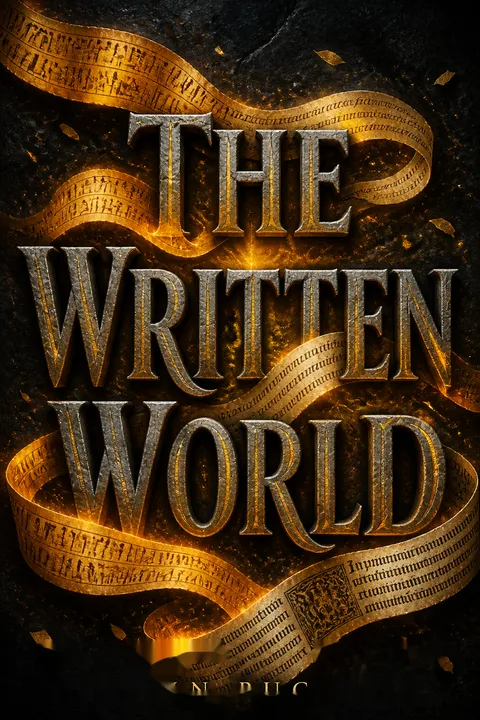
The Written World receives mixed reviews. Many praise its engaging overview of literature's impact on history, covering works from ancient epics to modern novels. Readers appreciate Puchner's accessible writing style and global perspective. However, some criticize historical inaccuracies, superficial analysis, and omissions of important literary works. The book's personal anecdotes and travelogue elements divide opinion. Despite shortcomings, most readers find it an enjoyable introduction to world literature's role in shaping civilization, though not as comprehensive or rigorous as some hoped.
People Also Read

FAQ
What is "The Written World: The Power of Stories to Shape People, History, Civilization" by Martin Puchner about?
- Sweeping history of literature: The book traces the evolution of literature and writing from the earliest civilizations to the present, showing how stories have shaped human societies.
- Focus on key texts and technologies: Puchner explores how foundational texts (like the Epic of Gilgamesh, the Bible, and the Communist Manifesto) and technologies (writing, paper, printing, digital media) have influenced history.
- Interplay of stories and power: The narrative demonstrates how stories have been used to build empires, religions, and nations, and how they have been tools for both oppression and liberation.
- Global and cross-cultural perspective: The book covers a wide range of cultures, from Mesopotamia and China to West Africa and the Caribbean, emphasizing the universality and diversity of literary traditions.
Why should I read "The Written World" by Martin Puchner?
- Understand literature’s impact: The book reveals how literature has not just reflected but actively shaped civilizations, politics, and identities.
- Connect past and present: Puchner draws clear lines from ancient storytelling to modern digital culture, making the book relevant for understanding today’s information age.
- Engaging storytelling: The author uses vivid anecdotes, personal travel stories, and accessible language to make literary history come alive.
- Broaden your worldview: By exploring non-Western texts and traditions, the book challenges Eurocentric narratives and expands the reader’s appreciation of global literature.
What are the key takeaways from "The Written World" by Martin Puchner?
- Stories shape history: Foundational stories and texts have been central to the formation of religions, empires, and national identities.
- Technology drives literary change: Innovations like writing, paper, printing, and the internet have repeatedly transformed how stories are created, preserved, and shared.
- Literature is both elite and popular: From royal courts to marketplaces, stories have circulated among all classes, sometimes as sacred texts, sometimes as entertainment.
- The struggle for control: Throughout history, there has been tension between those who control stories (scribes, priests, rulers) and those who seek to democratize them (reformers, revolutionaries, new media).
How does Martin Puchner define the "power of stories" in "The Written World"?
- Stories as world-shapers: Puchner argues that stories are not just entertainment but tools that shape beliefs, behaviors, and collective memory.
- Vehicles for authority and resistance: Stories have been used to legitimize rulers and religions, but also to challenge authority and inspire change.
- Stories as technology-dependent: The power of stories is amplified or limited by the technologies available for their transmission—oral, written, printed, or digital.
- Enduring influence: Even as technologies change, the fundamental human need for stories and meaning remains constant.
What are the four major stages in the history of literature according to "The Written World"?
- Scribes and early texts: The first stage is dominated by scribes who control difficult writing systems and preserve oral stories in written form (e.g., Gilgamesh, Homer).
- Teachers and oral wisdom: The second stage features charismatic teachers (Buddha, Confucius, Socrates, Jesus) who challenge written authority and inspire new forms of literature.
- Independent authors and new genres: The third stage sees the rise of individual authors and new literary forms, especially the novel, as writing becomes more accessible.
- Mass production and popular literature: The fourth stage is marked by the spread of paper and printing, leading to mass literacy, newspapers, manifestos, and the modern literary marketplace.
How does "The Written World" by Martin Puchner connect technological innovation to literary change?
- Writing systems: The invention of writing in Mesopotamia and the Americas enabled the preservation and standardization of stories.
- Paper and printing: Chinese inventions of paper and printing revolutionized the accessibility and spread of literature, later transforming Europe.
- The codex and the book: The shift from scrolls to bound books (codices) made reading and referencing texts easier, aiding the spread of religions and ideas.
- Digital revolution: The book draws parallels between past revolutions and today’s digital transformation, highlighting both opportunities and challenges for literature.
What role do "classic texts" play in "The Written World" by Martin Puchner?
- Foundations of civilization: Classic texts like the Bible, the Iliad, and the Communist Manifesto serve as cornerstones for cultures, religions, and political movements.
- Objects of reverence and conflict: These texts are often venerated, interpreted, and fought over, sometimes leading to wars or revolutions.
- Vehicles for identity: Classic texts help define who "we" are, providing shared stories and values for communities and nations.
- Dynamic and contested: Puchner shows that classics are not static; they are constantly reinterpreted, translated, and sometimes challenged or subverted.
How does "The Written World" address the global diversity of literary traditions?
- Beyond the West: The book covers not only Western classics but also foundational texts from China, Japan, India, the Middle East, Africa, and the Americas.
- Parallel developments: Puchner highlights independent inventions of writing and literature, such as the Mayan Popol Vuh and the West African Epic of Sunjata.
- Translation and adaptation: The spread of stories across cultures through translation, adaptation, and hybridization is a recurring theme.
- Postcolonial voices: The book discusses how formerly colonized societies use literature to reclaim identity and challenge dominant narratives.
What are some of the most influential stories or texts discussed in "The Written World"?
- Epic of Gilgamesh: The world’s oldest known epic, foundational for Mesopotamian culture.
- Homer’s Iliad and Odyssey: Central to Greek identity and later Western literature.
- The Bible and the Quran: Sacred texts that shaped Judaism, Christianity, and Islam.
- The Tale of Genji: The world’s first great novel, written by a Japanese woman, Murasaki Shikibu.
- One Thousand and One Nights: A collection of Middle Eastern folk tales that traveled globally.
- Don Quixote: The first modern novel, exploring the power and danger of stories.
- The Communist Manifesto: A political text that became a global literary and revolutionary force.
How does "The Written World" by Martin Puchner explain the relationship between literature and power?
- Literature as a tool of rulers: Kings and emperors have used stories to legitimize their rule and unify their subjects.
- Control and censorship: Authorities have often tried to control, censor, or burn books to maintain power.
- Literature as resistance: Stories have also been used by reformers, revolutionaries, and marginalized groups to challenge authority and imagine alternatives.
- Shifting centers of power: The democratization of reading and writing has repeatedly shifted the balance of power from elites to the broader public.
What does "The Written World" say about the future of literature in the digital age?
- New forms, old patterns: Puchner notes that digital media revives some ancient practices (scrolling, tablets) while creating new possibilities for storytelling.
- Democratization and fragmentation: The internet allows more people to write and publish, but also leads to information overload and challenges to authority.
- Enduring need for stories: Despite technological change, the human need for stories and meaning persists.
- Preservation and adaptation: The survival of literature depends on continuous use, adaptation, and relevance to new generations, not just on technology.
What are the best quotes from "The Written World" by Martin Puchner and what do they mean?
- “Stories have shaped the world more than the world has shaped stories.” — This encapsulates the book’s thesis that literature is a driving force in history, not just a reflection.
- “If you want to understand a civilization, look at its stories.” — Puchner emphasizes that foundational texts reveal the values, fears, and aspirations of societies.
- “Literature’s most magical power is to let us enter the inner worlds of others, including those long dead.” — This highlights the unique ability of literature to bridge time, space, and experience.
- “The only guarantee for the survival of literature is its continued use.” — Puchner warns that technology alone cannot preserve stories; they must remain meaningful and relevant.
These 12 questions and answers provide a comprehensive overview of the main arguments, concepts, and examples in "The Written World: The Power of Stories to Shape People, History, Civilization" by Martin Puchner, covering its global scope, historical depth, and relevance to today’s world.

Download PDF
Download EPUB
.epub digital book format is ideal for reading ebooks on phones, tablets, and e-readers.








































