
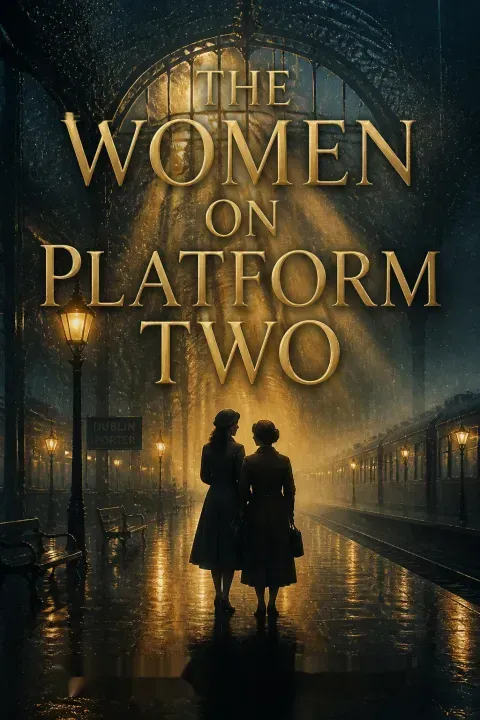


Plot Summary
Prologue
This story is based on a real-life event which occurred in the Republic of Ireland and Northern Ireland in the early 1970s. While the characters are entirely fictional, the story is loosely based on the fortitude and determination of real Irish women and their actions in bringing safe and legal contraception to the women of Ireland.
By framing the novel as a dramatisation of true events, the preface establishes a pact of authenticity with the reader. It signals that the personal struggles to follow are not mere melodrama but reflections of systemic oppression. The mention of 'fortitude and determination' primes us to view the protagonists not as victims but as warriors. This brief note also subtly indicts the reader who may be unaware of this history, inviting us to witness and remember.
One Blue Line
Saoirse4 holds the plastic stick, staring at a single blue line. Relief floods her: she is not pregnant. But when her fiancé Miles9 sees the result, his face crumples with disappointment. He presses her again about having children, and she finally snaps, insisting she is not ready and may never be.
He calls her selfish. She grabs her cardigan and storms out of their Dublin apartment, ignoring his pleas to stay. A sudden downpour pushes her into Connolly Station. She buys chocolate and coffee, settles on a bench, and listens to rain hammer the roof.
Her mind returns to the terminally ill children she nurses, the mothers shattered by grief, her own terror of that loss. She wanders to platform two, not intending to board any train, just escaping her spiralling thoughts.
Saoirse's conflict is not about a baby but about bodily autonomy. Her relief is genuine, yet Miles frames her choice as selfish, echoing a societal presumption that womanhood equals motherhood. The storm mirrors internal chaos, while the station becomes a liminal space where old certainties pause. Her work with dying children crystallises her fear of attachment, making reproduction feel like an existential threat rather than a life goal. This opening establishes a woman paralysed between love for her partner and fidelity to her own instincts.
The Photograph on Platform Two
An elderly woman1 with silver hair and a pink raincoat hurries past, a worn scrapbook clutched to her side. Saoirse4 notices a black-and-white photograph flutter to the ground. She picks it up: two young women beam at the camera, arms raised, a train behind them.
She chases the woman1 onto the Belfast-bound service, calling out, but the station noise swallows her voice. She finds the woman, Maura,1 who gasps with relief at the photo's return. The train lurches forward before Saoirse4 can disembark.
Maura,1 noting Saoirse's4 distress, invites her to sit and reveals the photo was taken on 22 May 1971, the day she and her best friend Bernie2 first boarded this very train. She opens her scrapbook and, with a twinkle, begins to tell the story of that day.
The dropped photograph is a tangible link between past and present. Maura's careful preservation of the scrapbook signals that memory is a sacred act, resisting erasure. Saoirse's accidental journey becomes a purposeful one: she is being drawn into a narrative she needs to hear. The train, a vehicle of liberation for the women of 1971, now becomes a vessel of intergenerational transmission, carrying stories of risk and resistance directly into the life of a younger woman facing her own crossroads.
The Doctor with the Sea-Gray Eyes
In November 1968, twenty-five-year-old Maura Flynn1 works at Switzers department store, modelling herself after Doris Day. A tall man in an expensive trilby approaches her counter and tells her she resembles the film star. He is Dr. Christopher Davenport,3 confident and charming.
That evening, they watch a Doris Day film; Maura1 is more captivated by the moonlight on his hair than the screen. They date incessantly. Within six months, he proposes over Sunday roast at her parents' house.
Her father beams at the prospect of a doctor son-in-law.3 Maura1 quits her job, as married women are expected to, and dreams of becoming Mrs. Davenport and a mother. Her cynical colleague Geraldine5 warns her not to lose herself, but Maura1 brushes it off, intoxicated by the fairy tale.
The romance is presented as a fairy tale, yet the text undercuts it with warnings: Geraldine's cynicism, the emphasis on Christy's status, and Maura's swift surrender of independence. The Doris Day persona becomes a trap; Maura is valued for her appearance and her future husband's profession, not her own desires. Her father's approval reveals how marriage was an economic and social transaction. The seeds of control are sown long before the wedding, in the very structure of courtship.
A Slap on the Shelbourne Steps
On 21 June 1969, Maura1 marries Christy3 at Whitefriar Street Church. She wears her cousin's altered dress and carnations in her hair. At the reception in The Shelbourne, she changes into a chic tan trouser suit she bought with her own wages, feeling bold. As they exit the hotel to cheering families, Christy's3 hand cracks across her face so hard she stumbles.
He hisses that her masculine outfit embarrassed him. On the Isle of Man honeymoon, he alternates between tender apologies and cold commands, forbidding loose hair or trousers. Their first night is painful and bewildering; Christy3 tells her she will get used to it. She buries her terror and resolves to be a good wife, learning to read his moods and suppress her own.
The slap on the steps is a brutal synecdoche for the marriage: public performance of happiness masking private violence. Christy's obsession with appearances reveals his need to control Maura's body as a reflection of his status. The honeymoon isolates her, accelerating conditioning. Maura's internal bargaining ('he didn't hit me that hard, maybe I'm overreacting') illustrates the psychological entrapment of abuse, where the victim assumes responsibility for the abuser's rage.
Bernie and the Broken Pram Wheel
One afternoon, Maura1 runs into Bernie McCarthy2 outside her husband's7 butcher shop. Bernie2 is heavily pregnant, pushing a pram with a broken spoke, three small daughters in tow. Their collision sends Maura's1 gifted meat flying.
Bernie2 is blunt, unpolished, and immediately suspicious about the free chops. When she learns Maura1 is the doctor's3 wife, her tone softens. Bonding over an impromptu walk home, they discover kindred loneliness.
In Maura's1 pristine kitchen, Bernie's2 girls eat apple tart and watch television while the two women trade confidences about marriage, babies, and the silence surrounding women's bodies. Bernie2 declares they will be friends, and Maura,1 starved for connection, agrees. This begins a lifeline of shared recipes, childcare, and stolen laughter.
Bernie serves as Maura's foil and anchor: fertile, grounded, unvarnished. Where Christy isolates, Bernie integrates. The friendship rekindles Maura's sense of self through female solidarity, offering a mirror that reflects not a possession but a person. Their willingness to talk about menstruation, sex, and childbirth breaks the enforced silence that keeps women ignorant and compliant. The burgeoning bond is a quiet rebellion in itself.
Bruises Beneath the Silk Scarf
Maura1 loses four pregnancies in just over a year. Some are spontaneous; others follow Christy's3 rages. She becomes adept at layering makeup over bruises and tying scarves to hide swelling. Christy3 simultaneously lavishes her with roses and fine china, performing the devoted husband.
When Bernie2 finally confronts her, Maura1 insists she fell down the stairs. Bernie2 does not believe her but does not push. Meanwhile, Bernie2 nearly dies giving birth to a premature son, Philip, who does not survive.
The doctor, Christy,3 warns Dan7 that another pregnancy could kill her. Fear drives Dan7 into a separate bedroom. Maura1 helps procure illegal French letters through Geraldine's5 barman brother, saving the McCarthys'2 marriage and giving the women a secret weapon.
The parallel between physical battery and the marital bed as a danger zone is deliberate. Both women's lives are circumscribed by male desire and medical gatekeeping. Maura's secret money box signals a subconscious preparation for escape, even as she outwardly complies. The illegal French letters democratise power, turning the bedroom from a site of fear back into one of intimacy for Bernie. Maura, however, cannot deploy them against her husband's violence.
The Girl with the Bleach Bottle
Maura1 and Bernie2 encounter fifteen-year-old Josie8 sleeping in a doorway after a botched backstreet abortion by a seamstress known as Mrs. Stitch. Josie8 was raped by her father's friend; her family sent her away, but she never boarded the boat. Maura1 takes her in, passing her off as a cousin.
Despite kindness, the toxic brew fails, and Josie,8 desperate, swallows a handful of pills from Christy's medicine cabinet. Maura1 finds her lifeless body. Christy,3 protecting his reputation, tells the police she was an unknown runaway. Maura1 is shattered by guilt. The tragedy etches a permanent resolve into her: no more women should die for lack of choice, and the silence that enables such deaths must be broken.
Josie's death is the novel's inciting wound, transforming personal suffering into collective outrage. It exposes the lethal consequences of a society that punishes female sexuality while absolving male predators. Maura's guilt, though undeserved, becomes the fuel for her activism. Christy's clinical cover-up, echoing the state's indifference, underscores the systemic protection of abusers. Josie becomes a ghost haunting Maura's conscience, demanding that her death not be meaningless.
The Doctor with the Polka-Dot Bow Tie
Christy's3 violence escalates until one night he throws Maura1 down the stairs, breaking her leg and several ribs. She spends over a week in hospital. A young doctor who always wears a different coloured bow tie tends to her. He pointedly remarks that he often sees women who 'slip' and sustain injuries as if from a boxing match. He invites her to confide in him, assuring confidentiality.
Maura,1 terrified of repercussions, asks only for water. But his offer plants a seed: someone sees. Her parents visit and scold her clumsiness, fretting about Christy's3 distress. Bernie2 and Dan7 bring homemade cards. Alone afterwards, Maura1 realises she must change her life or die. She discharges herself early, wearing denim trousers as a declaration.
The hospital becomes a crucible of awakening. Dr. Bow Tie's coded language is a lifeline; his refusal to state the obvious respects Maura's need to control her own disclosure. Her parents' wilful blindness illustrates how patriarchy enforces silence within families. The contrast between her blood family's denial and her chosen family's care clarifies where her loyalties lie. The denim trousers signal the beginning of Maura's reclamation of her body and identity.
Contraception for Women
Still on crutches, Maura1 meets Geraldine5 at Bewley's Café on Grafton Street. Geraldine5 introduces her to Nuala Tyrone6 and a table of women journalists forming the Irish Women's Liberation Movement. At first alienated by their rhetoric, Maura1 is goaded by a sceptical member, Sharon, to explain why a housewife cares about contraception.
Maura1 stands and delivers an impromptu speech: sex has vastly unequal consequences; women bear all the risk; they deserve control over their own bodies. The room erupts into cheers. Nuala6 embraces her, declaring they need ordinary housewives to lead the charge. Maura1 has found her calling. She returns home to Nuala,6 who moves in, and they begin planning a public campaign.
This scene recasts Maura's domestic suffering as expertise. Her raw honesty cuts through academic debate, proving that lived experience is a legitimate form of knowledge. The movement's embrace of her signals that effective feminism must centre those most affected, not just those with platforms. Maura's choice to speak, despite her physical fragility, marks the transformation from victim to activist, channelling her pain into collective power.
Late Late Show Rebellion
Nuala6 secures an appearance on The Late Late Show, Ireland's most-watched programme. Maura,1 Sharon, and Nuala6 face host Gay Byrne. They demand legal contraception, challenging church and state. When Gay asks about the bruises on Maura's1 face, she responds that her reasons are her own, but the camera lingers long enough for the nation to see the evidence of marital violence.
The audience is hostile, but the broadcast ignites a national conversation. Afterwards, Christy3 attempts to attack Maura1 again, but she screams for a neighbour's child, who fetches her mother with a frying pan. Humiliated, Christy3 flees. Maura's1 parents disown her. Nuala6 moves in. Letters pour in from women across Ireland, confessing their own silent despair.
Television becomes a confessional and a battlefield. Maura's visible bruises politicise the personal, making the abstract concept of 'choice' devastatingly concrete. The neighbour's intervention signals a shift: the private secret is now public knowledge, and community protection replaces isolation. The family rejection illustrates the cost of speaking out, but also the liberation from respectability. The flood of letters reveals a hidden epidemic, validating the movement's urgency and Maura's sacrifice.
The Mansion House Pledge
A solicitor arrives with notice that Christy3 is selling the house from under her, giving Maura1 thirty days to leave. She refuses to be distracted and plunges deeper into the movement. At a packed meeting in the Mansion House, women from across Ireland gather. When someone notes that contraception is legal in Northern Ireland, Maura1 proposes they take the train to Belfast, buy it, and bring it back.
The plan is audacious but galvanising. Nuala6 calls for volunteers to become lawbreakers. Forty-five women sign a pledge. Maura1 cuts up Christy's3 expensive suits to make placards. Bernie,2 initially hesitant because of the butcher's shop, is urged by Dan7 to join. He tells her their daughters' futures matter more than customers.
The pledge transforms abstract compassion into personal risk. Maura's destruction of Christy's suits is a symbolic reclamation of economic and bodily power, turning the trappings of her oppression into tools of liberation. Dan's support of Bernie models male allyship rooted in love rather than possession. The train plan cleverly exploits a legal loophole and geographic proximity, demonstrating how women used imagination and collective action to navigate patriarchal structures that gave them no legitimate room to manoeuvre.
Forty-Seven Women Board
On Saturday, 22 May 1971, forty-seven women gather at Connolly Station. Cameras flash; journalists swarm. They carry a banner sewn from Maura's1 green tablecloth and Christy's3 shirts, declaring the movement's name. Bernie,2 initially there only to wave, boards after Dan's7 encouragement. In Belfast, they split into groups and enter chemists.
At one shop, Bernie2 and a nervous young woman, Teresa, successfully buy condoms. But the pill requires a prescription. Maura,1 thinking quickly, purchases aspirin and repackages it in a clear bag, reasoning that the symbolic act matters as much as the substance. They celebrate with fish and chips on the pavement. On the return train, the mood is electric with nerves and triumph.
The journey is a pilgrimage from fear to collective power. Maura's aspirin trick is both a practical and rhetorical move: the pill's meaning transcends its chemistry, and the women understand that spectacle can shift consciousness even before laws change. The varied reactions (Teresa's giggles, Bernie's jitters) humanise the political act. The presence of media ensures that their private risk becomes a public performance, turning a shopping trip into a national challenge.
Pills Swallowed on Platform Two
At Connolly Station, a crowd of supporters meets the train, chanting and waving placards. Customs officials demand to search bags. Nuala6 pulls out condoms and the aspirin. As officials move to seize them, Nuala6 shouts for everyone to take their pills now. All forty-seven women swallow an aspirin on the platform while cameras capture the moment.
The officials, baffled, let them pass. No arrests are made. Outside, the women blow up condoms like balloons and toss them to the cheering crowd. Bernie's2 daughters wave; Dan7 beams. Mrs. Stitch, the seamstress, appears to thank them, giving her real name, Bernadette. Maura1 feels a profound shift: they have challenged the law and survived.
The swallowing of aspirin is a powerful act of civil disobedience, transforming a mundane health product into a political sacrament. The authorities' retreat marks a tacit admission that the law is untenable. The condom balloons become icons of jubilant rebellion, mocking the state's attempt to control female bodies. Mrs. Stitch's revelation closes a loop, acknowledging that even those who profited from desperation longed for a different world. The scene encapsulates the book's thesis: when women act collectively, patriarchal walls crack.
Saoirse's Call to Dublin
As the train pulls into Belfast Central, Maura's1 niece Marie10 joins them, revealing that the McCarthy family2 still makes this pilgrimage every year. Maura1 finishes her story, and Saoirse4 is stunned by how recently Irish women had to fight for bodily autonomy. She takes a photo with Maura,1 then disembarks. Sitting on a bench outside a pharmacy, she calls Miles.9
She tells him she cannot give him the children he wants, and that while she loves him, she must let him go. Her heart breaks, but she feels whole for the first time. She watches Maura1 reunite with the extended McCarthy clan,2 generations of chosen family, a living testament to the rewards of solidarity and self-possession.
Saoirse's choice brings the historical struggle into the present. By exercising the right Maura's generation secured, she honours their sacrifice without being bound by it. The parallel between her and a young Maura (fear vs. self-possession) completes the generational arc. The McCarthys' annual pilgrimage underscores that rights must be actively remembered and celebrated, not taken for granted. The novel closes by asserting that autonomy is both a personal journey and a collective inheritance.
Analysis
The novel excavates a pivotal yet largely forgotten moment in Irish women's history, using the intimacy of female friendship to illuminate a collective struggle. By alternating between Maura's1 1960s-70s story and Saoirse's4 2023 crisis, the book performs its own thesis: that progress is neither linear nor permanent, and that each generation must re-fight battles its foremothers seemed to win. The juxtaposition is deliberately jarring: Saoirse,4 with her pharmacy-collected contraception and career, appears to have everything Maura1 fought for, yet she is still trapped by the expectation that womanhood equals motherhood. The novel argues that 'choice' means the right to say no as well as yes, and that true autonomy includes the freedom not to reproduce.
Structurally, the book uses the train as a liminal space where past and present converge. Maura's1 annual pilgrimage keeps her history alive, while Saoirse's4 accidental boarding suggests that some journeys are fated. The scrapbook, with its fragments of recipes, drawings, and photographs, becomes a feminist archive, insisting that domestic lives are historically significant.
The portrayal of abuse is unflinching but avoids sensationalism. Christy3 is not a monster but a product of a system that conferred absolute power on husbands and protected their reputations. His colleagues, Maura's1 parents, and the police all participate in a conspiracy of silence that enables him. The novel's triumph is not that Christy3 is punished (his death is ambiguous, almost an afterthought) but that Maura1 reclaims her voice and body through collective action.
Bernie2 and Maura's1 friendship is the moral centre. Their mutual support models a feminist praxis that is not theoretical but practical: sharing food, childcare, and contraband. The novel suggests that such networks of care are the foundation upon which political movements are built. In the end, the contraceptive train is both a literal event and a metaphor for the long, slow, collective work of bending history toward justice.
Review Summary
The Women on Platform Two receives overwhelmingly positive reviews (4.43/5 from 13,387 readers), praised for its powerful portrayal of Irish women's fight for contraception rights in the 1970s. Readers found it emotionally gripping, beautifully written, and timely given current reproductive rights debates. The dual timeline structure follows Maura's story of abuse and activism alongside modern-day Saoirse's journey. Many appreciated the full-cast audiobook narration. While some noted convenient coincidences, most considered it inspiring, unputdownable, and historically important. Common triggers include domestic violence, miscarriage, and suicide.
Characters
Maura Davenport (née Flynn)
Abused wife turned activistA former department store shopgirl who dreams of marriage and motherhood, only to find herself trapped in a violent union with a respected doctor3. Her beauty, often compared to Doris Day, becomes both an asset and a curse. Initially naive and compliant, she slowly awakens through female friendship and tragedy. Her journey from victim to public campaigner for contraception mirrors Ireland's own painful evolution. She learns to wield her voice and her image as weapons, eventually becoming a reluctant but powerful symbol of the women's liberation movement. Her deepest wounds are not physical but the loss of her sense of self and the babies she could not protect.
Bernie McCarthy
Loyal friend and mother of threeA working-class mother of three daughters, married to a butcher. She is earthy, blunt, and fiercely loving. Her near-fatal pregnancy and the loss of her infant son Philip teach her the cost of unwanted fertility. She becomes Maura's1 anchor, offering practical support and unflinching honesty. Though constrained by fear of damaging her husband's7 business, she gradually takes greater risks for the movement, culminating in boarding the contraceptive train. Her scrapbook, filled with recipes, children's drawings, and photographs, embodies her commitment to preserving the ordinary beauty of women's lives while fighting to give her daughters a freer future.
Dr. Christy Davenport
Abusive husband and prominent physicianA respected Dublin doctor whose public charm masks a vicious temper. He marries Maura1 for her beauty and compliance, then systematically controls her appearance, movements, and body. He believes himself a good man, rationalising his violence as provoked by her failures. His medical authority shields him from suspicion; colleagues and neighbours see only the devoted husband. He represents the institutional protection of male abusers, particularly those with status. His eventual flight and death complete the arc of a man who could not survive the exposure of his private self.
Saoirse
Modern Dublin nurse, frame narratorA thirty-five-year-old paediatric nurse in 2023 Dublin, engaged to Miles9. She loves her partner9 deeply but is viscerally opposed to motherhood, a stance that causes ongoing conflict. Her work with terminally ill children has instilled a terror of parental grief. Meeting Maura1 on the train forces her to confront her own choices against the backdrop of women who had none. By the story's end, she finds the courage to end her relationship rather than betray her instincts, embodying the very autonomy for which Maura's1 generation fought. Her journey is from guilt to self-acceptance.
Geraldine O'Connell
Rebellious colleague and activistA young, single shop assistant at Switzers with fiery red hair and a fiercer temper. She rejects marriage and motherhood, preferring trousers to skirts and contraband feminist magazines to romance novels. Her older brother smuggles French letters from England, which she shares with Maura1 and Bernie2. She introduces Maura1 to Nuala Tyrone6 and the women's liberation movement, acting as a catalyst for Maura's1 political awakening. Her youthful defiance provides comic relief and ideological clarity.
Nuala Tyrone
Movement leader and strategistA tall, bespectacled journalist who lost her mother to childbirth at fifteen, Nuala co-founds the Irish Women's Liberation Movement. She is sharp, pragmatic, and unafraid of confrontation. She recognises Maura's1 potential as a public face for the cause and coaches her for television. Her own grief fuels a lifetime of activism. She moves into Maura's1 house after Christy3 leaves, forming a platonic partnership based on shared purpose.
Dan McCarthy
Supportive husband and butcherBernie's2 husband, a gentle giant who adores his wife and daughters. After almost losing Bernie2 in childbirth, he moves into a separate bedroom to protect her, a decision that nearly destroys their marriage until contraception offers a solution. He supports Bernie's2 activism despite the risk to his business, ultimately encouraging her to board the train. His quiet, steadfast love provides the counterexample to Christy's3 toxic masculinity.
Josie Battersby
Pregnant teen victimA fifteen-year-old girl raped by her father's friend, then sent away by her ashamed family. Maura1 and Bernie2 find her after a failed backstreet abortion attempt. Despite their care, she dies by suicide with pills stolen from Christy's cabinet. Her death becomes Maura's1 catalyst for activism and a haunting symbol of the lethal consequences of Ireland's contraceptive ban and sexual violence.
Miles
Saoirse's conflicted fiancéA kind, loving man in his mid-thirties who desperately wants children and cannot understand Saoirse's4 refusal. His longing creates an irreconcilable rift. He represents the societal expectation that adulthood culminates in parenthood, and his inability to hear Saoirse's4 'no' mirrors the paternalism Maura's1 generation fought against, though with far gentler consequences.
Marie McCarthy
Bernie's eldest daughter (child and adult)As a child, she is precocious and helpful, already shouldering domestic responsibility at six. As an adult, she accompanies her 'Aunty Maura1' on the annual commemorative train journey to Belfast, representing the living legacy of the movement. Her presence in the frame story closes the generational loop.
Plot Devices
Bernie's Scrapbook
Repository of memories and resistanceA worn, leather-bound book containing recipes, children's drawings, shopping lists, and photographs. Bernie2 carries it everywhere, adding to it throughout the story. It becomes the narrative device through which Maura1 tells their history to Saoirse4, transforming a personal keepsake into a historical document. The scrapbook embodies the idea that women's domestic lives are worth recording and that memory is an act of defiance against erasure. Its fragility mirrors the precariousness of the rights it witnesses. The date inscribed on the photograph, 22 May 1971, anchors the entire narrative.
The Train to Belfast
Vehicle of protest and liberationThe enterprise service from Dublin to Belfast becomes the literal and symbolic engine of the story. In 1971, the women use it to cross into a jurisdiction where contraception is legal and return as lawbreakers, turning a mundane journey into a political pilgrimage. The train also frames the novel: Maura1 rides it annually on the anniversary, and Saoirse4 boards it by accident in 2023, setting the storytelling in motion. The train represents movement, both physical and social, and the tracks become a thread linking generations of Irish women.
French Letters (Condoms)
Illegal tool of marital and political salvationContraband condoms, smuggled from England by Geraldine's5 barman brother, first appear as a means to save Bernie2 and Dan's7 sex life, and by extension their marriage, after a dangerous pregnancy. Later, condoms become the symbolic prize of the contraceptive train. Their purchase in Belfast and defiant display upon return transform them from a private, shameful secret into a public emblem of women's rights. They represent the absurdity of laws that criminalised basic health care and the resourcefulness of women in circumventing those laws.
The Aspirin Pills
Placebo for political performanceWhen Maura1 discovers that the oral contraceptive pill requires a prescription even in Northern Ireland, she buys ordinary aspirin and repackages it. On the return platform, all forty-seven women swallow an aspirin in front of customs officials and cameras, staging an act of civil disobedience. The aspirin functions as both a decoy and a symbol: the actual chemical doesn't matter as much as the collective act of claiming bodily autonomy. It demonstrates that the movement's power lies in solidarity and spectacle, not just in pharmacology.
Maura's Medicine Cabinet
Instrument of death and controlStocked with Christy's3 medical supplies, the cabinet represents his professional power and the danger of unchecked access. Josie8 uses pills from it to end her life, and Maura1 later worries Christy3 might drug her. The cabinet symbolises how male-controlled medicine could harm as easily as heal. It also provides the aspirin that Maura1 will repurpose for political theatre, transforming an object of domestic peril into a tool of liberation.
Download PDF
Download EPUB
.epub digital book format is ideal for reading ebooks on phones, tablets, and e-readers.








































