
Plot Summary
Prologue: Legacy in Hiding
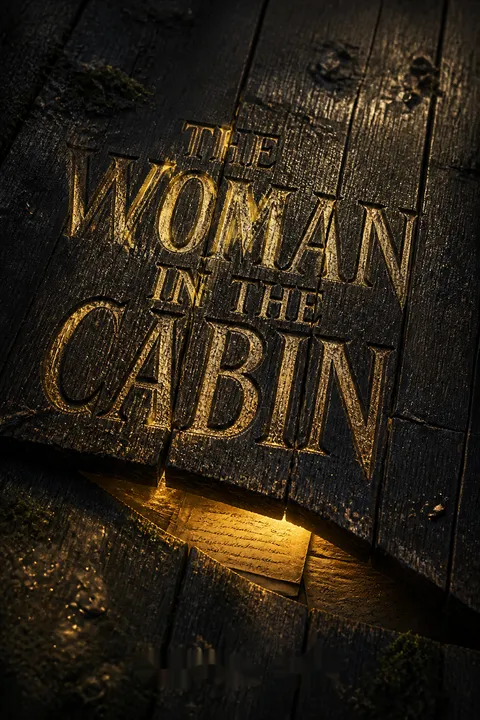
Gemma hides letters under the floorboards, poised to die or worse at the hands of her captor. She writes to her mother, her sister, herself—none will be sent, but all are scattered acts of rebellion and hope. This fleeting prologue's tension is thick, caught between imminent death and small-scale resistance—the fear that stifles her life, the hope that scribbles a trembling legacy for others. Her words are not just for herself: she believes they may be a future survivor's last and lasting compass. The scene colors the entire story ahead, casting a shadow of warning as the letters become the lifeblood for the next woman who might stumble upon her fate.
The Rules of Isolation
Mary performs perfection in a remote Scottish cabin: flawless dinners, spotless home, carefully presented self. Her husband Cal, a dominant presence who shapes every detail, functions as both provider and jailer, offering gifts that are symbols of control rather than affection. The routines and rules are relics of a 1950s marriage guide, enforced with the subtlest or sharpest of glances. Mary's internal landscape is one of fragility and longing, punctuated by the suffocating loneliness of isolation—she yearns for family and freedom, tucks away small desires, but always slips back into the choreography of survival. Here, comfort is an illusion—a fragile mask over anxiety.
Cracks in Domestic Perfection
Mary endures daily chores and longing for escape beyond the loch, walking a tightrope between obedience and suppressed frustration. Cal's mood is changeable: displays of affection are laced with casual cruelty. A present—a bird necklace—highlights her longing for both freedom and connection, mirroring the birds she watches outside but can never emulate. Her imagination pulls her toward the forbidden edge of the land, yet fear and conditioning hold her back. The world outside is mythologized—Cal's warnings of danger keep her caged. Mary's whispered hopes are tucked away, but seeds of dissent begin to sprout in her mind.
Late Visitors and Lines Crossed
Mary's fragile routine shatters when a lost hiker knocks on her door. Paralyzed with terror—fueled by Cal's stories of outside evil—she offers minimal help and water, a gesture both compassionate and risky. The hiker is harmless, but Cal's return electrifies the air. Tension spikes as Mary navigates the minefield of Cal's unpredictable possessiveness and the hiker's naïve trust. After Cal drives the man away, he turns his anger on Mary, accusing her of betrayal and inviting doom. The brief intrusion exposes the world's proximity and ultimate inaccessibility, and Mary's isolation feels harder. Her world closes in a little more.
Hidden Letters, Hidden Truths
Mary discovers letters from Gemma—Cal's former wife—hidden under the floor. Her world reorients: she isn't the first, only the latest. The letters reveal a pattern—a legacy of captivity and broken women, each trading autonomy for survival. Cal admits to Gemma's existence, rationalizing with scripture and denial, digging deeper into his own myth of righteous rule. Mary's connection to the past solidifies her resolve. The letters do not just illuminate history—they map out strategies, signal warnings, and plant the idea that escape—or at least rebellion—is possible if she is clever and ruthless enough.
Mary's Plan of Betrayal
Reading Gemma's last letter—a blueprint and warning—Mary pivots from passive suffering to active strategy. Driven by her growing pregnancy and a sharp sense of her own doom, she begins maneuvering for survival. She subtly sabotages Cal's satisfaction, angling for him to bring in another woman ("Mary Two"), hoping this will divide his attention and create opportunity. The moral cost haunts her even as she moves through the steps: she is, by necessity, sacrificing another to save herself and her unborn child. Within this web, guilt and maternal instinct mingle, fueling resolve and shame.
Enter Amy: A Different Cage
Amy, battered by her own abusive marriage, is lured by Cal's apparent compassion. Her storyline brings a second, parallel exploration of control, trauma, and twisted salvation. Cal's friendliness masks possession—his traditional values find a perfect victim in Amy, who mistakes his isolation for protection. After Amy flees her husband to follow Cal into the wilderness, she quickly finds herself recast in Mary's old role: isolated, manipulated, objectified. Amy's perspective amplifies the cabin's atmosphere of dread—a fresh set of eyes reveals the same subtle weapons of psychological warfare and constriction.
Barn Suffering and Secrets
Cal's manipulation culminates in Amy's imprisonment in the barn cage—the same device that broke Gemma and Mary before her. The barn is both literal and symbolic: the machinery of captivity, a site of forced erasure and rebirth. Amy's ordeal is a cycle of deprivation and coercion, with Cal using starvation, sleep deprivation, and reality distortion to gradually overwrite her past. The two "Marys" reflect and mirror one another, as Mary attempts to offer comfort and guidance even as her own guilt multiplies. This makes the survivor's dilemma explicit: is any escape justified if it requires complicity in someone else's suffering?
Mother, Monster, Matriarch
As pressure mounts, the psychological and generational explanation for Cal's violence comes into focus. His mother—a monstrous influence—emerges as co-conspirator and narrative architect. Her own dogmatic beliefs and lingering cruelty warp Cal's psyche and household rules, perpetuating the cycle of suffering. The biblical citations and "natural order" justifications that structure the cabin's life reveal institutional, generational rot rather than individual madness. At the same time, motherhood becomes both weapon and motive: Mary's growing awareness that her baby is deliberately unwanted by Cal only intensifies her need to escape. Cal and his mother's collusion provides a chilling portrait of how abusers protect and replicate themselves.
Penance and Pregnancy
Mary confronts the hazards of pregnancy under coercion, discovering that her "vitamin" regimens were birth control, confirming that Cal never wanted a child. Physical vulnerability—headaches, swelling, bleeding—becomes another kind of cage. Mary bargains, entreats, and feigns compliance, playing the perfect wife to buy time. Her plans shift between escape attempts and desperate appeals for medical help—she learns to hide, to mask her intentions, to exploit Cal's growing unpredictability. The outside world seems both horrifying and redemptive: every path out is fraught with the possibility of recapture or abrupt, arbitrary violence.
The Descent, and Escape
When her final plan is discovered, Mary is thrust back to the brink—Cal's rage and rape narrowly averted by the chaos of attack and counterattack. In a frantic overnight escape, Mary (now revealed as Lauren) treks through the wild with her baby, facing both natural and human threats. She struggles with exhaustion, hypothermia, injury, and the ordeal of unassisted childbirth in the forest. At every step, the narrative refuses simple catharsis, foregrounding the bodily and emotional toll. Surviving is possible, but every gain is costly.
The End of Obedience
The story's climax subverts the power dynamic: Amy and Lauren, each marked by trauma but refusing surrender, turn the tools of captivity against Cal. He is forced into the very cage he used on his victims, a reversal that feels both redemptive and grim. Amy's own history of violence is revealed—she killed her first abuser, her capacity for ruthlessness paired with a desperate morality. Together, the women and Lauren's child step into fragile freedom, bonded by scars and the faint flicker of mutual understanding.
Righteous Violence, Fragile Freedom
The women escape, taking with them both trauma and hope. Authorities are contacted. Cal survives, destined for imprisonment; his mother, confronted, dies by suicide, adding another generation of shame and unresolved violence to the record. The emotional reality of survival is raw. Amy and Lauren are held by the world's skepticism and bureaucracy; society is both a lifeline and another gauntlet. Therapy, testimony, and the glare of public attention replace the physical cage with an existential one, as the women (and Lauren's daughter, Robin) attempt to fashion normality from what remains.
Fragments of a Fractured Mind
Central to the novel is the question of reliability: Mary/Lauren's sense of self, her grasp on reality, and the systematic denial of her narrative by figures of authority (Cal's mother, posing as "Dr Stewart"). Drugged and institutionalized, Lauren is dubbed delusional, her testimonies reframed as evidence of mental illness. The structures of bureaucracy and medicine—echoing her captors' rhetoric—further disempower and confuse her, and the reader is challenged to question the boundary between "madness" and survival. The true horror here is that institutions replicate the logic of the abuser: control, denial, and forced compliance.
The True Cost of Escape
After the police intervention, the truth is pieced together—but not without cost. Amy faces the consequences of killing her husband, but is recognized as both victim and survivor. Lauren is reunited with her parents and attempts to rebuild a life for herself and her child. The book's conclusion holds no neat restoration—trauma continues; healing is neither swift nor assured. The freedom the women achieve is ambiguous, always tinged with memory, pain, and guilt: the price of agency in a world primed to disbelieve and contain women's suffering.
From Captor to Captive
Cal, now locked up and awaiting a life sentence, faces a reversal of fortune. The control he wielded has isolated and destroyed not just himself but his co-conspirator mother. Family legacy is a curse as much as motivation—his mother lays blame on him, then herself. In this world, evil replicates and cannibalizes itself. The former arbiters of morality and order are reduced to accusations and mutual disappointment. Meanwhile, the women who survived them must bear the aftermath, inheritors of wounds as well as of freedom.
The Shifting Nature of Reality
In the last movement, Lauren tentatively reclaims her name, her agency, and her child. Her survival is collective: she is rebuilt by her baby, by Amy's friendship, by her parents' embrace. The book closes in the everyday—shared coffee, car seats installed, mundane plans for baby-proofing—as the ultimate assertion of life after horror. Even as trauma lingers, the book resists darkness-as-destiny; the future, fragile and unfinished, is an act of faith.
Analysis
The Woman in the Cabin is a deeply unsettling exploration of abuse, gaslighting, and the machinery of patriarchy—both personal and institutional—rendered through fiercely intimate and shifting perspectives. It refuses the cheap thrills of straightforward "twisty" storytelling, instead cultivating a claustrophobic reality where women's suffering and agency are perpetually in doubt, their voices weaponized against them by both loved ones and "helpers." By layering overlapping cycles of abduction, indoctrination, generational trauma, and bureaucratic denial, it implicates not just Cal or his monstrous mother, but the systems and myths that sustain them. At its heart, the novel interrogates the cost and limits of survival: Lauren's and Amy's acts of rebellion are morally complex—no one emerges untainted. The transformative arc is not liberation, but the slow, painful reconstruction of identity, trust, and memory, embodied in the fragile hope of Robin's survival and the tentative, necessary alliances between women. The book asks: What is reality, and who has the authority to define it? How do you escape when the world is primed not to believe you? The answer—never facile—is that escape is always partial, bought with guilt and wounds, yet the act of naming, remembering, and refusing to be defined by another is itself a form of radical authorship.
Review Summary
The Woman in the Cabin receives mixed reviews, averaging 3.97 stars. Readers praise its isolated Scottish Highlands setting, tense atmosphere, and fast-paced first half. However, many criticize the repetitive middle sections, predictable plot, and frustrating protagonist whose slow decision-making tests patience. Some found the ending rushed with underdeveloped twists, while others were thoroughly gripped throughout. Trigger warnings for physical and psychological abuse are frequently noted. Comparisons to similar captivity thrillers suggest the book lacks originality, though fans of domestic suspense will likely find it an engaging, if imperfect, read.
Characters
Mary / Lauren
Lauren, first known as Mary, is both victim and strategist, her psyche splintered by years of captivity. Conditioned by Cal's routines, she learns to weaponize her own compliance, subtly manipulating her environment to survive. The discovery of Gemma's letters marks a turning point—Lauren recognizes her suffering is a lineage, not an exception. Her guilt over "sacrificing" another (Amy/Mary Two) is existential: her moral compromises are the cost of freedom. She is deeply marked by doubt, oscillating between resolve and self-loathing, haunted by the possibility her sanity has been overwritten. Escaping with her child Robin, she reclaims her name and confronts not just an abuser, but the systems and institutions that minimize and pathologize women's reality. Her journey is from tool to agent, from suppressed self to emerging mother.
Cal
Cal is a master of control—charming, physically powerful, and ideologically rigid. His worldview, inherited from a monstrous mother, blends biblical literalism and misogyny; he sees himself as righteous protector, even as he inflicts terror and violence. Cal's needs for affirmation and obedience drive him to collect, mold, and discard women, each "Mary" a canvas on which he paints his vision of order. His psychology is a toxic blend of insecurity (unworthy of love), entitlement (gendered dominance), and cultivated paranoia (fear of abandonment). He both loves and despises his captives—his power is always haunted by their imagined betrayal. Finally, Cal becomes what he fears and loathes: caged, powerless, subject to the violence of others.
Amy / Mary Two
Amy brings a new energy to the narrative: she has survived her own abusive marriage, and arrives at the cabin already bearing trauma and a ruthless necessity. Unlike Mary, Amy's survival is more confrontational; ultimately, she kills her own husband and participates in Cal's downfall. She is both foil and twin to Lauren—where one is conditioned to compliance, the other seethes with suppressed rage. Amy's grasp on morality is situational, her guilt complex complicated by the moral calculus of "kill or be killed." She serves as the disruptive force that helps complete the cycle of reversal, becoming not just victim, but agent of justice.
Gemma / Mary Zero
Gemma is a spectral presence—her hidden letters are both a memoir and a survival manual. Functioning as both warning and inspiration, she helps Lauren realize the cabin is not a unique purgatory, but an ongoing project of abuse. Gemma's fate (disappearance and, we learn, murder by Cal's mother) hangs over the entire novel; she represents both solidarity and warning, a ghostly sister to the living. Her legacy is survival at any cost, a testament to endurance that is at once empowering and devastating.
Cal's Mother / Dr Stewart
Cal's mother is the architect of his pathology—an iron-willed, controlling woman whose own traumas and dogmas are visited on her son (and his wives). By masquerading as Dr Stewart, she weaponizes gaslighting, eroding Lauren's grip on reality with layers of institutional authority. Her duality—mother and implacable professional—makes her the most insidious character: she rationalizes horror as duty and family as fate. Her ultimate suicide is not an act of remorse, but an escape from accountability.
Robin
Robin, Lauren's infant daughter, is both plot device and emotional anchor. She embodies hope, justifying moral compromise and providing the narrative's through-line of resistance and protection. Robin's vulnerability makes the stakes horrifyingly immediate; her mere existence forces Lauren into action, and her safety transforms trauma into future-facing love.
Lauren's Parents
Their long search and steadfast hope (manifesting in a viral campaign and public grief) embody both the cost of the novel's events and the reality of trauma's reach. Their reunion with Lauren marks a tentative restoration, but also a reminder that survival is a communal process of repair.
The Hiker
A brief but crucial victim—his arrival briefly punctures isolation, and his murder by Cal (and cover-up by Cal's mother) signals the totalizing logic of control: no loose ends, no witnesses, no help permitted. In death, he stands for both the world's indifference and the cost of contact.
Officer Barns
Officer Barns, overseeing the investigation and aftermath, is a rare institutional ally—kind, methodical, and representative of a system that, while slow, is ultimately capable of intervention and listening.
Supporting Women
A sequence of "Marys," each representing a different facet of resistance, compliance, survival, or collapse. Their voices echo in the narrative's letters, memories, and warnings, marking the ongoing crisis of domestic captivity and cultural gaslighting.
Plot Devices
The Cage and the Barn
The physical presence of the cage, and its later reversal (with Cal caged), is both an actual device and a symbol of psychological domination. The barn is a flexible space—prison, slaughterhouse, site of transformation—just as the rules of "Good Wifehood" were. It's where Mary/Lauren and Amy confront the literal boundaries of their agency, where trust and betrayal play out in cycles.
Hidden Letters and Floorboards
The letters serve as both foreshadowing and manual, granting Lauren the language to understand her prison and the possibility of escape. They connect victim to victim and suggest a community that transcends time and silence. Reading a letter is both past and present—a living "chorus" under the protagonist's every act.
Pregnancy and Birth
The pregnancy is plot driver, metaphor, and jeopardy rolled together. The threat of loss (miscarriage, unwanted birth, intentional harm by Cal) is ever-present. Birth outside the cabin marks the most radical break with Cal's power—the emergence of new life in the wilderness, without anyone's permission or supervision.
Unreliable Reality / Gaslighting
Both Cal and his mother use "reality distortion" as a weapon, culminating in Mary's/ Lauren's institutionalization and drugging. Here, the hospital is not sanctuary but an extension of Cal's power, doubling the structure of the cabin: both are ruled by figures presenting as caregivers but who police and erase the victim's voice. This narrative instability extends to the reader—truth becomes contingent, denied at the level of memory and proof.
Role Reversal and Irony
The novel's final move—the caging and condemnation of Cal, the suicide of his mother—employs irony as both satisfaction and warning. Power structures are revealed as arbitrary; with one shift of agency, captor is captive, gaslighter is silenced, and survivors forge new alliances. These shifts, however, are never total or unambiguously hopeful; the lines between victim, savior, and avenger are always blurred.
Perspective Shifting
Key chapters switch focalization from Mary/Lauren to Amy or Cal, allowing intimacy with different characters' wounds and strategies. This device destabilizes the narrative, immersing the reader in the confusion and multiplicity of experience, and revealing the recursive nature of abuse.
Download PDF
Download EPUB
.epub digital book format is ideal for reading ebooks on phones, tablets, and e-readers.








































