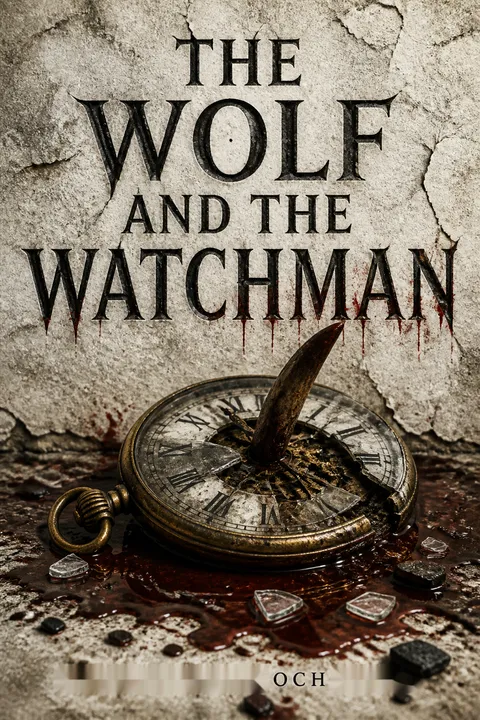

Plot Summary
Body in the Larder
Amid late 18th-century poverty and chaos, war veteran Mickel Cardell is roused from a drunken fog to investigate a floating body pulled from a foul lake. The parish's filth and uncertainty mirror Cardell's own fractured psyche; missing an arm and haunted by trauma, he becomes entangled in the city's unsparing violence right from the moment he wades through mire to retrieve what at first seems butcher's meat, but reveals itself as a young, dismembered man. This act, set before dawn, awakens not only a dormant sense of duty in Cardell but initiates the mystery's relentless unraveling, as Stockholm itself becomes both a crime scene and a purgatory for lost, broken souls.
The Ghost and the Watchman
Cardell's desperate, one-handed existence is joined by the presence of Cecil Winge, the city's consumptive, analytical legal mind. Summoned by the police chief, Winge recruits Cardell's war-scarred insights for a case that is more monstrous than anything in the courts. The duo complement and chafe against one another—reason and rage, intellect and muscle. Both outcasts, Winge for his failing body and Cardell for his violence, connect over the mutilated victim, whom they christen Karl Johan. Thus, a partnership of necessity is born, steeped in the undercurrents of loss, pain, and ambition, as they probe Stockholm's darkest layers.
An Unnamed Horror
In the charnel house of Maria Church, Cardell and Winge dissect the corpse's story: a young man methodically amputated, limb by limb, blinded, robbed of his tongue, held alive for months. Each wound heals before another is inflicted, evidence of premeditated sadism and resource. The abject suffering forces Cardell and Winge to interrogate not just the facts, but what manner of society—teetering between reform and squalor—breeds such horrors. Their grim determination takes root: they'll pursue the perpetrator relentlessly, even as the city's institutions turn away, overwhelmed and indifferent.
Reason Versus Emotion
As Winge's health crumbles, consumption claiming his body, he retreats into intellect—disassembling clocks, clinging to logic in a chaotic world. Meanwhile, his personal life unravels; he learns his estranged wife is pregnant, pushing him deeper into regret over his calculated, reason-driven attempts to control fate. The tension between intellect and feeling is mirrored in his investigative approach, questioning whether the pursuit of justice can ever be divorced from the messy truths of the human heart. His stance shifts from stoic rationalist to haunted man desperate for meaning.
Beneath Stockholm's Surface
As Winge navigates the bureaucratic teeth of Stockholm's new police order, he and Cardell uncover a city shot through with paranoia and corruption. The shifting sand of post-Gustavian power—watchmen hunting the weak, nobles chasing pleasure, political censors stifling dissent—provides both context and camouflage for the mutilated man's disappearance. Every institution seems poised to hide the city's wounds, not heal them. The murder exposes not just individual monstrosity, but a world where violence begets violence, and suffering is currency.
Wounds of War
Cardell, the watchman missing his left arm, relives the violence of Sweden's failed war with Russia, its waste and cruelty. His bond with a fellow soldier who drowned—Johan Hjelm—haunts his dreams and informs his compulsion to "redeem" lost souls. Through his story, personal and national wounds blur. Cardell's readiness to plunge into filth, his attachment to those abandoned by society, becomes clearer: he is atoning, searching for meaning in violence, and latching onto the case of Karl Johan as a path to his own salvation.
Watchmen and Wolves
Cardell and Winge interrogate Stockholm's corrupt watchmen—Winge pries administrative secrets from agency secretary Blom, while Cardell uncovers the brutal indifference and veiled criminality of his cohort. Both men recognize the city teems with "wolves," those who prey on the vulnerable while professing order. Violent retribution at the Perdition tavern and sharp exchanges with the police hierarchy reveal that justice, if it comes, won't be from above. The wolf becomes a motif: man as predator of man, Stockholm's social contract cracked.
The Serial Mutilations
Through textile analysis, witness interviews, and following the faintest traces, Winge and Cardell discover that Karl Johan's mutilation began months earlier, at the hands of someone with means and impunity. The black, obscene cloth, the traces of privilege amid the body's ruin, point not to a random killer but to a world where excess breeds cruelty—rumors swirl of secret societies, of the city's richest debauching the defenseless for pleasure. Cardell's rage hardens, Winge's determination sharpens: they will expose the predator, no matter the cost.
An Orphan's Descent
In a narrative twist, the orphaned, clever, but desperate Kristofer Blix recounts, in plaintive letters to his late sister, his economic and personal downfall in Stockholm. Swindled, betrayed, driven into debt slavery, Blix's arc is one of hope eroded by the city's predatory systems. Sold to a shadowy creditor, he is ultimately consigned to Birdsong, where he plays a fateful role in Karl Johan's torture—forced to become the surgeon of another's monstrous will. His slow descent gives a human face to brutality's machinery.
The Birdsong Estate
On an isolated estate, Blix unwittingly becomes the instrument of horror: commanded by the estate's master, he amputates and tends to Karl Johan, compelled by threat of violence and his own terror. The estate becomes a hellscape, a place where a single noble's loneliness, privilege, and hatred create a private theater of suffering. Still, driven by a vestige of compassion, Blix smuggles a gold ring—a clue to the victim's true identity—into Karl Johan's body, preserving hope for retribution even as he flees, broken and guilt-ridden.
The Wolf Revealed
Through dogged rational deduction, Winge and Cardell trace the trajectory from the fabricated noble ring, through secret informer letters, to the Balk estate—Birdsong. There, the predator's identity emerges: Johannes Balk, descendant of nobility, warped by childhood neglect, humiliation, and monstrous inheritance. Balk's calculated, emotionless narration to Winge makes plain: his crime is both personal vengeance and social indictment. The story reveals a monster both created by and rebelling against the old order, seeking meaning in obliterating innocence.
Debt, Deceit, Despair
Meanwhile, Blix's letters document the descent of the vulnerable in 1793 Stockholm: swindle at the hands of street-level predators; victimization in houses of correction; the city as devourer of the innocent. Debt, destitution, and lack of compassion at every echelon of society show how easily individuals are forced to participate in cruelty. The suffering of Karl Johan thus echoes countless smaller tragedies, each a product of structural violence. Through Blix, the reader inhabits both the banality and horror of urban neglect.
The House of Correction
Anna Stina, a poor fruit seller, is swept up in Stockholm's pitiless justice system: accused of whoring, sent to the house of correction—the Scar—by vindictive clergy and watchmen. Inside, cruelty and degradation are the order of the day; overseers mete out sadistic punishment, and the cycle of abuse is relentless. Amid spinning wheels and starvation, Anna Stina's will to survive births its own flicker of rebellion and ingenuity, echoing the lives lost or ruined in Stockholm's shadows.
Escape Through Ashes
Using stories gleaned from broken women, Anna Stina discovers a forbidden route of escape—an old ash dump and tunnel, overlooked for years. Her flight is a gauntlet lined with the bones of others who tried and failed. In a harrowing act of self-preservation, she wounds her own flesh and memory, burning away the past to survive. She emerges not as a reclaimed victim, but as someone forever changed, shorn of innocence but not hope, and pregnant, clinging to the possibility of a new life.
The Secrets of the Scar
Anna Stina, now living under an assumed name, struggles with trauma and the constant threat of exposure, yet finds shelter with the kindly Flowerman. Her story becomes one of cautious rebirth amidst the city's dangers. The novel draws a poignant parallel: Stockholm spawns both monsters and survivors, their fates intertwined. Anna Stina's decision to keep her child, despite its origins in violence, is both act of resistance and assertion of agency, offering a counterpoint to the city's endless cycles of cruelty.
Flames of Vengeance
The societal machinery of revenge, embodied by Cardell's resolve and the incited widows cheated by Ullholm (corrupt incoming police chief), culminates in a scene of righteous, if extralegal, reckoning. The moral universe of 1793 Stockholm is such that true justice, when it comes, is often from the hands of the desperate or aggrieved, not the state. The boundary between noble vengeance and base violence blurs, as personal pain is transmuted into collective action.
Hunt for Identity
Cardell's relentless pursuit leads from the city's gutters to aristocratic theaters, as he chases the origin of Karl Johan's ring and the truth of his torment. Encounters with forgers, informers, and the dissolute elite finally trace the line from victim to culprit. The city's masks are slowly torn away by determination and luck, until only the central horror remains, naked and undeniable.
A Ring of Lies
In a storm of revelations, the investigators decipher the code, connect the false noble ring to the actual fate of the mutilated man, revealing how the appearance of respectability often hides the darkest abuses. Private trauma—Balk's, Blix's, Anna Stina's—mirrors public rot: society's inability to protect its weakest, its readiness to disown justice for expedience. Winge and Cardell's journey is shown as a battle for empathy and meaning.
Masks and Monsters Unveiled
In a climactic confrontation, Balk narrates his own creation—how neglect, humiliation, and the warped legacies of privilege and pain forged a (self-identified) monster. The mutilation of Karl Johan is explained as both personal revenge and philosophical statement: man is wolf to man, and Stockholm, like Paris, is on the cusp of revolution. Only through the "best of all wolves" can a new order emerge, though even this is tainted by pain.
The Monster's Confession
Winge, at death's door and aware of the monster's self-destructive intent, manipulates events such that Balk takes the place of a condemned man at execution. Justice and mercy are tangled—Winge's final act is both a lie and a gift, robbing Balk of his intended martyrdom. Cardell, Anna Stina, and even the city, are left wounded but changed: meaning, perhaps, is not found in victory, but in flawed, flickering acts of connection against a world built on sorrow.
Analysis
The Wolf and the Watchman is a ferocious indictment and lament for the moral cost of civilization's progress. Set in 1793 Stockholm—a city rotted by poverty, bureaucracy, and the violence of privilege—it dares to imagine the human soul's resilience amidst systemic cruelty. Its twin protagonists, Cardell and Winge, are studies in pain and perseverance; together they stumble, argue, and suffer toward a justice that remains partial, compromised, and—yet—deeply necessary. The novel's use of shifting perspectives, coded letters, and psychoanalytic backstories complicate the reader's experience of sympathy and judgment, blurring lines between victim and perpetrator. Its central crime—methodical mutilation as spectacle—becomes both plot and metaphor: a demonstration of how society's most vulnerable are destroyed when compassion runs dry. Yet, even among the wolves, flickers of decency endure: Anna Stina's survival, Blix's dying kindness, Cardell's blunt compassion, Winge's final sacrifice. The lesson is stark: evil is a product, not an aberration, and justice—if it exists—must be constructed, painfully and imperfectly, from acts of courage and flawed love. In its harrowing sweep, the novel resonates as both a masterpiece of suspense and a meditation on what it means to be human in an inhuman age.
Review Summary
The Wolf and the Watchman is a dark, atmospheric historical thriller set in 1793 Stockholm, following a mismatched pair investigating a grotesquely mutilated body. Reviewers consistently praise its vivid, immersive depiction of a filthy, corrupt, poverty-stricken city, and the compelling dynamic between dying lawyer Cecil Winge and one-armed watchman Mickel Cardell. Most warn of extremely graphic content not suited for sensitive readers. While some found the middle sections involving Kristofer Blix and Anna-Stina Knapp overly long, the majority found the novel gripping, atmospheric, and powerfully written.
Characters
Mickel Cardell
Cardell, an ex-soldier missing his left arm, is Stockholm's battered emblem: a survivor of war's pointless sacrifice, estranged from society, battling trauma and physical pain. His role as watchman is more nominal than real; he prefers brawling and drinking to enforcing a corrupt law. Yet, haunted by guilt over a drowned friend and drawn to suffering, he becomes the blunt force behind the investigation, plunging into muck and danger where others turn away. Cardell's journey is one from brute reaction to hard-won empathy, as he seeks—sometimes violently, sometimes tenderly—to restore meaning to his maimed existence through justice for the city's most forsaken.
Cecil Winge
Winge, frail with consumption, is driven by a forensic mind and unwavering sense of justice. Plagued by illness, social isolation, and regrets—most notably over his attempt to orchestrate his wife's happiness through pure reason—he brings a cold, analytical perspective to the investigation. Yet beneath his logic burns an unacknowledged longing for connection and emotional redemption. Winge's psychological arc is a slow recognition of the limits of reason and the destructive power of calculating goodness; his final choices blend rationality with a deep, aching humanity, at cost to himself.
Johannes Balk
Balk, the murderer, arises from Stockholm's dying nobility; shaped by an abusive father and a mute, helpless mother, he grows warped, isolated, and capable of unimaginable cruelty. His atrocity toward Karl Johan is both a reenactment of inherited pain and a philosophical statement—he seeks to force society to confront its own depravity through spectacle. Yet, Balk is not devoid of feeling; his bond with his victim, Daniel Devall, contains yearning and, ultimately, shattered love. His final confession is both chilling and tragic, implicating not just himself but the city, the class system, and the very concept of justice.
Kristofer Blix
Blix, a naïve, intelligent young man seeking a future in medicine, is ground down by debt, exploitation, and Stockholm's relentless indifference. His narrative—letters to a dead sister—reveal the gradual erosion of hope, ending with entrapment as the reluctant "surgeon" who amputates Karl Johan at Balk's orders. His humanity flickers in his attempt to help his victim, his descent a microcosm of how the city manufactures both victims and perpetrators. In the end, Blix's final act (saving Anna Stina through kindness and self-sacrifice) redeems, in part, what was broken.
Anna Stina Knapp
Anna Stina is thrust, by poverty and gender, into Stockholm's punitive machinery—first exploited, then victimized by the justice system, and finally transformed by her own will. Her time in the house of correction (the Scar) is a tour-de-force of institutionalized cruelty; yet, through ingenuity and grim determination, she forges her escape, ultimately keeping her child and securing a fragile new life. Anna Stina symbolizes the capacity to survive and transform trauma, standing in contrast to the city's spiral of violence.
Isak Reinhold Blom
Blom works for the police as secretary; sly, self-serving, driven by status anxiety, he is both informer and frightened observer—sympathizing, but rarely acting courageously. His psycho-social role illustrates how Stockholm's machinery runs on small acts of self-preservation and indifference. Blom's occasional acts of assistance, tainted by personal gain, serve as a mirror to the reader—would we have done more?
Magnus Ullholm
Ullholm, embezzler and eventual police chief, is the unrepentant face of elite abuse—his disregard for the city's widows and his escape from justice catalyze collective rage. He functions as a symbol of how the city protects rather than punishes its predators, and serves as a foil for Winge and Cardell's pursuit of true justice.
Madame Sachs
As the manager of Keyser House, she arranges the spectacle of human suffering as sexual entertainment for the powerful. Unflinching and cynical, she rationalizes her part as a provider of pleasure and charity, a monstrous reflection of Stockholm's compartmentalized morality. She personifies the system's ability to turn human pain into worthless currency.
Pastor Lysander and Petter Pettersson
Lysander, the priest who prosecutes Anna Stina, and Pettersson, the sadistic workhouse custodian, are avatars of the city's everyday evil: they enforce "order" through humiliation and torture, justifying their actions with piety or legality. Both are ordinary men made monstrous by a corrupt society, and they leave lasting scars—visible and hidden—on their victims.
Daniel Devall ("Karl Johan")
Devall is swept up from hope and ambition into Stockholm's web of cruelty. Though mute for most of the narrative, his suffering and lingering humanity haunt every investigator and participant. In death, he is transformed from object to subject, his lost name reclaimed and his pain reframed as indictment of the structures that created his killer.
Plot Devices
Twin Protagonists: Reason and Rage United
By uniting Winge and Cardell—intellect and intuition, reasoned investigation and raw violence—the novel explores the limitations and possibilities of moral action in a broken society. Their interplay serves as the book's core narrative engine, foreshadowing both collaboration and tragic misunderstanding.
Multi-layered Narratives & Epistolary Devices
The story's structure alternates investigative action with Blix's plaintive letters, Anna Stina's prison recollections, and Balk's self-justification. These nested accounts slowly reveal the central crime's history, building suspense and complicating notions of guilt and victimhood.
Gothic and Historical Setting as Character
The city—fetid, cold, corrupt—is both backdrop and active shaper of events. Plagues, power shifts, and class divides structure the narrative's possibilities, serving as constant reminders that individual fates are inseparable from larger, uncaring systems.
Monstrousness as Inheritance and Infection
The cyclic violence—pain passing from generation to generation, class to class—is revealed through the Balk lineage and Stockholm's institutions. The mutilation of Karl Johan is both literal and symbolic: violence recapitulated on the bodies of the helpless.
Ring and False Noble Identity
The fabricated noble ring is both red herring and linchpin: its presence in the corpse signifies ambition and deception, but also eventual hope, as it allows the investigators to reconstruct the victim's true history. Its recurring motif—counterfeiting identity to survive—enriches Blix, Anna Stina, and Stockholm itself.
Justice Twisted: Law and Corruption Intertwined
The structure of justice—courts, executions, arrests—is shown as both arbitrary and necessary. Winge's manipulation of Balk's fate, the collective vengeance on Ullholm, and Anna Stina's escape all subvert traditional expectations of resolution, leaving the reader with ambiguous victory.
Bellman Noir Trilogy Series


Download PDF
Download EPUB
.epub digital book format is ideal for reading ebooks on phones, tablets, and e-readers.








































