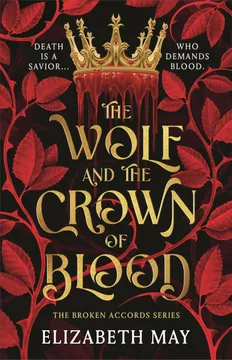

Plot Summary
Ashes and Blood Bargains
In the aftermath of a devastating war between gods and humans, Princess Amalthea Devaliant forges a blood pact with Alexios, the God of Storms, to end the carnage. Their bargain, sealed in sacrifice, births the Shroud—a magical barrier separating realms and demanding regular blood tithes from the Devaliant line. Centuries later, the peace is brittle, the cost of survival etched into every Devaliant's flesh. The gods, immortal and unforgetting, carry the scars of loss, while mortals slip into complacency, forgetting that peace is always paid for in blood.
Death's Beautiful Face
Three hundred years after the Accord, Bryony Devaliant, youngest princess and ritual sacrifice, stumbles upon a desperate oathbreaker and the Wolf—Evander, the God of Light and Alexios' enforcer. In a tense, bloody confrontation, Bryony negotiates a dark bargain with the Wolf: if he is ever sent to kill her, she demands a death of dignity and eye contact, not butchery. This twisted pact forges a dangerous connection between two beings shaped by violence and ritual, each haunted by the inevitability of their own deaths.
The Mark of Exile
Bryony's world shatters when Alexios revokes her Claim, marking her as an oathbreaker and condemning her to death. Once the linchpin of the Shroud, her blood now unwanted, she is cast out by the Oracles and her own family. Desperate to reclaim her worth, Bryony attempts a forbidden tithe, but the gods' judgment is final. Her identity, once defined by sacrifice, is now a death sentence. The Wolf's warning echoes in her mind—never give him a reason to hunt her.
The Wolf's Hunt
Evander, the Wolf, hunts fleshtraders trafficking in divine parts, haunted by memories of his brother's mutilation and the war's atrocities. His violence is artful, his loyalty to Alexios absolute—until he is ordered to kill Bryony for her growing influence among mortals. Torn between duty and the memory of their bargain, Evander is forced to confront the monstrous role he plays in a world that demands blood for peace.
Gods and Monsters
The gods' court is a den of predators, each immortal scarred by loss and betrayal. Alexios, burdened by the voices of his Claimed and the weight of the Shroud, manipulates his enforcers and mortals alike. Bryony, stripped of protection, is forced into a political marriage and public humiliation, her every move watched by a city on the brink. The Wolf circles, both executioner and reluctant savior, as the lines between monster and martyr blur.
The City That Bleeds
Hellevig, the city built on sacrifice, seethes with unrest. Bryony's failed wedding becomes a spectacle of defiance as she reveals her mark of exile, shattering the illusion of Devaliant invincibility. Her uncle, desperate to appease the gods, betrays her, leaving her to die on the Duehavn Ridge. Alone and bleeding, Bryony's memories fracture—her life a litany of deaths, each one a lesson in the cruelty of gods and men.
The Wedding and the Wolf
The Wolf arrives to claim Bryony's life, but their encounter becomes a brutal dance of power, pain, and desire. Instead of a swift execution, Evander offers her a choice: to carve her own death, to reclaim agency in a world that has always used her body as currency. Their violent intimacy blurs the line between predator and prey, forging a bond of mutual ruin and fascination.
A Deal with Death
Bryony survives her uncle's betrayal thanks to the intervention of Amara, a demigoddess with her own scars. Spirited across the Shroud into Scillari, Bryony finds herself in the Wolf's lair, forced to negotiate her continued existence. Evander, torn between his orders and his growing obsession, offers her a stay of execution—so long as she remains interesting. Their uneasy alliance becomes a crucible for transformation, each testing the other's limits.
Betrayal in the Blood
The Devaliant family fractures under the weight of ritual and political machinations. Theodora, Bryony's sister, fights to protect her, but is powerless against the gods' will and their uncle's treachery. The Wolf's own family is no less broken—his brother Bastien, the Blade, is a living reminder of the war's cost. Betrayal is a currency traded by mortals and immortals alike, each act of violence echoing through generations.
The Price of Power
In the Wolf's tower, Bryony is remade—not as a sacrifice, but as a weapon. Under Amara's brutal tutelage and Evander's watchful gaze, she learns to fight, to channel her rage, to survive. Their relationship deepens into a dark romance, each encounter a negotiation of pain and pleasure, dominance and surrender. The boundaries between love and hate, captor and captive, blur as they become each other's undoing.
Resurrection and Ruin
Bryony's journey is a cycle of deaths—on the altar, in the maze, in the arena. Each resurrection strips away another layer of innocence, forging her into something new. The Wolf, too, is transformed by love and loss, his monstrous nature tempered by vulnerability. Together, they confront the truth of their histories—the atrocities committed by their ancestors, the scars left by war, and the possibility of redemption through shared suffering.
The Garden of Thorns
The Wolf's garden, once wild and untended, becomes a symbol of their relationship—beautiful, dangerous, and in need of care. Bryony learns to tend the roses, to find gentleness in herself and in Evander. Their intimacy deepens, each touch a negotiation of trust and power. But secrets linger—behind locked doors, in the scars on their bodies, in the memories they cannot share. The past is a garden of thorns, and every bloom is watered with blood.
Lessons in Survival
Alexios, ever the manipulator, sets Bryony a series of impossible trials—mazes of pain, arenas of violence, bargains with death. Each test is a crucible, forcing her to confront her own limits and the depths of her devotion to Evander. The gods watch, hungry for spectacle, as Bryony bleeds and fights and refuses to break. Survival is not just endurance, but the willingness to transform pain into power.
The Maze of Sacrifice
Trapped in Alexios' living labyrinth, Bryony faces her greatest trial yet. The maze is a physical and psychological torment, each step a negotiation with pain and memory. She learns to surrender, to yield without giving up, to find strength in vulnerability. Her survival is an act of defiance—a refusal to be unmade by the gods' cruelty. At the center of the maze, she claims the key to her own freedom, but the cost is written in blood.
The Arena of Kings
In the Colosseum Eternal, Bryony faces the ultimate test—combat against demis and, finally, Alexios himself. The arena is a crucible of violence, each blow a reminder of the gods' indifference to mortal suffering. But Bryony refuses to kneel. She fights not just for herself, but for the right to stand beside Evander as his equal. Her victory is hard-won, her body broken and remade, her worth proven in the eyes of gods and mortals alike.
The Shroud Unraveling
The Shroud, the magical barrier separating realms, begins to fail as old wounds fester and new betrayals surface. The gods are forced to confront the consequences of their bargains, the fragility of their power, and the inevitability of change. Bryony and Evander, now soulbonded, offer themselves as anchors—willing to bear the weight of the world for each other. Their love becomes both a weapon and a shield, a force capable of healing or destroying.
The Claim of the Chosen
In a world where love is a liability, Bryony and Evander's bond is an act of defiance. Their soulbond, forged in pain and passion, challenges the gods' authority and the rules of the realms. Together, they claim each other—body, soul, and power—refusing to be defined by the violence of their histories. Their union is both a promise and a threat: that even in a world built on blood, love can be a force of unmaking and rebirth.
Wings of Rebirth
Bryony, reborn as a demigoddess with wings of white and gold, stands beside Evander as his equal and queen. The realms, once divided by war and sacrifice, are offered a new hope—a future shaped by those who have survived the worst and chosen to love anyway. The garden blooms again, the Shroud is mended, and the cycle of violence is broken—not by the gods' will, but by the courage of those who dared to fall and rise together.
Analysis
A modern myth of trauma, power, and loveThe Wolf and the Crown of Blood is a dark fantasy that interrogates the cost of survival in a world built on violence and sacrifice. At its core, the novel is a meditation on trauma—personal, familial, and societal—and the ways in which pain can both destroy and transform. The story refuses easy binaries: gods are as broken as mortals, love is as dangerous as hate, and survival is never without cost. Through Bryony and Evander's journey, the book explores the possibility of agency in a world that seeks to strip it away, the redemptive power of love forged in pain, and the necessity of confronting the past to build a future. The narrative's unflinching portrayal of violence, consent, and psychological complexity challenges readers to question the stories we tell about power, worth, and what it means to be chosen. Ultimately, the novel suggests that true strength lies not in invulnerability, but in the willingness to bleed, to break, and to rise again—together.
Review Summary
Reviews for The Wolf and the Crown of Blood are polarizing, averaging 4.11/5. Fans praise its explosive tension, dark Beauty and the Beast-inspired world-building, and intensely spicy romance between a cursed princess and an immortal assassin. Critics cite repetitive pacing, underdeveloped characters, heavy reliance on familiar tropes, and uncomfortable parallels to ACOTAR. The virgin FMC/experienced MMC dynamic drew frequent criticism. Most agree the world-building is strong, the last quarter compelling, and that readers who enjoy dark romantasy with abundant spice will likely find it satisfying.
Characters
Bryony Devaliant
Bryony is the youngest princess of the Devaliant line, raised from childhood to be a ritual sacrifice anchoring the Shroud. Her life is a cycle of deaths—on the altar, in the arena, at the hands of family and gods. Marked by trauma, self-harm, and a desperate need for agency, she is both victim and survivor. Her relationship with Evander, the Wolf, is a crucible of pain and desire, each encounter a negotiation of power and vulnerability. Over the course of the story, Bryony transforms from a passive vessel into a weapon, reclaiming her body and destiny. Her journey is one of endurance, rage, and ultimately, love—a love that is as dangerous as it is redemptive, challenging the very foundations of the world.
Evander, the Wolf
Evander, known as the Wolf, is the God of Light and Alexios' enforcer—a killer forged in the fires of war and loss. Haunted by the mutilation of his brother and the destruction of his homeland, he is both executioner and artist, his violence a form of worship. His relationship with Bryony is a dark mirror—each sees in the other a reflection of their own brokenness. Evander's journey is one of monstrous self-loathing and reluctant vulnerability, as love for Bryony forces him to confront the possibility of redemption. His struggle is not just against external enemies, but against the beast within—a beast that both hungers for and fears the intimacy of being truly known.
Alexios, God of Storms
Alexios is the Eternal of Asteria, the architect of the Shroud, and the ruler who brokered peace through blood. His power is immense, but so is his isolation—he is haunted by the voices of his Claimed and the weight of immortal memory. Manipulative, ruthless, and deeply wounded, Alexios is both savior and tormentor, his actions driven by a desperate need to maintain order at any cost. His relationship with Bryony is adversarial, a test of wills that exposes the limits of divine power and the cost of leadership. Beneath his cruelty lies a profound loneliness, a longing for connection that he cannot allow himself to feel.
Bastien, the Blade
Bastien is Evander's brother, the God of Shadows, and the living embodiment of the war's horrors. Mutilated by humans, his wings replaced by living shadow, Bastien is cold, calculating, and emotionally scarred. His loyalty to Evander is absolute, but his hatred for the Devaliant line is a festering wound. Bastien's interactions with Bryony are fraught with tension—she is both a reminder of his suffering and a potential threat to his brother's sanity. His psychological landscape is one of compartmentalization and suppressed rage, his actions driven by a need for control in a world that once stripped him of everything.
Theodora Devaliant
Theodora, Bryony's older sister, is the pragmatic, cold "ice princess" who bears her own scars from ritual sacrifice and political betrayal. She is fiercely protective of Bryony, willing to defy gods and men to keep her safe. Theodora's relationship with her family is complex—marked by love, resentment, and the shared trauma of being born to die. Her psychological armor is both her strength and her prison, isolating her from those she loves even as she fights for their survival.
Amara
Amara is a survivor of the war's atrocities, her wings marked by pain and resilience. She becomes Bryony's trainer and reluctant ally, teaching her to fight and survive in a world that wants her dead. Amara's own history with the gods is fraught—her relationship with the Dark King is a wound that never fully heals. She is both mentor and mirror, her lessons in violence and endurance shaping Bryony's transformation from victim to weapon.
Idris Devaliant
Idris, Bryony's uncle and the emperor of Luceni, is a man broken by loss, addiction, and the weight of impossible expectations. His betrayal of Bryony is both cowardice and desperation—a last, futile attempt to appease the gods and maintain his own power. Idris is a cautionary figure, a reminder of the cost of survival in a world that demands sacrifice from its rulers.
Severin, the Dark King
Severin is the Eternal of Nyholm, the God of Death, and a figure of both terror and tragedy. His power is necromancy, his court a place of shadows and memory. Severin's relationship with Amara is a wound that shapes his every action—a love lost to war and betrayal. He is both adversary and unexpected ally, his own suffering a dark reflection of the story's central themes.
Zephyr
Zephyr is Alexios' spymaster, a demigoddess with the rare power of creation. She crafts armor and clothing for the gods and their Chosen, her loyalty to Alexios tempered by her own scars. Zephyr is a figure of quiet strength and hidden pain, her role as observer and fixer making her indispensable to the court's survival.
Arcadia
Arcadia is a demigoddess and former lover of Evander, her presence a constant reminder of what Bryony is not. She embodies the court's skepticism and hostility toward mortals, her jealousy and pride fueling the challenges Bryony must overcome to claim her place as queen.
Plot Devices
Blood as Currency and Symbol
Blood is both literal and metaphorical currency in the story—used to seal bargains, maintain the Shroud, and mark the boundaries between life and death. The ritual of sacrifice is a recurring motif, each act of violence both a payment and a reminder of the world's fragility. The scars on Bryony's body, the blood spilled in the arena, and the wounds carried by the gods are all symbols of the cost of survival and the possibility of transformation through pain.
The Shroud and the Claim
The Shroud is both a physical barrier and a metaphor for the boundaries between gods and mortals, love and violence, memory and forgetting. The Claim—a magical mark of protection or ownership—serves as a plot device to explore issues of agency, consent, and power. The revocation and restoration of Claims drive the story's central conflicts, forcing characters to confront the limits of their autonomy and the consequences of their choices.
The Arena and the Maze
The arena and the maze are literal and figurative spaces of testing—places where characters are stripped of pretense and forced to confront their deepest fears and desires. These trials are not just battles for survival, but rites of passage, each victory and defeat reshaping the characters' identities and relationships. The structure of escalating challenges mirrors the psychological journey from victimhood to agency.
Soulbonding and the Chosen
The soulbond between Bryony and Evander is both a plot device and a thematic core—an act of defiance against the gods' rules and the world's expectations. Their bond challenges the boundaries between mortal and immortal, victim and monster, love and violence. The process of becoming Chosen is fraught with risk and transformation, each step a negotiation of trust, power, and vulnerability.
Intergenerational Trauma and Memory
The story is haunted by the memories of war, betrayal, and loss—carried by both gods and mortals. The scars of the past shape every action, every relationship, every act of violence and tenderness. The characters are forced to reckon with the sins of their ancestors, the wounds that never heal, and the possibility of breaking the cycle through acts of love and sacrifice.
Power, Consent, and Agency
The narrative structure is built on a series of bargains, deals, and negotiations—each a test of agency and consent. The story interrogates the ethics of power, the possibility of choice in a world built on coercion, and the ways in which love can be both a weapon and a sanctuary. The shifting dynamics between Bryony and Evander, between mortals and gods, are explored through rituals, trials, and acts of mutual surrender.
Download PDF
Download EPUB
.epub digital book format is ideal for reading ebooks on phones, tablets, and e-readers.








































