
Plot Summary
City of Shadows and Fear
Judge Dee, newly appointed Emergency Governor, surveys a capital suffocating under the weight of pestilence and dread. The Emperor and court have fled, leaving behind a city of death, silence, and mounting fear. Dee's lieutenants, Ma Joong, Chiao Tai, and Tao Gan, help him maintain order as the city's social fabric unravels. The old aristocratic families—Mei, Hoo, and Yee—are all that remain of the city's former rulers, their fates entwined with the city's own. Rumors and ominous street rhymes circulate, hinting at doom for these houses. Dee's sense of helplessness grows as the death toll rises and the city's spirit withers, setting the stage for a series of interwoven mysteries and tragedies.
The Steep Staircase Death
Merchant Mei, the last pillar of the old order, is found dead at the foot of his mansion's steep marble staircase. The official verdict is accidental death—perhaps a stroke or a misstep. Yet, subtle details trouble Judge Dee: unexplained bruises, black smudges on the corpse, and the presence of the fashionable but untrustworthy Doctor Lew. Mei's death is a blow to the city's morale and food supply, as he was the only trusted organizer of relief. Dee's suspicions are piqued, but with the city in crisis, he must balance investigation with the urgent needs of survival.
Whispers of the Old World
The old families—Mei, Hoo, and Yee—cling to their insular traditions, shunning outsiders and living in a world apart. Their history is one of power, inbreeding, and hidden vice. Dee and his lieutenants discuss the peculiarities of these clans, their influence, and the superstitions that bind the city's fate to theirs. The death of Mei is seen as a bad omen, and the city's people grow restless, believing that the fall of these houses will herald the city's end. The stage is set for further tragedy as the old world's secrets begin to unravel.
The Street Singer's Scream
As Judge Dee and Chiao Tai discuss the city's plight, a street singer's song is cut short by a scream. Chiao Tai rushes to the scene, finding Doctor Lew accosting a frightened young woman. The incident exposes Lew's predatory nature and hints at the vulnerability of the city's poor. The girl, Coral, is one of the twin daughters of Yuan the puppeteer, and her encounter with Lew foreshadows the deeper entanglements of the city's underclass with the crimes of the elite.
The Puppet Master's Secrets
Ma Joong, waiting in a dingy tavern, meets Yuan, a traveling puppeteer with a sharp tongue and a mysterious past. Yuan's peep show reveals scenes of cruelty and longing, including a villa by a willow-lined river and a woman being whipped—a tableau that eerily mirrors the hidden violence of the city's aristocracy. Yuan's daughters, Bluewhite and Coral, are skilled performers, but their lives are shadowed by poverty and the legacy of their mother's tragic fate. The puppeteer's art becomes a metaphor for the manipulation and suffering at the heart of the city's mysteries.
Dancers and Loaded Sleeves
Bluewhite, Yuan's strong-willed daughter, fends off four ruffians with her deadly loaded sleeve—a weapon of the underworld. Ma Joong is captivated by her strength and beauty, but also senses her pain and pride. The encounter reveals the dangers faced by women in the city and the resilience required to survive. Bluewhite's relationship with her father and sister is complex, shaped by secrets and the need for vengeance. The episode also introduces the theme of women's agency in a world dominated by male violence.
The Marquis Murdered
News arrives that Marquis Yee, head of one of the old families, has been murdered in his fortress-like mansion. Judge Dee investigates, finding Yee's body in a gallery overlooking the canal, his face mutilated by a savage blow. The scene is staged, with clues suggesting both a personal vendetta and a possible attempt to frame someone. The household is filled with fear and suspicion, and the city's sense of doom deepens as another pillar of the old order falls.
The Willow Pattern Clue
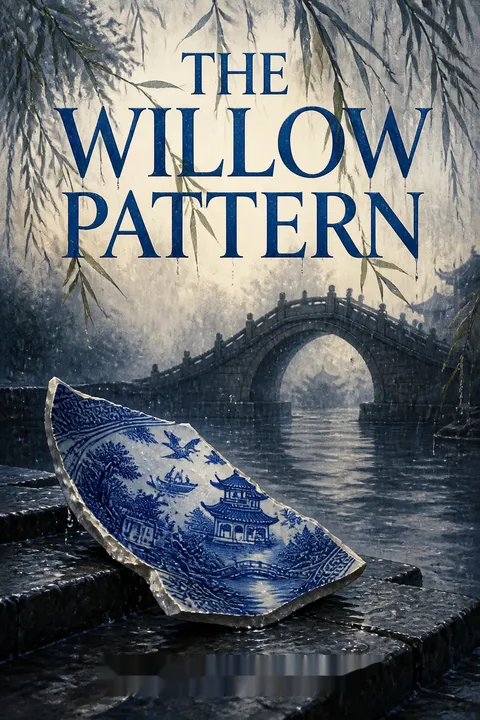
In the gallery where Yee was killed, Judge Dee discovers a shattered blue-and-white vase decorated with the Willow Pattern—a motif that echoes the architecture of Hoo's villa across the canal. The judge speculates that the broken vase is a deliberate clue, pointing to Hoo as the murderer. The Willow Pattern, with its story of forbidden love and pursuit, becomes a symbol of the tangled relationships and hidden motives driving the city's tragedies.
The Gallery of Ghosts
Interviews with Yee's maid, Cassia, reveal a history of sadism and abuse in the mansion. The gallery, once a place of power, is haunted by the ghosts of those tortured and killed there. Cassia's hatred for Yee is matched by her loyalty to the family, and her testimony is a mix of truth and misdirection. The investigation uncovers evidence of a young dancer and her tout visiting Yee, suggesting a plot involving seduction, blackmail, or revenge. The gallery becomes a stage for the city's darkest dramas.
The Hunter's Confession
Judge Dee visits Hoo, the last of the old triumvirate, in his willow-lined villa. Hoo is a bluff, boisterous man, but beneath his bravado lies a history of loss and longing. He tells the true story behind the Willow Pattern: his ancestor's doomed love for a courtesan named Sapphire, and the villa built for her. Hoo's own life mirrors this tale, as he confesses to being ensnared by a dancer, Porphyry, and to a rivalry with Yee. The judge senses that Hoo is hiding more than he reveals, and that the past is repeating itself in tragic fashion.
The Widow's Despair
The aftermath of Yee's murder brings further tragedy as his widow, driven mad by grief and guilt, hangs herself. Judge Dee's investigation into the Mei family uncovers more secrets: Mrs. Mei's mysterious origins, her possible past as a courtesan, and her ambiguous relationship with Doctor Lew. The women of the old families are revealed as both victims and agents, caught in webs of power, desire, and despair. Their fates are intertwined with the city's own struggle for survival and justice.
The Scavengers' Revolt
As the city's order breaks down, the scavengers—those tasked with disposing of the dead—form a seditious brotherhood, selling fake amulets and plotting rebellion. Ma Joong and Chiao Tai are nearly killed in a violent confrontation, escaping only through cunning and courage. The episode highlights the fragility of authority and the dangers of social collapse. The scavengers' revolt is both a symptom and a cause of the city's descent into chaos, and Judge Dee must act swiftly to restore order.
The Bondmaid's Revenge
The true motive behind the dancer's visits to Yee is revealed: Coral and her father, Yuan, seek to avenge the death of their mother, a bondmaid whipped to death by Yee. Their plot involves seduction, deception, and the hope that Yee and Hoo will destroy each other. Coral's courage and suffering are laid bare, as is the cost of vengeance. Judge Dee recognizes the complexity of their actions and the limitations of the law in addressing such deep wounds.
Lovers, Lies, and Legacies
The investigation into Mei's death uncovers a web of adultery, betrayal, and murder. Mrs. Mei and Hoo are revealed as lovers who conspired to kill Mei when he discovered their affair. Doctor Lew, complicit in the cover-up, is undone by his own lies. The case is a tragedy of passion and ambition, echoing the legends of the Willow Pattern and the city's own decline. Judge Dee's pursuit of justice is tempered by compassion and an understanding of human frailty.
The Rain Breaks the Spell
As the tribunal concludes its work, rain finally falls on the city, breaking the oppressive heat and signaling the end of the plague. The people emerge from their homes, hope rekindled. Judge Dee, exhausted but resolute, reflects on the resilience of the city and its people. The rain is both a literal and symbolic cleansing, washing away the stains of death and corruption, and offering the possibility of renewal.
The Tribunal's Verdict
Judge Dee presides over the tribunal, sentencing Hoo to death for Mei's murder and condemning Doctor Lew to prison for his role in the cover-up. Mrs. Mei dies of the plague before she can be executed, her confession a final act of agency. The court's decisions are marked by a recognition of the complexities of guilt and innocence, and the need for both justice and mercy in a world scarred by suffering.
The Avenger Unmasked
The true killer of Yee is unmasked: Bluewhite, driven by love for her sister and hatred for Yee's cruelty, killed him in a moment of righteous fury. Her act is one of justified vengeance, but she keeps her secret to protect her family. Judge Dee, understanding the nuances of justice, chooses not to expose her, allowing the case to remain officially unsolved. The cycle of violence and retribution is broken, if only for a moment, by compassion and wisdom.
The City Awakens
With the rain comes renewal. The city's people return to the streets, life resumes, and the old order gives way to the new. Judge Dee, weary but hopeful, writes to his family, reflecting on the trials endured and the lessons learned. The city's survival is a testament to the courage and resilience of its people, and to the enduring power of justice, even in the darkest of times.
Analysis
A meditation on justice, power, and renewal"The Willow Pattern" is more than a detective story; it is a profound exploration of a society in crisis, where the collapse of the old order exposes both the rot at its core and the resilience of its people. Through the interwoven mysteries, van Gulik examines the limits of law, the costs of vengeance, and the complexities of human desire. The novel's women—victims, avengers, and survivors—challenge the patriarchal structures that have long governed the city, while the poor and marginalized assert their agency in unexpected ways. The Willow Pattern motif serves as a reminder that history repeats itself, but also that new stories can be written. Judge Dee's journey is one of humility and wisdom, as he learns to balance justice with compassion, and to accept the unsolved and the unknowable. The rain that ends the novel is both a literal and metaphorical cleansing, offering hope that, even after the darkest night, renewal is possible. The book's enduring lesson is that justice is not merely the punishment of the guilty, but the restoration of balance and the affirmation of humanity in the face of suffering.
Review Summary
People Also Read
Characters
Judge Dee
Judge Dee is the central figure, a magistrate and emergency governor tasked with holding a plague-ridden city together. He is methodical, compassionate, and deeply principled, yet haunted by the limits of his power. Dee's relationships with his lieutenants—Ma Joong, Chiao Tai, and Tao Gan—are built on mutual respect and loyalty. Psychologically, Dee is both a rationalist and a humanist, balancing the demands of law with empathy for the suffering around him. His development is marked by increasing weariness but also by a growing understanding of the complexities of justice, mercy, and the human heart.
Ma Joong
Ma Joong is a former highwayman turned colonel, known for his strength, impulsiveness, and loyalty. He is drawn to Bluewhite, whose independence and courage challenge his assumptions about women and love. Ma Joong's journey is one of self-discovery, as he moves from bravado to vulnerability, learning to respect and cherish a woman as his equal. His relationship with Chiao Tai is that of brothers-in-arms, marked by banter and deep trust.
Chiao Tai
Chiao Tai is a colonel of the guard, calm, observant, and pragmatic. He serves as Dee's right hand in maintaining order and investigating crimes. Chiao Tai's psychological insight and animal empathy (notably with Yuan's monkey) make him a valuable investigator. He is less emotionally volatile than Ma Joong, providing a stabilizing influence. His loyalty to Dee and his sense of duty are unwavering, and he is often the voice of reason in moments of crisis.
Tao Gan
Tao Gan is Judge Dee's chief secretary, a thin, stooped man with a sardonic wit and a mind like a steel trap. He is a master of research, able to recall details from vast archives, and his psychoanalytic insights often guide Dee's investigations. Tao Gan is skeptical of human nature, yet his loyalty to Dee is absolute. He is the embodiment of the scholar-official, using intellect and irony to navigate a corrupt world.
Bluewhite
Bluewhite, daughter of Yuan the puppeteer, is a skilled acrobat and fighter, wielding her loaded sleeve with deadly precision. She is proud, self-reliant, and deeply loyal to her family, especially her twin sister Coral. Bluewhite's psychological complexity lies in her struggle between vengeance and compassion, and her refusal to be defined by her gender or social status. Her relationship with Ma Joong is fraught with tension, attraction, and mutual respect, culminating in her secret act of justice.
Coral
Coral is Bluewhite's twin, a singer and dancer whose innocence and vulnerability contrast with her sister's strength. She becomes the bait in her father's plot to avenge their mother's death, enduring humiliation and danger for the sake of justice. Coral's psychological journey is one of trauma and resilience, as she navigates the dangers of the city and the burdens placed upon her by her family's past.
Yuan
Yuan is the father of Bluewhite and Coral, a once-proud man broken by poverty and the loss of his wife. His art is both a means of survival and a vehicle for expressing his pain and desire for revenge. Yuan's psychological state is marked by bitterness, guilt, and a longing for justice. He manipulates events like a puppet master, but ultimately learns the limits of control and the cost of vengeance.
Mrs. Mei (Sapphire)
Mrs. Mei, formerly known as Sapphire, is a woman haunted by her past as a courtesan and her longing for love and fulfillment. Her marriage to Mei is marked by gratitude and resentment, and her affair with Hoo leads to murder. Psychologically, she is driven by a sense of entitlement and a hunger for more than life has given her, yet she is also capable of remorse and self-destruction. Her death by plague is both a punishment and a release.
Hoo Pen
Hoo is the last of the old aristocrats, a man of great physical strength but emotional weakness. His love for Mrs. Mei and rivalry with Yee drive him to murder. Hoo's psychological makeup is a mix of pride, nostalgia, and self-pity. He is both a victim and a perpetrator, unable to escape the patterns of his family's past. His execution is the final act in the tragedy of the old world.
Doctor Lew
Doctor Lew is a learned but morally ambiguous figure, whose charm masks predatory instincts and a willingness to lie and manipulate. He is complicit in Mei's murder and the cover-up, motivated by desire and self-preservation. Psychologically, Lew is a narcissist, skilled at rationalization and self-justification. His downfall is brought about by his own duplicity and the relentless pursuit of truth by Judge Dee.
Plot Devices
Interwoven Mysteries and Social Decay
The novel employs a structure of interlocking mysteries—Mei's death, Yee's murder, the bondmaid's revenge, and the scavengers' revolt—each echoing the city's broader descent into chaos. The cases are linked by recurring symbols (the Willow Pattern, loaded sleeves), overlapping characters, and the theme of the old order's decay. Foreshadowing is used through street rhymes and legends, hinting at the fates of the main families. The narrative alternates between high and low society, exposing the interconnectedness of power, poverty, and violence. The use of performance (puppetry, dance) as both literal and metaphorical device underscores the manipulation and spectacle at the heart of the city's tragedies.
Symbolism of the Willow Pattern
The Willow Pattern, a blue-and-white porcelain design, serves as a central symbol, linking the personal stories of love, loss, and vengeance to the city's collective fate. The pattern's legend—of lovers pursued and transformed—mirrors the destinies of the main characters. The motif recurs in physical objects (vases, plates), architecture (Hoo's villa), and narrative structure, providing both clues and commentary on the action. The breaking of the vase is both a literal and symbolic act, signaling the shattering of the old world and the emergence of new possibilities.
Psychological Realism and Social Critique
The novel delves into the psychological motivations of its characters, exploring themes of trauma, desire, loyalty, and revenge. The interplay between personal and collective histories is foregrounded, with individual actions reflecting broader social dynamics. The decay of the old families is paralleled by the city's physical and moral decline, and the struggle for justice is shown to be both necessary and fraught with ambiguity. The narrative structure allows for multiple perspectives, giving voice to women, the poor, and the marginalized, and challenging the assumptions of authority and tradition.
Climactic Rain and Renewal
The arrival of rain at the novel's climax is both a plot device and a symbol of cleansing and renewal. It marks the end of the plague, the resolution of the main cases, and the possibility of a new beginning for the city. The rain's timing—coinciding with the tribunal's verdicts and the unmasking of the true avenger—underscores the themes of justice, mercy, and the cyclical nature of history.
Judge Dee Series
Download PDF
Download EPUB
.epub digital book format is ideal for reading ebooks on phones, tablets, and e-readers.








































