
Plot Summary
Haunted by Birthday Shadows
Eve Shaw, haunted by the trauma of her sister Bella's death on her fourth birthday, lives a life marked by guilt and isolation. Each year, her birthday brings back the memory of the accident—her failure to close the garden gate, leading to Bella's fatal escape. Now an adult, Eve is plagued by visions of a monstrous rabbit, a symbol of her guilt, and keeps people at arm's length. Her only solace is in art and the music of Max Everly, a long-dead composer whose work seems to reach across time to comfort her. On her twenty-seventh birthday, Eve's world shifts when a mysterious elderly man named Max Everly visits her at work, leaving her with a white octopus ornament and cryptic words that hint at beginnings and endings entwined.
The Mysterious Visitor's Gift
The elderly Max Everly's visit unsettles Eve. He insists on giving her the white octopus, which eerily matches the octopus she's drawn obsessively since childhood—always with one black-tipped tentacle. The encounter is charged with déjà vu and unspoken recognition. Max's words are enigmatic, suggesting that Eve's life is at a crossroads and that she must "come back to the hotel." Shortly after, Max collapses and dies in Eve's arms outside the auction house, leaving her with the octopus and a sense that her life is about to be upended. The event deepens Eve's sense of being haunted, not just by her past, but by something larger and more mysterious.
Echoes from the Past
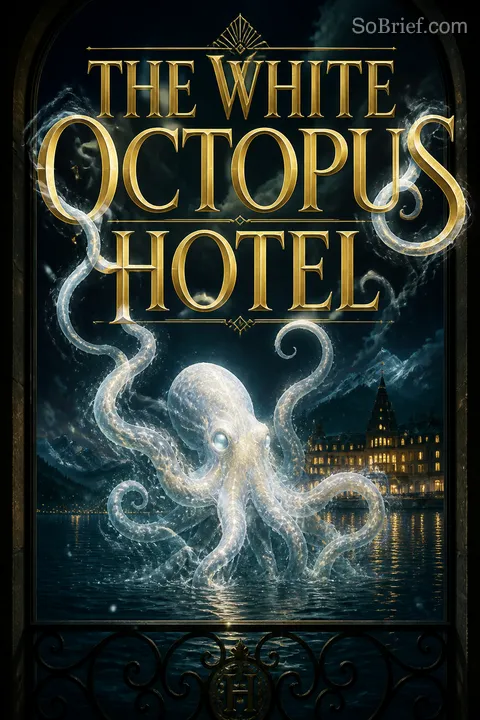
A year later, Eve, still unable to shake the memory of Max's visit, travels to France on her birthday, hoping for escape. At a flea market, she discovers a tea set marked with the same white octopus crest. The stallholder mentions it came from a hotel—The White Octopus. Back in London, Eve's research reveals the hotel's mythic status: a grand, now-abandoned Swiss hotel, rumored to have housed magical objects. The hotel's history is entwined with the enigmatic painter Nikolas Roth, whose works vanished along with the hotel's closure in 1935. Eve's obsession grows, as does her conviction that she has some forgotten connection to the place.
The Hotel That Shouldn't Exist
Eve's memories blur with fantasy as she becomes convinced she visited the White Octopus Hotel as a child, despite evidence it closed decades before her birth. She seeks out Victor, a retired auctioneer, who confirms the legends: the hotel's objects are magical, scattered across Europe, and only reveal their powers to those who need them. Victor gives Eve a key to Room 27, rumored to allow time travel, and an octopus badge—a secret sign among those who believe in the hotel's magic. Eve's longing for redemption sharpens: if the hotel's writing paper exists, she could write to her younger self and undo Bella's death.
The Search for Magic
Eve tests the tea set, hoping for magic, and is granted a fleeting vision of another life—a nurse in a bygone era. The experience convinces her that the hotel's magic is real. She contacts her parents, seeking confirmation of her childhood memories. Her father recalls only a modest trip to Switzerland; her mother, distant and emotionally scarred, reveals they visited the abandoned hotel, but only briefly. The conversation is fraught with unspoken blame and regret. Eve's yearning for connection and forgiveness is palpable, but the gulf between her and her mother remains.
The Gate Left Open
A flashback to Eve's fourth birthday reveals the pivotal trauma: distracted by party excitement, Eve leaves the garden gate open. Bella, her toddler sister, wanders out and is struck by a car. The family is shattered. Eve's mother, in her grief, lashes out, demanding to know if Eve closed the gate. The moment cements Eve's lifelong guilt and sense of being fundamentally unlovable. The memory is raw, the pain undiminished by time. Eve's adult life is shaped by this wound, her relationships stunted, her self-worth eroded.
Unraveling Family Ties
Eve visits her mother, hoping for answers about the hotel and, perhaps, absolution. The house is a shrine to absence, family photos replaced by images of abandoned places. Her mother shares a photograph of the White Octopus Hotel, with young Eve in the frame. The conversation is stilted, both women unable to bridge the chasm of grief and blame. Eve learns her mother found a key at the hotel—another echo of the magical objects—but lost it. The visit ends without resolution, reinforcing Eve's sense of being forever haunted by what was left unsaid.
The Pull of the White Octopus
Unable to let go, Eve takes leave from work and travels to Switzerland, determined to find the hotel and, with it, the writing paper that might allow her to change the past. The journey is arduous, the landscape both breathtaking and isolating. The hotel, seen across the lake, is a decaying relic, yet exerts a magnetic pull. Eve's arrival is marked by a sense of homecoming and foreboding. She arranges passage across the lake, her resolve hardening: she will face whatever the hotel holds, no matter the cost.
Arrival at the Abandoned Palace
Eve explores the ruined hotel, its grandeur faded but its magic palpable. The lobby is a mausoleum of lost time, the fountain's octopus a silent witness. Echoes of the past press in—music, laughter, the shimmer of parties long ended. Eve is drawn to the guest book, where a tentacle bursts forth, confirming the living magic of her own drawings. The hotel is a labyrinth of memory and possibility, its secrets waiting to be uncovered. Eve's sense of purpose intensifies: she must find the writing paper, and perhaps herself, within these haunted walls.
The Living Sketchbook
Eve's history with art is revealed: her octopus drawings, which began as therapy after a breakdown, became her companions and protectors. The octopus tattoo, alive and mobile, is both a comfort and a secret shame. Art is Eve's way of making sense of her pain, but also a barrier to intimacy. Her relationships falter, her sense of self is fractured. Yet the octopus is also her guide, leading her deeper into the hotel's mysteries and her own psyche.
The Time-Lost Room
Eve discovers that the key to Room 27, when used from inside, transports her to the hotel's heyday in 1935. The transformation is total: the hotel is alive with guests, music, and magic. Eve is welcomed as a time-traveling guest, told she must pay for her stay with her memories. She is swept into a scavenger hunt for the hotel's magical objects, the prize being her heart's desire. The rules are clear: she can stay as long as she likes, but must forget everything upon leaving. The stakes are set—Eve must choose between redemption and the risk of losing herself.
The Key That Doesn't Fit
Eve's quest for the writing paper is complicated by the hotel's shifting architecture and elusive magic. The key to Room 27 doesn't fit any other door; Room 27 itself seems to exist only in the liminal space between floors. Eve's encounters with other guests and staff reveal layers of performance and secrecy. Magical objects abound—mirrors that show other lives, phones that ring with the voices of the dead, bars haunted by eavesdroppers. The scavenger hunt becomes a metaphor for Eve's search for meaning and forgiveness.
The Scavenger Hunt Begins
The hotel's grand party is announced, and with it, the scavenger hunt for clocks and octopuses hidden throughout the hotel. The winner will receive a Roth painting and their choice of magical object. Eve is drawn into the competition, her determination fueled by the possibility of undoing her past. She encounters Max Everly, alive and magnetic, and is both starstruck and unsettled by their connection. The hunt is both literal and symbolic—a search for lost time, lost selves, and the possibility of a second chance.
Ghosts, Mirrors, and Apples
As Eve searches the hotel, she is confronted by manifestations of her guilt: the rabbit, apples, and echoes of Bella. Magical mirrors threaten to trap her reflection; phones ring with the voices of the dead. The hotel is a maze of memory and regret, each room a test of Eve's resolve. She learns that other guests are actors, hired to play roles in the hotel's ongoing performance. The line between reality and illusion blurs, and Eve's sense of self is tested.
The Party of Lost Souls
At the climactic party, snow falls from the ceiling and other lives are glimpsed in the mirrors—a sign that the hotel's time is ending. Eve sees a vision of the life she might have had, with Bella alive and her family whole. She is reunited with her mother, now revealed as Mrs. Roth, and with Anna, who is both her sister and her daughter. The party is both a celebration and a farewell, as the hotel prepares to close its doors forever.
The Music That Heals
Eve and Max's relationship deepens, their connection forged through shared trauma and the healing power of music. Max's compositions, inspired by Eve, become a lifeline for both. The music box that plays the most beautiful song in the world is both a symbol of their love and a vessel for their pain. The act of creation—art, music, magic—becomes the means by which they survive and find meaning in suffering.
The Maze of Regret
Eve's journey through the hotel's secret corridors and hidden rooms is a journey through her own psyche. She confronts her younger self, her guilt, and her inability to forgive. The scavenger hunt leads her to the basement, where she finds trunks filled with her own art and Max's letters—a testament to the burdens they both carry. The final octopus is revealed to be the missing weight for the grandfather clock, the key to rewinding time and rewriting fate.
The Writing Paper's Temptation
With the scavenger hunt complete, Eve is offered the writing paper—the chance to send a letter to her younger self and prevent Bella's death. But the cost is steep: to save Bella, she must erase not only her own life, but Max's and their children's. Anna, revealed as their daughter, pleads with Eve to understand the consequences. The moment is fraught with longing and fear; Eve must decide whether to sacrifice herself for the possibility of redemption, or accept the life she has built from pain.
The Truth in the Basement
Eve's final confrontation with her past takes place in the hotel's basement, where she faces the ghosts of her childhood and the truth of her own responsibility. She meets her four-year-old self, full of rage and grief, and is forced to acknowledge the impossibility of perfect forgiveness. Max's compassion and understanding offer a path forward—not of erasing the past, but of living with it. The hotel's magic is revealed to be not about undoing pain, but about transforming it.
The Choice at the Clock
Eve chooses not to use the writing paper, refusing to trade one life for another. She returns the octopus to the grandfather clock, completing the cycle and allowing time to rewind—not to erase the past, but to begin anew. Anna, Harry, and Tristan—her children with Max—depart, leaving Eve and Max to claim the hotel as their own. The end is also the beginning: a chance to live, love, and create, not in spite of pain, but because of it.
The End Is the Beginning
Eve and Max step into their new roles as caretakers of the White Octopus Hotel, their love forged in suffering and sustained by art and magic. The hotel becomes a place of healing, a sanctuary for lost souls, and a testament to the power of forgiveness—not as erasure, but as acceptance. Their story is one of transformation: from guilt to grace, from isolation to connection, from endings to beginnings. The White Octopus Hotel stands as a monument to the possibility of redemption, not through undoing the past, but through embracing it.
Analysis
The White Octopus Hotel is a profound meditation on grief, guilt, and the possibility of redemption. Alexandra Bell crafts a narrative that blurs the boundaries between fantasy and reality, past and present, self and other. The hotel is both a haunted house and a sanctuary, a place where the wounds of the past can be confronted but not erased. The novel's central lesson is that forgiveness is not about undoing harm, but about accepting imperfection and choosing to live fully despite it. Through Eve's journey, Bell explores the ways in which trauma shapes identity, the necessity of art and connection in healing, and the courage required to let go of the hope for a perfect past. The magical elements—time travel, living art, enchanted objects—are not escapes from reality, but tools for engaging with its deepest truths. Ultimately, the novel offers a vision of hope that is hard-won and bittersweet: happiness is fleeting, pain is inevitable, but love and creativity can transform even the darkest experiences into something enduring and beautiful.
Review Summary
The White Octopus Hotel has earned a strong overall rating of 3.92/5, with readers praising its atmospheric 1930s hotel setting, emotional depth, and surprising twists. Many loved the blend of time travel, magical realism, grief, and romance, drawing comparisons to The Warm Hands of Ghosts and The Night Circus. However, some found the pacing slow initially and the time travel mechanics confusing. The romance between Eve and Max resonated with many, though a few wished for more on-page development. The ending divided readers, with some finding it magical and others feeling it incomplete.
Characters
Eve Shaw
Eve is the novel's protagonist, a woman defined by childhood trauma and lifelong guilt over her sister's death. Her psyche is marked by isolation, self-blame, and a desperate longing for forgiveness. Art is both her refuge and her curse; her living octopus tattoo symbolizes her struggle to contain and transform her pain. Eve's relationships are fraught, especially with her mother, and she is slow to trust or accept love. Her journey through the White Octopus Hotel is both literal and psychological—a quest to undo the past that ultimately becomes a journey toward self-acceptance. Eve's development is marked by her willingness to confront her darkest memories, her capacity for compassion, and her eventual choice to embrace life, love, and imperfection.
Max Everly
Max is both a historical composer and a living presence in Eve's life, his music a lifeline for her darkest moments. Traumatized by war and haunted by loss, Max is a man of deep feeling and creative brilliance, yet also marked by self-doubt and survivor's guilt. His relationship with Eve is complex—at once a source of healing and a mirror for their shared wounds. Max's journey is one of learning to accept love and happiness despite the inevitability of pain. His willingness to risk everything for Eve, and to let go when necessary, marks his growth from a man defined by regret to one capable of hope and renewal.
Anna Roth / Annabella
Anna is a multifaceted character: at once the enigmatic hostess of the hotel, Eve's lost sister, and her future daughter. She embodies the novel's themes of reincarnation, forgiveness, and the cyclical nature of trauma. Anna's relationship with Eve is fraught with longing, resentment, and ultimately, understanding. As both victim and survivor, Anna challenges Eve to confront the consequences of her choices and to recognize the interconnectedness of all lives. Her role as the orchestrator of the hotel's final test is both compassionate and uncompromising.
Jane Shaw / Mrs. Roth
Jane is Eve's mother, a woman broken by grief and unable to forgive or connect with her surviving daughter. Her journey parallels Eve's, as both women struggle to move beyond blame and regret. Jane's transformation into Mrs. Roth, the hotel's historian, is a testament to the possibility of healing through new beginnings. Her final message to Eve—that she was the greatest joy of her life—offers a measure of closure and hope.
Victor Harris
Victor is a retired auctioneer and one of the few adults who believes in the magic of the White Octopus Hotel. He serves as a mentor and guide for Eve, providing her with the key to Room 27 and the octopus badge. Victor's own longing for the writing paper mirrors Eve's, and his willingness to share his knowledge and resources is an act of quiet generosity. He represents the importance of community and shared belief in the face of skepticism.
Bella Shaw
Bella is both a memory and a haunting presence in Eve's life. Her death is the central trauma that shapes the novel's events, and her manifestations—as a rabbit, as Anna, as a ghost—are symbols of unresolved grief. Bella's innocence and love are contrasted with Eve's guilt and anger, and her ultimate message—that she is tired and ready to go—allows Eve to begin the process of letting go.
Tristan Roth
Tristan is one of Anna's siblings and a guardian of the hotel's secrets. He is responsible for the clocks and the maintenance of the hotel's magic. Tristan's calm, practical demeanor provides stability amid the chaos of the hotel's final days. His role in explaining the mechanics of the clock and the consequences of Eve's choices is crucial to the novel's resolution.
Harry Roth
Harry is Anna's brother and the hotel's resident mixologist. He is a link between the past and present, carrying forward the traditions and magic of the hotel. Harry's presence is marked by warmth, humor, and a deep sense of responsibility to his family and the hotel's guests.
Nan
Nan is a precocious child who serves as a bridge between the living and the dead, the magical and the mundane. She is entrusted with secrets and plays a key role in guiding Eve to the final clues of the scavenger hunt. Nan's innocence and openness contrast with the guardedness of the adults, and her ability to communicate with ghosts underscores the novel's themes of connection and continuity.
The Octopus
The octopus is both a literal magical object and a metaphor for Eve's grief and creativity. Its presence in art, tattoos, and hotel décor is a constant reminder of the possibility of turning pain into beauty, of embracing the strange and the wounded parts of oneself. The octopus's journey—from sketchbook to clock weight to symbol of healing—mirrors Eve's own transformation.
Plot Devices
Time Loops and Magical Objects
The novel's structure is built around time loops, magical objects, and the interplay between past, present, and future. The White Octopus Hotel itself is a liminal space, existing outside ordinary chronology, where guests can confront their regrets and seek redemption. Keys, clocks, and writing paper serve as literal and symbolic devices for accessing lost moments and rewriting fate. The scavenger hunt is both a plot engine and a metaphor for the search for meaning and forgiveness. Foreshadowing is woven throughout, with recurring motifs—rabbits, apples, music, and octopuses—signaling the interconnectedness of events and the inevitability of reckoning with the past. The narrative structure mirrors the psychological process of healing: cyclical, recursive, and ultimately transformative.
Download PDF
Download EPUB
.epub digital book format is ideal for reading ebooks on phones, tablets, and e-readers.








































