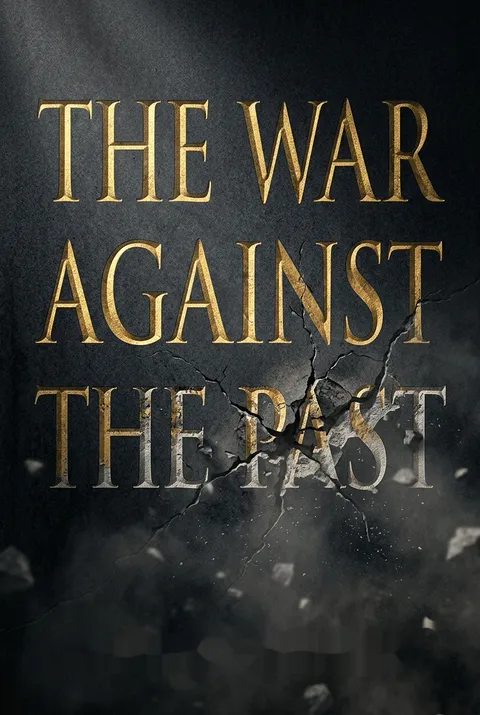

Key Takeaways
1. The West's Undeclared War Against Its History
For when the past is contaminated, it becomes near impossible to endow people’s life with meaning in the present.
A silent conflict. At the turn of the 21st century, an undeclared "War Against the Past" was launched, targeting the historical legacy of Western civilization. This isn't a grand conspiracy but a culmination of diverse, uncoordinated acts and widely absorbed assumptions, leading to a systematic "historical disinheritance." The conflict diminishes the past's authority, discredits its legacy, and ultimately harms communities whose way of life is rooted in European culture.
Culture Wars' core. The main driver of contemporary Culture Wars is this assault on history. Supporters often portray the past as a menace, constantly targeting its symbols, values, and achievements in a "frenetic moral crusade" to instill shame about origins. This involves reorganizing historical memory and delegitimizing ideals, blurring the lines between present and past to "fix" contemporary problems by altering what has already occurred.
Darkening the narrative. Public and private institutions increasingly paint their communities' past in the darkest colors, apologizing for historical events and even spectacular achievements like Greek philosophy or the Enlightenment, now indicted for supposed links to exploitation. This narrative, highlighting malevolent, oppressive, and abusive dimensions, has made the past widely perceived as the "Bad Old Days," evident in museums and historical dramas.
2. Year Zero Ideology: Erasing a "Toxic" Past
The decimation of a society’s history is not an end in itself. Rather it is represented as a necessary first step in the establishment of a completely new socioeconomic and political framework that is designed to secure a more desirable society and propagate new norms, values, cultural practices, hierarchies, and traditions.
A radical break. Year Zero ideology, a recurring feature in modernity, advocates for a radical break with the past, often by declaring it "toxic" and demanding its complete eradication. Historically, this has involved erasing visible traces of the past, like renaming cities after the Russian Revolution or the Khmer Rouge's attempt to start society anew. Today, however, the focus is less on building a new world and more on exacting vengeance on the past.
Damnatio Memoriae. This ideology often employs practices akin to the Roman damnatio memoriae, the condemnation and erasure of memory. Contemporary examples include:
- Toppling and vandalizing statues (e.g., Abraham Lincoln, Edward Colston).
- Burning "outdated" books, as seen in Ontario schools as a "flame purification ceremony" for reconciliation.
- Destroying ancient artifacts, like ISIS militants bulldozing Nimrud, justified as destroying "idols."
These acts, while varying in severity, share a common spirit of intolerance and a desire to nullify historical influence.
Contemporary distinctiveness. Unlike past iterations, 21st-century Year Zero ideology is often implicit and expansive, driven by the assumption that the past itself is the source of contemporary evils. It targets not just specific regimes but broad aspects of Western culture—whiteness, patriarchy, rationality, capitalism—reducing its history to an "ugly story of ceaseless oppression and domination." This approach, exemplified by the 1619 Project, seeks to contaminate foundational traditions to delegitimize present-day institutions.
3. Presentism: Judging History by Today's Standards
Presentism, at its worst, encourages a kind of moral complacency and self-congratulation.
Eroding temporal boundaries. The "War Against the Past" is waged by treating historical figures and events as if they are contemporaries, blurring the distinction between past and present. This "eternalization of the present" is fueled by presentism, an outlook that interprets the past through the lens of current concerns and values, often leading to anachronistic distortions.
Moral anachronism. Presentism fosters a "temporal superiority," where contemporary society judges past generations as morally inferior. This self-flattering practice, often seen in "grievance archaeology," condemns historical figures for not adhering to 21st-century sensibilities. For example:
- Reinterpreting Joan of Arc as "questioning the gender binary."
- Labeling ancient Egyptian pharaoh Hatshepsut as "transgender."
- Attributing "racist motives" to Roman sculptors.
This approach, which Lucien Febvre called the historian's "sin of sins," distorts historical reality and undermines the integrity of past experiences.
The unending now. Presentism reflects a cultural condition where the present has expanded into both the past and the future, creating an "unending now." This "acceleration of history" renders the past irrelevant and closes off a positive vision of the future, leading to a "frenetic standstill" where everything changes rapidly but no real structural change is possible. This detachment from historical context diminishes society's capacity for genuine historical consciousness and critical thought.
4. Grievance Archaeology: The Obsessive Search for Past Wrongs
Grievance archaeology, however, is not simply about excavating hitherto unknown facts or events. It is principally about repackaging the past in accordance with the values and objectives of present-day identity politics.
Excavating for offense. Grievance archaeology is a practice driven by identity politics, actively seeking out historical injustices and misdeeds to validate contemporary identity claims. It's not about objective historical inquiry but about "repackaging the past" to serve present-day agendas. This often involves reading history backward, casting individuals and groups from centuries ago as offenders of modern sensibilities.
Weaponizing the past. This approach transforms historical wrongs into a "moral currency" used to claim attention, respect, and authority in the present. Examples include:
- Demanding the removal of statues because they cause "emotional and psychological strain" or "trauma" to present-day groups.
- The Pitt Rivers Museum removing "shrunken human heads" to avoid reinforcing "racist and stereotypical thinking."
- The Victoria and Albert Museum warning visitors about "uncomfortable truths" in British humor exhibitions.
These actions demonstrate a cultural addiction to shaming the past, often portraying it as a "clear and present danger" that contaminates contemporary life.
A growth industry. Grievance archaeology has become a "growth industry," relentlessly working to rupture society's emotional and organic link with its past. It extends to seemingly innocuous areas, such as:
- "Decolonizing" plant and animal names linked to historical figures deemed problematic.
- Auditing university archives for "uncomfortable truths" to justify "diversification work."
- Claiming that school classroom layouts are "shaped by colonization."
This obsessive search for offense, often driven by a "witch-hunt" mentality, aims to delegitimize Western culture and its historical foundations.
5. Identity Politics: Validating Some, Spoiling Other Histories
For contemporary identity politics, the past provides a rich vein of injustice.
Identity's recent rise. The hyper-politicization of identity is a relatively recent phenomenon, emerging in the post-WWII era as Western societies became estranged from their past. When traditional narratives and moral frameworks weakened, the "quest for identity" gained commanding influence, leading to a "crisis of identity" where individuals struggle to find meaning without a clear historical narrative.
Validation and invalidation. Identity politics uses history in two ways:
- Validating identities: Reinterpreting the past to find historical representation and legitimacy for marginalized groups (e.g., "black Cleopatra," "black Vikings," "queer archaeology").
- Invalidating identities: Systematically "spoiling" the identities of perceived opponents, particularly "whiteness" and traditional Western identity.
This dual approach fuels the "War Against the Past," as history becomes a battleground for recognition and condemnation.
Spoiling "whiteness." The concept of "whiteness," invented by critics, serves to morally devalue those with white skin, attributing historical complicity in racial oppression. This has led to the widespread use of terms like "too white" to signify disapproval, applied to:
- Political parties and government departments.
- Cultural institutions and academic disciplines (e.g., philosophy, classical music).
- Even abstract concepts like "dyslexia heroes."
This moral devaluation extends to "Dead White Men" and "pale, male, and stale" figures, aiming to dismantle traditional sources of pride and authority.
6. The Linguistic Battlefield: Outdating and Re-engineering Language
A nation which allows her language to go to ruin is parting with the last of her intellectual independence, and testifies her willingness to cease to exist.
Language under attack. Language has become a central battleground in the War Against the Past, with a growing trend of policing and censoring traditional vocabulary. Words integral to historical understanding are declared "problematic" or "outdated," leading to their displacement by new, ideologically driven terms. This semantic engineering aims to sever society's connection to its past by altering the very tools of memory and communication.
The "outdated" weapon. The term "outdated" has mutated from a descriptive term to a moral condemnation, implying intellectual and moral inferiority. This is used to:
- Discredit traditional kinship terms like "mother" and "father," replaced by "birthing parent."
- Force apologies from public figures for using terms like "coloured" or "invalid carriages."
- Justify trigger warnings on classic literature (e.g., Hemingway, Woolf, Mitford) for reflecting "attitudes of its time."
This constant "outdating" renders past accomplishments morally subordinate to present-day sensibilities, creating a psychic distance from history.
Re-engineering reality. Linguistic engineering goes beyond mere censorship; it actively re-engineers the meaning of words to transform cultural attitudes and norms. Examples include:
- Replacing "woman" with "menstruating person" or "bodies with vaginas."
- Changing "breastfeeding" to "chestfeeding."
- Mandating gender-neutral pronouns and titles in official documents (e.g., Judicial College's Equal Treatment Bench Book).
This deliberate dismantling of traditional language, often enforced by institutions, aims to construct a new reality, weakening society's capacity to recall its past and fostering a condition of "social amnesia."
7. Disinheriting the Young: Education's Role in Historical Amnesia
After all, the point of learning history is not to remember the past, but to be liberated from it.
Undermining generational transmission. Education, traditionally a means of transmitting cultural inheritance, has become a key site for the War Against the Past. Progressive pedagogy, influenced by figures like John Dewey, has long been hostile to the idea of conserving past values, aiming instead to "free" children from "unworthy features" and "outdated prejudices" of their parents and communities.
Politicizing the classroom. In recent decades, this anti-traditionalist stance has intensified into outright indoctrination, particularly in Anglo-American schools. The curriculum aggressively promotes:
- Transgenderist dogma.
- Racialized narratives from Critical Race Theory.
- The decolonization of Western civilization's legacy.
This ideological curriculum often teaches children to assess the past from contemporary sensibilities, fostering emotional alienation from their ancestors rather than pride in their nation's history.
The "darkening" of history. The curriculum increasingly presents a "Black Armband" view of history, emphasizing past misdeeds and injustices to the exclusion of achievements. This leads to:
- Questioning national founding myths (e.g., the 1619 Project challenging 1776 as America's birth year).
- Denouncing national symbols (e.g., students protesting the Union Jack as "racist").
- Portraying historical figures (e.g., Churchill) as villains.
This "darkening" of history, often driven by a "curriculum of relevance" and emotional empathy, dispossesses young people of a coherent historical narrative, contributing to social amnesia and a weak sense of identity.
8. The Paradoxical War: Rejecting Yet Obsessing Over the Past
The paradox of our past is that it is said to be less and less relevant to our existence while, at the same time, it is seen to have a uniquely negative influence on contemporary society.
A self-defeating conflict. The "War Against the Past" is inherently paradoxical: it simultaneously rejects the past as irrelevant and toxic, yet obsessively engages with it to exact revenge and validate present-day grievances. This fixation on past misdeeds, rather than a forward-looking vision, traps society in a "presentist purgatory," unable to learn from history or confidently shape the future.
Loss of moral compass. By constantly highlighting human selfishness and destruction, this war fosters a deeply anti-humanist outlook, diminishing humanity's moral status and potential. It breeds fatalism, a "deep pessimism about the ability of human beings to control anything very much," replacing hope for progress with resignation and a sense of powerlessness.
Reclaiming history for the future. To counter this, society must reclaim a balanced and nuanced understanding of its past, recognizing both its triumphs and its failures. History, as "life's teacher," provides the "moral and intellectual resources" for:
- Developing a 21st-century narrative of solidarity and community.
- Understanding the origins of values like freedom, equality, and tolerance.
- Cultivating a dynamic sense of identity rooted in a "living tradition."
Without fighting for and preserving our history, society risks becoming "depressingly fragmented and polarized," dislocated from its origins and unable to navigate its way into the future.
Review Summary
The War Against the Past receives mixed reviews averaging 3.7/5. Readers appreciate Furedi's critique of presentism and identity politics in academia, finding his warnings about historical revisionism relevant and important. However, critics note significant weaknesses: the prose is often repetitive and long-winded, the book contains factual errors, and arguments can be difficult to follow. While some praise its comprehensive examples of cancel culture, others find the numerous sources make it jump between subjects, reducing readability.
People Also Read



Download PDF
Download EPUB
.epub digital book format is ideal for reading ebooks on phones, tablets, and e-readers.








































