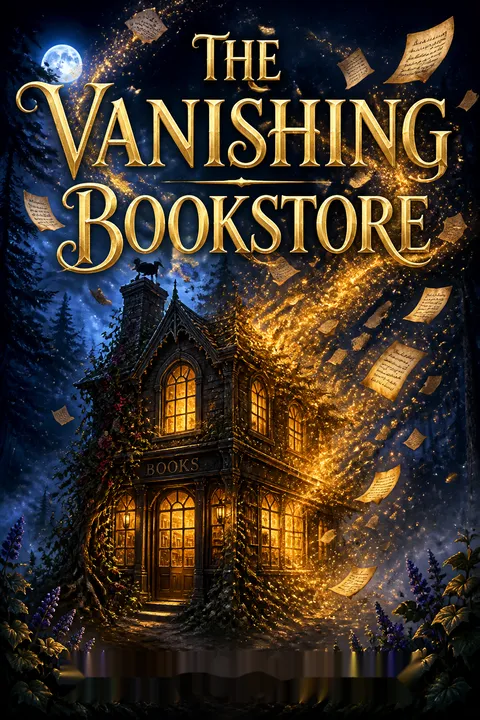

Plot Summary
Salem Shadows and Seeds
In the darkness of Salem, young Isadora English tends her family's herb-laden cottage, feeling the weight of suspicion and fear. Her family—healers, not witches—are marked by their silver hair and green eyes, set apart from the wary villagers. When her friend Ambrose Corwin arrives in panic, warning of a witch hunt, Isadora flees with him, clutching her mother's forbidden journal. They hide the book in Ambrose's secret bookstore, a sanctuary of forbidden stories. As the hounds close in, Isadora's trust and innocence are shattered, and she realizes that escape may be impossible. The seeds of a centuries-old curse are sown, binding her fate to Ambrose, her family, and the darkness that hunts them.
The Scent of Loss
Dora English, a florist with a gift for reading people through scent, feels a void in her life. When George Corwin, a grieving stranger, enters her shop seeking funeral flowers, their encounter is charged with strange familiarity and awkward humor. Dora's intuition senses something off, but she's distracted by her own restlessness and the comfort of her surrogate family—her sharp Aunt Lenny and neighbor Mabel. The day's oddities, from George's peculiar request to Dora's own sense of being watched, hint at deeper mysteries. Dora's longing for meaning and connection is palpable, setting her on a path toward revelations she cannot yet imagine.
Sisters' Secrets Unveiled
Lenny, Dora's formidable aunt, senses omens and dreads a call from her sister Sephy in Salem. The sisters, bound by blood and magic, discuss the failing health of their eldest, Lucine, and the urgency of Dora's awakening. Lenny's reluctance to return to Salem and her efforts to shield Dora from their legacy reveal a family fractured by centuries of trauma and hope. The sisters' conversation is laced with regret, love, and the burden of a curse that dooms Dora to die young, unless she can reclaim her power and memories. The past and present entwine, as the family's survival depends on secrets long kept.
Curses Across Centuries
In Salem, Sephy tends to Lucine and their apothecary, reflecting on the sisters' many lives since their execution in 1692. Each cycle brings hope and heartbreak: Lucine always dies first, Dora before thirty-five, and Corwin, the witch hunter, always finds them. The sisters' gifts—healing, foresight, and the language of flowers—are both blessing and curse. The town that once condemned them now profits from its witchy past, but the threat remains. The sisters' only hope lies in Dora's forgotten power and the lost spellbook, hidden centuries ago. The cycle of persecution and rebirth continues, as the hunter draws near.
Flowers, Fate, and Strangers
Dora's life in London is disrupted by recurring dreams and the persistent presence of George Corwin. Their encounters, tinged with déjà vu and unease, blur the line between past and present. George's gifts of symbolic flowers and his probing questions unsettle Dora, while her friend Katie's involvement complicates matters. As Dora prepares to leave for Salem with Lenny, she entrusts her shop to Katie, unaware of the danger lurking. The threads of fate tighten, drawing Dora toward her ancestral home and the mysteries that await.
Unsettling Gifts and Warnings
Dora's preparations for Salem are shadowed by strange occurrences—visions, injuries, and George's increasingly intrusive behavior. Lenny recognizes the signs of the witch hunter's return, interpreting George's floral gifts as a coded threat. The sisters' urgency grows, knowing that time is running out for Dora to reclaim her memories and power. The journey to Salem is not just a holiday, but a return to the heart of the curse. The past bleeds into the present, as Dora's dreams and instincts awaken, hinting at the battles to come.
Salem Beckons Home
Arriving in Salem, Dora is overwhelmed by the town's witchy exuberance and the deep sense of belonging she cannot explain. She meets her Aunt Sephy and, eventually, her dying mother Lucine, feeling both the joy of reunion and the pain of lost years. The sisters' home is a haven of magic and memory, filled with herbs, cats, and the ever-watchful crow, Hades. As Dora's homesickness fades, her connection to her family and her own latent power grows. The stage is set for the confrontation with the past and the witch hunter who stalks them still.
The Gathering of Bloodlines
Dora's days in Salem are a whirlwind of discovery—learning the truth of her lineage, the curse, and the lives she's lived before. The sisters, reunited, share laughter, grief, and the rituals that bind them. Dora's encounters with Ambrose, her soulmate across centuries, stir memories and emotions she cannot fully grasp. The search for Lucine's lost spellbook becomes urgent, as the sisters realize it is the key to breaking the curse. The power of three—Dora, Lenny, and Sephy—must be restored, even as Lucine's life ebbs away.
The Witch Hunter's Mark
As Dora's memories return in flashes, the threat of George Corwin becomes immediate. Katie's disappearance in London, marked by violence and blood, signals that the hunter is closing in. Lenny's attempt to protect Dora leads her into Corwin's trap, and the sisters are forced to act. The family's magic, once used only for healing, must now be wielded in battle. The cost of resistance is high, and the sisters' love and courage are tested as never before.
The Bookstore That Vanished
Guided by visions and Ambrose's help, Dora locates the vanishing bookstore where she once hid Lucine's spellbook. The journey through Salem's woods is both literal and symbolic—a passage through brambles, memories, and fear. Dora's magic, the language of flowers and the elements, awakens as she retrieves the book. The reunion with Ambrose is both romantic and redemptive, as they reclaim their love and the hope of breaking the curse. The past and present converge, and Dora steps into her true power.
Unraveling the Past
With the spellbook in hand, Dora and her aunts prepare for the final confrontation. Lucine's death is both a loss and a release, her spirit guiding Dora from beyond. The sisters teach Dora the old ways, blending ritual, memory, and love. Dora's transformation—marked by her silver hair and growing confidence—signals the return of the English women's full power. The family's unity, the power of three, and the support of their familiars and allies set the stage for the binding spell that will end Corwin's reign.
The Curse Tightens
Corwin strikes, capturing Lenny and luring Dora to the site of their ancestral trauma. The cemetery becomes a battleground of magic and will, as Dora faces the witch hunter with the help of her shadow dog, Caesar, and the spirit of Hades. The power of the murdered women, the support of her family, and the invocation of Hecate turn the tide. Dora's mastery of her magic, her courage, and her love for her family break the cycle of violence and fear. The curse is shattered, and Corwin is bound at last.
The Power of Three
With Corwin defeated, the sisters and Ambrose gather to mourn, celebrate, and envision a future free from the curse. Dora's transformation is complete—her hair silver, her power radiant, her heart open to love and possibility. The family's bonds, tested by centuries of suffering, are stronger than ever. The vanishing bookstore, once a symbol of secrecy and loss, becomes a beacon of hope and renewal. The English women, at last, are free to live, love, and shape their own destinies.
The Binding Spell
The sisters perform the binding spell, drawing on the strength of their ancestors, the wisdom of the spellbook, and the support of their familiars. The ritual is both a release and a reclamation—a final act of defiance against the forces that sought to destroy them. The power of three, the love of family, and the courage to face the darkness ensure that the curse will not return. The sisters' laughter, resilience, and magic echo through Salem, a testament to the endurance of hope.
Breaking the Cycle
As the dust settles, the sisters reflect on the lives they've lived, the losses they've endured, and the future they can now embrace. Dora and Ambrose look forward to a life together, free from fear. The family's story, once hidden and fragmented, is now whole. The vanishing bookstore, left open, hints at new beginnings and the possibility of magic for others. The cycle of persecution is broken, and the English women's voices, once silenced, ring out in triumph.
The Book's New Keeper
In the epilogue, a new woman discovers the vanishing bookstore and the spellbook, drawn by dreams and longing. The legacy of the English women endures, as magic finds its way to those in need. The story closes with a sense of wonder, possibility, and the assurance that the voices of the wrongly accused will never be silenced again.
Analysis
Helen Phifer's The Vanishing Bookstore is a modern witch novel that weaves together historical trauma, family legacy, and the quest for self-acceptance. At its heart, the book is about the power of memory—personal, familial, and cultural—to both wound and heal. The English women's repeated persecution and rebirths are a metaphor for generational trauma, particularly that experienced by women accused of "otherness" or power. The curse that binds them is not just supernatural, but psychological: the internalization of fear, shame, and the need to hide one's true self. Dora's journey from denial to empowerment is emblematic of the process of reclaiming agency and voice. The novel's use of magic is both literal and symbolic, representing the transformative potential of ritual, community, and self-knowledge. The vanishing bookstore, the spellbook, and the familiars are all externalizations of the characters' inner resources. The defeat of Corwin—the embodiment of patriarchal violence and resentment—is achieved not through violence, but through unity, love, and the reclamation of story. The book's message is ultimately hopeful: that the voices of the wrongly accused will never be silenced, that cycles of trauma can be broken, and that magic—whether in the form of love, memory, or resistance—endures. For modern readers, the novel offers both a gripping narrative and a meditation on the importance of facing the past, honoring one's heritage, and forging a future free from fear.
Characters
Dora (Isadora) English
Dora is the modern incarnation of Isadora English, a healer's daughter from 1692 Salem. In the present, she is a florist in London, gifted with an intuitive sense of scent and the language of flowers. Raised by her aunt Lenny after her parents' deaths, Dora is haunted by a sense of incompleteness and recurring dreams. Her journey is one of self-discovery, as she uncovers her magical heritage, the trauma of her past lives, and her central role in breaking the family curse. Dora's psychological arc moves from denial and confusion to acceptance, courage, and empowerment. Her relationships—with her aunts, her mother Lucine, and her soulmate Ambrose—are marked by love, loss, and the longing for belonging. Dora's development is the heart of the story, as she transforms from a passive victim of fate to an active shaper of her own destiny.
Lenora (Lenny) English
Lenny is Dora's aunt and surrogate mother, a skilled doctor with a sharp tongue and a deep sense of responsibility. She is haunted by the failures of past lives and the burden of keeping Dora safe from the witch hunter's curse. Lenny's psychological complexity lies in her blend of toughness and vulnerability—she is both the family's shield and its most wounded member. Her relationship with Dora is maternal, loving, and sometimes overbearing, shaped by centuries of trauma and sacrifice. Lenny's arc is one of reconciliation—with her sisters, her own choices, and the need to let Dora claim her power. Her willingness to face Corwin and her ultimate survival are testaments to her resilience and love.
Seraphina (Sephy) English
Sephy is the middle English sister, a healer and apothecary in Salem. She embodies warmth, wisdom, and the nurturing aspects of the family's magic. Sephy's psychological depth comes from her role as the emotional anchor—she soothes, teaches, and comforts, but also carries the pain of repeated loss. Her relationship with Lucine and Lenny is marked by both laughter and sorrow, and her bond with Dora is maternal and magical. Sephy's arc is one of acceptance—of the need to fight, to let go, and to trust in the power of love and ritual. Her guidance is crucial in Dora's awakening and the family's final victory.
Lucine English
Lucine is the eldest sister, mother to Dora, and the original keeper of the spellbook. Her premature death in every lifetime is the family's greatest sorrow and the catalyst for their quest to break the curse. Lucine's psychological profile is shaped by sacrifice—she gives up her daughter, her power, and her life to protect her family. Her relationship with Dora is bittersweet, marked by absence, longing, and a final, redemptive reunion. Lucine's arc is one of release—her death is both an ending and a passage, as her spirit guides Dora in the final battle.
Ambrose Corwin
Ambrose is the son of a Salem judge and nephew to the witch hunter, yet he is Dora's protector and lover across centuries. His psychological complexity lies in his divided loyalties, his guilt over his family's crimes, and his unwavering love for Dora. Ambrose's arc is one of devotion and redemption—he helps Dora recover the spellbook, supports her awakening, and stands by her in the final confrontation. His relationship with Dora is the story's romantic core, a love that endures beyond death and time.
George Corwin (The Witch Hunter)
Corwin is the judge's nephew, the original witch hunter whose obsession with the English women drives the curse. In every lifetime, he hunts, torments, and seeks to destroy them, feeding on the souls of the innocent. Psychologically, Corwin is a study in resentment, entitlement, and the corrupting power of hate. His inability to possess Lenny turns to vengeance, and his immortality becomes a prison of his own making. Corwin's arc is one of escalation and ultimate defeat—his power is broken by the unity and love of the English women.
Katie Ryan
Katie is Dora's best friend in London, a source of humor and support. Her involvement in Dora's life puts her in danger when Corwin targets her as bait. Katie's arc is one of loyalty and resilience—her survival is a testament to the power of friendship and the collateral damage of generational trauma.
Mabel Hastings
Mabel is a source of comfort and wisdom for Dora, embodying the everyday magic of kindness and community. Her role is minor but emotionally significant, grounding Dora in the present and reminding her of the value of chosen family.
Hades (The Crow)
Hades is more than a pet—he is a magical familiar, a bridge between worlds, and the guardian of the English women's souls. His presence is both comforting and mysterious, and his actions are crucial in saving the sisters from Corwin's grasp. Hades' arc is one of loyalty and sacrifice, embodying the story's themes of protection and transformation.
Caesar (Shadow Dog)
Caesar, Dora's shadow dog, is summoned in the final battle as a guide and defender. He represents the enduring bond between humans and their animal companions, and his presence is a source of strength and courage for Dora.
Plot Devices
Reincarnation and Generational Trauma
The narrative is structured around the repeated rebirths of the English women, each lifetime echoing the traumas and hopes of the last. This cyclical structure allows for deep exploration of inherited pain, the persistence of love, and the possibility of breaking destructive patterns. The gradual return of Dora's memories is both a plot engine and a metaphor for healing—only by facing the past can the curse be broken.
The Vanishing Bookstore
The secret bookstore, built and hidden by Ambrose, is both a literal and symbolic repository of forbidden knowledge. Its vanishing and reappearance mirror the characters' lost and recovered memories. The spellbook hidden within is the key to the family's salvation, and the act of finding it is a rite of passage for Dora.
The Power of Three
The motif of the power of three—Dora, Lenny, and Sephy—recurs throughout the narrative, echoing both witchcraft tradition and the psychological need for family unity. Only when the three are together, in ritual and purpose, can they summon the strength to confront Corwin and break the curse.
Foreshadowing and Symbolism
The story is rich in foreshadowing—ominous gifts, recurring dreams, and symbolic flowers all hint at deeper truths and coming dangers. Scents trigger memories and connections, while the language of flowers encodes messages of love, loss, and warning. The use of omens and magical familiars (Hades, Caesar) deepens the sense of a world where the supernatural and psychological are intertwined.
Ritual and Spellwork
The sisters' rituals—herbalism, spellcasting, and the final binding—are both plot devices and metaphors for reclaiming agency. The preparation and performance of magic mirror the characters' psychological journeys, transforming trauma into power and isolation into community.
Narrative Structure
The novel alternates between past and present, gradually revealing the origins of the curse and the steps needed to break it. The convergence of timelines in the final battle underscores the theme of integration—of memory, identity, and family.
Download PDF
Download EPUB
.epub digital book format is ideal for reading ebooks on phones, tablets, and e-readers.








































