
Plot Summary
Scar and Flute
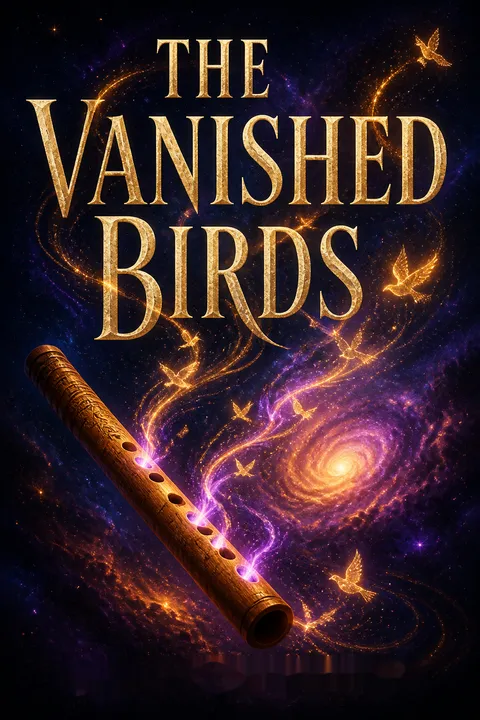
Kaeda is born in a small agrarian village on Umbai-V, marked by an extra finger removed at birth—a scar that becomes his talisman. His childhood is shaped by the rhythms of harvest and the stories of offworlders who visit every fifteen years. During one such visit, a mysterious offworld captain, Nia, gifts him a wooden flute, igniting a longing for the stars and a connection that will haunt him for decades. The flute becomes a symbol of hope, desire, and the possibility of escape from the confines of his world. Kaeda's life, like the scar on his hand, is shaped by small wounds and the dreams they inspire, setting the stage for a story about time, love, and the ache of what might have been.
Time's Strange Currents
Kaeda grows into adulthood, his life measured by the fifteen-year cycles of the offworlders' visits. His relationship with Nia is fleeting but transformative, a single night that lingers as a wound and a promise. As the years pass, Kaeda's world changes—friends marry, children are born, and loved ones die. He becomes governor, fulfilling his father's prophecy, but the ache of longing for something beyond never leaves him. Time, for Kaeda, is both a gift and a thief, stretching and folding in ways he cannot control. The flute remains by his side, a reminder of the woman who comes and goes, always younger, always out of reach, as he ages and the world moves on.
The Boy Who Fell
One night, a fiery crash brings a mute, traumatized boy to Kaeda's village. The villagers are wary, but Kaeda takes him in, sensing a kinship with the lost and the strange. The boy, later named Ahro, is haunted by violence and silence, but finds solace in music—especially the flute Kaeda gives him. As Ahro learns to play, the village's suspicion softens, and Kaeda's home becomes a haven for the boy. Yet, Ahro's presence is a catalyst, stirring old wounds and new possibilities, and setting in motion events that will ripple far beyond the village's borders.
Nia's Long Journey
Nia, the offworld captain, is tasked with transporting Ahro away from Umbai-V, into the uncertain safety of the stars. Her ship, the Debby, becomes a patchwork family: Nia, her loyal and wounded crew, and the silent, musically gifted boy. As they travel through the Pocket—a realm where time bends and years pass in moments—Nia struggles with her own history of loss, guilt, and the impossible responsibility of caring for a child who is both precious and dangerous. The crew's bonds are tested by secrets, trauma, and the relentless passage of time, as Nia tries to give Ahro the home she never found for herself.
The Quiet Ship
Ahro's origins are revealed: he was raised on the Quiet Ship, a place of cruelty and silence, where children serve masked musicians and are punished for the slightest mistake. His only comfort was the Kind One, a secret teacher who gave him the gift of language and the hope of escape. Music is both his torment and his salvation. When he finally finds his name—Ahro—it is an act of self-creation, a claim to identity in a world that tried to erase him. The Debby's crew becomes his new family, but the scars of the Quiet Ship linger, shaping his fears and his longing for connection.
Fumiko's Dream of Wings
Fumiko Nakajima, the architect of the great space stations, is driven by childhood memories of ugly birds and a mother's impossible standards. Her brilliance brings her fame, but her heart is marked by loneliness and a brief, passionate love with Dana, a woman she must leave behind for her work. Fumiko's stations—Pelican, Macaw, Barbet, Thrasher—are her legacy, a way to save humanity from a dying Earth, but also a monument to the people and places she can never return to. Her story is one of sacrifice, ambition, and the cost of building a future on the bones of the past.
The Gathering of Strays
As the Debby travels the fringe, its crew—each marked by loss, exile, or failure—finds purpose in caring for Ahro and each other. Sartoris, the party architect turned teacher, documents their journey, finding meaning in small acts of kindness and the routines that bind them. The crew's relationships deepen through shared hardship, laughter, and the slow work of healing. Ahro learns from each of them: how to fly, to heal, to fight, to negotiate, to love. The ship becomes a home, not because it is safe or perfect, but because it is a place where broken people choose to stay and care for one another.
Lessons in Leaving
Ahro comes of age among the stars, yearning for love and belonging. His first romance, with a boy named Oden on a distant world, is awkward, tender, and transformative—a brief moment of joy and self-discovery. But Ahro's power, the Jaunt, is awakening: the ability to travel instantly across space, guided by music and longing. This gift is both a miracle and a curse, drawing the attention of those who would use him and threatening to tear him from the only home he has known. The lesson of leaving is that every connection is fragile, every home temporary, and every love shadowed by the possibility of loss.
The Jaunt Revealed
Ahro's secret is exposed: he is the key to instantaneous travel, the living engine behind the Fast Travel technology that will reshape the galaxy. Betrayed by those he trusted, he is captured and turned into a resource—his body wired, his mind drugged, his identity erased. The miracle of the Jaunt becomes a commodity, fueling the expansion of Umbai's empire, even as it destroys the boy at its heart. The crew of the Debby is scattered, broken by loss and guilt, while Nia is left to mourn the child she could not save. The cost of progress is measured in blood and memory.
Betrayals and Exiles
Fumiko, exiled and stripped of her legacy, is haunted by the ghosts of her past—Dana, her lost love; Hart, her loyal friend; the thousands who died for her ambition. Vaila, the pilot who betrayed her crew, is rewarded with a hollow title and a life of luxury she cannot bear. Nia, adrift and grieving, finds herself among the salvage fleets, her only comfort the memory of music and the hope that Ahro might still be out there. Each character is exiled by their choices, seeking forgiveness or oblivion, and learning that redemption is a journey with no certain end.
The New Resource
Ahro, now called Acquisition, is reduced to a tool—his humanity stripped away, his memories suppressed, his body kept alive only to serve the needs of others. Yet, in the depths of his captivity, a spark remains: the memory of music, the echo of a name, the hope of return. The world moves on, celebrating the wonders of Fast Travel, oblivious to the suffering that makes it possible. But in the darkness, Ahro waits, listening for the song that might lead him home.
The Thousand Fires
Nia, refusing to give up, embarks on a years-long quest to find Ahro, using music as a beacon to guide him back. Each song is a flare, a fire on the shore of the impossible, calling to the boy lost in the machinery of empire. Sartoris, aging and forgetful, remains her companion, chronicling their journey as they skip from world to world, always hoping, always searching. The fires multiply, each one a testament to love's refusal to surrender, even in the face of overwhelming odds.
Breaking the Sky
Fumiko, in her final act, destroys the capsule that imprisons Ahro, shattering the system that feeds on his power. The resulting chaos ripples across the galaxy—ships lost, stations displaced, the old order broken. In the moment of destruction, Ahro is freed, his body returned to the world that first gave him a name. The cost is immense—lives lost, dreams undone—but in the breaking of the sky, there is the possibility of something new.
The Last Homecoming
On the fields of Umbai-V, Nia finds Ahro at last, broken but alive. Their reunion is quiet, tender, and hard-won—a moment of grace after years of pain. The world has changed: the village is unrecognizable, the old ways gone, the future uncertain. But in the act of coming home, in the embrace of those who have survived, there is a glimmer of hope. The story ends not with triumph, but with the simple, stubborn act of loving what remains, and the promise that, even in a vanished world, the night still belongs to those who dare to sing.
Analysis
A meditation on time, loss, and the cost of progressThe Vanished Birds is a sweeping, emotionally resonant exploration of what it means to love, to lose, and to persist in a universe shaped by the relentless march of time and the machinery of empire. At its core, the novel asks: What is the price of survival? What do we owe to those we leave behind, and to those we carry with us? Through its nonlinear structure, its use of music as both motif and mechanism, and its focus on found family, the story interrogates the ways in which individuals are commodified, exploited, and forgotten in the name of progress. Yet, it is also a story of hope—the stubborn, defiant hope that persists in the face of despair. The lessons of the book are hard-won: that home is not a place, but a practice; that love is an act of will as much as of feeling; and that even in a vanished world, the night still belongs to those who dare to sing. In a modern context, the novel resonates as a critique of late capitalism, a warning about the dangers of technological utopianism, and a celebration of the small, persistent acts of care that make survival possible. Its ultimate message is that the future is built not on miracles, but on the courage to remember, to return, and to love what remains.
People Also Read


Characters
Kaeda
Kaeda is the heart of the opening narrative—a boy marked by a scar, destined for ordinary greatness as a village governor, yet haunted by the extraordinary. His charisma and longing set him apart, but he is ultimately shaped by the limits of his world and the slow, relentless passage of time. His relationship with Nia is both a source of hope and a wound that never heals, teaching him the bittersweet lesson that some dreams are meant to be lived only in memory. Kaeda's journey is one of acceptance, learning to find meaning in the everyday, even as he aches for the stars.
Nia Imani
Nia is a woman forged by loss and responsibility, her life a series of departures and returns. She is fiercely protective, yet haunted by guilt and the fear of failing those she loves. Her relationship with Kaeda is a touchstone, but it is her bond with Ahro that defines her arc—a love that is both maternal and desperate, a refusal to let go even when all seems lost. Nia's psychological complexity lies in her struggle to balance duty and desire, to find home in a universe that is always moving on. Her development is a testament to the power of persistence, vulnerability, and the courage to love in the face of inevitable loss.
Ahro (The Boy)
Ahro is the vanished bird—the silent, traumatized child who becomes the key to the galaxy's future. His early life on the Quiet Ship is marked by cruelty and deprivation, but also by the secret kindness of the Kind One, who gives him language and hope. Music is both his torment and his salvation, a thread that connects him to others and to himself. As he grows, Ahro's longing for connection and belonging is complicated by the awakening of his power—the Jaunt—which makes him both precious and vulnerable. His journey is one of self-discovery, agency, and the painful cost of being seen as a resource rather than a person. In the end, his story is about reclaiming his name, his body, and his right to choose.
Fumiko Nakajima
Fumiko is the architect of humanity's future, a genius driven by childhood wounds and the impossible standards of her mother. Her love for Dana is the emotional core of her life, a brief, bright flame that shapes everything that follows. Fumiko's stations are monuments to both hope and loss, built on the bones of the past and the dreams of a better tomorrow. Her psychological depth lies in her capacity for both creation and destruction, her willingness to sacrifice everything for progress, and her ultimate reckoning with the cost of her ambition. Fumiko's final act is one of atonement, a breaking of the system she helped build.
Sartoris Moth
Sartoris is the observer, the one who records the journey and gives it meaning. Once a party architect, he becomes Ahro's tutor and the ship's unofficial historian, finding purpose in small acts of kindness and the routines that bind the crew. His own loneliness and longing for connection mirror the larger themes of the story. As he ages and his memory fades, Sartoris becomes a symbol of the fragility of history and the importance of bearing witness, even when the world forgets.
Vaila Jenssen
Vaila is the pilot whose devotion to Fumiko and the system leads her to betray her crew. Her actions are driven by a desperate need for approval and belonging, but result in exile, guilt, and a hollow reward. Vaila's psychological arc is one of self-destruction and the search for redemption—a reminder that loyalty, when misplaced, can be as dangerous as betrayal. Her fate is a meditation on the cost of complicity and the difficulty of forgiving oneself.
Sonja
Sonja is the ship's veteran, marked by trauma and loss, but also by resilience and humor. Her relationship with Royvan is a rare source of joy, a testament to the possibility of healing even in the aftermath of violence. Sonja's development is shaped by her willingness to protect others, her struggle with her own demons, and her ultimate sacrifice. She embodies the story's theme of found family and the ways in which broken people can make each other whole.
Royvan Hollywell
Royvan is the ship's doctor, haunted by the loss of a patient and the collapse of his career. His journey is one of slow recovery, learning to trust and care again in the company of fellow exiles. His love for Sonja is a quiet, steady force, and his role as caretaker extends to the entire crew. Royvan's arc is about forgiveness—of himself and others—and the possibility of starting over, even when the past cannot be undone.
Em Reese
Em is the engineer, a survivor of the substrata, whose skills are matched only by his cynicism. His history with the black market and his complicated loyalties make him both valuable and dangerous. Em's relationship with the crew is marked by banter, rivalry, and a grudging affection that deepens over time. His fate is a reminder of the risks inherent in trust and the ways in which the past can catch up with even the most resourceful.
The Kind One
The Kind One is both a real figure from Ahro's past and a symbolic presence in his dreams—a teacher, a protector, and ultimately a psychopomp who offers the choice between surrender and persistence. Their role is to remind Ahro (and the reader) that even in the darkest places, there is the possibility of kindness, and that the journey is shaped as much by those who help us as by those who harm us. The Kind One's presence is a thread of hope, a promise that the end is not the only thing that matters.
Plot Devices
Nonlinear Time and the Pocket
The novel's structure is built around the manipulation of time—through the Pocket, where years pass in moments, and through the cycles of visits, departures, and returns. This device allows the story to explore the emotional cost of time's passage: the pain of aging while others remain young, the ache of missed opportunities, and the bittersweet nature of memory. The nonlinear narrative mirrors the characters' psychological journeys, as they are forced to reckon with the consequences of choices made in one era that echo across decades. The Pocket is both a literal and metaphorical space—a place where the rules of reality are suspended, and where the true shape of longing is revealed.
Music as Connection and Catalyst
Music is the novel's central motif and plot engine. The flute, the song of homecoming, and the rhythms of work and play are all means by which characters connect, communicate, and ultimately find their way back to each other. Music is both a source of trauma (for Ahro) and a path to healing; it is the key to the Jaunt, the signal that guides the lost home, and the language that persists when words fail. The recurring use of music as a plot device allows the story to explore themes of memory, identity, and the power of art to transcend suffering.
The Jaunt and the Commodification of Miracles
Ahro's power—the Jaunt—is at first a mystery, then a miracle, and finally a commodity. The process by which his gift is discovered, exploited, and turned into the engine of empire is a central plot device, driving the story's critique of capitalism, colonialism, and the dehumanization of the individual. The transformation of Ahro from person to "Acquisition" is both a personal tragedy and a commentary on the ways in which society consumes its most vulnerable. The Jaunt is also a narrative device that allows for sudden shifts in setting, perspective, and possibility, keeping the story in constant motion.
Found Family and the Ship as Home
The Debby and its crew are a microcosm of the novel's larger themes: exile, belonging, and the search for home. The ship is both a literal vessel and a metaphor for the fragile, makeshift families we create in the face of loss. The routines, rivalries, and rituals of shipboard life provide structure and meaning, even as the outside world threatens to tear them apart. The destruction of the Debby and the scattering of its crew are foreshadowed throughout, underscoring the story's insistence that home is not a place, but a choice—a commitment to care, even when the world is vanishing.
Foreshadowing and Circular Structure
The novel is rich in foreshadowing and circular motifs: the scar, the flute, the song, the cycles of visits and departures, the return to Umbai-V. Characters' lives are shaped by patterns they cannot escape, and the story's structure mirrors this, returning again and again to moments of loss, longing, and reunion. The final homecoming is both an ending and a beginning, a reminder that every story is a circle, and that the act of returning is itself a kind of hope.

Download PDF
Download EPUB
.epub digital book format is ideal for reading ebooks on phones, tablets, and e-readers.








































