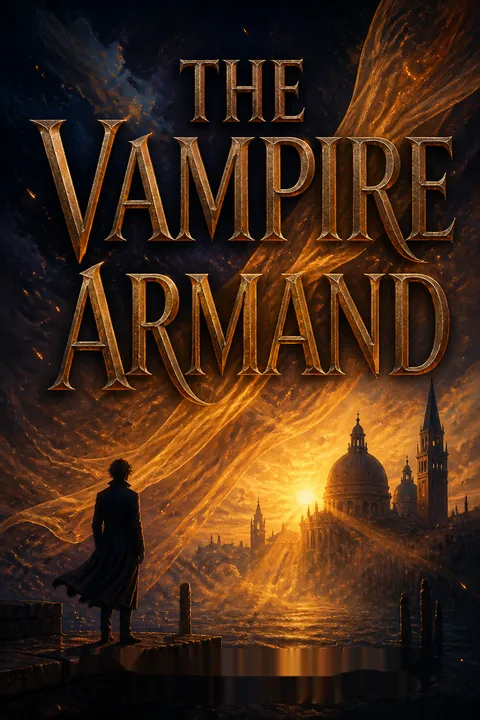

Plot Summary
Chapel of the Unmoving
In the aftermath of Lestat's catastrophic spiritual journey, Armand enters a chapel filled with vampires, but his focus is on Lestat, who lies motionless before the crucifix, lost in a coma-like state. Armand, himself a centuries-old vampire, is haunted by memories and the weight of his own past. He feels both love and alienation from the gathering of immortals, and is drawn to the innocence of his mortal companions, Sybelle and Benji. The chapel, once a place of faith, is now a sanctuary for the lost and damned, and Armand's longing for meaning and connection is palpable as he contemplates his own role in this strange family of the undead.
Marius' Venetian Sanctuary
Armand recalls his rescue from slavery and despair by Marius, a powerful and cultured vampire who becomes his mentor and lover. In Marius' Venetian palazzo, Armand—then called Amadeo—finds a world of beauty, art, and learning. Marius surrounds him with luxury, education, and affection, nurturing his mind and soul. The palazzo is a haven from the brutality of Armand's past, and Marius' love is both paternal and passionate. Yet, beneath the surface, there is always the shadow of immortality and the price it demands. Armand's transformation from a broken child to a cherished protégé is marked by both joy and the seeds of future sorrow.
The Making of Amadeo
As Amadeo matures under Marius' guidance, he is initiated into the pleasures and complexities of Venetian society. He experiences love, sensuality, and the intoxicating freedom of youth. But tragedy strikes when Amadeo is poisoned and near death. In a desperate act of love and necessity, Marius gives him the Dark Gift, transforming him into a vampire. The process is both excruciating and ecstatic, a rebirth that severs Amadeo from his mortal life forever. He awakens to a world of heightened senses and eternal night, but also to the loneliness and hunger that define the vampire's existence.
Venice: Beauty and Innocence
Amadeo flourishes in Venice, surrounded by art, music, and the camaraderie of Marius' other apprentices. He revels in the city's splendor and the pleasures of immortality, but innocence cannot last. The outside world encroaches, and the palazzo's peace is shattered by violence and betrayal. The arrival of the Children of Darkness, a fanatical vampire coven, brings destruction and death. Marius is burned and lost, the apprentices are slaughtered, and Amadeo is taken captive. The paradise of Venice is revealed as fragile, its beauty unable to shield against the darkness that always lurks beneath.
Lessons of Love and Loss
Imprisoned by the Children of Darkness, Amadeo—now called Armand—endures torture, starvation, and the loss of all he loves. He is forced to kill his beloved Riccardo and is broken in body and spirit. The coven, led by Santino, indoctrinates him into their bleak, religiously-tinged philosophy. Armand's faith is twisted into fanaticism, and he becomes a leader of the Paris coven, enforcing the old ways with cruelty. The trauma of loss and the perversion of love leave deep scars, shaping Armand's identity and his relationship to faith, beauty, and power.
The Fall of Paradise
Armand's tenure as coven master in Paris is marked by ritual, superstition, and the suppression of individuality. The arrival of Lestat, a rebellious and charismatic vampire, shatters the old order. Lestat's disregard for tradition and his embrace of modernity expose the emptiness of the coven's beliefs. The Theatre des Vampires is born, a place where vampires perform for mortals, blurring the line between predator and prey. Armand's world is upended, and he is left adrift, his faith in both God and the old ways destroyed. The fall from paradise is complete, and cynicism takes root.
The Children of Darkness
The Children of Darkness, with their strict rules and rituals, represent the dangers of religious extremism and the denial of joy. Armand is both victim and perpetrator, enforcing their laws even as he suffers under them. The coven's philosophy is one of suffering, penance, and the rejection of beauty. Armand's memories of Venice and Marius haunt him, and he longs for the lost innocence and love of his youth. The Children of Darkness are ultimately a dead end, their worldview unable to sustain meaning or happiness, and Armand's eventual break from them is both liberation and exile.
Paris: The Theatre of Shadows
In Paris, Armand reinvents himself as the leader of the Theatre des Vampires, a troupe of immortals who perform for mortal audiences. The theatre becomes a metaphor for the masks vampires wear and the roles they play to survive. Armand's relationships with Louis and Claudia, two tragic vampires, are marked by longing, jealousy, and the impossibility of true connection. The theatre's destruction and Claudia's death leave Armand more isolated than ever, his search for meaning and redemption thwarted by the very nature of his existence.
The Bridge of Sighs
Armand's narrative bridges the gap between his past and the present, recounting centuries of wandering, loss, and failed love. He reflects on his relationships with Daniel, his mortal companion turned vampire, and with other immortals who drift in and out of his life. The world changes, but Armand remains haunted by memory and regret. The Bridge of Sighs is both literal and symbolic—a passage from innocence to experience, from hope to resignation. Armand's longing for connection and meaning persists, even as he doubts the possibility of either.
Lestat's Divine Madness
The narrative returns to the present, where Lestat's encounter with Memnoch the Devil has left him shattered. Lestat's journey through Heaven and Hell, his confrontation with God and the Devil, and his receipt of Veronica's Veil are recounted through Armand's eyes. The story becomes a meditation on faith, suffering, and the possibility of redemption. Lestat's madness is both a warning and a mirror for Armand, who is drawn to the mystery of the Veil and the promise of divine love. The boundaries between reality and vision blur, and the search for God becomes a search for self.
The Veil and the Sun
Armand is transfixed by the sight of Veronica's Veil, believing he sees the true face of Christ. Overcome by zeal, he exposes himself to the sun, seeking martyrdom and union with the divine. The experience is both agony and ecstasy, a vision of Heaven and a descent into Hell. Armand's body is destroyed, but his soul is filled with a sense of grace and forgiveness. The limits of faith are tested, and the meaning of suffering is called into question. The Veil becomes a symbol of both hope and the impossibility of certainty.
Resurrection in the Snow
Against all odds, Armand survives his self-immolation, buried in snow and ice. He is rescued by Sybelle and Benji, whose love and care restore him to life. The process of healing is slow and painful, but it is also redemptive. Armand's bond with his mortal companions deepens, and he finds in them a new reason to live. The resurrection is both literal and metaphorical—a return from the brink of death and despair, and a renewal of hope. Love, in its many forms, proves stronger than suffering or loss.
Sybelle and Benji's Gift
Armand's gratitude to Sybelle and Benji leads him to embrace them as his own, offering them protection, education, and affection. Their innocence and resilience inspire him, and he becomes their guardian and teacher. The trio forms a new family, bound not by blood but by choice and love. Armand's relationship with Sybelle is especially profound, as her music becomes a source of healing and transcendence. The gift of companionship is both a blessing and a responsibility, and Armand is determined to cherish it, even as he fears its eventual loss.
The Price of Immortality
Marius, seeking to spare Armand the pain of losing his beloved mortals, transforms Sybelle and Benji into vampires. The act is both a gift and a violation, granting them eternal life but robbing them of their humanity. Armand is devastated, feeling betrayed by Marius and uncertain of his own role in their fate. The price of immortality is revealed as steep—eternal life comes at the cost of innocence, and the burden of memory and regret is inescapable. The new family must navigate the challenges of their changed existence, seeking meaning in a world that is both wondrous and cruel.
Marius' Final Lesson
In the aftermath of Sybelle and Benji's transformation, Armand confronts Marius about the meaning of love, faith, and history. Marius confesses his loss of optimism and his disillusionment with humanity, citing the endless cycles of violence and suffering. Armand, in turn, reflects on his own journey and the lessons he has learned. The final lesson is that love is necessary, even in a world without answers, and that the search for meaning is itself an act of hope. The past cannot be undone, but the future remains open to possibility.
The Meaning of the Veil
Armand is asked what he truly saw in the Veil, and he struggles to articulate the meaning of his vision. For him, Christ is not a distant God or a theological abstraction, but a brother—a symbol of suffering, love, and the possibility of redemption. The Veil represents both the limits of faith and the enduring power of hope. Armand's answer is deeply personal, rooted in experience rather than doctrine. The mystery of Christ remains unresolved, but it is a source of comfort and inspiration, a reminder that love and suffering are intertwined.
The New Family
Armand comes to accept Sybelle and Benji's transformation, finding joy in their companionship and the new life they share. The family is united by love and mutual understanding, and Armand is able to forgive Marius and himself for the choices that have been made. The past is acknowledged but not allowed to define the present. The embrace of life, with all its pain and beauty, becomes an act of courage and grace. The new family is a testament to the possibility of healing and the enduring power of love.
The Last Appassionata
In the final scene, Sybelle plays the Appassionata for Lestat, who has emerged from his long silence. The music is a symbol of resilience, creativity, and the capacity for renewal. Armand, surrounded by those he loves, finds a measure of peace and fulfillment. The story ends not with answers, but with the affirmation of life and the promise of eternity. The last notes of the Appassionata echo through the night, a reminder that beauty endures, even in the face of suffering and loss.
Analysis
Anne Rice's The Vampire Armand is a meditation on trauma, faith, and the search for meaning in a world defined by suffering and loss. Through Armand's journey—from abused child to cherished protégé, from fanatic coven master to disillusioned wanderer—the novel explores the complexities of love, the dangers of fanaticism, and the enduring power of beauty. The story is both a personal confession and a philosophical inquiry, using religious symbolism, theatricality, and the motif of the Veil to probe the mysteries of existence. Rice's vampires are not merely monsters, but seekers—haunted by memory, longing for connection, and struggling to reconcile their need for love with the violence of their nature. The novel's modern resonance lies in its exploration of trauma, resilience, and the possibility of healing. Armand's ultimate acceptance of love, despite the inevitability of loss, is both a lesson and a hope: that even in a world without answers, the embrace of life and the affirmation of beauty can offer redemption. The book invites readers to reflect on the meaning of suffering, the limits of faith, and the necessity of love, leaving us with the haunting echo of the Appassionata—a testament to the endurance of the human (and inhuman) spirit.
Review Summary
Reviews for The Vampire Armand are deeply polarized. Many readers adore Armand as a complex, tragic character, praising Rice's lush historical descriptions—particularly of Renaissance Venice—and his compelling exploration of faith, trauma, and identity. Fans frequently cite it as a favorite in the series. Critics, however, find the narrative plotless and overwritten, the pacing sluggish, and the religious digressions overwhelming. A recurring concern across both positive and negative reviews is the romanticization of Marius's abusive, predatory relationship with the underage Armand.
People Also Read


Characters
Armand (Amadeo)
Armand is the central figure of the novel, a vampire whose life has been shaped by trauma, love, and the search for faith. Once a child slave, he is rescued and transformed by Marius, only to lose his innocence in the violence of the Children of Darkness. As a coven master, he enforces cruel laws, but is ultimately left adrift by the collapse of old certainties. Armand's relationships—with Marius, Lestat, Louis, Daniel, Sybelle, and Benji—are marked by longing, loss, and the hope for redemption. Psychologically, he is both vulnerable and resilient, capable of deep love but also of cruelty and despair. His journey is one of self-discovery, as he seeks meaning in suffering and the possibility of grace.
Marius
Marius is Armand's maker and the embodiment of Renaissance humanism. He is cultured, wise, and compassionate, but also burdened by centuries of loss and disillusionment. Marius' love for Armand is both paternal and romantic, and his efforts to shield his protégé from pain are ultimately futile. He is haunted by the destruction of his Venetian sanctuary and the loss of his ideals. Marius' final lesson is one of humility and acceptance—he recognizes the limits of reason and the necessity of love, even in a world filled with suffering. His relationship with Armand is complex, marked by both tenderness and betrayal.
Lestat
Lestat is a force of nature, challenging tradition and embracing modernity. His journey through Heaven and Hell, and his confrontation with God and the Devil, leave him shattered and transformed. Lestat's charisma and defiance inspire both admiration and fear in those around him. He is a catalyst for change, exposing the emptiness of old beliefs and the need for new meaning. Psychologically, Lestat is both confident and vulnerable, driven by a hunger for experience and understanding. His relationship with Armand is one of rivalry, fascination, and mutual dependence.
Sybelle
Sybelle is a gifted pianist whose music becomes a source of solace and transcendence for Armand. She is gentle, resilient, and deeply loving, able to accept Armand's nature without fear or judgment. Her obsession with the Appassionata is both a refuge and a form of self-expression. Sybelle's transformation into a vampire is both a loss and a liberation, granting her eternal life but severing her from humanity. Her relationship with Armand is marked by intimacy, trust, and the promise of renewal. She represents the possibility of healing and the enduring power of beauty.
Benji
Benji is a streetwise Arab boy who becomes Armand's devoted friend and protector. He is clever, adaptable, and fiercely loyal, able to navigate the dangers of the mortal and immortal worlds alike. Benji's love for Sybelle and Armand is unconditional, and he is willing to risk everything for their safety. His transformation into a vampire is both a reward and a challenge, granting him power but also responsibility. Benji's resilience and optimism are a counterpoint to Armand's melancholy, and his presence is a source of strength and joy.
Santino
Santino is the master of the Children of Darkness, a coven defined by religious fanaticism and the cult of suffering. He is both charismatic and cruel, capable of both tenderness and brutality. Santino's philosophy is one of penance and denial, and he seeks to impose his worldview on others. His relationship with Armand is complex, marked by both mentorship and oppression. Psychologically, Santino is driven by a need for order and meaning, but is ultimately unable to escape the emptiness of his own beliefs.
Pandora
Pandora is a powerful and enigmatic vampire, once the lover of Marius. She is wise, compassionate, and fiercely independent, able to see through illusions and challenge dogma. Pandora's presence is a source of comfort and perspective for Armand, and her relationship with Marius is marked by both love and regret. Psychologically, she is resilient and adaptable, able to survive the vicissitudes of history without losing her sense of self.
Louis
Louis is a vampire defined by guilt, longing, and the search for meaning. His relationship with Armand is one of mutual recognition and shared suffering. Louis' love for Claudia and his inability to save her haunt him, and his friendship with Armand is both a solace and a reminder of loss. Psychologically, Louis is introspective and sensitive, capable of deep empathy but also prone to despair.
Gabrielle
Gabrielle is Lestat's mother and a vampire of great strength and independence. She is emotionally distant, analytical, and often cold, able to survive without attachment or sentiment. Gabrielle's relationship with Lestat is complex, marked by both love and estrangement. She serves as a foil to the more passionate and vulnerable characters, embodying the dangers of detachment and the limits of reason.
Daniel Molloy
Daniel is a journalist who becomes obsessed with the vampire world and is eventually transformed by Armand. His relationship with Armand is marked by both love and resentment, as he struggles to adapt to immortality and the loss of his humanity. Daniel's journey is one of disillusionment and adaptation, and his presence is a reminder of the costs and consequences of the vampire's gift.
Plot Devices
Framing Narrative and Confession
The novel is structured as a confession, with Armand dictating his life story to David Talbot. This framing device allows for reflection, self-analysis, and the layering of memory and interpretation. The act of storytelling becomes a means of healing and self-understanding, as Armand seeks to make sense of his past and his present. The confession is both a plea for forgiveness and an assertion of identity, and it invites the reader to share in Armand's journey of self-discovery.
Flashbacks and Nonlinear Structure
The narrative moves fluidly between past and present, using flashbacks to explore Armand's childhood, his relationship with Marius, the destruction of Venice, and his experiences with the Children of Darkness. This nonlinear structure mirrors the vampire's experience of time—eternal, cyclical, and haunted by memory. The interplay of past and present allows for thematic resonance and the exploration of psychological trauma.
Religious Symbolism and the Veil
The motif of Veronica's Veil and the face of Christ recurs throughout the novel, serving as a symbol of faith, suffering, and the possibility of redemption. The Veil is both a literal relic and a metaphor for the mysteries of existence. Armand's vision of the Veil and his exposure to the sun are pivotal moments, testing the limits of faith and the meaning of martyrdom. Religious symbolism is used to explore questions of love, suffering, and the nature of the divine.
Theatricality and Performance
The motif of theatre—both literal and metaphorical—runs throughout the novel. Vampires perform for mortals and for each other, adopting masks and roles to survive and to find meaning. The Theatre des Vampires is a central setting, and the idea of life as performance is used to explore questions of identity, authenticity, and the possibility of connection.
Foreshadowing and Irony
The novel is rich in foreshadowing, with early hints of tragedy and betrayal that are fulfilled in later chapters. Irony is used to highlight the gap between intention and outcome, especially in the relationships between makers and fledglings, lovers and friends. The tension between hope and despair is a constant undercurrent, and the possibility of renewal is always shadowed by the inevitability of loss.
The Vampire Chronicles Series

About the Author
Other books by Anne Rice




Download PDF
Download EPUB
.epub digital book format is ideal for reading ebooks on phones, tablets, and e-readers.








































