
Plot Summary
Arrival at Lapis Lazuli
Emma M. Lion arrives in London, seeking refuge and a fresh start at Lapis Lazuli House after years of upheaval. The house, with its eccentric architecture and storied past, is both a comfort and a challenge. Emma is greeted not by her cousin Archibald, but by the disapproving Parian and the earnest young maid, Agnes. Instead of her old rooms, Emma is banished to the garret, a dusty, neglected space at the top of the house. Despite the indignity, Emma's wit and resilience shine as she surveys her new domain, determined to make the best of her circumstances. The house itself, with its blue door and peculiar charm, becomes a character in her journey, promising both obstacles and the possibility of belonging.
Exile to the Garret
Banished to the garret, Emma is informed she must take her meals alone, a supposed punishment that she turns into a small victory. She reflects on her appearance, her family's legacy, and the peculiarities of her new life. The garret, with its mismatched furniture and half-windows, becomes a symbol of her liminal state—neither fully at home nor entirely an outcast. Emma's humor and self-awareness color her observations, as she muses on her family's opinions and her own uncertain place in the world. The isolation, while intended as a slight, offers her a measure of freedom and introspection, setting the tone for her journey toward self-reliance.
Surveying St. Crispian's
Continuing her father's tradition, Emma walks the streets of St. Crispian's, reacquainting herself with its oddities and history. The neighborhood is a patchwork of eccentric architecture, local legends, and a vibrant, if peculiar, community. Emma delights in the quirks—backward shop signs, the annual debate over door colors, and the storied past of Traitors Road. Her observations reveal both her affection for the place and her outsider status. The walk is tinged with nostalgia and longing, especially as she recalls her late friend Maxwell, whose absence haunts her. St. Crispian's, with its blend of respectability and strangeness, mirrors Emma's own contradictions and sets the stage for the unfolding drama.
Ghosts and Local Legends
Emma learns from Agnes about The Roman, a ghostly centurion said to haunt the area, and the monks who sing at Jacob's Well. These stories, shared with a mix of skepticism and delight, deepen the sense of St. Crispian's as a place where the past lingers and the unusual is commonplace. Emma's curiosity and openness to the uncanny reflect her imaginative spirit and her willingness to find meaning in the oddities around her. The supernatural elements serve as both metaphor and mood, hinting at the unseen forces—memory, loss, and hope—that shape Emma's life. The blending of the mundane and the magical becomes a hallmark of her experience in the neighborhood.
The Bookshop and the Scheme
Emma passes The Dalliance, the local bookshop, unable to afford even a battered volume. Her love of books and the loss of her father's library weigh heavily on her. A clandestine correspondence with her cousin Arabella reveals a shared scheme to outwit their formidable Aunt Eugenia, buying Emma precious time before being swept into the social season. The exchange is playful and conspiratorial, highlighting Emma's resourcefulness and the importance of female friendship. The deprivation of books is both literal and symbolic—a hunger for knowledge and agency that drives Emma's actions and underscores her sense of loss and aspiration.
The Battle for Allowance
Emma's attempts to secure her promised allowance and back salary are met with evasion and hostility from Cousin Archibald. Her frustration grows as she is repeatedly rebuffed, forced to confront the precariousness of her situation. The battle over money is not just about survival, but about dignity and justice. Emma's determination to claim what is rightfully hers is both a practical necessity and a moral stand. The episode exposes the power dynamics within her family and the broader constraints faced by women of her era. Emma's wit and tenacity are tested, but she refuses to be cowed by Archibald's intransigence.
Cleaning, Mice, and Memories
Emma embarks on a campaign to clean and reclaim her garret, enlisting Agnes's help and confronting the reality of mice and dust. The physical labor is both cathartic and symbolic—a way of asserting control over her environment and, by extension, her life. As she scrubs and paints, Emma reflects on her family's history, the scars of past conflicts, and the losses that have shaped her. The process of making the garret habitable becomes a metaphor for her broader struggle to carve out a space for herself in a world that has often marginalized her. The chapter is suffused with humor, resilience, and a growing sense of agency.
The Vicar's Spell
Emma attends church and recalls the arrival of Young Hawkes, the charismatic vicar whose sermons are more soliloquy than lecture. His honesty, eloquence, and unconventional style have captivated the neighborhood, offering both spiritual and intellectual nourishment. Emma's encounter with Hawkes is brief but significant—he once gave her a card inscribed "Imperterritus," meaning undaunted. The memory of this exchange, and Hawkes's ongoing presence, serve as a touchstone for Emma's own journey toward courage and self-definition. The vicar's spell is not just religious, but literary and emotional, weaving together the themes of grace, language, and resilience.
The Scar and the Past
Archibald finally confronts Emma, their conversation laced with old grievances and the ever-present Scar—a physical and symbolic reminder of past conflict. The tangled web of inheritance, resentment, and obligation is laid bare, revealing the complexities of family loyalty and betrayal. Emma's position as heir is both a privilege and a burden, complicated by Archibald's sense of injustice and her own precarious security. The encounter is tense but clarifying, forcing Emma to reckon with the legacy of her parents, the machinations of her relatives, and her own capacity for forgiveness and resolve.
The Empty Bookshelf
Emma's acquisition of a green bookcase, and the solitary presence of Milton's Paradise Lost upon it, becomes a poignant symbol of both regret and aspiration. The emptiness of the shelves mirrors the gaps in her education and the sacrifices she has made—selling her father's beloved library to fund a disappointing schooling. Emma's reflections on this loss are tinged with both sorrow and determination. The bookshelf stands as a testament to her enduring love of learning and her hope for a future in which she can reclaim what was lost. It is a quiet but powerful assertion of identity and purpose.
The Education Bargain
Emma recounts the painful decision to sell her father's books in order to attend a better school, only to find the education she received was narrow and utilitarian. The bargain, made in good faith, left her both undereducated and bereft of her most cherished inheritance. Emma refuses to blame her younger self, recognizing the impossible choices imposed by circumstance and gender. The chapter is a meditation on the value of knowledge, the constraints of class and gender, and the resilience required to make meaning from disappointment. Emma's self-forgiveness and resolve to rebuild are hard-won and deeply moving.
Summoned by Lady Eugenia
Emma is summoned to Spencer House, where her formidable Aunt Eugenia outlines her plans for the social season. Emma is to serve as the foil and spy for her cousin Arabella's debut, a role that is both strategic and demeaning. The encounter is a battle of wits, with Emma deploying humor and subtle resistance against her aunt's machinations. The episode highlights the performative nature of social life and the limited agency afforded to women. Emma's ability to navigate these dynamics with intelligence and irony is both a survival strategy and a quiet act of rebellion.
The Silver Accusation
Emma is accused by Matilde and Archibald of stealing silver, a charge that is both absurd and wounding. The accusation is used to justify withholding her salary, compounding her financial and emotional vulnerability. Emma's protestations are met with suspicion and contempt, exposing the fragility of her position and the ease with which her integrity can be impugned. The episode is a study in the corrosive effects of mistrust and the ways in which women's reputations can be weaponized against them. Emma's indignation is righteous, but her options are limited, forcing her to seek justice through wit and persistence.
The Ruined Fortune
A visit to the bank reveals the full extent of Archibald's mismanagement—her inheritance has been squandered on his vanity and gambling. Emma is left with only a year's worth of funds and the prospect of selling her beloved home. The revelation is devastating, stripping away the last illusions of security and exposing the vulnerability of women's property rights. Emma's anger and despair are palpable, but so too is her determination to fight for her future. The chapter is a turning point, forcing Emma to confront the realities of dependence, betrayal, and the necessity of self-advocacy.
The Reckoning with Archibald
Emma and Archibald finally meet to settle accounts, their conversation a mix of recrimination, negotiation, and reluctant cooperation. Archibald agrees to pursue her salary and hand over the household books, while Emma takes charge of the finances and the search for a tenant for Lapis Lazuli Minor. The encounter is fraught but productive, marking a shift in the balance of power. Emma's assertiveness and strategic thinking come to the fore, as she navigates the complexities of survival and the need for compromise. The reckoning is both an end and a beginning, setting the stage for new challenges.
The Trunk of Treasures
Arabella brings Emma a trunk containing the few belongings of her parents that were saved—her mother's Bible, her father's illustrated Shakespeare, and other cherished mementos. The return of these treasures is a moment of profound relief and joy, offering Emma a tangible connection to her past and a renewed sense of identity. The objects are more than keepsakes; they are symbols of love, memory, and the possibility of renewal. Emma's gratitude and hope are palpable, as she resolves to savor and rebuild what she can, even in the face of uncertainty.
The Tenant Arrives
A new tenant, a man with a limp and an enigmatic presence, moves into Lapis Lazuli Minor. His arrival is heralded by local superstition—the Roman ghost's warning—and met with curiosity and apprehension by Emma and Agnes. The tenant's presence introduces an element of mystery and potential change, disrupting the fragile equilibrium of the household. Emma's observations are tinged with both intrigue and anxiety, as she senses that his arrival may signal a new chapter in her own story. The encounter is brief but charged, hinting at future developments and the ever-present possibility of transformation.
A Lion's Resolve
As Emma receives her new calling cards, embossed with a lion and edged in sea green, she feels a surge of resolve. Despite the betrayals, losses, and uncertainties she has faced, Emma is determined to keep Lapis Lazuli House and carve out a life on her own terms. The lion becomes a symbol of her undaunted spirit, her refusal to be defeated by circumstance or the machinations of others. The chapter closes with Emma's quiet but fierce commitment to survival, dignity, and the pursuit of knowledge and belonging. Her journey is far from over, but she faces it with courage and hope.
Analysis
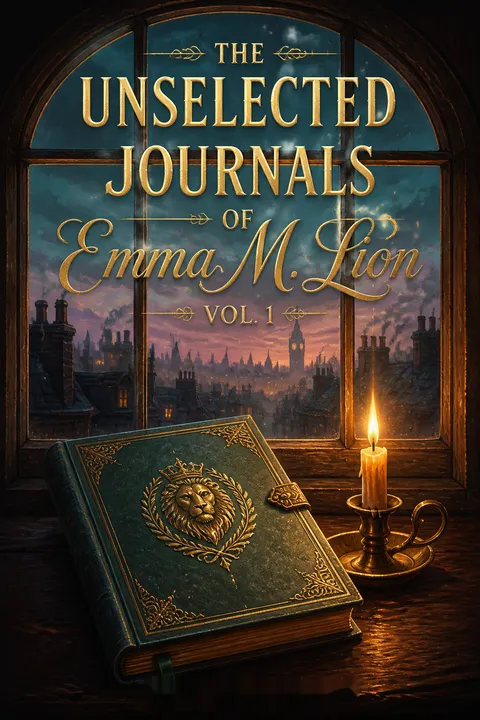
Beth Brower's The Unselected Journals of Emma M. Lion: Vol. 1 is a masterful exploration of resilience, identity, and the quest for agency in a world defined by constraint. Through Emma's incisive, witty, and deeply personal journals, the novel interrogates the limitations imposed by gender, class, and family, while celebrating the power of intellect, humor, and friendship. The setting—richly drawn and alive with eccentricity—serves as both sanctuary and battleground, reflecting the protagonist's internal struggles and aspirations. The use of the journal format foregrounds the act of self-narration as both survival and subversion, allowing Emma to reclaim her story in the face of marginalization and betrayal. The novel's blend of social satire, emotional honesty, and subtle magic creates a narrative that is at once timeless and acutely relevant, offering readers both the comfort of recognition and the challenge of empathy. Ultimately, Emma's journey is a testament to the enduring human need for home, knowledge, and the courage to persist—undeterred, undaunted, and unbowed.
Review Summary
The Unselected Journals of Emma M. Lion receives an overall strong reception, with most readers charmed by Emma's wit, humor, and resilience in 1883 London. Many compare it favorably to Jane Austen and Anne of Green Gables. Common critiques note a slow start, with readers often warming up significantly by the final third. The audiobook narrator receives particular praise. Several reviewers note the series improves with subsequent volumes, and many who initially struggled ultimately became devoted fans.
People Also Read




Characters
Emma M. Lion
Emma is the heart of the narrative—a young woman marked by loss, displacement, and the constant negotiation of her place in a world that undervalues her. Orphaned and exiled to the garret of her own inheritance, she faces financial precarity, family betrayal, and the lingering grief of lost loved ones. Emma's voice is sharp, self-aware, and laced with humor, masking vulnerability with irony. Her relationships—with friends, family, and the house itself—are complex, shaped by loyalty, resentment, and longing. Over the course of the story, Emma grows from a position of marginalization to one of agency, reclaiming her right to home, knowledge, and self-determination. Her journey is both deeply personal and emblematic of the struggles faced by women seeking autonomy in a patriarchal society.
Cousin Archibald Flat
Archibald is both Emma's antagonist and a pitiable figure—her cousin by marriage, current master of Lapis Lazuli House, and the architect of her financial woes. His actions are driven by insecurity, entitlement, and a deep-seated resentment of Emma's inheritance. The infamous Scar, a result of past conflict, symbolizes the unresolved tensions between them. Archibald's mismanagement of Emma's fortune is both a personal betrayal and a reflection of broader social injustices. Yet, beneath his bluster and cruelty, there are glimpses of shame and vulnerability. His relationship with Emma is adversarial but not wholly irredeemable, marked by moments of reluctant cooperation and mutual dependence.
Agnes
Agnes is the young maid-turned-cook at Lapis Lazuli, a figure of comic relief and unexpected wisdom. Her background—pruned of accent and ambition by her mother—mirrors Emma's own struggles with class and expectation. Agnes's loyalty to Emma is unwavering, and her practical support is essential to Emma's survival. She is both confidante and co-conspirator, her innocence and candor providing a counterpoint to the machinations of the household. Agnes's superstitions and fears, especially regarding ghosts and new tenants, add texture and humor to the narrative, while her resilience and kindness ground Emma in moments of crisis.
Arabella Spencer
Arabella is Emma's closest familial ally, a cousin whose beauty and social standing contrast with Emma's precarious position. Despite her advantages, Arabella is not immune to the constraints of her gender and class, and she navigates the expectations of the social season with both grace and subversive wit. Her friendship with Emma is marked by loyalty, shared schemes, and a willingness to bend the rules for mutual benefit. Arabella's retrieval of Emma's lost treasures is an act of profound generosity, reinforcing the importance of female solidarity in a world that often pits women against each other.
Parian
Parian is Archibald's valet-turned-butler, a figure of authority and obstruction in Emma's daily life. His disdain for Emma is palpable, and he delights in enforcing her exile and reporting on her activities. Parian's adherence to hierarchy and propriety is both a source of frustration and dark comedy. Yet, his role is not entirely antagonistic; he is a product of the same system that marginalizes Emma, and his actions are shaped by self-preservation and limited agency. Parian's presence underscores the rigid social structures that govern the household and the subtle ways in which power is exercised and contested.
Lady Eugenia Spencer
Lady Eugenia is the matriarch of Emma's extended family, a woman of formidable intellect and iron will. Her approach to life is pragmatic, her affections reserved, and her expectations exacting. Lady Eugenia's schemes for the social season are both a source of opportunity and constraint for Emma, who is cast as both foil and spy in her cousin's debut. The relationship between aunt and niece is a battle of wits, marked by mutual respect and underlying tension. Lady Eugenia's gestures—such as the commissioning of Emma's calling cards—reveal a complex blend of duty, pride, and reluctant affection.
Young Hawkes
Young Hawkes is the spiritual and intellectual center of St. Crispian's, a vicar whose sermons are as much performance as prayer. His honesty, eloquence, and empathy have endeared him to the community, and his brief but meaningful interactions with Emma serve as moments of affirmation and guidance. Hawkes's own outsider status—marked by youth, beauty, and a disregard for convention—mirrors Emma's, and their connection is one of mutual recognition. The card he gives Emma, inscribed "Imperterritus," becomes a talisman of courage and resilience.
Mary Bairrage
Mary is Emma's closest friend from school, a typist at the forefront of a changing world. Her wit, resourcefulness, and willingness to flout convention make her both a confidante and a role model. Mary's escapades—disguises, card games, and clandestine outings—offer Emma a glimpse of alternative possibilities and the power of female agency. Their friendship is a source of laughter, support, and mutual encouragement, providing a vital counterbalance to the constraints of family and society.
Maxwell
Maxwell, though deceased, is a constant presence in Emma's thoughts and memories. His loss is a wound that shapes her emotional landscape, coloring her experiences with longing and unresolved grief. Maxwell represents both the possibility of love and the pain of its loss, a figure whose absence is felt as keenly as any living character. Emma's reflections on Maxwell are tender, honest, and suffused with regret, underscoring the enduring impact of loss and the difficulty of moving forward.
The New Tenant
The unnamed tenant who arrives at Lapis Lazuli Minor is an enigma—a man marked by physical injury and an air of secrecy. His presence is heralded by local superstition and met with both curiosity and apprehension. The tenant's interactions with Emma are brief but charged, suggesting the possibility of future connection or conflict. He represents change, uncertainty, and the intrusion of the unknown into Emma's carefully managed world.
Plot Devices
Journal Format and First-Person Voice
The narrative unfolds through Emma's private journals, granting readers intimate access to her thoughts, emotions, and perceptions. This device allows for a blend of candor, wit, and self-censorship, as Emma both reveals and conceals aspects of her experience. The first-person voice is confessional and performative, inviting empathy while maintaining a critical distance. The journal format enables the layering of past and present, memory and observation, and provides a flexible structure for digression, reflection, and commentary. It also foregrounds the act of storytelling itself, highlighting the ways in which narrative can be both a means of survival and a form of resistance.
Setting as Character
The neighborhood of St. Crispian's and the house of Lapis Lazuli are more than backdrops—they are active participants in the story. Their quirks, histories, and legends shape the lives of the characters and reflect the themes of belonging, inheritance, and transformation. The setting is rendered with loving detail and a sense of the uncanny, blurring the boundaries between the ordinary and the magical. The house, in particular, mirrors Emma's own journey—neglected, resilient, and full of hidden potential.
Symbolism and Motif
Recurring symbols—Emma's empty bookshelf, the ghostly Roman, the lion on her calling cards—serve as touchstones for the narrative's deeper concerns. Books represent knowledge, loss, and the possibility of renewal; ghosts embody the persistence of the past and the unresolved nature of grief; the lion stands for courage, identity, and the refusal to be tamed. These motifs are woven throughout the story, enriching its emotional and thematic resonance.
Social Satire and Irony
The narrative is suffused with irony and social satire, as Emma navigates the absurdities of class, gender, and family. Her humor is both a coping mechanism and a form of critique, exposing the hypocrisies and injustices of her world. The interplay of wit and vulnerability creates a distinctive tone—by turns comic, poignant, and incisive.
Foreshadowing and Unresolved Mysteries
The story is punctuated by moments of foreshadowing—the arrival of the new tenant, the warnings of the Roman ghost, the unresolved fate of Maxwell's remains. These elements create a sense of anticipation and suspense, suggesting that Emma's journey is far from over and that the world of St. Crispian's is full of secrets yet to be revealed.
The Unselected Journals of Emma M. Lion Series Series
Download PDF
Download EPUB
.epub digital book format is ideal for reading ebooks on phones, tablets, and e-readers.








































