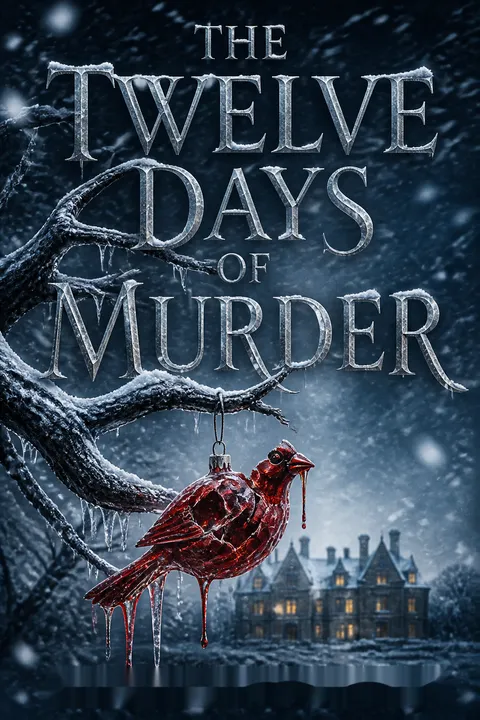

Plot Summary
Invitation to the Past
Charley, a struggling actress, receives an ornate invitation to a Christmas murder-mystery weekend at a remote Scottish manor, Snellbronach. The host is Ali, her old university friend, and the guest list is the former Murder Masquerade Society—a group that once meant everything to Charley, until it all fell apart after the disappearance of Karl, Ali's twin brother. Despite her misgivings and the painful memories, Charley is lured by the promise of money and a chance to reconnect, or perhaps redeem herself. The journey north is long and fraught with anxiety, as Charley reflects on her outsider status and the unresolved trauma that still haunts her from the group's last fateful Christmas together.
Masqueraders Reunite Uneasily
At the airport, Charley reunites with the other Masqueraders: glamorous Pan, caustic Shona, privileged Leo, brash Gideon, and Sam, now a weary doctor, along with Sam's girlfriend Audrey. The group's dynamic is instantly fraught—old rivalries, class differences, and unresolved accusations bubble beneath the surface. Ali is notably absent, and her husband Leo is evasive about her whereabouts. The group's banter is laced with subtle cruelty, and Charley feels both invisible and exposed. The shadow of Karl's disappearance lingers, and the group's collective guilt and suspicion are palpable, setting the stage for a gathering where no one truly trusts anyone else.
Arrival at Snellbronach
The group arrives at Snellbronach, a stark, art-deco manor deep in the snowy Scottish wilderness. The house is beautiful but cold, both literally and emotionally. They are greeted by Kamala, the caterer, who is brisk and unimpressed by their privilege. The house is cut off from the world—no phone signal, no Wi-Fi, and soon, heavy snow traps them in. Each guest finds a personalized character binder for the murder-mystery game, with roles and secrets eerily close to their real lives. Charley is cast as the "murderer," and the game's plot seems designed to dredge up old wounds, especially the infamous missing necklace and Karl's disappearance.
Old Wounds, New Games
As the group settles in, the murder-mystery game begins to blur with reality. The character assignments and secrets in the binders echo the group's real betrayals and scandals. Charley's role as a social-climbing thief mirrors the accusations once leveled at her. Pan, the influencer, is cast as a wealthy widow with a secret. The group's dinner devolves into a cruel rehashing of old grievances, with Charley once again the scapegoat. The game's structure, meant to be fun, instead becomes a vehicle for Ali's revenge and the group's collective self-destruction.
The Murder-Mystery Begins
The murder-mystery game kicks off in earnest, with elaborate clues, scheduled "murders," and secret rendezvous. Charley is to "kill" Pan's character in the library at 3 a.m., but she oversleeps and misses the appointment. The house's isolation and the group's paranoia intensify. Strange noises, missing luggage, and the sense of being watched unsettle everyone. The game's plot—centered on betrayal, blackmail, and hidden motives—feels less like fiction and more like a reckoning for the group's real sins. The boundaries between play-acting and genuine malice begin to dissolve.
Secrets in the Snow
As snow buries the manor, the group's secrets come to light. Charley discovers that her character's "secret" is uncomfortably close to her real affair with Karl. Pan is distracted and fragile, haunted by a mysterious phone call. Shona, obsessed with folklore, claims to see omens of death in the woods. The group's gifts on Christmas morning are macabre: dead birds, entrails, and symbolic tokens that point to their real-life guilt. The sense of foreboding grows, and the guests realize that the game is no longer just a game—someone is using it as cover for something far more sinister.
A Body in the Pear Tree
On Christmas morning, Pan is found hanged from a pear tree in the garden, dressed in her character's costume. At first, the group assumes suicide, but Charley notices a head wound and the absence of a stool—Pan could not have done this alone. The murder-mystery has become real. The group is horrified, but their shock quickly turns to suspicion. With the house snowed in and no way to call for help, they realize the killer must be one of them. The "twelve days of Christmas" theme is now a blueprint for murder.
The Game Turns Deadly
The group tries to maintain order, but fear and mistrust spiral. Gideon is found dead in his bed, strangled with a gold chain and surrounded by Monopoly money and Pan's rings—another murder staged to fit the game's theme. The survivors turn on each other, each with motive and opportunity. Shona, increasingly unhinged, claims supernatural forces are at work. Kamala, the caterer, is suspected of being an outsider with her own agenda. The group's alliances fracture, and the sense of doom is overwhelming.
Accusations and Revelations
The survivors gather to share their secrets, hoping honesty will save them. Pan's posthumous video confession reveals she was a fraud and the one who tried to drown Charley years ago. Leo admits to knowing about a secret passage at Fenshawe Manor, which may have enabled Karl's disappearance. Ali confesses to orchestrating the weekend to force the truth about Karl. The group realizes that their interconnected betrayals and cover-ups have made them all complicit—and all targets.
The Locked Room Vanishing
Through a series of flashbacks and confessions, the truth about Karl's disappearance emerges. Leo reveals the existence of a priest hole in the manor's chimney, which he showed Karl as part of a planned prank. But someone blocked the exit and lit a fire, trapping Karl inside and causing his death by smoke inhalation. The group is devastated by the realization that Karl's death was not a clever vanishing act, but a cruel, accidental murder enabled by their own secrets and negligence.
The Truth About Pan
Pan's video confession and Ali's revelations expose Pan as a working-class imposter who built her influencer persona on lies. She admits to stealing Dasha's necklace and to attacking Charley in the lake out of fear of exposure. Her death, staged as a "partridge in a pear tree," is both punishment and tragic irony. The group is forced to confront how their own snobbery and cruelty drove Pan to desperation, and how their games have always been about exclusion and survival.
The Gifts and Their Meanings
The Christmas gifts left for each guest are revealed to be more than just props—they are personalized accusations. Entrails for Shona, a dead bird for Sam, a gaudy necklace for Charley, feathers for Leo, and so on. Each gift is a clue to the recipient's guilt or secret, and a warning of their potential fate. The group realizes that the killer is using the game's structure to mete out justice, and that anyone could be next.
The Second Death
Shona is found eviscerated in her room, her body staged with straw and her own macabre sculpture. The murder is a grotesque echo of the folklore she loved, and a direct reference to the "belly-slitter" legend she invoked. The survivors are now certain that the killer is among them, and that the murders are both personal and symbolic. The group's remaining trust collapses, and survival becomes the only goal.
Shona's Folklore and Fear
Shona's obsession with folklore and punishment becomes a lens for the group's fear. She believes they are being judged for their sins, and her death seems to confirm it. The survivors, wracked with guilt and paranoia, begin to see omens and threats everywhere. The line between psychological horror and real danger blurs, and the group's collective breakdown accelerates the killer's plan.
The Circle Narrows
With the group decimated, the survivors attempt to escape through the snow, seeking help in the woods. Charley and Audrey discover a hermit's hut, but realize that the killer is still among them. Poisoned coffee incapacitates most of the group, and Kamala disappears. The survivors are forced to confront the possibility that the killer is not an outsider, but one of their own, driven by revenge for a past wrong.
The Real Killer Revealed
In a final confrontation by the frozen burn, Audrey attacks Charley, revealing her motive: her child died as a result of a drug scandal that the Masqueraders helped cover up or profit from. Sam, the doctor, is revealed as the mastermind, manipulating Audrey and orchestrating the murders as retribution for the group's complicity in corporate malfeasance. Charley, wounded and desperate, manages to fight back, and with the help of a local hermit, survives the attack.
The Final Confrontation
Charley, near death from hypothermia and injury, is rescued and the authorities finally arrive. Dasha, Karl's ex, appears, having been delayed by the snow, and helps piece together the final events. Sam is arrested, and the full extent of his and Audrey's crimes is revealed. The group's collective guilt, privilege, and moral blindness are laid bare. Charley, traumatized but alive, is left to reckon with the cost of survival and the meaning of justice.
Aftermath and Survival
In the aftermath, Charley returns to her life, forever changed by the ordeal. The media fixates on the sensational details, missing the deeper story of corruption and complicity. The surviving Masqueraders scatter, their reputations and relationships in ruins. Charley finds a measure of peace in her own resilience, determined to live honestly and reject the toxic games of her past. The story ends with a note of hard-won hope, as Charley embraces her future, scarred but unbroken.
Analysis
A chilling dissection of privilege, guilt, and complicityThe Twelve Days of Murder is more than a country house whodunit—it is a razor-sharp exploration of how privilege, ambition, and unresolved trauma can curdle into violence. The novel uses the familiar tropes of the murder-mystery genre—locked rooms, isolated settings, elaborate games—to expose the rot at the heart of a group bound by secrets and self-interest. Each character is both victim and perpetrator, their fates shaped by the sins they try to hide and the games they play to survive. The story interrogates the allure and danger of performance, the corrosive effects of exclusion, and the ways in which systems of power protect the guilty and punish the vulnerable. In the end, survival comes not from winning the game, but from breaking free of its rules. The novel's final message is a call for honesty, accountability, and the courage to face the truth—even when it means standing alone.
People Also Read



Characters
Charley Sale
Charley is the emotional heart of the story—a working-class actress who never truly fit in with the privileged Masqueraders. Her longing for acceptance is matched by her acute sense of exclusion and injustice. Charley's relationship with Karl was a secret source of joy and pain, and his disappearance left her with unresolved trauma. Throughout the novel, Charley's vulnerability is matched by her resilience; she endures suspicion, betrayal, and violence, yet ultimately survives through a combination of empathy, intelligence, and sheer will. Her journey is one of self-acceptance, as she learns to value her own integrity over the approval of others.
Ali Boniface
Ali is Karl's twin and the architect of the deadly reunion. Driven by grief and a need for answers, she manipulates the group into returning to the scene of their greatest trauma. Ali's intelligence and organizational skills are formidable, but her emotional wounds make her ruthless and sometimes blind to the consequences of her actions. Her relationship with Leo is strained by secrets, and her need for control is both her strength and her undoing. Ali's arc is one of reckoning—with her own complicity, her brother's death, and the limits of revenge.
Pan (Pandora Papadopoulos)
Pan is the group's glamorous social media star, but her persona is a carefully constructed lie. Born Maria, she reinvented herself to escape her modest origins, only to become trapped by her own deceptions. Pan's cruelty towards Charley is rooted in fear of exposure, and her eventual confession reveals deep insecurity and regret. Her murder, staged as a "partridge in a pear tree," is both a punishment for her lies and a commentary on the group's obsession with image over substance. Pan's story is a cautionary tale about the cost of self-invention and the hunger for belonging.
Leo
Leo is the quintessential old-money Englishman, charming and clever but deeply compromised. His desire to collect "interesting people" masks a fear of irrelevance, and his political ambitions are built on a foundation of lies and manipulation. Leo's knowledge of the priest hole is the key to Karl's disappearance, and his failure to act is both cowardice and self-preservation. His relationship with Ali is ultimately destroyed by his inability to be honest. Leo's arc is one of exposure—his carefully curated persona is stripped away, revealing the emptiness beneath.
Gideon
Gideon is the group's golden boy, wealthy and brash but emotionally stunted by his domineering father. His desperate need for approval makes him both a bully and a victim. Gideon's complicity in academic cheating and his unrequited love for Pan leave him vulnerable to manipulation. His murder, staged with gold chains and Monopoly money, is a brutal commentary on the emptiness of privilege. Gideon's story is a portrait of the damage wrought by toxic masculinity and the illusion of invulnerability.
Shona
Shona is the group's wild card—an artist obsessed with death, ritual, and the supernatural. Her fascination with punishment and folklore becomes a self-fulfilling prophecy, as she is murdered in the style of the "belly-slitter" legend she invokes. Shona's cruelty is often a mask for her own fear and alienation, and her willingness to push boundaries makes her both a catalyst and a casualty. Her death is the most gruesome, and her legacy is a warning about the dangers of playing with darkness.
Sam
Sam is the most complex and ultimately the most dangerous member of the group. Outwardly compassionate and rational, he is haunted by a fatal mistake in his medical career and a growing sense of powerlessness. Sam's partnership with Audrey in the murders is driven by a twisted sense of justice and a desire to punish the group for their complicity in a drug scandal. His ability to compartmentalize and rationalize his actions makes him a chilling antagonist. Sam's arc is a descent into moral nihilism, as he becomes the very monster he claims to abhor.
Audrey
Audrey is Sam's girlfriend and the only true outsider in the group. Her son's death from a drug the Masqueraders helped promote gives her a powerful motive for revenge. Audrey's vulnerability masks a deep well of rage, and her partnership with Sam is both a cry for justice and a surrender to despair. Her final confrontation with Charley is a tragic collision of pain and guilt, and her death is both an act of self-destruction and a release.
Kamala
Kamala is the hired help, unimpressed by the group's privilege and drama. Her outsider status gives her a unique perspective, and her refusal to be drawn into the group's games is both self-preservation and quiet rebellion. Kamala's role is to bear witness, and her survival is a testament to the value of staying apart from toxic systems. She is a reminder that not everyone is complicit, and that sometimes the best way to survive is to refuse to play.
Karl Boniface
Karl is the absent center of the story—the brilliant, manipulative founder of the Murder Masquerade Society whose disappearance haunts everyone. His love affair with Charley, his rivalry with Pan, and his penchant for blackmail make him both beloved and feared. Karl's death is the result of a chain of betrayals, accidents, and cover-ups, and his absence is the wound that never heals. He is both the reason for the reunion and the ghost that drives the group to destruction.
Plot Devices
Locked Room Mystery and Role-Play
The novel's central device is the murder-mystery game, which provides both a literal and metaphorical framework for the unfolding drama. The locked room mystery of Karl's disappearance is mirrored by the group's entrapment in the snowbound manor, and the roles assigned in the game echo the characters' real secrets and sins. The use of personalized binders, symbolic gifts, and scheduled "murders" creates layers of foreshadowing and misdirection. The narrative structure alternates between present-day events and flashbacks to the original Masquerade, gradually revealing the truth through confession, confrontation, and psychological unraveling. The interplay of performance and reality is both a source of suspense and a commentary on the masks we wear.
Download PDF
Download EPUB
.epub digital book format is ideal for reading ebooks on phones, tablets, and e-readers.








































