
Plot Summary
Exile to Elderby
Inspector Frank Grasby, a well-meaning but accident-prone Yorkshire detective, is sent to the remote village of Elderby as punishment for a series of professional blunders. Facing the threat of career ruin, he's tasked with solving a spate of farm thefts, but the assignment feels more like exile. As Christmas approaches, Grasby's personal life is in shambles, his relationship with his stern vicar father is strained, and he's haunted by a sense of failure. The move to Elderby, arranged by his gruff superior Juggers, is meant to keep him out of trouble, but it soon becomes clear that the village is anything but peaceful. The stage is set for a collision of personal redemption and rural intrigue.
Arrival in a Snowbound Village
Grasby's journey to Elderby is fraught with mishaps, including a malfunctioning car and a cold, forbidding landscape. Upon arrival, he's met with a mix of suspicion and parochial hospitality from the villagers, who are quick to judge outsiders. The local police station is sleepy and undermanned, and his new landlady, Mrs. Gaunt, is an eccentric widow with a pet raven and a house full of strange rules. Grasby's first impressions are of a place frozen in time, where everyone knows everyone else's business, and secrets lurk beneath the surface. The snowbound setting amplifies the sense of isolation and impending danger.
The Hanging Beggar's Secrets
Grasby's first foray into Elderby's social life is at the Hanging Beggar, the village pub with a macabre history. Here, he meets Ethel, the gossipy landlady, and a cast of locals who are both welcoming and wary. The pub is the heart of the community, a place where rumors and grievances are exchanged as freely as pints. Grasby quickly learns that the village's tranquility is an illusion; beneath the surface, old resentments, class tensions, and personal vendettas simmer. The pub's name and its dark past foreshadow the violence and secrets that will soon come to light.
Holly House Intruder
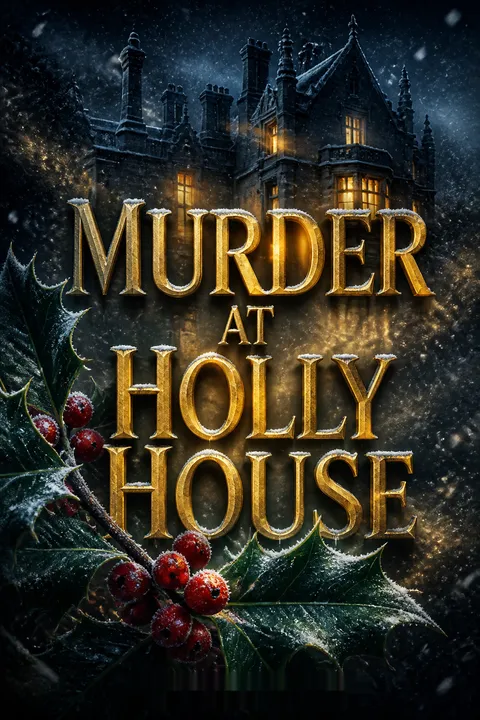
Grasby is called to Holly House, the grand estate of the nouveau-riche Lord Damnish, after reports of an intruder. The Damnish family—blustering Lord, brittle Lady, and their disaffected son—are embroiled in their own dramas and resentments. The break-in is dismissed as a failed burglary, but the incident exposes the family's paranoia and the strained relationship between the aristocracy and the villagers. Grasby's investigation is hampered by class snobbery and the family's reluctance to cooperate, but he senses that the incident is more than a simple crime—it's a harbinger of deeper unrest.
Chimney Corpse Discovery
The case takes a macabre turn when Grasby discovers a corpse jammed up the Holly House chimney. The dead man is a stranger, and his presence in such a bizarre location shocks the village. The investigation is complicated by the lack of identification, the family's evasiveness, and the possibility that the death is linked to the recent farm thefts. Grasby's instincts tell him that the murder is part of a larger conspiracy, but he's hampered by local resistance and his own outsider status. The discovery sets off a chain of events that will unravel the village's darkest secrets.
Daisy Dean, American Intern
Grasby is joined by Daisy "Deedee" Dean, an American criminology intern whose charm and intelligence quickly make her indispensable. Deedee's presence is both a comfort and a complication; her outsider perspective helps Grasby navigate Elderby's insular world, but her own motives are ambiguous. She is connected to powerful interests across the Atlantic, and her relationship with the villagers—and with Grasby—grows increasingly complex. Together, they form an uneasy partnership, probing the links between the murder, the farm thefts, and the village's tangled social web.
The Damnish Family's Shadows
Grasby delves deeper into the Damnish family's history, uncovering a legacy of betrayal, lost titles, and simmering resentment. Lady Damnish's estranged brother, Ingleby, emerges as a key figure, representing the old aristocracy displaced by Lord Damnish's rise. The family's internal conflicts mirror the broader tensions in Elderby, where old money, new money, and working-class villagers are locked in a struggle for power and respect. Grasby suspects that the family's secrets are at the heart of the violence, but the truth is obscured by layers of deception and self-interest.
Farm Thefts and Local Tensions
The farm thefts that brought Grasby to Elderby prove to be more than simple rural mischief. As he investigates, he uncovers a network of petty criminals, disgruntled tenants, and possible political agitators. The thefts are connected to the broader unrest in the village, serving as both a symptom and a cover for more serious crimes. Grasby's efforts to solve the thefts are frustrated by local loyalties, class prejudice, and the villagers' reluctance to trust an outsider. The sense of unease grows as it becomes clear that the thefts are part of a much larger and more dangerous conspiracy.
A Murder in the Night
The village is rocked by a second murder: Chuck Starr, an American journalist and friend to Deedee, is found strangled and stabbed near the church. The killing is professional, suggesting a perpetrator with military or intelligence training. Grasby's investigation is stymied by official interference, as higher authorities move quickly to suppress the truth. The murder exposes the presence of foreign agents, political intrigue, and the possibility of a coup. Grasby and Deedee realize they are caught in a web of espionage, where trust is scarce and danger is ever-present.
The Disappearing Manuscript
As Grasby investigates Starr's murder, he discovers that the journalist's manuscript—an exposé on wartime secrets and postwar conspiracies—has vanished. The disappearance of this crucial evidence deepens the mystery and heightens the sense of paranoia. Grasby suspects that powerful forces are working to suppress the truth, and that the village is a battleground for rival intelligence agencies. The loss of the manuscript is a turning point, forcing Grasby and Deedee to question everyone's motives—including each other's—and to confront the possibility that they are being manipulated by unseen hands.
The Salt House Mystery
Grasby's investigation leads him to the Salt House, a decaying industrial building on the edge of the moors. Here, he uncovers evidence of clandestine activity: secret meetings, hidden weapons, and coded messages. The Salt House is the nexus of the village's conspiracies, a place where local grievances intersect with national and international intrigue. Grasby's discovery puts him in grave danger, as he becomes the target of both the conspirators and those seeking to silence them. The Salt House becomes the stage for a deadly game of cat and mouse.
Dangerous Revelations
Grasby is betrayed by those he trusted, including his colleague Bleakly and his old family friend Lord Parsley. The true scale of the conspiracy is revealed: a fascist coup is being plotted, with Elderby as its staging ground. The village's petty crimes and personal vendettas are revealed as part of a much larger and more sinister plan. Grasby and Deedee must navigate a landscape of shifting allegiances, where friends become enemies and nothing is as it seems. The danger is no longer just personal—it is national, even global.
The Parish Council Confrontation
At a tense parish council meeting, the village's divisions come to the fore. Grasby is grilled by local notables, including Lady Damnish and retired police officials, while Mrs. Gaunt delivers a chilling prophecy of more bloodshed. The meeting is a microcosm of the village's conflicts: class, power, and the struggle between old and new. Grasby is forced to defend his investigation while concealing the true extent of the danger. The council's inability to face the truth mirrors the broader failure of authority, leaving Grasby and Deedee to act on their own.
Betrayals and Hidden Agendas
As the coup plot accelerates, Grasby is betrayed, kidnapped, and nearly killed by those he thought were allies. He narrowly escapes death with the help of unexpected friends, but the experience leaves him shaken and distrustful. The lines between good and evil blur, as personal ambition, ideology, and survival instincts drive the characters to desperate acts. Grasby realizes that the only way to survive is to trust his own instincts and to rely on the few people who have proven their loyalty. The village becomes a battleground, with Grasby at the center.
The Coup Unfolds
The conspirators' plan comes to fruition: weapons are delivered to the Salt House, and a coup is launched with the aim of seizing Catterick Army Base. Grasby, Deedee, and a handful of loyalists mount a desperate resistance, using guile, courage, and improvised tactics to disrupt the plot. The battle is chaotic and deadly, with betrayals and reversals at every turn. The fate of the village—and the country—hangs in the balance. Grasby's personal journey from exile to hero reaches its climax as he confronts the true architects of the conspiracy.
The Final Confrontation
In the aftermath of the failed coup, Grasby faces his greatest personal and moral challenges. Deedee is gravely wounded, and the cost of victory is high. The true traitors are unmasked, including Lord Parsley, whose betrayal cuts deeply. Grasby is forced to confront the limits of justice, the ambiguities of loyalty, and the price of survival. The village is left scarred, its secrets exposed but not fully resolved. Grasby's own future is uncertain, as he grapples with the consequences of his actions and the knowledge that evil often escapes unpunished.
Aftermath and Cover-Up
The official response to the events in Elderby is swift and ruthless: the coup is covered up, the deaths are explained away, and the surviving conspirators are quietly removed or exiled. Grasby receives a discreet commendation but is left with a sense of disillusionment and loss. The village returns to its outward tranquility, but the scars remain. Grasby's relationship with his father is changed, and his hopes for personal happiness are tempered by the knowledge that justice is often a matter of expediency. The story ends with a sense of unresolved tension, as the cycle of secrets and betrayals continues.
Analysis
A meditation on postwar England's anxieties and the cost of loyaltyMurder at Holly House is more than a country house mystery; it is a darkly comic exploration of the psychological and political fallout of World War II. Through the eyes of Frank Grasby—a flawed, self-aware, and fundamentally decent man—the novel interrogates the nature of trust, the dangers of nostalgia, and the corrosive effects of secrecy. The village of Elderby becomes a microcosm for a nation struggling to reconcile its past with an uncertain future, where old hierarchies are crumbling and new threats emerge from within. The story's blend of espionage, gothic atmosphere, and social satire reflects the complexities of a society in transition, where personal and national loyalties are constantly tested. Ultimately, the novel suggests that justice is often compromised, that evil is rarely vanquished, and that survival requires both courage and adaptability. The lesson is clear: in a world of shifting allegiances and hidden agendas, the only certainty is the necessity of self-reliance and the enduring value of human decency.
Review Summary
Murder at Holly House receives mixed reviews averaging 3.43/5 stars. Readers praise protagonist Frank Grasby's witty narration, humorous father-son dialogue, and authentic 1950s atmosphere. However, many feel misled by festive marketing when the cozy mystery unexpectedly shifts into spy thriller territory. While fans appreciate the entertaining characters and twisty plot, critics find the numerous character switches confusing and the espionage elements disappointing. The bumbling detective's likability divides readers—some find him endearing and amusing, others annoying. Despite strong atmospheric writing, several reviewers struggled with pacing, finding sections dull or difficult to follow.
People Also Read
Characters
Frank Grasby
Inspector Frank Grasby is a man out of step with his time and his profession. Haunted by past failures and a difficult relationship with his vicar father, he is exiled to Elderby as punishment for his blunders. Grasby is intelligent, observant, and deeply moral, but his self-doubt and tendency toward dark humor make him an outsider. He is both a product and a critic of the English class system, navigating the village's social hierarchies with a mix of empathy and skepticism. Over the course of the story, Grasby evolves from a reluctant exile to a reluctant hero, forced to confront the limits of justice and the ambiguities of loyalty. His journey is one of self-discovery, as he learns to trust his instincts and accept the cost of doing what is right.
Daisy "Deedee" Dean
Deedee is a Yale-educated criminology intern whose presence in Elderby is both a blessing and a mystery. Outwardly vivacious and disarming, she is in fact a skilled intelligence operative, sent to monitor both the village and her own allies. Deedee's relationship with Grasby is complex: she is both his confidante and his rival, her motives always slightly out of reach. Her American perspective offers a counterpoint to the village's insularity, and her courage and resourcefulness are crucial to the story's resolution. Deedee's ultimate fate is tragic, underscoring the personal cost of espionage and the dangers of divided loyalty.
Elphinstone Bleakly
Sergeant Bleakly is the embodiment of rural police inertia: narcoleptic, forgetful, and apparently harmless. Beneath this façade, however, lies a man shaped by wartime trauma and capable of betrayal. Bleakly's loyalties are ambiguous; he is both a victim and a perpetrator, manipulated by those above him and complicit in the village's darkest secrets. His eventual exposure as a traitor is both shocking and inevitable, a testament to the corrosive effects of power and fear. Bleakly's psychological complexity adds depth to the story's exploration of trust and deception.
Lord Damnish
Lord Damnish is a self-made man who has bought his way into the aristocracy, displacing the old order and earning the resentment of both villagers and family. He is domineering, insecure, and obsessed with status, but also capable of surprising pragmatism. Damnish's relationship with his wife, son, and the villagers is fraught with tension, reflecting the broader social upheavals of postwar England. He is both a victim and a beneficiary of the system, his actions driven by a need for control and recognition. Damnish's role in the conspiracy is ambiguous, highlighting the blurred lines between self-interest and treason.
Lady Damnish
Lady Damnish is the last scion of the old Elderby family, forced into marriage with Lord Damnish to save her family's fortunes. She is intelligent, manipulative, and fiercely protective of her status. Her estrangement from her brother Ingleby and her involvement in the conspiracy reveal a woman torn between loyalty, ambition, and survival. Lady Damnish's psychological depth lies in her ability to adapt to changing circumstances, using her wits and connections to maintain her position. Her ultimate downfall is a commentary on the costs of compromise and the dangers of unchecked ambition.
Ingleby
Ingleby represents the old order displaced by the rise of men like Lord Damnish. He is cultured, aloof, and deeply resentful, channeling his frustrations into art and subterfuge. Ingleby's relationship with his sister and the villagers is complex; he is both a symbol of lost grandeur and a participant in the village's conspiracies. His motivations are a mix of personal grievance and ideological conviction, making him both a suspect and a victim. Ingleby's psychological arc is one of disillusionment, as he realizes that the past cannot be reclaimed and that loyalty is a double-edged sword.
Mrs. Hetty Gaunt
Mrs. Gaunt is a figure of gothic eccentricity: a widow with a pet raven, a house full of strange rules, and a reputation for second sight. She serves as both comic relief and a source of wisdom, her pronouncements often prescient and unsettling. Mrs. Gaunt's role is that of the village's conscience, reminding Grasby and others of the cyclical nature of history and the dangers of ignoring the past. Her psychological complexity lies in her ability to see through appearances and to survive by adapting to the village's ever-changing power dynamics.
Superintendent Juggers
Juggers is both Grasby's nemesis and his protector, a man whose bluster conceals a deep sense of responsibility. He is a product of the old police culture: tough, pragmatic, and loyal to his own. Juggers' involvement in the cover-up and his ambiguous relationship with the conspirators reflect the moral compromises required by those in power. His psychological arc is one of disillusionment, as he realizes that justice is often a matter of expediency and that loyalty can be both a virtue and a vice.
Lord Parsley (Mitch)
Lord Parsley is a charming, avuncular figure whose betrayal is the story's most personal and devastating. He represents the dangers of nostalgia, privilege, and unexamined loyalty. Parsley's psychological complexity lies in his ability to rationalize treason as patriotism, and in his willingness to sacrifice friends and family for a cause he no longer fully understands. His downfall is a cautionary tale about the perils of unchecked ambition and the corrosive effects of power.
Reverend Croucher
Croucher appears at first as a timid, ineffectual clergyman, but is later revealed as a covert intelligence operative. His dual identity reflects the story's themes of deception, adaptation, and the hidden costs of war. Croucher's psychological arc is one of transformation, as he moves from passive observer to active participant in the village's drama. His ability to navigate both the spiritual and the political realms makes him a key figure in the resolution of the plot.
Plot Devices
Framed Exile and Fish-Out-of-Water
The story's structure is built around Grasby's forced exile to Elderby, a classic "fish-out-of-water" device that allows the reader to discover the village's secrets alongside the protagonist. This device creates both dramatic tension and comic relief, as Grasby's outsider status exposes the absurdities and dangers of rural life. The exile motif also serves as a metaphor for postwar dislocation and the search for meaning in a changing world.
Locked-Room and Closed Community Mystery
Elderby functions as a closed community, where every character is both a suspect and a potential victim. The locked-room aspect of the Holly House murder, combined with the insularity of the village, heightens the sense of claustrophobia and paranoia. This device allows the author to explore themes of trust, betrayal, and the corrosive effects of secrecy, while also providing a framework for the gradual revelation of the conspiracy.
Espionage and Political Intrigue
The plot is driven by layers of espionage, double agents, and political machinations. The use of missing manuscripts, coded messages, and clandestine meetings creates a sense of constant danger and uncertainty. Foreshadowing is employed through cryptic warnings, missing evidence, and the presence of outsiders like Deedee. The narrative structure alternates between personal drama and national crisis, reflecting the interconnectedness of the local and the global.
Unreliable Narration and Shifting Allegiances
The story is told through Grasby's subjective, often self-deprecating perspective, which both grounds the narrative and calls it into question. Characters' motives are constantly shifting, and the reader is never sure who to trust. This device mirrors the psychological effects of espionage and the moral ambiguities of postwar England. The use of red herrings, false confessions, and sudden reversals keeps the reader—and Grasby—off balance.
Gothic and Comic Elements
The novel blends gothic tropes—eccentric landladies, haunted houses, ominous weather—with sharp comic dialogue and self-aware humor. This tonal hybridity allows the story to explore dark themes without descending into despair, and to critique the absurdities of English society with both affection and irony. The gothic elements foreshadow violence and betrayal, while the comic moments provide relief and insight.
Download PDF
Download EPUB
.epub digital book format is ideal for reading ebooks on phones, tablets, and e-readers.








































