
Plot Summary
The Call to Summit
David Ponder, once a successful businessman, now lives in the shadow of loss and regret. After the death of his beloved wife Ellen, he is adrift, haunted by memories and the weight of his past failures and triumphs. Alone in his Dallas penthouse, he clings to the Seven Decisions—principles he once gathered from history's greatest minds during a miraculous journey. As he contemplates his purpose and the meaning of his remaining days, the archangel Gabriel appears, summoning David to a final, urgent summit. Humanity, Gabriel warns, stands on the brink of self-destruction, and David is chosen to lead a gathering of history's most influential Travelers to answer a single, world-altering question: What must humanity do to restore itself to the path of successful civilization?
Grief and Gabriel's Mission
Gabriel reveals the gravity of the summit: humanity is at a precipice, and the fate of civilization hangs in the balance. David, still reeling from grief and self-doubt, is told he will lead the assembly of Travelers—figures like Lincoln, Joan of Arc, and Churchill—because he represents the "common man" and has lived both failure and redemption. Gabriel's presence is both awe-inspiring and intimidating, and David's reluctance is palpable. Yet, the archangel insists that David's ordinariness, humility, and hard-won wisdom make him uniquely qualified. The summit will be a test not just of intellect, but of heart, courage, and the willingness to persist in the face of overwhelming odds.
Gathering of the Travelers
Transported to a timeless, ethereal chamber, David finds himself at the head of a grand table surrounded by ascending rows of seats. One by one, legendary figures arrive: Winston Churchill, Joan of Arc, Abraham Lincoln, and others, each bringing their unique perspective and life experience. The atmosphere is charged with anticipation and reverence, but also with the weight of responsibility. Gabriel presents the question: What must humanity do, individually and collectively, to restore itself to the pathway toward successful civilization? The Travelers are given five chances to answer, each time calling upon a new adviser from among their ranks. The hourglass of humanity's time is set, and the summit begins.
The Question of Civilization
David and Churchill, joined by the first Travelers, dissect the question's meaning. They realize it is not about material success, but about the deeper qualities that make a civilization thrive—virtues, direction, and the restoration of a lost path. The group debates the difference between a "life of success" and a "successful life," recognizing that intention alone is not enough; direction and action are crucial. The Principle of the Path emerges: it is not what we intend, but the direction we choose, that determines our destination. The Travelers agree that the answer must be both individual and collective, practical and profound.
Hope's First Answer
Joan of Arc, the first adviser, passionately argues that hope is the essential ingredient humanity has lost. She recounts her own story—how hope inspired her to lead France to victory and endure martyrdom. Churchill and David agree, reflecting on how hope sustained them through adversity. The group presents "restore hope" as their answer, believing it to be the key to rekindling civilization's spirit. Gabriel, however, returns and gently but firmly rejects the answer. Hope, he says, is necessary but not sufficient. The Travelers are shaken but must press on, realizing that the solution is more complex than any single virtue.
Wisdom and Its Limits
With Abraham Lincoln now at the table, the Travelers turn to wisdom as the next possible answer. They discuss the nature of wisdom—its roots in truth, humility, and the ability to foresee consequences. Wisdom, they agree, is not knowledge alone, but discernment and the willingness to learn from others and from experience. Yet, as they present "seek wisdom" to Gabriel, they are again told that while wisdom is a vital component, it is not the answer. The group is humbled, recognizing that even the greatest minds can be limited by their own perspectives and that wisdom, though powerful, is not the sole remedy for humanity's ills.
Courage Under Fire
Eric Erickson, a forgotten hero of World War II, joins the summit and shares his story of undercover bravery. The Travelers discuss courage—not as the absence of fear, but as action in spite of it. They note that courage is contagious, that it enables all other virtues, and that moral courage is rarer than physical bravery. The group presents "show courage" as their answer, convinced that bold action is what humanity needs. Gabriel, however, rejects this as well, explaining that courage, like hope and wisdom, is only a part of the whole. The Travelers are frustrated, but the process deepens their understanding of the interconnectedness of virtues.
The Search for Self-Discipline
King David joins the summit, bringing the perspective of a leader who has known both triumph and failure. He speaks of self-discipline—the ability to do what must be done, even when one does not feel like it. The group explores how self-discipline underpins all achievement and how its absence leads to disaster. They discuss the pain of self-discipline versus the pain of regret, and how self-mastery is the foundation of greatness. Yet, when Lincoln presents "exhibit self-discipline" as their answer, Gabriel again says it is not enough. The Travelers are running out of chances, and the hourglass continues to empty.
Character and the Hourglass
With time running short, George Washington Carver is called to the table. He suggests that all the virtues discussed—hope, wisdom, courage, self-discipline—are components of character. The group agrees that character is what determines greatness, that it is built through habits, choices, and adversity. They present "build character" as their answer, believing it to be the synthesis of all previous attempts. Gabriel smiles, and the room erupts in celebration—until Lincoln realizes that Gabriel's smile was not confirmation. The answer is still incorrect. The Travelers are devastated, and the hourglass is nearly empty.
The False Victory
The Travelers' joy turns to confusion and anger as they realize their answer was not accepted. Gabriel explains that struggle has value, and that the process itself is meaningful, but the solution remains elusive. The group is left to grapple with disappointment and the fear that they have failed humanity. The hourglass, symbolizing the time left for civilization, becomes the focus of their anxiety. As the sand continues to fall, the Travelers are forced to confront the possibility that even the greatest assembly of minds can falter when faced with the ultimate question.
The Hourglass Mystery
Benjamin Franklin and others notice something strange about the hourglass: its flow of sand seems to respond to the Travelers' actions and attitudes. They realize that humanity's time is not fixed, but can be extended or shortened by collective behavior and choices. As the last grains of sand threaten to fall, the group is galvanized to try once more. The summit's rules are set aside, and the Travelers are allowed one final chance. The urgency of the moment brings clarity, and the group prepares to make their last, desperate attempt to save civilization.
The Final Seconds
As the hourglass is about to empty, a voice from the audience cries out, "Do something!" The sand stops. Joshua Chamberlain, Civil War hero, steps forward and explains that in moments of crisis, when all else fails, action—any action—is what changes the course of history. The group realizes that all virtues are meaningless without action. They present "do something" as their answer, and Gabriel asks for a declaration. The Travelers craft a manifesto, urging humanity to act, to begin, to persist—no matter how small the step.
Do Something
Gabriel accepts the answer. The declaration is read aloud: humanity must not wait for perfect conditions or complete understanding, but must act—right now, with whatever is at hand. The Travelers understand that hope, wisdom, courage, and character are all activated by doing something. The hourglass is reset, and the fate of civilization is given another chance. The summit ends in relief and celebration, as the Travelers realize that the simplest answer was the most profound: action is the catalyst for all change.
The Declaration
The Travelers' declaration is a call to arms for every individual: begin where you are, do what you can, and never let fear or uncertainty paralyze you. The declaration emphasizes that while no one can do everything, everyone can do something. It is through collective, persistent action that civilization is restored and advanced. The message is both humbling and empowering, reminding all that greatness is not reserved for the few, but is within reach of anyone willing to act.
Return and Reflection
David is returned to his penthouse, forever changed by the summit. Gabriel visits one last time, affirming that the experience was real and that David's role as Everyman was essential. David reflects on the lessons learned: that the struggle itself is valuable, that persistence is key, and that the truth is found not just in knowing, but in doing. He is left with a sense of peace and purpose, ready to share the declaration with the world and to live out its principles in his own life.
Truth, Best, and Legacy
In a final public interview, David distinguishes between listening, hearing, and understanding. He explains that while listening closely can lead to greatness, only true understanding—the pursuit of Truth—can lead to the Best. The legacy of the summit is not just a set of principles, but a call to seek the Truth, to act upon it, and to inspire others to do the same. The story ends with a challenge to all: do something, pursue the Best, and leave a legacy of action and understanding for future generations.
Analysis
Andy Andrews' The Traveler's Summit is a modern parable that uses the device of a supernatural summit to explore the timeless question of what makes a civilization thrive. By assembling a cast of history's greatest minds, the novel dramatizes the search for a unifying principle that can restore humanity to its highest potential. The story's emotional arc mirrors the journey of many individuals and societies: from hope, through disillusionment and struggle, to the realization that action—however imperfect—is the catalyst for all progress. The repeated failures of the Travelers to find the "right" answer underscore the limitations of intellect, virtue, and even character when divorced from action. The ultimate message—that greatness is not reserved for the extraordinary, but is achieved by ordinary people willing to "do something"—is both humbling and empowering. In an age of complexity, paralysis, and endless debate, the book's call to action is refreshingly simple and deeply resonant. It challenges readers to move beyond contemplation and to participate actively in the shaping of their own lives and the world around them. The summit's lessons—persistence, humility, collaboration, and the courage to act—are as relevant today as ever, offering a blueprint for personal and collective renewal.
Review Summary
The Traveler's Summit receives mostly positive reviews, with readers praising Andrews' storytelling and the book's inspirational messages. Many appreciate the historical figures and life lessons presented. Some readers find it thought-provoking and relevant to current times. A few critics mention it being similar to the previous book or having a disappointing ending. Overall, readers enjoy the blend of fiction and personal growth elements, with many recommending it as a worthwhile read.
People Also Read







Characters
David Ponder
David Ponder is the quintessential "common man" whose life has been marked by both extraordinary highs and devastating lows. Once a successful businessman, he lost everything—only to rebuild his fortune and give it away. Haunted by the death of his wife and the weight of his past, David is chosen by Gabriel to lead the Travelers' Summit because he embodies the struggles, doubts, and resilience of ordinary people. Psychologically, David is humble, self-doubting, and deeply empathetic, yet capable of rising to the occasion when called. His journey is one of transformation: from grief and inertia to purpose and action. Through the summit, he learns that greatness is not about perfection, but about persistence, humility, and the willingness to act even when uncertain.
Gabriel
Gabriel, the archangel, serves as the summit's guide, messenger, and judge. He is both awe-inspiring and enigmatic, embodying divine authority and impartiality. Gabriel's role is to present the challenge, enforce the rules, and push the Travelers beyond easy answers. He is emotionally detached, unable to experience human sorrow or joy in the same way, but is fascinated by humanity's capacity for struggle and growth. Gabriel's interactions are often blunt, even frustrating, but his purpose is to force the Travelers to dig deeper, to move beyond platitudes and discover the essential truth. He represents the higher standard to which humanity is called, and his approval is hard-won.
Winston Churchill
Churchill brings wit, candor, and a lifetime of hard-won wisdom to the summit. As a "second act man," he knows the pain of failure and the triumph of comeback. His battles with depression ("the black dog") and his leadership during Britain's darkest hours make him a symbol of perseverance and moral courage. Churchill's psychological complexity—his humor, gruffness, and vulnerability—adds depth to the summit's discussions. He challenges others to confront their own weaknesses and to persist in the face of adversity. His relationship with David is one of mutual respect, and his presence grounds the group in historical perspective and practical action.
Joan of Arc
Joan is the summit's youngest and most passionate voice, representing the power of hope in the face of overwhelming odds. Her story of divine calling, military leadership, and martyrdom inspires the group to consider the role of hope in human achievement. Joan is fierce, direct, and unafraid to challenge others, yet she also carries the scars of betrayal and suffering. Her psychological resilience is rooted in faith and a sense of destiny, but she is also capable of humility and self-reflection. Joan's journey at the summit mirrors her earthly life: bold, sacrificial, and ultimately transcendent.
Abraham Lincoln
Lincoln is the summit's moral compass, bringing a deep understanding of forgiveness, humility, and the complexities of leadership. His experience with personal loss, depression, and the burdens of national crisis inform his contributions. Lincoln is thoughtful, patient, and able to see the long view, often mediating between conflicting perspectives. Psychologically, he is introspective and self-deprecating, yet capable of decisive action. His relationship with David is paternal, offering encouragement and perspective. Lincoln's presence reminds the group that greatness is forged in adversity and that true leadership requires both strength and compassion.
Eric Erickson
Eric Erickson, a real-life World War II spy, represents the unsung heroism that often goes unnoticed by history. His story of self-sacrifice, deception, and moral ambiguity challenges the group to consider the nature of courage—not as bravado, but as the willingness to act despite fear and uncertainty. Erickson is pragmatic, self-effacing, and haunted by the costs of his actions. His psychological makeup is marked by resilience, adaptability, and a deep sense of responsibility. Erickson's presence at the summit underscores the idea that ordinary people, through extraordinary choices, can change the course of history.
King David
King David brings the perspective of a leader who has known both divine favor and personal failure. His life is a study in contrasts: shepherd and king, poet and warrior, sinner and penitent. David's reflections on self-discipline, temptation, and the consequences of his actions provide a sobering counterpoint to the summit's discussions of virtue. Psychologically, he is introspective, passionate, and capable of deep remorse and repentance. His relationship with the other Travelers is marked by humility and a willingness to learn from both triumph and tragedy. David's journey is a reminder that greatness is not the absence of failure, but the ability to rise again.
George Washington Carver
Carver is the summit's quiet force, embodying humility, perseverance, and the transformative power of character. Born into slavery, he overcame immense obstacles to become a scientist, educator, and humanitarian. Carver's insights into character—how it is built, tested, and revealed—help the group synthesize the virtues discussed. Psychologically, he is gentle, optimistic, and deeply spiritual, finding meaning in service and simplicity. Carver's presence is a balm to the group's frustrations, reminding them that true greatness is measured not by reputation, but by the quiet, persistent building of character.
Joshua Chamberlain
Chamberlain, the Civil War hero, arrives at the summit's darkest hour to deliver the breakthrough insight: when all else fails, do something. His story of decisive action at Gettysburg, taken in the face of uncertainty and exhaustion, becomes the metaphor for the summit's ultimate answer. Chamberlain is modest, reflective, and aware of the ripple effects of small actions. Psychologically, he represents the power of initiative and the courage to act without guarantees. His intervention crystallizes the summit's journey from contemplation to action.
Anne Frank
Anne Frank, though not a formal adviser, is a recurring presence at the summit, symbolizing hope, resilience, and the enduring spirit of youth. Her interactions with David and the other Travelers provide moments of levity, perspective, and emotional grounding. Anne's psychological resilience, forged in the crucible of hiding and persecution, is a testament to the power of optimism and the refusal to surrender to despair. She reminds the group—and the reader—that even in the darkest times, the human spirit can shine.
Plot Devices
The Summit Structure
The summit itself is a narrative device that brings together historical figures from different eras, allowing for a rich interplay of ideas, experiences, and personalities. The structure of five attempts, each with a new adviser, creates a sense of urgency and progression. The hourglass serves as a visual and symbolic representation of humanity's dwindling time, heightening tension and focusing the group's efforts. The summit's rules—set by Gabriel—force the Travelers to collaborate, reflect, and dig deeper with each failure, illustrating the iterative nature of problem-solving and the value of persistence.
The Hourglass
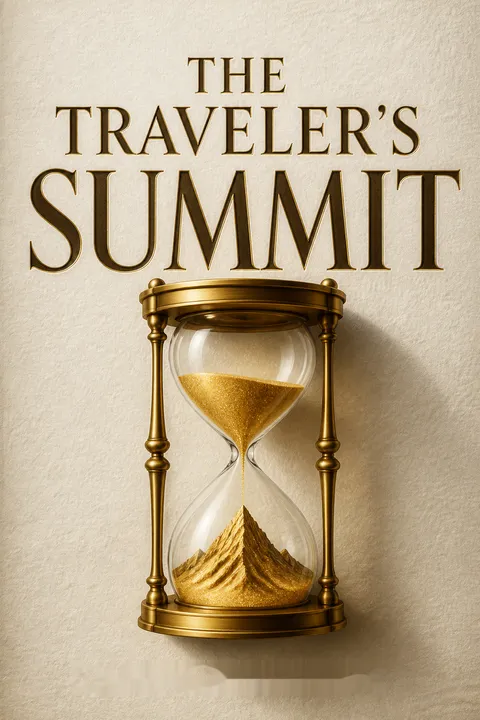
The hourglass is a central symbol, representing not just the literal time left for the summit, but the broader theme of humanity's choices and consequences. Its mysterious behavior—sometimes slowing, sometimes accelerating—mirrors the impact of collective action and attitude on the fate of civilization. The hourglass also serves as a plot device to create suspense, drive the narrative forward, and ultimately reveal that time is not fixed, but can be influenced by the willingness to act.
The Seven Decisions and Virtues
The Seven Decisions, gathered by David in his earlier journey, serve as both a foundation and a series of red herrings. Each virtue—hope, wisdom, courage, self-discipline, character—is explored in depth, with the group believing at various points that each is the answer. This structure allows for foreshadowing, as the true solution is hinted at but not revealed until the end. The process of elimination and synthesis mirrors the way individuals and societies often search for meaning, trying and discarding partial truths before arriving at the essential one.
The Declaration
The Travelers' final declaration is both a narrative resolution and a plot device that bridges the story's world and the reader's reality. By crafting a manifesto that urges immediate action—"do something"—the story moves from abstract discussion to practical application. The declaration serves as a call to arms, inviting readers to participate in the restoration of civilization by taking responsibility for their own actions.
Meta-Narrative and Modern Framing
The story's epilogue and author's note frame the narrative as both a parable and a possible reality, inviting readers to question the boundaries between fiction and truth. The inclusion of a public interview, references to real historical artifacts, and the suggestion that David Ponder's story is both extraordinary and accessible to all, reinforce the book's central message: greatness is within reach of anyone willing to act.
FAQ
1. What is "The Traveler's Summit" by Andy Andrews about?
- Sequel to The Traveler’s Gift: The book follows David Ponder, the protagonist from "The Traveler’s Gift," as he is summoned by the archangel Gabriel to lead a summit of history’s greatest “Travelers” to answer a question that will determine humanity’s future.
- A Quest for Civilization’s Salvation: The Travelers must answer, “What does humanity need to do, individually and collectively, to restore itself to the pathway toward successful civilization?” within a limited time, or risk the end of civilization as we know it.
- Blending Fiction and Life Lessons: Through a blend of historical fiction, time travel, and philosophical discussion, the book explores timeless principles for personal and societal success.
- Ensemble of Historical Figures: The narrative features real-life figures like Winston Churchill, Joan of Arc, Abraham Lincoln, King David, and George Washington Carver, each contributing their wisdom to the summit.
2. Why should I read "The Traveler's Summit" by Andy Andrews?
- Inspiration and Motivation: The book is designed to inspire readers to take action in their own lives, offering practical wisdom through engaging storytelling.
- Unique Storytelling Approach: Andy Andrews uses a creative narrative device—bringing together historical figures in a supernatural summit—to deliver life lessons in an entertaining way.
- Timeless Principles: Readers gain insight into principles such as hope, wisdom, courage, self-discipline, and character, all of which are essential for personal and collective growth.
- Applicable to Modern Life: The book’s central message, “Do something,” is a call to action relevant to anyone feeling stuck, overwhelmed, or searching for purpose.
3. Who is the main character in "The Traveler's Summit" and what is his role?
- David Ponder as Protagonist: David Ponder, a once-ordinary man who previously traveled through time in "The Traveler’s Gift," is chosen to lead the summit.
- Representative of the Common Man: He is selected because he embodies the “common man,” having experienced both failure and success, and is seen as relatable to all.
- Tasked with Leadership: David must guide a group of history’s greatest minds to answer a question that will determine the fate of humanity.
- Personal Struggles: Throughout the book, David grapples with grief, self-doubt, and the weight of responsibility, making his journey both personal and universal.
4. What is the central question or challenge in "The Traveler's Summit" by Andy Andrews?
- Restoring Civilization’s Path: The summit’s challenge is to answer, “What does humanity need to do, individually and collectively, to restore itself to the pathway toward successful civilization?”
- High Stakes: The fate of humanity hangs in the balance; failure to answer correctly could mean the end of civilization as we know it.
- Time Constraint: The Travelers are given a limited amount of time (represented by an hourglass) and only five chances to answer the question.
- Collaborative Problem-Solving: The challenge requires input from a diverse group of historical figures, each offering their unique perspective.
5. Who are the "Travelers" in "The Traveler's Summit" and what do they represent?
- Historical and Legendary Figures: The Travelers include Winston Churchill, Joan of Arc, Abraham Lincoln, King David, George Washington Carver, and others.
- Embodiments of Virtues: Each Traveler represents a key virtue or principle—hope, wisdom, courage, self-discipline, character, and more.
- Diverse Backgrounds: The group spans different eras, cultures, and experiences, symbolizing the collective wisdom of humanity.
- Advisers and Collaborators: They serve as advisers to David Ponder, contributing their life lessons and historical insights to solve the summit’s challenge.
6. What are the key concepts and virtues discussed in "The Traveler's Summit" by Andy Andrews?
- Hope: Explored as the foundation for perseverance and overcoming adversity; without hope, all is lost.
- Wisdom: Defined as the ability to foresee the consequences of choices; wisdom is gained through seeking, experience, and association.
- Courage: Not the absence of fear, but acting in spite of it; courage is necessary to enact change and inspire others.
- Self-Discipline: The ability to make oneself do what is necessary, even when it’s difficult; self-discipline bridges the gap between desire and achievement.
- Character: Ultimately, the book concludes that building character is essential for both individual and societal success.
7. What is the final answer or solution reached in "The Traveler's Summit" and what does it mean?
- The Answer: “Do Something”: After exploring hope, wisdom, courage, self-discipline, and character, the Travelers realize that the essential action is to “do something.”
- Action Over Inaction: The message is that when faced with uncertainty or adversity, taking action—any positive action—is better than doing nothing.
- Universal Application: This principle applies to individuals, communities, and nations; progress and restoration begin with action.
- Personal Declaration: The book ends with a declaration encouraging readers to act now, reinforcing the importance of immediate, purposeful action.
8. How does Andy Andrews use historical figures to convey lessons in "The Traveler's Summit"?
- Dialogue and Debate: Historical figures engage in thoughtful discussions, sharing their experiences and perspectives on key virtues.
- Personal Stories: Each Traveler recounts pivotal moments from their lives, illustrating how principles like hope, courage, and self-discipline shaped their destinies.
- Role Modeling: By showing how these figures overcame adversity, the book provides role models for readers to emulate.
- Collective Wisdom: The diversity of the Travelers’ backgrounds demonstrates that universal truths transcend time, culture, and circumstance.
9. What are the Seven Decisions from "The Traveler’s Gift" and how do they relate to "The Traveler's Summit"?
- The Seven Decisions: Responsibility, seeking wisdom, being a person of action, having a decided heart, choosing happiness, greeting each day with a forgiving spirit, and persisting without exception.
- Foundation for the Summit: These decisions are referenced throughout "The Traveler’s Summit" as foundational principles for success and fulfillment.
- Applied in New Context: The summit’s challenge builds upon these decisions, requiring the Travelers to synthesize and apply them to a global problem.
- Personal Growth: David Ponder’s journey demonstrates how living by these decisions leads to transformation and the ability to impact others.
10. What are the key takeaways and actionable advice from "The Traveler's Summit" by Andy Andrews?
- Take Action Now: Don’t wait for perfect circumstances—start with what you have and do something positive.
- Build Character: Focus on developing virtues like hope, wisdom, courage, and self-discipline; character is the foundation of greatness.
- Overcome Fear and Inertia: Fear is a misuse of imagination; action is the antidote to fear and despair.
- Value of Struggle: Adversity and setbacks are opportunities for growth and learning; persistence is essential.
- Influence Others: By acting, you inspire and empower those around you, creating a ripple effect of positive change.
11. What are the best quotes from "The Traveler's Summit" by Andy Andrews and what do they mean?
- “Do something. And do it now.” – The central message, emphasizing the importance of immediate action in the face of uncertainty.
- “Adversity is preparation for greatness.” – Suggests that challenges are necessary for personal growth and future success.
- “It is not circumstances, but character alone that makes the man.” – Highlights the primacy of character over external conditions.
- “We can know the Truth without having the Best. But we will never have the Best without knowing the Truth.” – Stresses the need for deep understanding to achieve the highest outcomes.
- “Never feed a black dog.” – Churchill’s metaphor for not indulging negative thoughts or depression, but instead focusing on positive action.
12. How can readers apply the lessons from "The Traveler's Summit" by Andy Andrews to their own lives?
- Start Small, Act Now: Don’t wait for the perfect plan; take the first step toward your goals or in helping others.
- Develop Core Virtues: Work on building hope, wisdom, courage, self-discipline, and character in daily life.
- Embrace Adversity: View challenges as opportunities to grow stronger and wiser, rather than as setbacks.
- Lead by Example: Your actions can inspire others to act, creating a positive impact in your community and beyond.
- Make a Personal Declaration: Commit to doing something meaningful every day, reinforcing the book’s call to purposeful action.
About the Author
Other books by Andy Andrews







Download PDF
Download EPUB
.epub digital book format is ideal for reading ebooks on phones, tablets, and e-readers.








































