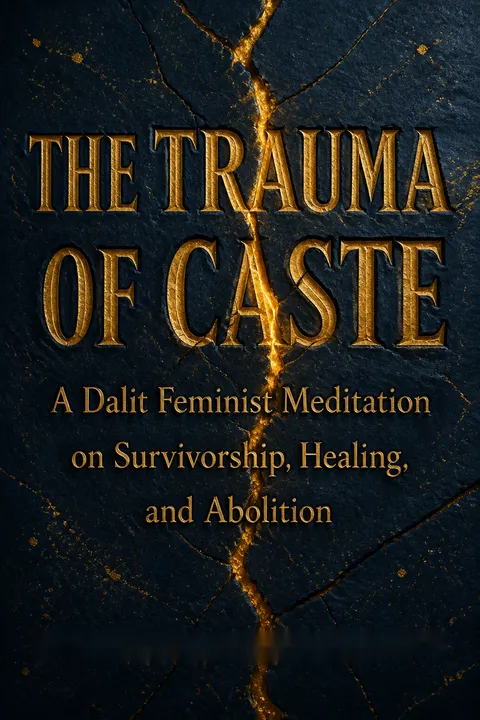

Key Takeaways
1. Caste is a global system of structural exclusion and intergenerational trauma
Caste is the wound that, left untreated, will ultimately destroy us.
A system of birthright. Caste is an ancient, rigid hierarchy that pre-dates modern racial categories, dictating a person's worth, occupation, and social standing from the moment of birth. It divides society into distinct tiers, placing Brahmins at the absolute peak of privilege and relegating Dalits—formerly labeled "untouchables"—to the bottom. This structure is maintained through strict endogamy and enforced by systemic violence.
The weight of statistics. The material reality of caste-oppressed people is defined by severe deprivation, poverty, and physical danger. In India alone, millions of Dalits face daily atrocities that are systematically ignored by the dominant-caste hegemony. Key statistics highlight this ongoing crisis:
- A crime is committed against a Dalit person every eighteen minutes.
- Over 37 percent of Dalits live below the poverty line, and more than half of Dalit children are undernourished.
- Public health workers refuse to visit Dalit homes in one-third of villages.
- Dalits are denied access to water sources in nearly half of all villages.
Intergenerational soul wounds. Beyond physical deprivation, caste operates as a deep psychological trauma passed down through generations. This historical trauma, or "soul wound," causes individuals to disconnect from their bodies, emotions, and communities as a survival mechanism. Healing requires moving past mere intellectualization to address how this trauma is physically stored in the body.
2. Brahminism is the animating ideology of caste apartheid and must be dismantled
Brahminism uses the ideology of caste to dehumanize, divide, and dominate the productive majority to distract them from holding caste elites accountable for issues like poverty, illiteracy, hunger, and unemployment.
The ideology of dominance. Brahminism is the foundational belief system that justifies and maintains the caste hierarchy through religious scriptures and cultural hegemony. It establishes a system of "graded inequality" where every caste group is pitted against another to protect its relative position in the pyramid. This prevents the oppressed majority from uniting against the small minority of dominant-caste elites who control society's resources.
Scriptural justification of violence. Ancient Hindu texts, such as the Manusmriti (Code of Manu) and the Bhagavad Gita, provide the legal and philosophical defense of caste apartheid. These texts prescribe horrific physical punishments for lower-caste individuals who attempt to transgress their assigned roles. Key examples of scriptural violence include:
- The Manusmriti decreeing that Chandalas must live outside villages, wear the garments of the dead, and use broken dishes.
- Edicts demanding that a Shudra's tongue be cut off or ears filled with molten lead for reciting or listening to sacred texts.
- The philosophical defense of dharma as a rigid duty to accept one's birth-ascribed servitude as karmic punishment.
The necessity of debrahminization. To achieve true liberation, South Asian society must undergo a process of debrahminization alongside decolonization. This involves actively dismantling the structures of Brahminical supremacy and centering the leadership of Dalit-Bahujan-Adivasi communities. It requires both dominant-caste and caste-oppressed individuals to confront the ways they have internalized these violent hierarchies.
3. Caste-based discrimination and violence have migrated to the global diaspora
Everywhere South Asians go, they bring caste and trauma from caste apartheid.
The migration of prejudice. Many South Asian immigrants mistakenly believed that crossing the oceans would dissolve the boundaries of caste. Instead, dominant-caste immigrants recreated the structures of caste apartheid in their new homelands, establishing exclusive social, professional, and religious networks. This has forced Dalit immigrants to live in hiding, passing as dominant-caste or avoiding South Asian spaces entirely to escape discrimination.
Diasporic discrimination in practice. Caste discrimination in the diaspora manifests in workplaces, academic institutions, and community organizations. From the early 20th-century lumber mills of Canada to modern Silicon Valley tech giants, Dalits continue to face systemic bias. Notable examples of diasporic casteism include:
- The landmark 2020 California lawsuit against Cisco Systems for caste-based workplace discrimination and retaliation.
- Over 250 tech workers at major companies like Google, Facebook, and Microsoft reporting slurs, bullying, and biased hiring.
- The exploitation and human trafficking of Dalit laborers to build temples in New Jersey and other US states.
The rise of a civil rights movement. In response to this ongoing discrimination, a powerful transnational movement for caste equity has emerged. Activists have successfully campaigned to add caste as a protected category in major academic and labor institutions. These historic wins include the California State University system, Harvard Graduate Student Union, and various progressive labor unions recognizing caste as a civil rights issue.
4. Brahminical patriarchy controls bodies, gender, and sexuality through violence
Brahminical patriarchy is the ideology that dominant castes adhere to in ritually, socially, economically, culturally, psychologically, and psychically marginalizing the caste-oppressed through the reproductive control of all genders and sexualities.
Caste and gender intertwined. Under Brahminical patriarchy, the preservation of caste purity is entirely dependent on the control of women's sexuality and reproductive choices. Endogamy—the practice of marrying strictly within one's caste—is enforced to maintain the accumulation of wealth and privilege within dominant-caste lineages. Consequently, any transgression of these boundaries, such as intercaste love, is met with severe social ostracization or violent "honor" killings.
Sexual violence as a weapon. In caste apartheid, sexual violence is not merely an individual crime but a systemic tool used by dominant castes to terrorize and subjugate entire communities. Dalit women and marginalized genders bear the brunt of this performative violence, which is designed to inflict maximum public shame. The systemic nature of this violence is illustrated by:
- More than 67 percent of Dalit women experiencing sexual violence in their lifetimes.
- The average age of death for Dalit women being a shocking thirty-nine years.
- The complicity of state actors, police, and medical professionals who systematically deny justice to survivors.
Reclaiming bodily autonomy. Dismantling Brahminical patriarchy requires centering the experiences and leadership of Dalit, Bahujan, and Adivasi feminists. True liberation must involve reclaiming bodily autonomy, consent, and pleasure free from the policing of caste norms. By organizing collective resistance and practicing self-care, marginalized women and queer individuals are redefining the boundaries of gender justice.
5. The carceral state and institutional systems perpetuate caste-based violence
Muslim, Dalit, and tribal communities are disproportionately targeted by the Indian carceral state, making up 53 percent of the Indian prison population.
A legacy of colonial policing. The modern policing and carceral systems in South Asia are rooted in a combination of Brahminical hierarchy and British colonial control. Originally designed to surveil and suppress colonized subjects, the police force continues to protect the property and interests of dominant-caste elites. This institutional bias ensures that crimes against caste-oppressed people are rarely investigated or prosecuted.
Systemic targeting of minorities. The carceral state disproportionately criminalizes and incarcerates Dalits, Adivasis, and religious minorities. These communities face systemic harassment, arbitrary arrests, and custodial violence at the hands of law enforcement. Key aspects of this carceral injustice include:
- One in four inmates in Indian prisons is Dalit, and 76 percent of death row inmates are from marginalized backgrounds.
- Over 67 percent of the prison population consists of undertrials who cannot afford bail and languish in jail for years.
- The ongoing criminalization of Indigenous tribes under legacy colonial laws like the Habitual Offenders Act.
The call for abolition. Because the legal and carceral systems are fundamentally designed to uphold caste supremacy, reform is not enough. Activists call for a complete overhauling of these punitive structures through the lens of caste and prison abolition. True justice requires moving away from carceral punishment toward transformative and restorative justice models that repair harm and restore communities.
6. Caste stress severely impacts mental health, leading to an epidemic of suicide
The value of a man was reduced to his immediate identity and nearest possibility.
The toll of caste stress. Living under the constant threat of discrimination, humiliation, and violence takes a devastating toll on the mental and physical health of the caste-oppressed. This chronic psychological burden, known as "caste stress," manifests as severe anxiety, depression, hypervigilance, and imposter syndrome. Over time, this stress is somatized into chronic physical conditions like hypertension, diabetes, and heart disease.
An epidemic of institutional murder. The hostile environments in academic and professional institutions often push Dalit students and workers to the brink of despair. Rather than viewing these tragic deaths as individual suicides, the community defines them as "institutional murders" caused by systemic exclusion. Notable examples of this crisis include:
- The tragic death of PhD student Rohith Vemula, whose suicide sparked a national reckoning on campus casteism.
- The death of young student Delta Meghwal, who was driven to suicide after facing caste-based sexual assault by her teacher.
- The high rates of depression and suicidal ideation among Dalit students who face relentless bullying and isolation.
Prioritizing mental wellness. Healing from the trauma of caste requires breaking the silence and shame surrounding mental health in marginalized communities. It is vital to build supportive mental health infrastructures and trauma-informed care networks that validate the unique experiences of caste-oppressed individuals. Reclaiming mental wellness is a radical act of political resistance and self-preservation.
7. Spiritual violence requires a reclamation of choice, consent, and liberatory lineages
Buddhism was created in part as a reaction to the cruelty of caste apartheid and became the first refuge of the caste-oppressed.
The trauma of spiritual exclusion. For millennia, Brahminism weaponized religion to declare Dalits "spiritually defiling" and deny them access to sacred spaces, scriptures, and the divine. This spiritual violence inflicted a deep soul wound, convincing the oppressed that their suffering was a divine punishment for past-life sins. Reclaiming spiritual agency is therefore a crucial step in healing from the trauma of caste.
Seeking liberatory paths. To escape this spiritual imprisonment, millions of Dalits have historically converted to other religions or developed their own spiritual traditions. These paths offer a message of equality, dignity, and direct connection to the divine. Key liberatory spiritual lineages include:
- Navayana Buddhism, initiated by Dr. Ambedkar's mass conversion of hundreds of thousands of Dalits in 1956.
- The Ravidassia tradition, based on the egalitarian teachings of the 15th-century tanner saint Shri Guru Ravidas.
- Dalit liberation theology within Christianity and the egalitarian, anti-caste roots of early Sikhism and Sufi Islam.
The power of choice and consent. True spiritual healing cannot be forced or prescribed; it must be rooted in absolute choice and affirmative consent. For survivors of spiritual violence, choosing their own spiritual path—or choosing none at all—is a powerful reclamation of autonomy. By honoring diverse spiritual lineages, the anti-caste movement fosters a space of mutual respect and collective liberation.
8. Environmental degradation and climate change are deeply intertwined with caste exploitation
If the people working the land don't have dignity, can the land have dignity?
Caste and the land. The exploitation of the earth is historically and materially linked to the exploitation of caste-oppressed labor. For centuries, Dalits and Adivasis have been forced to perform the most hazardous and back-breaking agricultural and sanitation work without land ownership or fair pay. This system of debt slavery and bonded labor treats both human bodies and the land as disposable resources for dominant-caste profit.
The unequal impact of climate change. As the climate crisis escalates, South Asia faces extreme weather, droughts, and rising sea levels that disproportionately impact marginalized communities. Lacking resources, land ownership, and state protection, the caste-oppressed are the most vulnerable to environmental displacement. Key environmental injustices include:
- Millions of Dalit and Adivasi farmers facing crop failures and debt due to erratic monsoons and rising temperatures.
- The displacement of millions of people in low-lying areas like Bangladesh, turning them into climate refugees.
- The exclusion of Dalit and Indigenous voices from global climate policy and environmental decision-making.
A just transition. True environmental justice requires a "just transition" that shifts society from an extractive economy to a regenerative, life-sustaining one. This transition must involve land reform, reparations, and the centering of traditional Dalit and Adivasi agricultural wisdom. We cannot heal the planet without simultaneously dismantling the systems of human exploitation that have ravaged it.
9. True healing requires somatic processing, ancestral connection, and collective imagination
To heal from the trauma of caste is to free ourselves from all the demons that systems of oppression create, whether it's inside of ourselves, whether it's in the ways that we interact, whether it's in our engagement with the species.
Somatic abolitionism. Because the trauma of caste is deeply stored in the nervous system, intellectual understanding alone is insufficient for healing. We must engage in somatic practices that help us observe, regulate, and release the physical tension and hypervigilance caused by caste stress. By learning to settle our nervous systems, we can break the automatic cycles of fight, flight, freeze, or appease.
Connecting with ancestral resilience. Healing also involves reclaiming our connection to our ancestors and honoring their legacy of survival and resistance. Even in the face of unspeakable violence, our ancestors passed down a profound capacity for love, joy, and community. We can connect with this ancestral strength through:
- Practicing mindfulness and setting clear intentions for intergenerational healing.
- Honoring the stories of anti-caste revolutionaries who paved the way for our freedom.
- Recognizing that our lives are the realization of our ancestors' wildest dreams of liberation.
Radical dreaming and the collective imaginary. The final frontier of liberation is the collective imaginary—the shared landscape of our hopes, dreams, and possibilities. Oppression seeks to destroy our ability to imagine a world beyond violence, keeping us trapped in the survival demands of the present. Through socially engaged art, storytelling, and radical dreaming, we can co-create a caste-liberated future rooted in mutual care and collective joy.
Download PDF
Download EPUB
.epub digital book format is ideal for reading ebooks on phones, tablets, and e-readers.








































