
Plot Summary
Arrival at Gardner-Bahnsen
Max, a scholarship student, arrives at the prestigious Gardner-Bahnsen School for Girls, feeling both out of place and at home. The school promises more than academics: it's a crucible for ambition, grit, and survival skills. Max's friendships are complicated by class differences and her own hunger for recognition. She's drawn to the school's traditions and the promise of the Tierney Cup, a legendary tournament that crowns the most capable final-year student. The campus buzzes with anticipation, but beneath the surface, old wounds and insecurities simmer. Max's relationship with her best friend Nora is strained, and the arrival of new students hints at coming upheaval. The stage is set for a year that will test every girl's limits.
Fractured Friendships and Old Wounds
Nora, once inseparable from Max, now feels the ache of their fractured friendship. The previous year ended with Nora confessing her love for Max, only to be rejected. Their new single rooms symbolize their emotional distance. Nora's sense of self, once fortified by Max's presence, is now shaky. She tries to maintain her composure, but the pain of being cast aside lingers. The school's rituals and the pressure to excel only heighten her isolation. Nora's mother, sensing her daughter's turmoil, tries to reach out, but Nora pushes her away. The emotional fallout from her confession haunts every interaction, and the prospect of the Tierney Cup becomes both a distraction and a potential path to reclaiming her sense of worth.
The New Girl's Reputation
Teddy Swanson, notorious for being expelled from multiple elite schools, joins Gardner as a legacy student. Her presence is met with curiosity and suspicion. Teddy's family expects her to reform, but she's haunted by a sense of emptiness—a "black hole" inside her that drives her to self-sabotage and reckless behavior. She's both fascinated and repelled by the school's traditions. Teddy quickly becomes a subject of gossip, her past fueling wild rumors. She's determined to keep her darkness at bay, but the competitive, pressure-cooker environment of Gardner threatens to draw it out. Her arrival disrupts the social order, and her interactions with Max and Nora set the stage for new alliances and rivalries.
The Tierney Cup Announced
At the opening assembly, Headmistress Dr. Thompson announces the Tierney Cup: a grueling, multi-event tournament reserved for final-year students. The Cup is steeped in tradition and myth, promising glory and a permanent place in Gardner's history. Max, obsessed with winning, signs up immediately, seeing it as her ticket to legacy and self-validation. Nora, initially hesitant, is pushed by Teddy's provocations to enter as well, breaking the unspoken rule that the Cup "belongs" to Max. The sign-up list becomes a battleground of ambition, with old friends turning into rivals. The Cup's challenges—swimming, archery, survival skills—will test not just physical prowess but also loyalty, integrity, and the willingness to do whatever it takes to win.
Rivalries and Resentments
As training for the Cup begins, old resentments flare. Max and Nora's rivalry intensifies, each determined to prove herself. Teddy, meanwhile, oscillates between wanting to belong and wanting to burn everything down. She flirts with both chaos and Nora, complicating the emotional landscape. The girls' social circles fracture under the weight of competition. Rumors swirl about Teddy's past and Max's motives. Family pressures and class differences add further tension. The Cup becomes a proxy for deeper battles: for love, for validation, for escape from the roles they've been assigned. Every interaction is charged, and the boundaries between friend and foe blur.
Training, Secrets, and Schemes
The girls throw themselves into training—archery, swimming, survival skills—each with her own agenda. Max is relentless, determined to outshine everyone, especially Nora. Teddy, surprisingly skilled, unsettles the others with her unpredictability. Nora, caught between her old loyalty to Max and her new connection with Teddy, struggles to find her footing. Secrets multiply: Teddy and Nora grow closer, sharing vulnerabilities and desires, while Max's resentment festers. Family visits during "Family Weekend" expose further cracks, as parents' expectations and disappointments come to the fore. The pressure mounts, and the girls' facades begin to slip, revealing the raw ambition and pain beneath.
The Cup Begins
The Cup kicks off with a brutal open-water swim. Nora, drawing on her strength and determination, wins the first event, surprising herself and the others. Max, shaken by not coming first, becomes more desperate. Teddy, competitive but distracted by her inner turmoil, performs well but not spectacularly. The results shift the social dynamics: Nora is suddenly a threat, Max's confidence is rattled, and Teddy's outsider status is both a liability and a weapon. The girls' relationships grow more volatile, with alliances shifting and betrayals looming. The Cup's promise of glory becomes a double-edged sword, sharpening both ambition and animosity.
Betrayals and Confessions
As the Cup progresses, the emotional stakes rise. Teddy and Nora's relationship deepens, but Teddy's restlessness and self-destructive impulses threaten to sabotage it. Max, feeling increasingly isolated, lashes out at both Nora and Teddy. During a snowbound Thanksgiving break, Max and Teddy are forced to share a room, leading to a moment of forbidden intimacy. This betrayal, when revealed, detonates the fragile peace among the trio. Nora, devastated by the double betrayal, confronts them in a violent outburst during a Cup challenge, leading to chaos and the suspension of the tournament. The girls' secrets and lies are exposed, and the cost of ambition becomes painfully clear.
Family Weekends and Hidden Agendas
Family Weekend brings the girls' backgrounds into sharp relief. Max's mother visits, not out of love but to leverage Max's connections for her younger sisters' benefit. Teddy's family pressures her to reform, while Nora's parents struggle to understand her pain. The girls' attempts to reconcile their ambitions with their families' expectations only deepen their sense of alienation. The Cup, once a symbol of hope, now feels like a battleground for their parents' dreams as much as their own. The weight of legacy, class, and race shapes every decision, and the girls are forced to confront the limits of both privilege and resilience.
The Tournament Unravels
The Cup's suspension after Nora's violent outburst leaves the girls in limbo. The administration cancels the tournament, citing safety and the breakdown of trust. The girls are left to grapple with the fallout: Nora is suspended, Max and Teddy are isolated, and the rest of the class is denied their chance at glory. The sense of injustice and unfinished business festers. Max, unwilling to let go, proposes a secret, unsanctioned final challenge—a return to one of Gardner's most dangerous traditions: the cliff dive. The girls, desperate for closure and legacy, agree, setting the stage for tragedy.
The Final Challenge
In the early morning, the remaining competitors and their classmates gather at the cliffs for the illicit final challenge. The atmosphere is electric with fear and anticipation. As the girls prepare to jump, doubts and arguments erupt. Nora, determined to reclaim her agency and prove herself, steps to the edge. Teddy, wracked with guilt and longing, tries to stop her. In a moment of chaos, Nora falls—whether by accident or Teddy's hand is ambiguous. Max, realizing too late what's at stake, dives in after her. The consequences are immediate and devastating: Nora is pulled from the water, gravely injured; Max disappears, presumed dead. The Cup's legacy is forever stained.
Catastrophe on the Cliff
The aftermath is a blur of sirens, hospital rooms, and whispered blame. Nora survives but slips into a coma. Max's body is never found. Teddy, hailed as a hero for "trying to save" Nora, is consumed by guilt and the fear of exposure. The school reels from the scandal, struggling to contain the story and protect its reputation. The girls' parents close ranks, and the administration buries the truth. The survivors are left to navigate a landscape of grief, suspicion, and unresolved questions. The myth of the Gardner girl is shattered, replaced by a more complicated, painful reality.
Aftermath and Blame
As the months pass, the narrative around the tragedy hardens. Teddy is embraced by the school community, her role recast as that of a would-be savior. Max becomes a cautionary tale, her ambition and outsider status blamed for the disaster. Nora, still in a coma, is both mourned and mythologized. The girls move toward graduation, haunted by what happened but desperate to move on. The truth of that day—who pushed, who saved, who betrayed—becomes a secret that only Teddy knows. The cost of survival is silence, and the price of legacy is the rewriting of history.
The Last Gardner Girl
With Nora gone and Max presumed dead, Teddy becomes the last of the central trio. She leverages her new reputation to secure her future, gaining acceptance to college and the approval of her peers. The black hole inside her is quieted, if not filled, by the knowledge that she has outlasted the others. But the truth of what happened on the cliff lingers, a secret she burns—literally—when she destroys Nora's written accusation. Teddy's survival depends on her ability to forget, to let the myth of her heroism stand unchallenged. The legacy of Gardner is now hers to shape, for better or worse.
Truth, Lies, and Legacy
The school year ends with the survivors trying to reclaim normalcy. The myth of the Gardner girl endures, but its meaning is forever altered. The truth of what happened is buried, replaced by a narrative that serves the needs of the living. Teddy, now the "hero," is both relieved and haunted. The price of ambition, the hunger for legacy, and the corrosive power of secrets are laid bare. The story ends not with triumph, but with the uneasy knowledge that survival often comes at the expense of truth—and that the real cost of greatness may be the loss of one's soul.
Nora's Awakening
Months later, Nora awakens from her coma, disoriented and voiceless. As she pieces together her memories, she realizes the truth of what happened on the cliff: Teddy pushed her. Determined to set the record straight, she writes a note for the detective investigating the case. But Teddy, desperate to protect herself, intercepts the note and, in a final act of self-preservation, destroys it. Nora suffers a fatal seizure before she can speak her truth. The last chance for justice dies with her, and the myth of Teddy's heroism is cemented.
The Price of Survival
With both Max and Nora gone, Teddy alone carries the burden of what happened. She chooses to let the world believe the lie, burning the evidence of her guilt and stepping into her new life as a Gardner girl and future college student. The story ends with Teddy embracing her survival, even as the truth is lost forever. The legacy of Gardner is now one of ambition, betrayal, and the high cost of winning at all costs.
Analysis
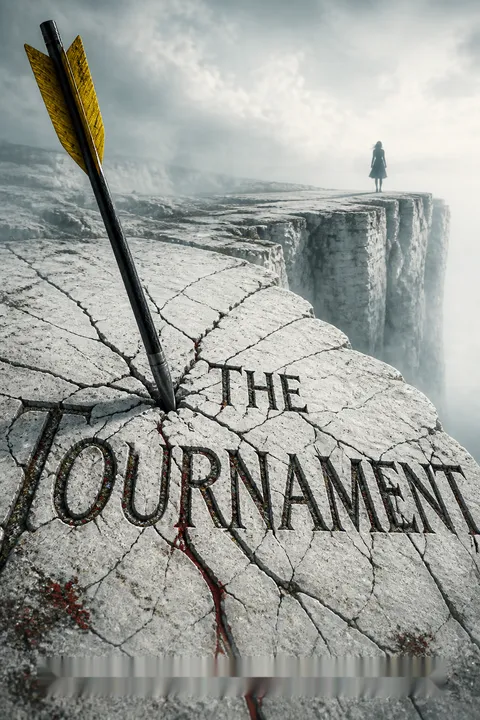
Rebecca Barrow's The Tournament is a razor-sharp deconstruction of ambition, privilege, and the myth of the "exceptional girl." Set in a rarefied boarding school, the novel uses the Tierney Cup as both a literal and symbolic crucible, exposing the costs of legacy, competition, and the hunger to be remembered. Through the intertwined stories of Max, Nora, and Teddy, Barrow explores how trauma, class, and unmet emotional needs drive young women to both greatness and destruction. The book's narrative structure—shifting perspectives, unreliable narration, and the ultimate erasure of truth—mirrors the way institutions and individuals rewrite history to suit their needs. The final act, in which Teddy destroys Nora's written accusation, is a chilling commentary on the ease with which the powerful can silence the vulnerable. In the end, The Tournament is less about who wins or loses than about the price paid for survival, the corrosive effects of secrets, and the impossibility of true justice in a world built on ambition and denial. The lesson is clear: greatness, when pursued at any cost, leaves only ashes behind.
Review Summary
The Tournament receives mixed reviews, averaging 3.23/5. Readers frequently praise its complex, morally gray queer characters and shocking ending, while criticizing the misleading marketing. Many expected a thriller centered on the competition, but found the tournament largely sidelined in favor of a love triangle between Max, Nora, and Teddy. The slow first half frustrated many readers, though the final pages won several over. Character development received mixed feedback, with Max generally considered the most relatable and Teddy the most divisive.
People Also Read

Characters
Max (Wren Maxwell)
Max is a scholarship student at Gardner-Bahnsen, fiercely intelligent, competitive, and determined to escape her working-class background. Her drive to win the Tierney Cup is fueled by a need for validation and a desire to leave a mark on a world that has often overlooked her. Max's relationship with Nora is central: once best friends, their bond is shattered by Nora's confession of love and Max's inability to reciprocate or process her own feelings. Max's psychological armor—her toughness, her refusal to show weakness—both protects and isolates her. Her rivalry with Nora and entanglement with Teddy lead to her downfall. In the end, Max's ambition and inability to reconcile her need for love with her hunger for greatness result in tragedy.
Nora McQueen
Nora is Gardner's golden girl: talented, strong, and beloved by many, but deeply insecure. Her friendship with Max is the anchor of her adolescence, and her romantic feelings for Max are both a source of hope and pain. Nora's journey is one of seeking validation—first from Max, then from Teddy, and finally from herself. Her willingness to step into the Cup, to compete against Max, is both an act of rebellion and self-assertion. Nora's relationship with Teddy is passionate but ultimately destructive, as Teddy's chaos mirrors Nora's own inner turmoil. Nora's psychological arc is one of moving from dependence to agency, but her attempt to reclaim her narrative ends in betrayal and silence. Her final act—trying to expose the truth—costs her her life.
Teddy Swanson
Teddy is the wild card: a legacy student with a history of expulsion, a magnetic presence, and a self-destructive streak. She is driven by a sense of emptiness—the "black hole"—that she tries to fill with risk, rebellion, and conquest. Teddy's relationships are transactional and often manipulative; she is both drawn to and threatened by Nora's goodness and Max's ambition. Her affair with Max is less about love than about power and disruption. Teddy's psychological complexity lies in her simultaneous desire for connection and her compulsion to destroy it. In the end, her survival depends on her ability to rewrite the past, burn the evidence, and embrace the myth of her own heroism, even as she knows the truth.
Safiya Haddad
Safiya is one of Nora and Max's closest friends, ambitious and driven but less ruthless than the others. She is often the voice of reason, trying to mediate conflicts and keep the group together. Saf's own desire to win the Cup is genuine, but she is ultimately sidelined by the escalating drama. Her loyalty is tested as the group fractures, and she is left to pick up the pieces in the aftermath. Saf's psychological arc is one of disillusionment: she enters the year believing in the ideals of Gardner, but leaves with a more cynical understanding of what ambition can cost.
Isobel Delphy
Isobel is glamorous, witty, and always at the center of the school's social scene. She is less invested in the Cup itself and more interested in the dynamics of power and popularity. Isobel's role is often that of observer and commentator, providing both comic relief and sharp insight. She is quick to adapt to shifting alliances and is ultimately more survivor than participant. Isobel's psychological resilience allows her to weather the storm, but she is also complicit in the rewriting of history that follows the tragedy.
Brooke Nielsen
Brooke is brash, funny, and fiercely loyal—to a point. She is often the glue that holds the group together, but her loyalty is conditional and self-protective. Brooke is quick to distance herself from scandal and is adept at navigating the school's shifting social landscape. Her psychological strategy is to keep things light, to deflect pain with humor, and to avoid getting too close to the fire. In the end, Brooke survives by adapting, but her relationships are marked by a certain emotional shallowness.
Dr. Thompson
Dr. Thompson is the stern but fair headmistress of Gardner-Bahnsen. She is deeply invested in the school's legacy and the ideals of the Tierney Cup. Her role is to enforce order and protect the institution, even at the expense of individual students. Dr. Thompson's psychological rigidity is both her strength and her weakness: she is unable to adapt to the chaos unleashed by the girls' ambition, and her decision to cancel the Cup is both necessary and tragic. She represents the limits of authority in the face of adolescent rebellion.
Teddy's Mother
Teddy's mother is a figure of both pressure and disappointment. She expects Teddy to reform, to live up to the family's legacy, but is emotionally unavailable and critical. Her relationship with Teddy is transactional, focused on appearances and achievement rather than genuine connection. Psychologically, she embodies the coldness of privilege and the damage it can inflict on those who fail to meet its standards.
Max's Mother
Max's mother is a source of both longing and resentment. She is more interested in leveraging Max's connections for her younger daughters than in supporting Max herself. Her emotional distance and transactional approach to parenting fuel Max's hunger for validation and her sense of never being enough. Psychologically, she represents the wounds of neglect and the corrosive effects of conditional love.
Detective Ambrose
Detective Ambrose is the outsider called in to make sense of the tragedy. She is methodical, empathetic, and determined to uncover the truth, but is ultimately thwarted by the girls' silence and Teddy's final act of destruction. Her presence underscores the limits of adult intervention in a world where the rules are written by the girls themselves. Psychologically, she represents the hope for justice and the frustration of its denial.
Plot Devices
The Tierney Cup
The Tierney Cup is the central plot device, serving as both a literal tournament and a metaphor for the girls' struggle for legacy, belonging, and self-worth. Its challenges—swimming, archery, survival skills, and the forbidden cliff dive—test not just physical ability but also moral character and psychological resilience. The Cup's history, traditions, and eventual suspension mirror the breakdown of order and the eruption of chaos among the girls. The Cup's cancellation and the illicit final challenge underscore the dangers of unchecked ambition and the costs of rewriting history.
Unreliable Narration and Shifting Perspectives
The novel employs multiple points of view—primarily Max, Nora, and Teddy—each with her own biases, secrets, and blind spots. The truth of what happened is revealed gradually, with each girl's version of events coloring the narrative. The rewriting of history—by the school, by the survivors, by Teddy herself—becomes a central theme. The destruction of Nora's note is the ultimate act of narrative control, ensuring that the "official" story is a lie.
Foreshadowing and Symbolism
From the opening pages, the novel foreshadows disaster: the school's emphasis on survival skills, the rumors of past accidents, the girls' obsession with legacy. The cliff, the Cup, and the "black hole" inside Teddy all serve as symbols of ambition, danger, and emptiness. The recurring motif of burning—letters, bridges, evidence—underscores the theme of erasure and reinvention.
Social Hierarchy and Class
The school's social structure—scholarship students vs. legacies, rich vs. poor—fuels much of the tension. Max's outsider status, Teddy's legacy, and Nora's privilege intersect in ways that both bind and divide them. The Cup becomes a battleground for these anxieties, and the final rewriting of history is as much about class as it is about truth.
The "Black Hole"
Teddy's recurring metaphor of the "black hole" inside her is a powerful device for exploring self-destructive impulses, addiction to chaos, and the hunger for meaning. It drives her actions, shapes her relationships, and ultimately explains her willingness to destroy others—and herself—for the sake of feeling something.
Download PDF
Download EPUB
.epub digital book format is ideal for reading ebooks on phones, tablets, and e-readers.








































